


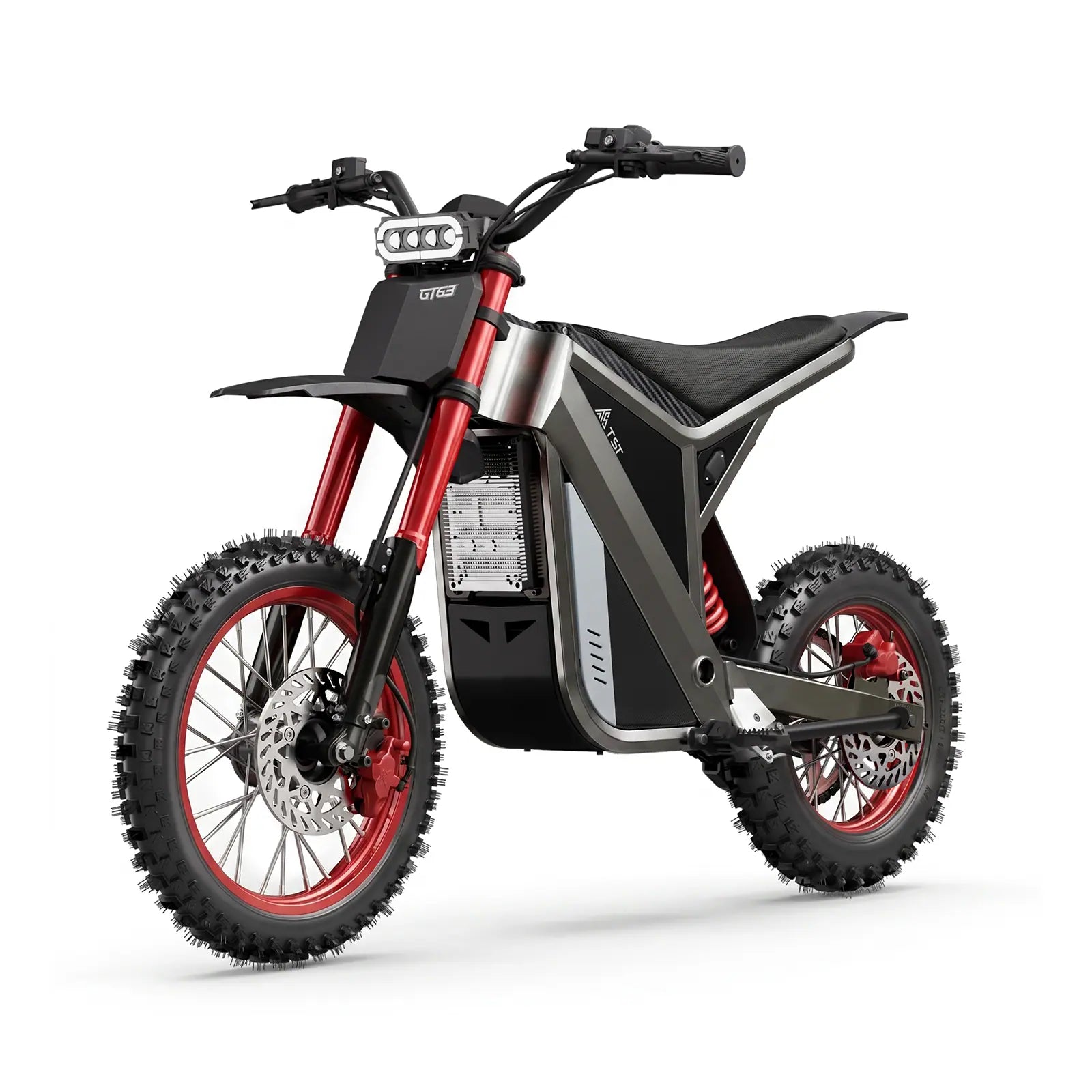














A 20x4 and a 26x4 tire share the same nominal width but roll on different wheel diameters — and that diameter changes step-over height, obstacle rollover, and steering feel more than it changes traction. The tire number alone does not tell you how a bike handles sand, roots, or curb cuts, because rim width, casing, tread, inflation, and the rest of the bike's build all shift the result. Before choosing between the two formats, it helps to separate what the size code actually measures from what the whole bike does with it.
What the Numbers Actually Measure
The first number in a fat-tire code (20 or 26) is a nominal wheel/tire diameter in inches, and the second (commonly 3.0 to 4.9) is a nominal tread width. Neither number is a precise measurement. Under the ISO/ETRTO system used across the bicycle industry, actual mounted width depends on the internal rim width the tire sits on — a given tire can measure meaningfully narrower or wider than its printed size depending on the rim it is paired with, and sidewall shape can shift where the widest point of the tread actually sits. Two bikes both labeled "26x4" are not guaranteed to have identical footprints unless the rim width and tire model are also matched.
Diameter follows the same logic. A 20-inch fat-tire wheel with a 4-inch tire has an outer diameter closer to a standard 24-inch wheel once the tall sidewall is added, and a 26x4 wheel measures larger still. That difference in outer diameter — not the "20" or "26" label by itself — is what changes wheelbase, bottom-bracket height, and how the wheel meets an obstacle.
Rollover and Obstacle Handling: Where Diameter Actually Matters
Wheel diameter's clearest physical effect is on rolling over discrete, square-edged obstacles: roots, curbs, potholes, rocks. A larger-diameter wheel meets an obstacle at a shallower angle and needs less upward force to climb it, so a 26x4 setup will generally clear a given root or rock ledge with less deflection than a 20x4 setup of otherwise similar build.
That advantage is easy to overstate, though. Independent rollover testing on pneumatic tires shows that for bumps small enough to be absorbed by tire deformation rather than needing to be climbed, wheel diameter differences in the 26–32 inch range produce no measurable rolling-resistance advantage — the tire's air volume and casing compliance, not the wheel diameter, do most of the work smoothing rough surfaces. In practice, this means the rollover benefit of a 26-inch wheel is most noticeable on sharp, tall obstacles like curbs, roots, and rock steps, and much smaller on washboard, gravel, or soft terrain where tire pressure and volume dominate the ride quality.
Flotation, Traction, and Pressure Are Width and PSI Questions, Not Diameter Questions
Flotation on sand or snow comes from contact-patch area and low inflation pressure, both of which are governed by tire width and casing volume rather than wheel diameter. A wider tire at very low pressure spreads rider and cargo weight over more surface area regardless of whether it sits on a 20-inch or 26-inch rim. Fat-tire pressure guidance commonly runs from roughly 2–10 PSI in deep snow and packed powder up to 12–24 PSI on hardpack and pavement, with meaningful drops recommended for sand, singletrack, and rooty trail sections. A 20x4 and 26x4 tire of similar width and casing quality, run at matched pressure for the same rider weight, will float similarly on soft ground; the diameter difference shows up more in how each wheel behaves once it hits something solid underneath the soft layer.
Because tire pressure needs scale with rider and cargo weight, terrain, and tire volume together, any single PSI number is a starting point, not a fixed rule. A heavier rider or loaded cargo rack needs several PSI more than the same tire at a light rider weight, and mixed terrain — pavement into gravel into a soft shoulder — typically calls for splitting the difference or adjusting between sections rather than fixing on one pressure for the whole ride.
Steering, Stability, and Step-Over: Confounded With the Rest of the Bike
Smaller-diameter wheels with fat tires tend to steer more quickly and feel more maneuverable at low speed, which is part of why compact and folding fat-tire e-bikes are built around 20-inch wheels; larger-diameter wheels track straighter at speed and generally feel more planted on rough, fast descents. But these handling differences are also shaped by fork rake, trail, wheelbase, frame geometry, and total bike weight — variables that typically change alongside wheel size on any real product line, not independently of it. A 20x4 moped-style e-bike and a 26x4 step-through e-bike from the same brand are not a clean diameter test; they usually differ in suspension, frame type, weight distribution, and intended riding position as well, so any handling difference observed between them cannot be attributed to tire diameter alone.
Step-over height follows a similar pattern. A larger wheel diameter generally raises the point where the top tube or frame crosses in front of the saddle on a traditional frame, which affects mount and dismount ease, but step-through and low-step frame designs can offset this regardless of wheel size. Anyone comparing step-over height across two bikes should check the exact frame type and stated saddle/frame height for each model rather than assuming wheel diameter decides it.
A Worked Example: Comparing Current TST Fat-Tire Models
TST's current lineup illustrates why format decisions can't be reduced to the tire number. According to TST's model comparison page, the R002 (Mega-torque), the dual-battery variant, the Moped Cargo Bike, the Folding, and the Folding Pro models are all built around 20"x4" tires, while the All-Terrain and Step-Thru models use 26"x4" tires. On paper, that looks like a clean size comparison — but the surrounding specifications are not matched:
Source: TST model comparison page, checked September 10, 2026. Peak motor wattage is a maximum rating, not continuous output, and top speed figures are manufacturer "up to" claims that vary with terrain, rider weight, and assist mode; classification and road legality depend on the exact jurisdiction and are not established by these specifications alone.
The 20x4 R002 carries more peak power and full suspension, while the 26x4 All-Terrain relies on front suspension only and a lower peak rating. So if a rider felt the 20x4 bike absorbed rough terrain better, that difference is at least as plausibly the extra rear suspension and stronger motor as it is the tire diameter. This is exactly the trap the wheel-size shorthand creates: it invites shoppers to credit one spec for a difference produced by several. The TST Carrier, meanwhile, uses a 20"x3" tire rather than a 4-inch tire at all, and the Commuter and City-Smooth models use 27.5"x2.25" tires — neither is a true fat-tire comparison point, which is a reminder to check the exact tire width printed for each model rather than assuming every "20-inch" or "26-inch" bike in a lineup runs the same tire.
Replacement Tires, Rims, and Compatibility Checks
Before committing to either format for mixed-terrain riding, verify four things against the exact product page or manual for the bike in question, since none of them are implied by the wheel-size label:
-
Confirm the exact tire size printed on the current sidewall or spec sheet (width and diameter), not just the "20" or "26" shorthand, since variants within a model line can differ.
-
Check the internal rim width the tire is mounted on, since a wider or narrower rim changes the tire's actual inflated width and how much pressure range is usable.
-
Confirm frame and fork clearance before assuming a tire upgrade is possible; most frames built around a 20x4 tire do not have room for a 26x4 tire, and the reverse swap is rarely available either, because axle spacing, fork width, and brake mount position are usually matched to one wheel size.
-
Verify current replacement tire availability and price for the exact size and tread pattern before buying, since 26x4 fat tires are a more established aftermarket size in general cycling retail, while some 20x4 sizes are more commonly sourced through the original bike brand.
For riders specifically weighing TST's fat-tire lineup, the practical next step is to compare complete current models — not tire size alone — since suspension, motor rating, and weight ride alongside the tire on every ride. The model comparison page at tstebike.com lists current specifications, pricing, and tire size for each active model side by side.
The Decision Rule
Choose based on the obstacle and storage constraints you actually face, not the size number. If the ride mixes pavement with curb cuts, roots, or occasional rock ledges, and you don't need to fold or carry the bike often, a larger-diameter 26x4 format has a real, physics-based edge at clearing tall obstacles smoothly. If storage space, transport in a car or on transit, or tight low-speed maneuvering matters more than obstacle rollover, a 20x4 format's smaller footprint and typically lighter wheel assembly are the more relevant advantages. Either way, match tire pressure to your actual rider-plus-cargo weight and the softest terrain you'll ride, and confirm suspension, motor rating, and frame clearance on the specific bike — those factors will affect your mixed-terrain ride at least as much as the tire's nominal diameter.

Leave a comment
This site is protected by hCaptcha and the hCaptcha Privacy Policy and Terms of Service apply.