


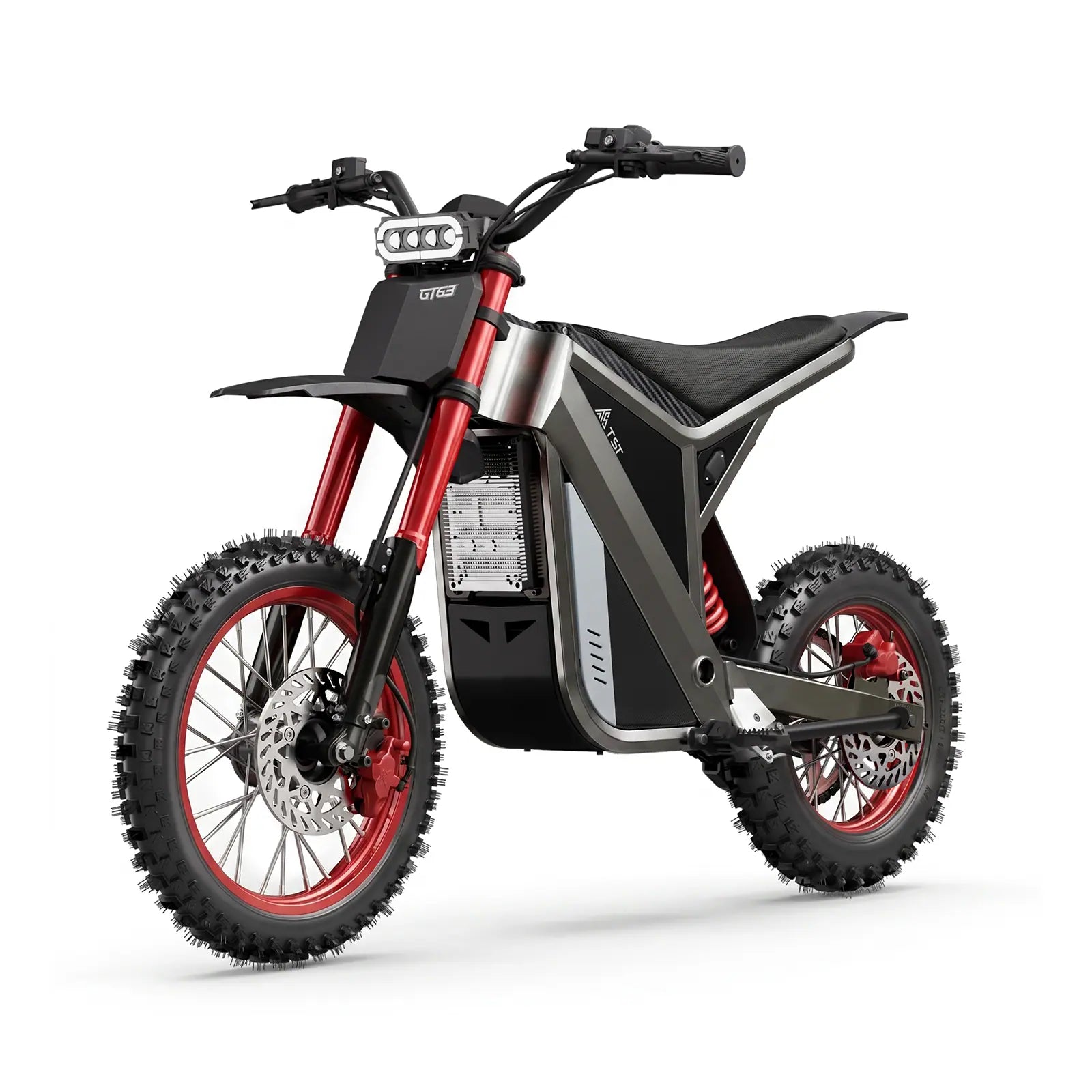














At the prices checked on August, 2026, the TST R7 delivers substantially more power, payload, and range for about $1,100 less than the RadExpand 5 Plus, which makes it the stronger value for commuters and families who need a step-through, cargo-capable bike. The RadExpand 5 Plus earns its premium with a torque sensor, turn signals, a folding frame, and Rad Power Bikes' larger dealer and community network.
TST R7 vs RadExpand 5 Plus: specs checked August, 2026
| Feature | TST R7 | RadExpand 5 Plus |
|---|---|---|
| Price | $799 (official sale, 8/2026) | $1,899 |
| Motor | 1500W, 90 N·m | 750W |
| Top speed | 32 mph | 20 mph |
| Range | Up to 65 miles | 60+ miles |
| Payload | 450 lb | 315 lb |
| Frame | Step-through | Folding |
| Brakes | Hydraulic discs | Hydraulic discs |
| Warranty | 2 years, direct | Brand warranty via Rad |
What Does the $1,100 Price Gap Actually Buy?
The R7's official listing shows $799 as a promotional price as of August, 2026, with a free front light and fender set included, while the RadExpand 5 Plus lists at $1,899. That is roughly a $1,100 gap at the time of this check. In that difference, the R7 packs a 1500W motor, a 450 lb payload rating, and hydraulic disc brakes, which are the specs most buyers would otherwise pay far more for.
The honest flip side: Rad Power Bikes is one of the largest and most established e-bike brands in North America, with years of reviews, a dealer network, and proven resale value. Paying more for that ecosystem is defensible; the question is whether the RadExpand's specific features justify the premium for your use case.
Power and Payload: The Specs That Change What the Bike Can Do
The R7's 1500W motor with 90 N·m of torque is a full class above the RadExpand's 750W, and the 450 lb versus 315 lb payload rating is the difference between solo-plus-gear and carrying a passenger or heavy cargo. If you haul groceries, ride with a child seat, or climb real hills, those numbers decide the purchase before anything else.
The trade-off is legality and discipline: 32 mph exceeds Class 1-3 e-bike definitions in many states, so the R7 may require registration or be restricted from bike paths where you live. The RadExpand's 20 mph ceiling keeps it comfortably inside standard classes. Check your state rules before choosing.
Ride Comfort and Geometry: Step-Through versus Folding
The R7's step-through frame is built for easy mounting, an upright position, and passenger or cargo duty, with a modular rear seat that swaps between a passenger seat, cargo rack, or storage box. The RadExpand 5 Plus is a folding bike that fits a car trunk or apartment closet, which the R7 cannot do.
For daily commuters who store indoors, the RadExpand's folding design is a genuine advantage. For riders who want a stable, comfortable, cargo-capable machine and never fold it, the R7's full-size geometry rides more like a proper bike and absorbs bumps better with its full suspension.
How Far Will Each Bike Really Go on a Charge?
Both bikes advertise 60-65 miles in ideal conditions. Plan around 40-45 miles of realistic mixed riding on either, less with a heavy load, hills, cold weather, or constant throttle. The R7's 48V 15Ah pack is removable for indoor charging, as is the RadExpand's battery, so both support a two-pack household routine.
One difference: at 1500W, the R7 draws more current under full throttle, so a rider who rides hard will see range fall faster than on the 750W RadExpand. The R7's advantage is reserve power, not necessarily efficiency; ride in a lower assist level to stretch it.
Match the battery to the route before you commit. If your commute is a flat 10-mile round trip, either bike's 48V 15Ah-class pack covers it with margin and an overnight charge. If you ride 30 miles with hills or carry cargo, the R7's 65-mile ideal figure gives you the reserve, while the RadExpand's 60+ mile claim leaves less room for a cold-weather or headwind day. Buying the cheaper bike with a smaller usable margin is how range anxiety starts.
RadExpand 5 Plus vs TST R7: Where Rad Still Wins
The RadExpand 5 Plus leads on features the spec table understates. Its torque sensor delivers smoother, more natural pedal assist than the R7's cadence-based system. Its turn signals, hydraulic brakes, and retractable pedals are genuinely useful urban features. Its folding frame, 4'10"-5'10" fit range, and 60+ mile range make it a polished commuter package. And Rad Power Bikes' scale means more independent reviews, more owners, and a deeper accessories catalog.
For a rider who wants a refined, folding, torque-sensing commuter from a brand with a large community, the RadExpand is worth its price. The R7 is not a better bike in every way; it is a different tool that leads on power, payload, and price.
Total Cost of Ownership: Brakes, Battery, and Accessories
Long-term cost favors the R7 in most scenarios. Hydraulic brakes are standard on both, which is good; budget for brake pads as consumables either way. The R7's 48V 15Ah battery is the same format TST uses in the R002 and Buddy Pro, and TST sells replacements directly, which keeps a spare pack affordable. The optional $269 aluminum rear storage box turns the R7 into a genuine cargo hauler for groceries or delivery work.
The RadExpand's premium price also carries premium ownership costs: its specific folding frame parts and proprietary accessories cost more, and service is easiest through Rad-authorized channels. If you keep a bike for years, the R7's cheaper parts and shared battery format matter.
Think through the servicing rhythm too: hydraulic brakes on both bikes should be bled about once a year or when the lever feel goes soft, the chain and cassette should be cleaned and lubricated every few hundred miles, and the tires should be checked weekly for pressure and wear. Budget about $50-150 per year for wear items plus the occasional service, and set aside more if you ride in rain or salt air.
Who Should Buy Which Bike in This Comparison?
Buy the TST R7 if you need power for hills, 450 lb of payload capacity, a step-through frame for easy mounting, and the best spec-per-dollar in this comparison. It suits families, cargo haulers, and riders who want one bike that covers commuting and errands. Buy the RadExpand 5 Plus if you need a folding bike for storage or transport, prefer a torque sensor and turn signals, or want the assurance of a large, established brand with a dealer network.
For most riders who do not need the folding feature, the R7's $800 savings, 1500W motor, and 450 lb payload make it the stronger value at the prices checked in August 2026.
TST EBike Expert Views
"Value questions usually hide a payload question. A 750W bike at 315 lb is right for many riders, but if you add a passenger, a child seat, or a week of groceries, the margin disappears fast. That is why the R7 is built around 450 lb and 90 N·m: reserve capacity is the feature you feel in year two, not on the spec sheet. Buyers who never fold a bike should not pay a folding premium, and buyers who need a fold should not compromise on it. Match the platform to the load and the storage, and the price gap resolves itself."
— TST EBike Product Research Team (this article is written by TST EBike's editorial team, which works for the manufacturer)
Conclusion: The R7 Leads on Value, Rad Leads on Polish
At the prices checked on August, 2026, the TST R7 offers about $1,100 more value in power, payload, and range, while the RadExpand 5 Plus justifies its premium with a torque sensor, turn signals, folding design, and brand maturity. Choose the R7 for heavy-duty value; choose the RadExpand for refined folding commuting.
Key Takeaways
- The R7 costs roughly $1,100 less than the RadExpand 5 Plus at the time of this check.
- The R7's 1500W motor and 450 lb payload exceed the RadExpand's 750W and 315 lb.
- The RadExpand leads on torque sensor, turn signals, folding, and brand ecosystem.
- A 32 mph bike may be outside standard e-bike classes in your state; verify before riding.
See the TST R7 product page for current pricing, and browse the cargo e-bike collection for hauling-focused alternatives.
Related reading: the best cargo e-bikes under $1,000, compared
FAQs
Is the RadExpand 5 Plus worth the extra $1,100?
For riders who need a folding bike, a torque sensor, or brand assurance, yes; for riders who want maximum power and payload per dollar, the R7 is the better value.
Which bike is easier for a shorter rider?
The RadExpand 5 Plus fits riders from 4'10" to 5'10", while the R7's step-through frame suits a broad range of heights; test both for standover and reach.
Can the R7 carry a passenger?
Yes, its 450 lb payload and modular rear seat allow passenger or cargo setups, which is beyond the RadExpand's 315 lb rating.
Do both bikes have removable batteries?
Yes, both use removable packs, so you can charge indoors and even keep a spare battery for long routes.

Leave a comment
This site is protected by hCaptcha and the hCaptcha Privacy Policy and Terms of Service apply.