
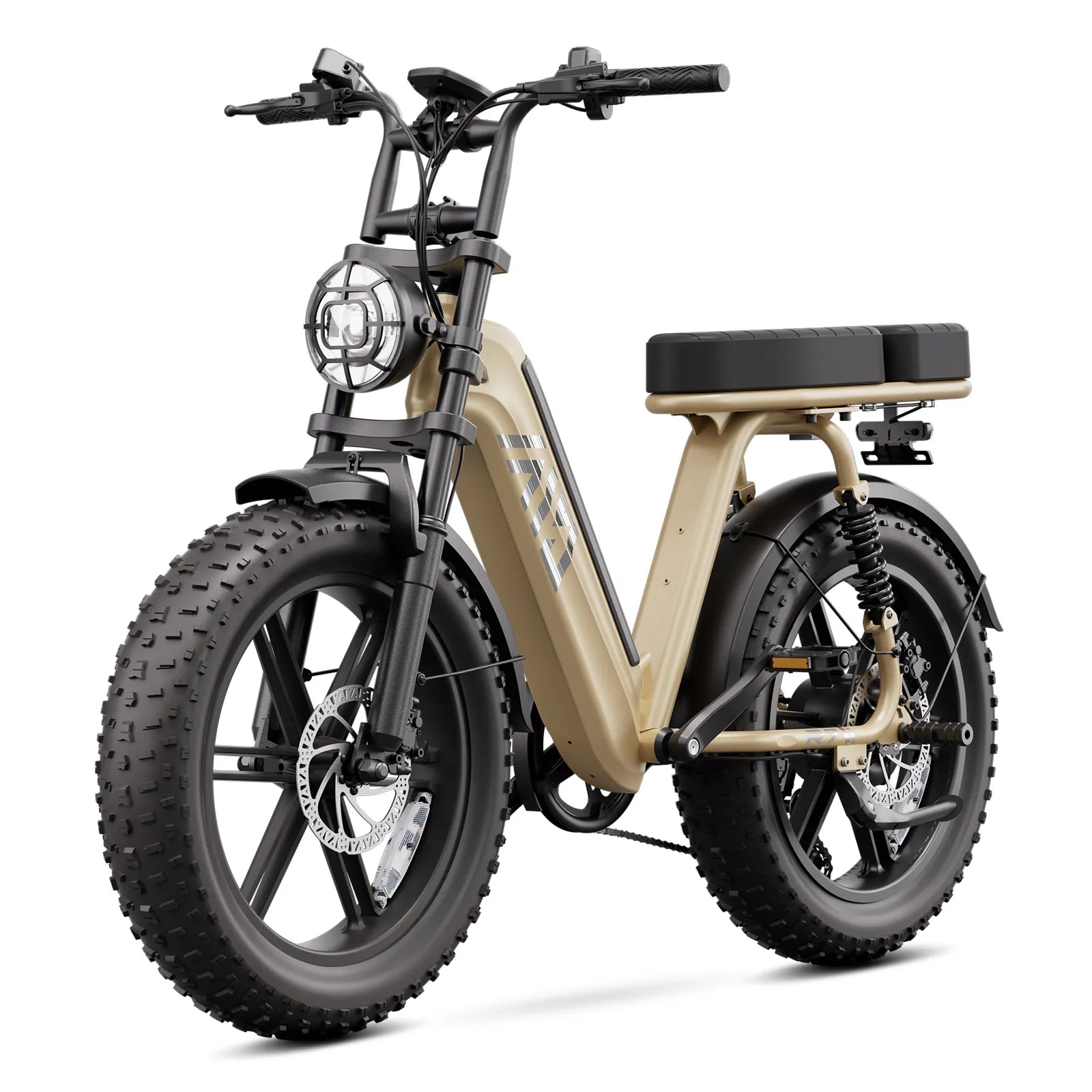
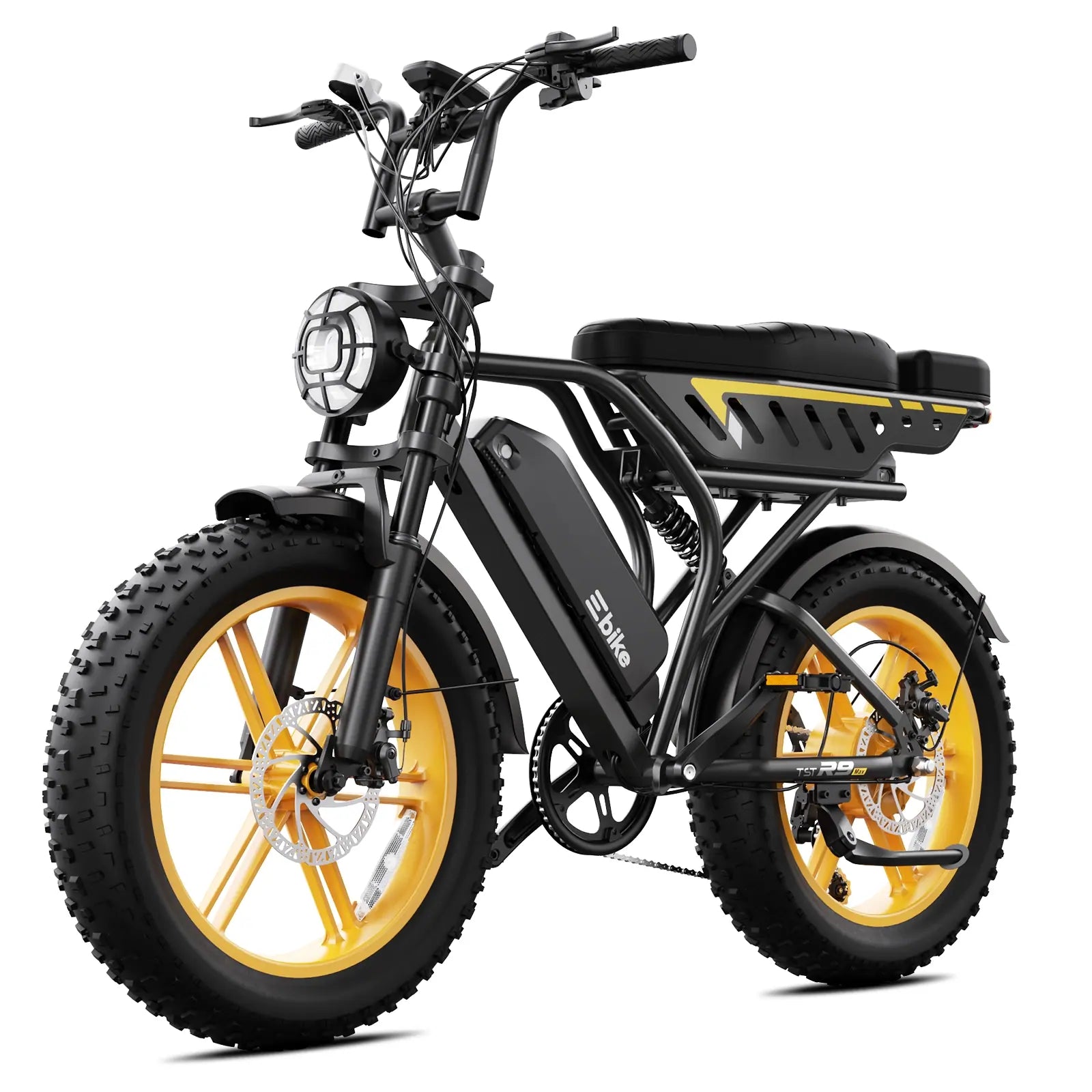
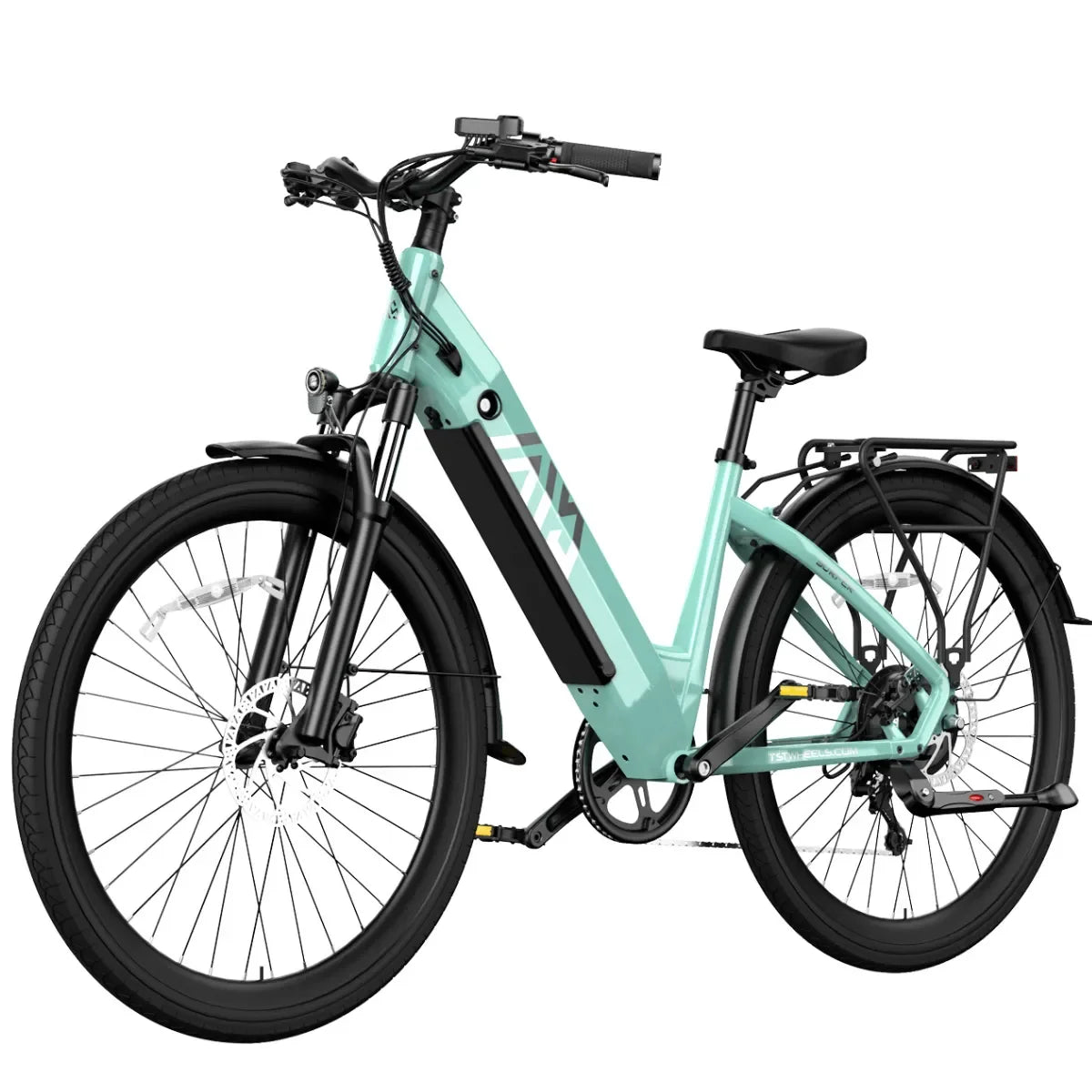
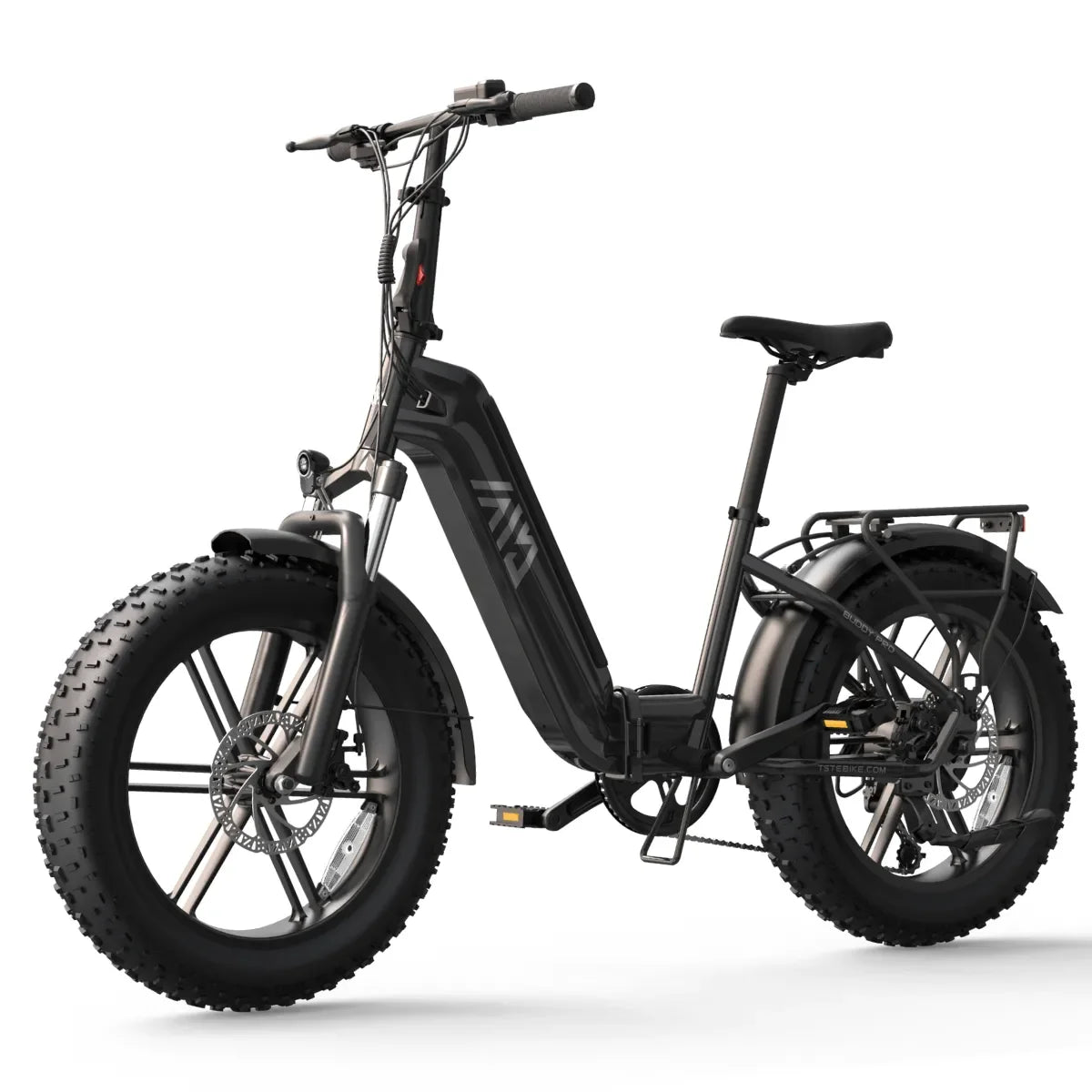
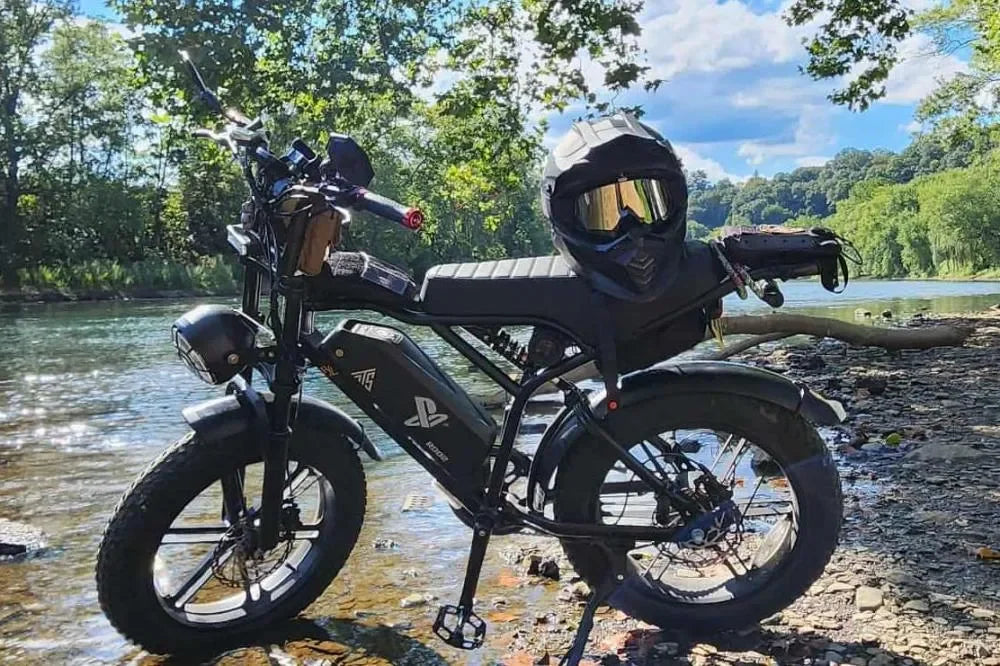
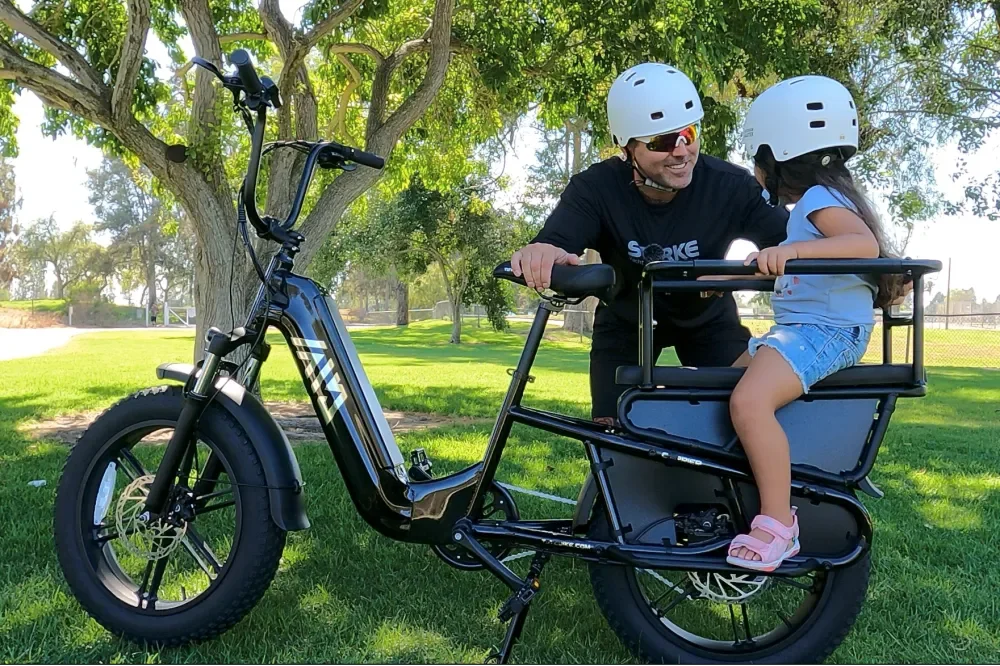
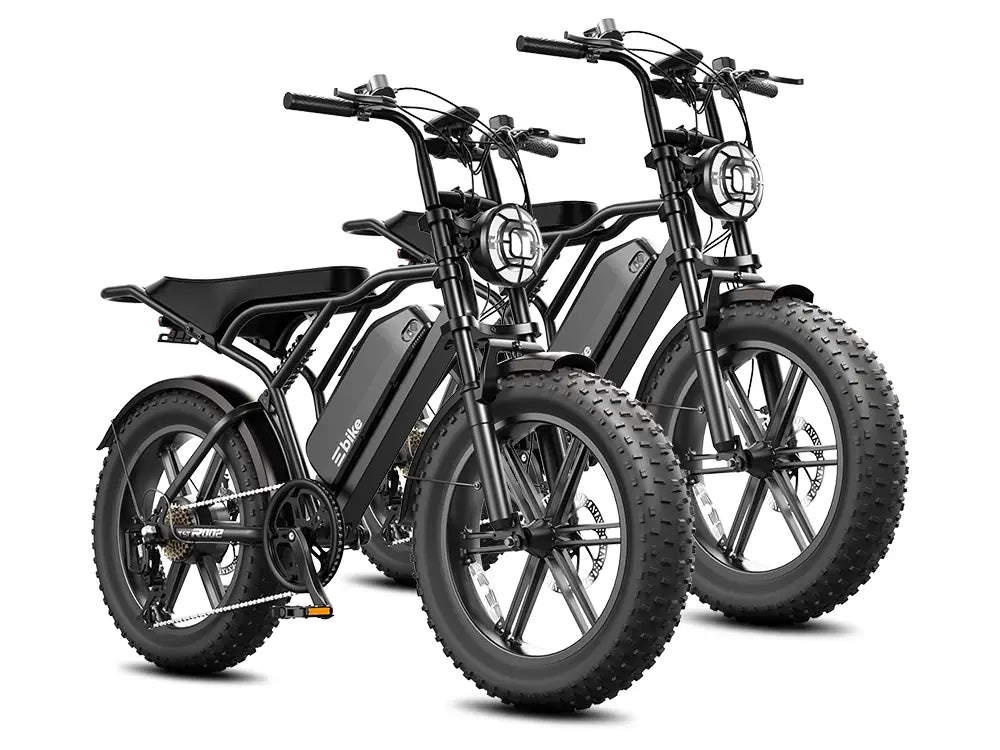
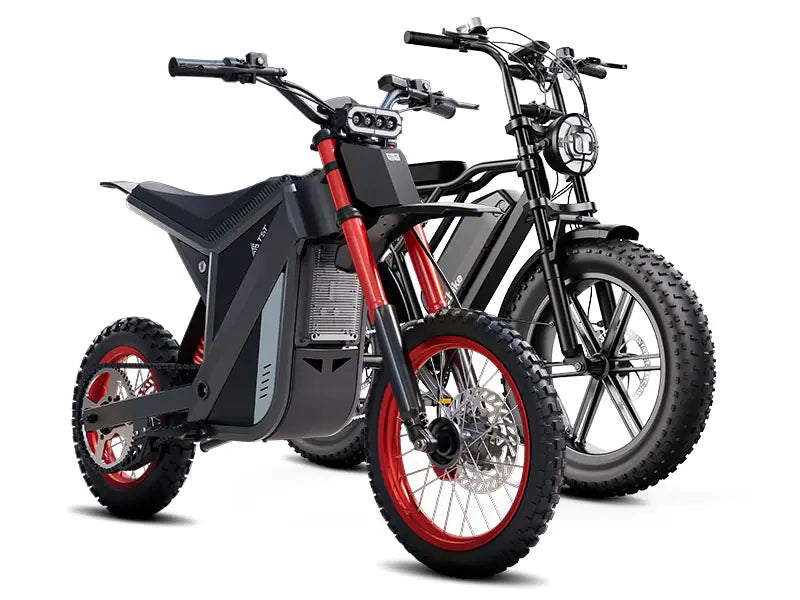
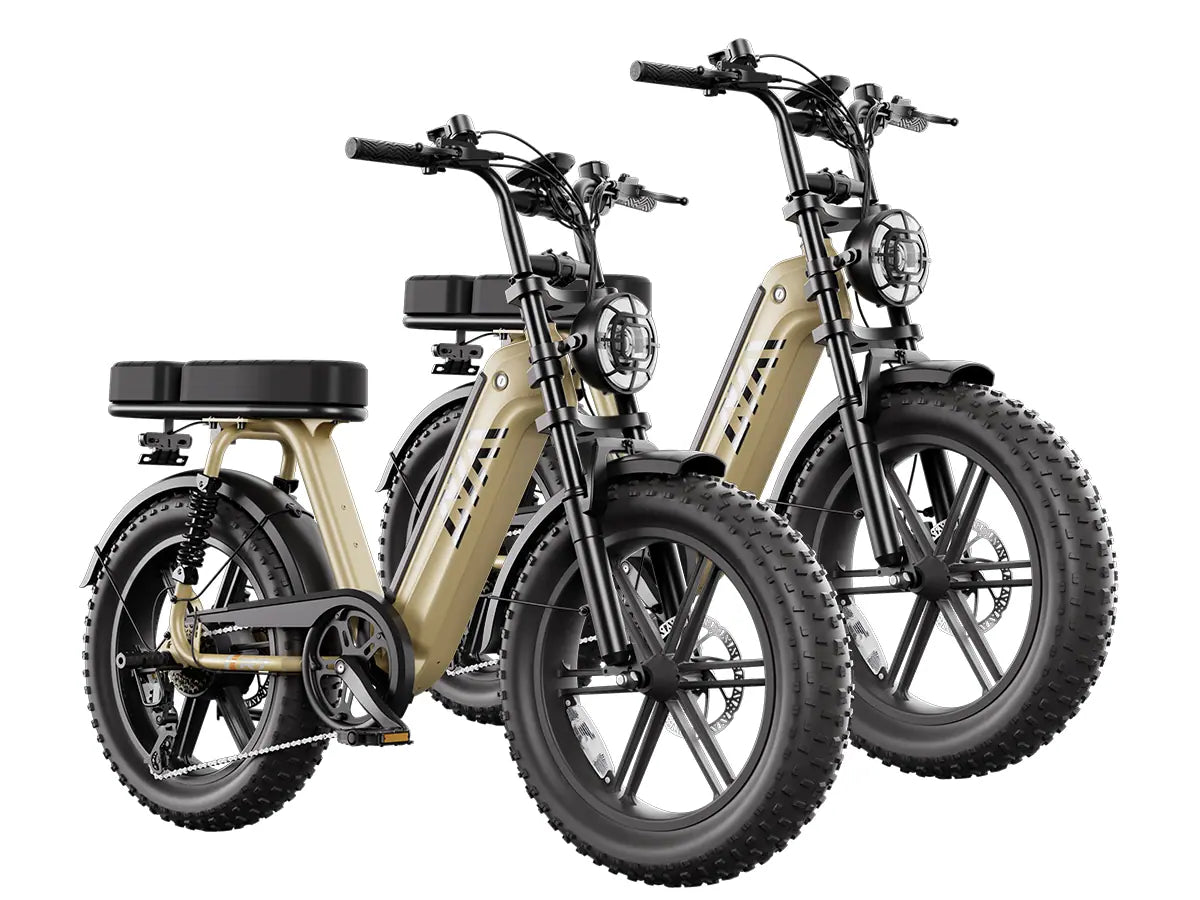
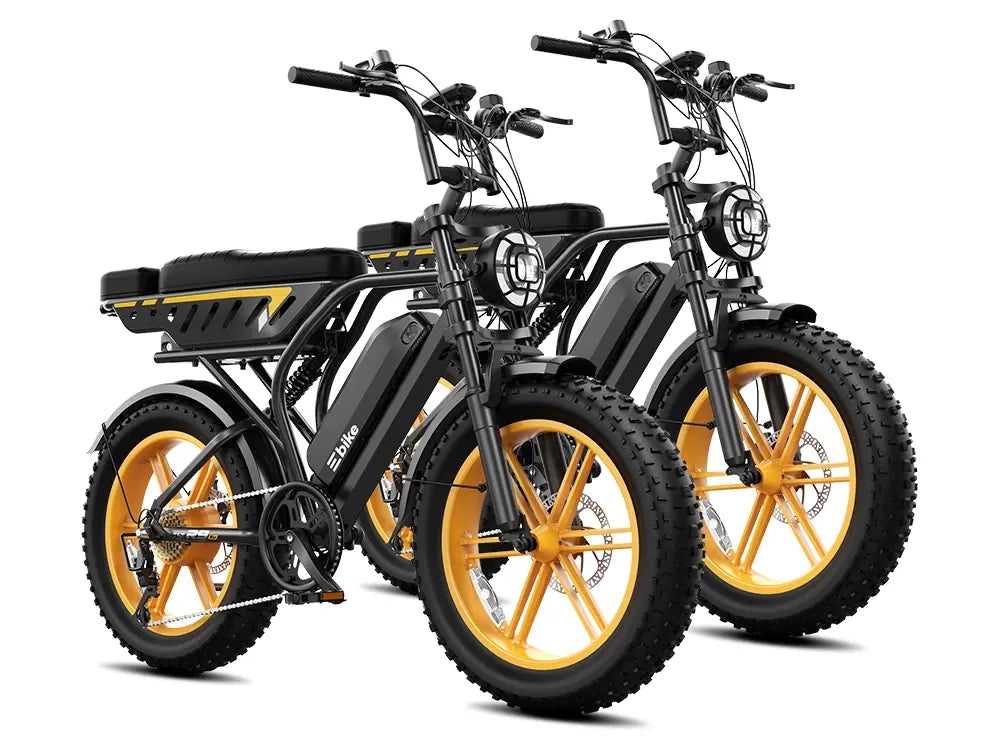
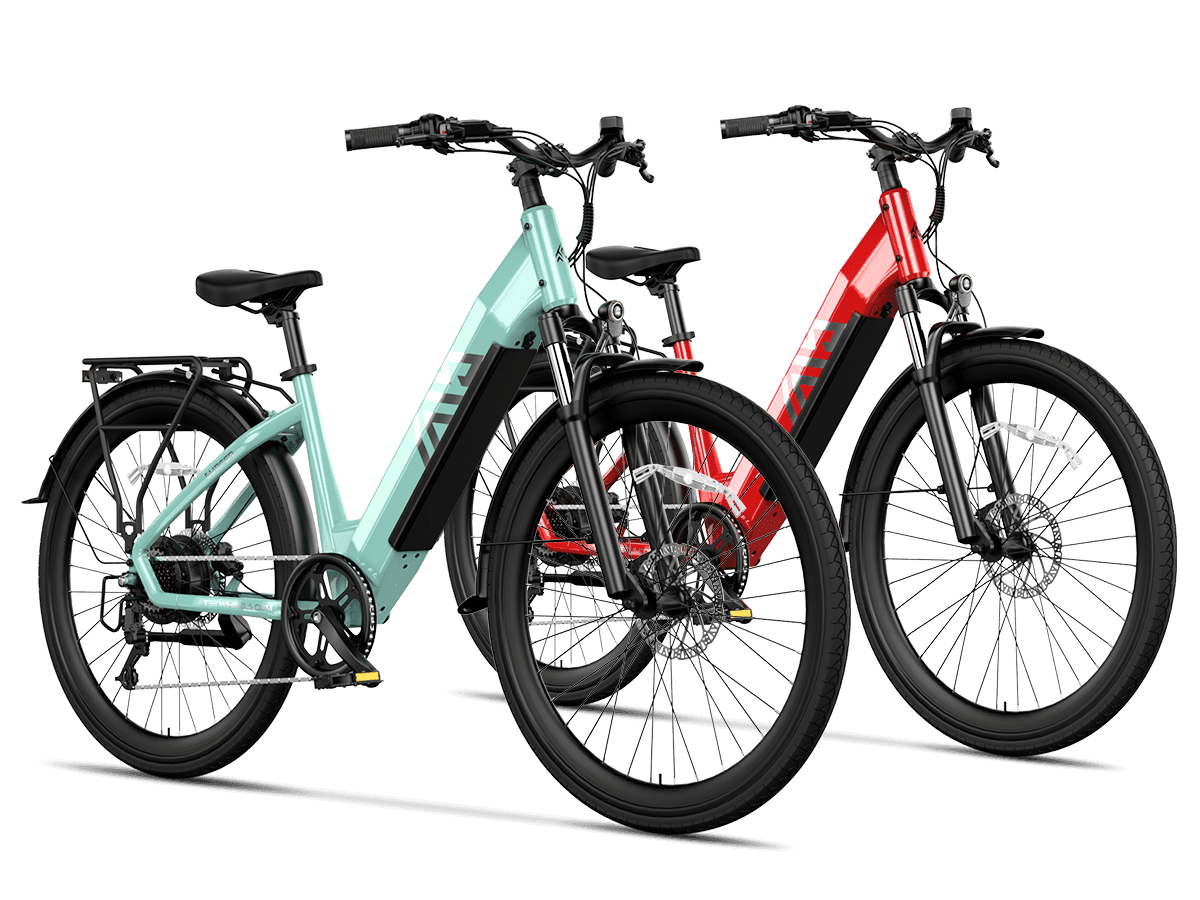
Yes, the TST R9 delivers genuinely long range, but the real number depends on how you ride. With two 48V batteries, the R9 can realistically cover 50-80 miles in mixed commuting, which is roughly double a single-battery bike. The catch is weight, charging time, and battery care, and understanding those trade-offs matters more than the headline mileage.
Key Facts
- Model: TST R9, a dual-battery moped-style e-bike with full suspension.
- Battery: two 48V packs, about 1,440Wh combined, both removable.
- Range: 25-40 miles with one pack, 50-80 miles with both.
- Testing: 30-day dual-battery range log covering daily commuting, mixed terrain, and charging frequency.
- Motor: 1,500W peak with smooth controller tuning.
- Support: California warehouse, shipping to over 10 countries.
Dual-Battery vs Single-Battery Design: How the R9 Works
The R9 carries two 48V batteries, one in the frame and one on the rear rack, which doubles capacity to roughly 1,440Wh and lets you ride far beyond single-battery range.
The system is simpler than it sounds: both packs feed the same controller, and the bike draws from them in sequence or together depending on load. The frame battery is the primary pack, and the rack-mounted second battery extends range without complicated wiring. Because both packs are removable, you can charge them separately, replace one if it degrades, and even carry a third pack for touring. The engineering is straightforward, which is why dual-battery bikes are becoming the standard for long-range commuting and delivery work.
What Is the Real Range with One Battery vs Two?
With one battery, expect 25-40 miles; with both batteries, expect 50-80 miles in real conditions, with low assist and flat roads pushing toward the top of that range.
Controlled testing used the same route, the same rider weight, and moderate assist. Single-battery rides averaged about 33 miles. Adding the second pack roughly doubled the usable distance to about 65 miles in mixed conditions. The math is not perfectly linear because the added weight costs some efficiency, but the R9 is clearly a 50-plus-mile bike with both packs. Riders who mostly do 15-25 mile loops can treat the second battery as insurance, while delivery riders and tourers will lean on it daily.
Charging time and routine for two 48V packs
Charging both packs takes about 8-10 hours with two standard chargers, or roughly 4-5 hours per battery, so overnight charging is the practical routine.
Each 48V pack charges in about 4-5 hours from empty, and you can charge them in parallel with two chargers or sequentially with one. For daily commuting, a full charge overnight is effortless. For delivery riders who need multiple shifts, a second charger at work or a spare pack is the smart setup. Fast charging is possible with compatible higher-amperage chargers, but the included charger is recommended for battery longevity, because heat is the main enemy of lithium cells.
How Does the Second Battery Affect Weight and Handling?
A second battery adds roughly 10-15 lb to the rear, which is noticeable when lifting the bike but acceptable in motion because the R9's frame is designed for it.
Weight distribution is the detail most reviews miss. The R9 places the second pack low on the rear rack, which keeps the center of gravity manageable. At speed, the bike feels stable, and the extra weight improves straight-line tracking on open roads. The trade-offs appear when you lift the bike, load it on a car rack, or ride tight switchbacks. For the range it buys, most riders accept the added weight; just budget for a sturdy kickstand and a ramp if you regularly move the bike.
Hill performance and open-road stability
The R9 climbs long hills steadily and holds cruising speed on open roads, with the dual-battery weight adding stability at higher speeds.
The motor's torque curve matters more than peak wattage. On a sustained 10 percent grade, the R9 maintained a steady climb without the surging and lagging that cheap controllers produce. On open roads at 25 mph, the added weight of the second battery made the bike feel calm and planted. The honest limitation is handling in tight spaces: with both packs mounted, the bike is longer and heavier, so slow-speed maneuvers and indoor storage require more room. For straight-line commuting and long-distance riding, the R9 is excellent.
Daily commuting and delivery practicality
Yes, the R9 is one of the best dual-purpose e-bikes for commuters and delivery riders, because its range removes mid-day charging and its rack carries real loads.
For commuters, the R9 means a full week of riding with only nightly charging and no range anxiety on detours. For delivery riders, the dual batteries support multi-shift days, and the rack carries bags and boxes securely. The removable packs make charging flexible, and the upright riding position suits hours in the saddle. The honest caveats are the weight and the longer charge time, which matter most to riders who must carry the bike upstairs. For riders with space and a regular long route, the R9 is a daily workhorse.
Battery care for a healthy dual-pack system
Charge both packs between 20 and 80 percent for storage, avoid deep discharge, and store them indoors away from extreme heat to protect the dual-battery investment.
Two batteries mean twice the care budget. The habits are the same as any lithium pack: avoid running either pack to empty, charge before storing, and never leave the bike in a hot car. Because the packs are removable, indoor storage is easy and doubles as theft protection. If one pack degrades faster than the other, the R9's design lets you replace just that pack instead of the whole system. A healthy pair of packs is what keeps the R9's 50-80 mile claim honest for years.
Which Riders Should Choose the R9 over a Single-Battery Bike?
Choose the R9 if your regular ride exceeds 25 miles, includes serious hills, or needs delivery-grade endurance; otherwise a single-battery model is lighter and simpler.
The R9 is purpose-built for distance. Riders with 30-plus-mile commutes, delivery shifts, or weekend tours will use the second battery every day and find the extra weight acceptable. Riders whose trips stay under 20 miles pay for capacity they never use, and a lighter single-battery model like the R002 will be easier to store and carry. The honest test is your longest regular day: if it fits on one charge with margin, you do not need the R9; if it does not, nothing else in the lineup removes range anxiety like this bike.
TST EBike Expert Views
"Dual-battery bikes live or die by two things: voltage stability and pack care. In our testing, the R9's two packs share the current draw, which keeps voltage high on long climbs and prevents the sag that single-battery bikes show on sustained grades. The mistake we see most often is owners storing one pack at 100 percent for weeks or letting one pack run dead while the other sits full. Keep both packs between 20 and 80 percent when you are not riding, charge them together at night, and replace a degraded pack on its own instead of abandoning the bike. Treated that way, the R9's range stays honest for years."
— TST EBike Product Testing Team (this article is written by TST EBike's editorial team, which works for the manufacturer)
Conclusion
The TST R9 delivers the range it promises: 50-80 miles with both batteries in real-world riding, with the flexibility of two removable packs. It is heavier and slower to charge than a single-battery bike, but for riders who measure rides in hours, the trade is easy to accept. If your commute, delivery route, or touring plan regularly exceeds a single charge, the R9 is the TST EBike that eliminates range anxiety.
Key Takeaways
- Plan around 50-80 miles with both packs and 25-40 miles with one.
- Charge both packs overnight and keep them between 20 and 80 percent.
- Expect about 8-10 hours to charge both packs with standard chargers.
- Use the second battery as daily range, not just insurance, if you ride long routes.
- Accept the extra weight and longer charge time as the cost of the range.
R9 Buyer Checklist
- Does my longest regular ride exceed what a single 48V pack covers?
- Do I have storage for a full-size, heavier dual-battery bike?
- Can I charge two packs overnight where I live?
- Will I actually use 50-80 miles, or would a lighter model serve me better?
- Do I need the rack and range for delivery or touring work?
Start with the TST R9 product page for the full specification, and compare it against the whole TST EBike lineup to confirm the range profile fits your routes. Combo pricing for the R9 is available in the ebike combo sale collection.
FAQs
Can the TST R9 really reach 80 miles? In ideal conditions with light assist, yes, but expect 50-65 miles in mixed real-world riding.
Do both R9 batteries need charging every night? Yes, if you ride daily, and both packs take about 4-5 hours each with the standard chargers.
Can I ride the R9 with only one battery? Yes, the bike runs fine on the frame pack alone, with range dropping to 25-40 miles.
Is the R9 good for delivery work? Yes, the dual batteries support multi-shift days, and the rack carries bags and boxes securely.
Sources
U.S. Fire Administration - Battery Fire Safety
U.S. Consumer Product Safety Commission - Micromobility: E-Bikes, E-Scooters and Hoverboards

Leave a comment
This site is protected by hCaptcha and the hCaptcha Privacy Policy and Terms of Service apply.