











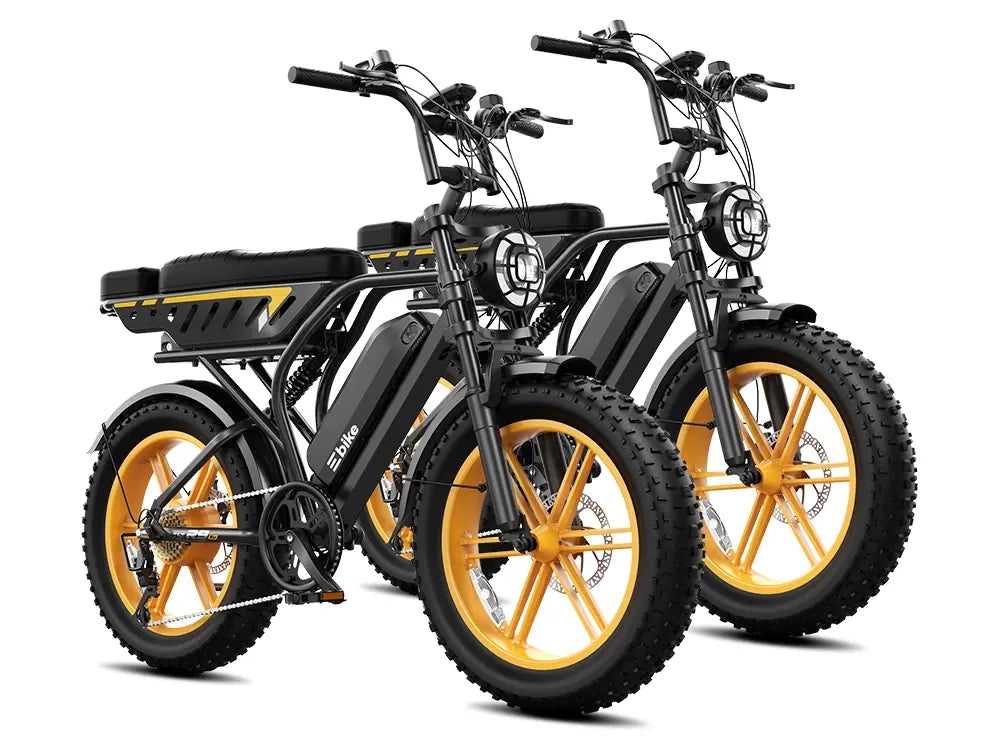

For packed-sand paths, boardwalks, and the ride to the coast, the best e-bike for beach riding is one that matches your local sand type—such as the $899 TST Surfer for firm surfaces or a 4-inch fat-tire model for soft powder. Prices and specifications were verified for August 2026. No electric bike is completely salt-proof, so the real differentiator is matching your tire width to the sand conditions while maintaining a disciplined saltwater care routine.
Which Sand Types Matter for E-Bike Tires?
Beach riding splits into two distinct surfaces. Packed sand near the waterline is firm enough for a standard tire and feels like smooth pavement; soft, dry sand above the tide line behaves like powder and punishes narrow tires regardless of motor power. Your first decision is which sand you will actually ride, and your second is how much of your ride is on roads getting there.
Most riders use beach paths, boardwalks, and packed sand, which is exactly what a 27.5-inch wheeled bike handles well. If you plan to cross open dunes, no road-oriented bike will be happy, and 4-inch fat tires at low pressure become the requirement.
Timing changes the sand as much as the tide: early morning packed sand is firmer and faster, while afternoon dry sand above the tide line is softer and deeper. Plan the ride around low tide for the best surface, and carry a pressure gauge because the ideal tire pressure shifts with the sand conditions. A fat-tire bike at 12 psi that floats at noon may sink at 20 psi an hour later.
On a crowded beach, ride like a pedestrian on foot: slow near families and towels, give walkers the packed lane, and never weave through sunbathers for speed. Beach e-bikes draw attention, and a cautious rider at 8 mph is safer and more welcome than a fast one threading through crowds. Carry a bell or call out before passing, and walk the bike through the most crowded sections entirely.
Remember that other beach users have priority: anglers with lines, children running between towels, and dogs off-leash are all unpredictable, and a motorized bike is the one that must yield every time. Ride with the expectation that someone will step into your path, and keep a finger on the brake at all times in the crowded zone.
Candidate Pool: Beach-Focused Models Compared
| Model | Price (August 2026) | Tires | Payload | Best Beach Role |
| TST Surfer | $899 | 27.5" x 2.25" | 400 lb | Packed sand and boardwalks |
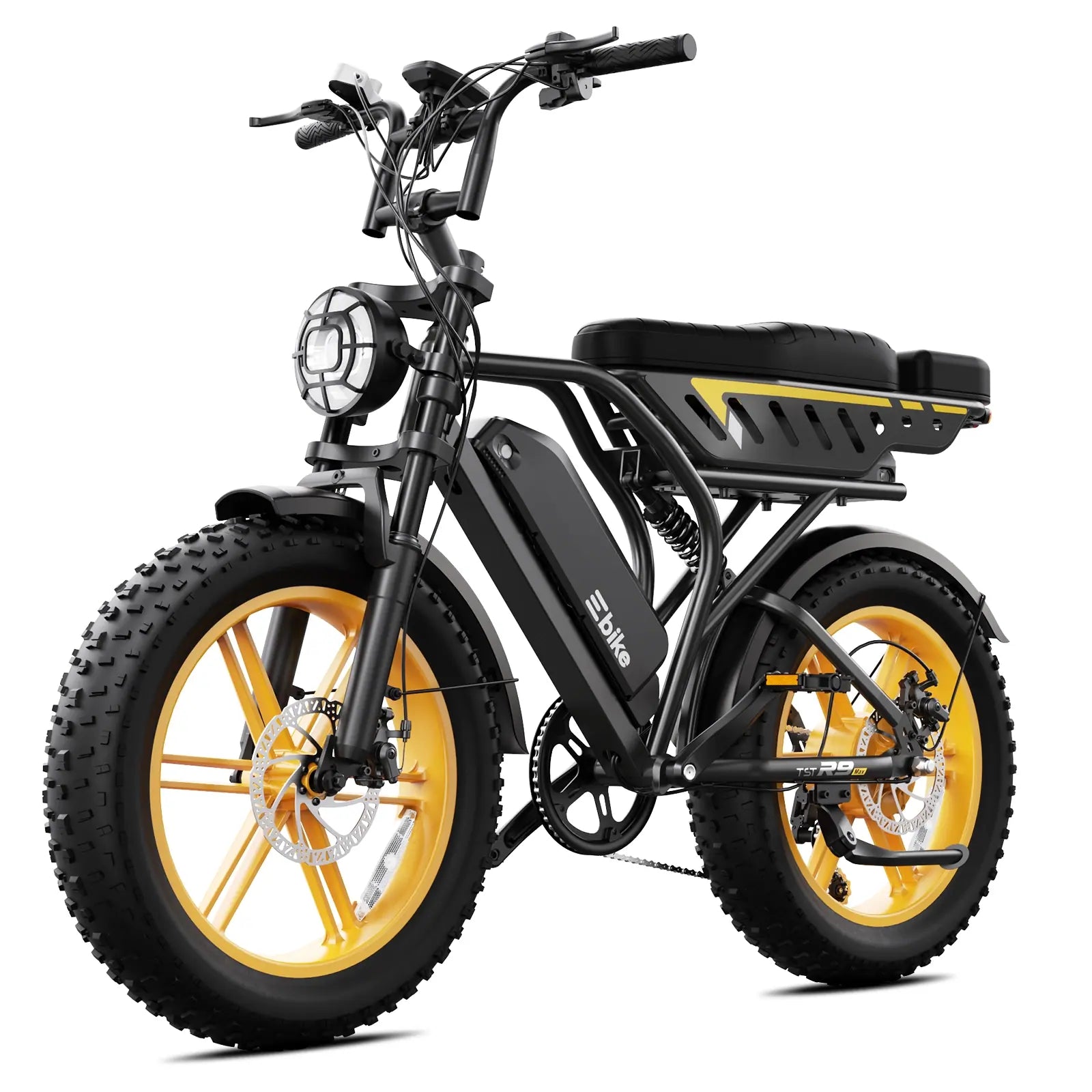
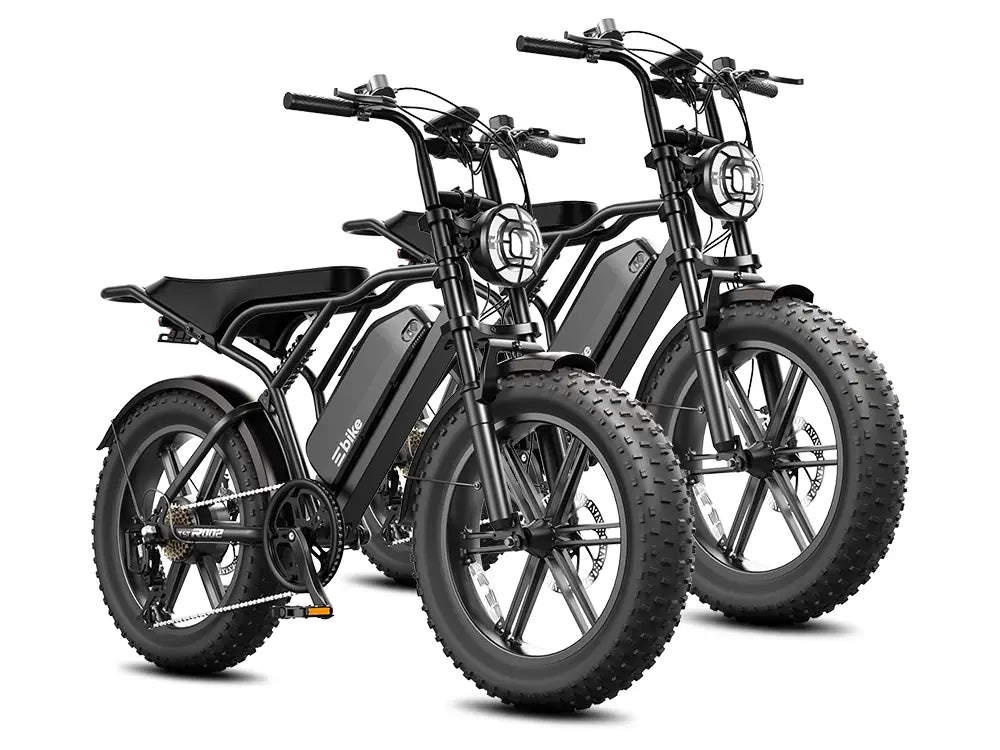
| TST R002 | $799 | 20" x 4" fat | 450 lb | Soft sand and mixed terrain |
| TST R7 | $799 | 20" x 4" fat | 450 lb | Soft sand with step-through comfort |
| Heybike Tyson | See official page | 20" x 4" fat | 400 lb | Soft sand, folding transport |
The pattern is clear: 27.5-inch wheels for speed and efficiency on firm ground, 4-inch fat tires for float on soft sand.
TST Surfer: The Pick for Packed Sand and Boardwalks
The Surfer combines a step-through frame, 27.5x2.25-inch tires, hydraulic disc brakes, a 1000W motor with 70 N·m of torque, and a 400 lb payload at an official sale price of $899. It rolls fast on pavement, tracks smoothly over boardwalk joints, and its upright geometry suits long, relaxed cruises with a beach bag on the rack.
Its 65-mile ideal range covers a full beach day plus the ride there and back, and the free fender and rear rack promotion adds practicality for wet swimsuits and gear. For the majority of beach riders who stick to paths and packed sand, it is the best-balanced choice.
TST R002 and R7: The Soft-Sand Picks from TST
The R002 and R7 both run 20x4-inch fat tires with a 450 lb payload and 90 N·m of torque, which is the combination that floats on soft sand and powers through loose patches. The R002 is the moped-style choice for power-focused riders; the R7 adds a step-through frame and full suspension for comfort-oriented riders. Both list at $799 in the August 2026 promotion.
The trade-off is rolling resistance: 4-inch fat tires are slower and less efficient on pavement, so the ride to the beach costs more battery. If your route is mostly roads with a soft-sand finish, either bike works; if it is mostly pavement, the Surfer is the better tool.
Heybike Tyson: The Soft-Sand Folder for Car Transport
The Tyson pairs 20x4-inch fat tires with a 720Wh battery, a 400 lb payload rating, and a folding frame, making it the practical choice for riders who drive to the beach and need the bike to fit in a trunk. Its fat tires at low pressure handle soft sand well, and the fold means no roof rack is required.
The trade-offs: its 20-inch wheels feel busier on pavement at speed, its range claim of up to 55 miles assumes ideal conditions, and support depends on the retailer or Heybike's channel. For soft-sand riding with car transport, it is a legitimate pick.
Surfer vs R002 vs Tyson: Matching Tires to Beach Types
For packed sand and boardwalks, the Surfer leads on speed, efficiency, and comfort. For soft sand, the R002 and R7 lead on power, payload, and float, with the R7 adding step-through ease. For soft sand plus car transport, the Tyson's folding frame is the deciding feature, at the cost of pavement efficiency. There is no universal beach bike; there is only the right tire for your sand.
If you ride one beach all season, buy for that sand. If you ride several beaches with different surfaces, choose the 4-inch tire and accept the efficiency cost, because float on soft sand is the harder problem to solve.
How Do You Protect a Beach E-Bike from Salt?
Salt is the real enemy of any beach e-bike. After every ride, rinse the drivetrain, brakes, and battery contacts with fresh water, dry the bike, and keep the chain lubricated. Salt spray corrodes cables, spokes, and connectors faster than mud, and neglected corrosion is not covered by warranty on any brand.
Budget for faster wear on chains, brake pads, and cables if you ride beaches weekly, and consider a full fender set (included on the Surfer's promotion) to keep salt spray off the drivetrain. A beach bike that is cleaned after every ride outlives one that is not by years.
Build a ten-minute beach-day routine: rinse the bike with fresh water before it dries, dry the chain and brake areas, apply chain lube once a week, and wipe the battery contacts and display connectors. Monthly, check for rust on spokes, cable ends, and rack bolts, and treat any spot immediately. The routine sounds small, but it is the single biggest factor in whether a beach e-bike rides well in season two.
Are E-Bikes Allowed on the Beach Where You Ride?
Many beach towns restrict motorized vehicles on the sand and some limit e-bikes on boardwalks, so check the local ordinance before your first ride. Beach rules are usually set by the city or county, not the state, and they change seasonally. Also confirm your bike's class for any road sections on the way to the beach: a 1000W model like the Surfer can exceed Class 1-3 limits in some states.
The bike choice does not change the law. Ride only where motorized bikes are permitted, and avoid protected dunes entirely; fines for illegal beach riding can be steep.
TST EBike Expert Views
"Beach buyers ask us which motor is best for sand, and the honest answer is that tires decide sand, not watts. A 4-inch fat tire at low pressure floats where a 2.25-inch tire digs in, and the R002 and R7 are built for exactly that. But most beach riding is packed sand and boardwalks, where the Surfer's 27.5-inch wheels roll faster and use less battery. The maintenance habit matters just as much: rinse the salt off after every ride, or the corrosion bill arrives in season two. Match the tire to the sand you actually ride, and keep the bike clean."
— TST EBike Customer Experience Team
Conclusion: Pick the Tire for Your Sand, Not the Loudest Spec
The TST Surfer is the best beach e-bike for packed sand, boardwalks, and mixed rides at $899; the TST fat-tire e-bike collection (featuring the TST R002 and R7) handles soft sand at $799; and the Heybike Tyson suits soft sand with car transport. None is salt-proof, so the care routine matters as much as the purchase. Know your sand, then pick the tire.
Beach Bike Decision Guide
-
Packed sand, boardwalks, and road riding: TST Surfer.
-
Soft, dry sand: TST R002 or R7 Fat Tires.
-
Soft sand plus trunk transport: Heybike Tyson.
-
Any beach riding: budget for post-ride rinsing and faster chain and brake wear.
Related reading: TST Surfer vs. Heybike Tyson: Which Beach Bike Wins?
Frequently Asked Questions About Beach E-Bikes
Can I ride my beach e-bike directly into seawater?
No. Even the best beach e-bikes are not waterproofed against direct saltwater submersion. Saltwater aggressively corrodes electrical connectors, chain links, and disc brake rotors. Always rinse your bike with fresh water immediately after riding near the coast.
Are fat tires always better for beach riding than standard tires?
Not necessarily. If you primarily ride on hard-packed sand, boardwalks, and paved bike paths, a standard 27.5-inch tire (such as the TST Surfer) rolls significantly faster and uses less battery. 4-inch fat tires are only required if you regularly navigate soft, dry, or deep powder sand.
Do e-bikes need special maintenance after a beach trip?
Yes. A strict 10-minute post-ride routine—including a freshwater rinse, chain drying, and regular lubrication—is mandatory. Neglected salt corrosion can seize components within a single season and is generally excluded from manufacturer warranties.

Leave a comment
This site is protected by hCaptcha and the hCaptcha Privacy Policy and Terms of Service apply.