


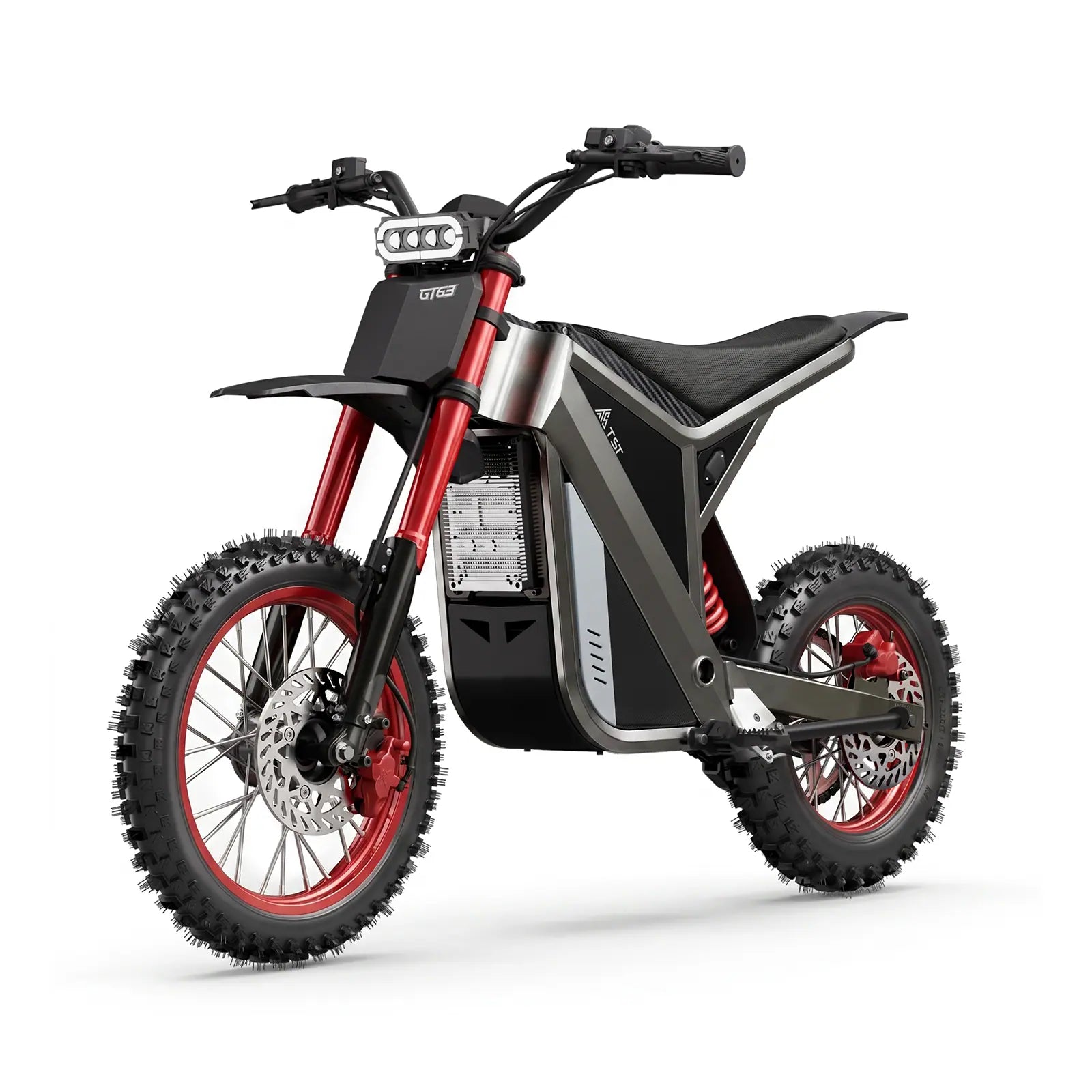














Ride mud with wide tires at low pressure, smooth throttle, and a relaxed body position. Fat tires at 6–12 psi float over soft ground instead of sinking, and a self-cleaning tread keeps its grip. Ease into the throttle to avoid wheel spin, shift weight back, and pick a line that keeps the bike moving forward.
Why Fat Tires Win in Mud
Wide tires spread the bike's weight over a large contact patch, so the bike rides on top of the mud instead of trenching into it. At low pressure, the casing deforms around ruts and roots, and the tread keeps enough clean lugs engaged to generate drive. Narrow tires sink and pack with mud, turning into slicks.
Tire Pressure for Mud
Run fat-tire pressures around 6–12 psi for deep mud, adjusting for rider weight — heavier riders run toward the upper end to avoid rim strikes. At these pressures, the contact patch lengthens and the tire's self-cleaning tread stays exposed. Check pressure before the ride; it changes the mud behavior completely.
Throttle and Body Position
In mud, smooth wins. Roll the throttle on gently instead of snapping it, use a lower assist level, and shift your weight slightly back to keep the driven wheel loaded. Keep your chest low and elbows bent so the front wheel can hunt for grip without pulling you off line.
Choosing a Line
Pick the line that keeps momentum: the firmest ground, the shortest path through soft sections, and a straight approach to climbs. Look ahead, not at the front tire, and commit to the line once you choose it. Hesitation in mud costs more speed than any obstacle.
Self-Cleaning Tread
Tread design matters as much as width. Tall, widely spaced lugs with open shoulders shed mud and water as the wheel turns, keeping fresh rubber edges in contact. After a mud ride, clean the drivetrain and tires thoroughly — dried mud wears components fast.
TST EBike's 26x4 Defender-class platforms are built for low-pressure mud riding, and the product pages confirm the tire spec.
Conclusion
Riding an e-bike in mud is about flotation, smooth power, and line choice. Air the fat tires down, roll the throttle on gently, shift weight back, and commit to a clean line. The TST EBike's Defender-class 26x4 platforms are built for exactly this, and TST EBike documents the tire and suspension setup on its product pages. Practiced this way, mud becomes a playground instead of a trap.
What tire pressure should I use for mud?
Around 6-12 psi for deep mud on fat tires, adjusted for rider weight.
Why do my tires spin in mud?
Abrupt throttle breaks traction. Roll on smoothly and shift weight back to keep the driven wheel loaded.
Are fat tires actually better in mud?
Yes — the wider contact patch provides flotation and grip that narrow tires cannot match.
How do I stop mud from packing my tires?
Use an open, self-cleaning tread at low pressure so lugs flex and shed mud as the wheel turns.
Should I use more power in mud?
No. More power usually means more wheel spin. Smooth, steady power wins in mud.
How do I clean my ebike after a mud ride?
Use low-pressure water on the frame, clean the drivetrain and tires thoroughly, and dry before storing.

Leave a comment
This site is protected by hCaptcha and the hCaptcha Privacy Policy and Terms of Service apply.