


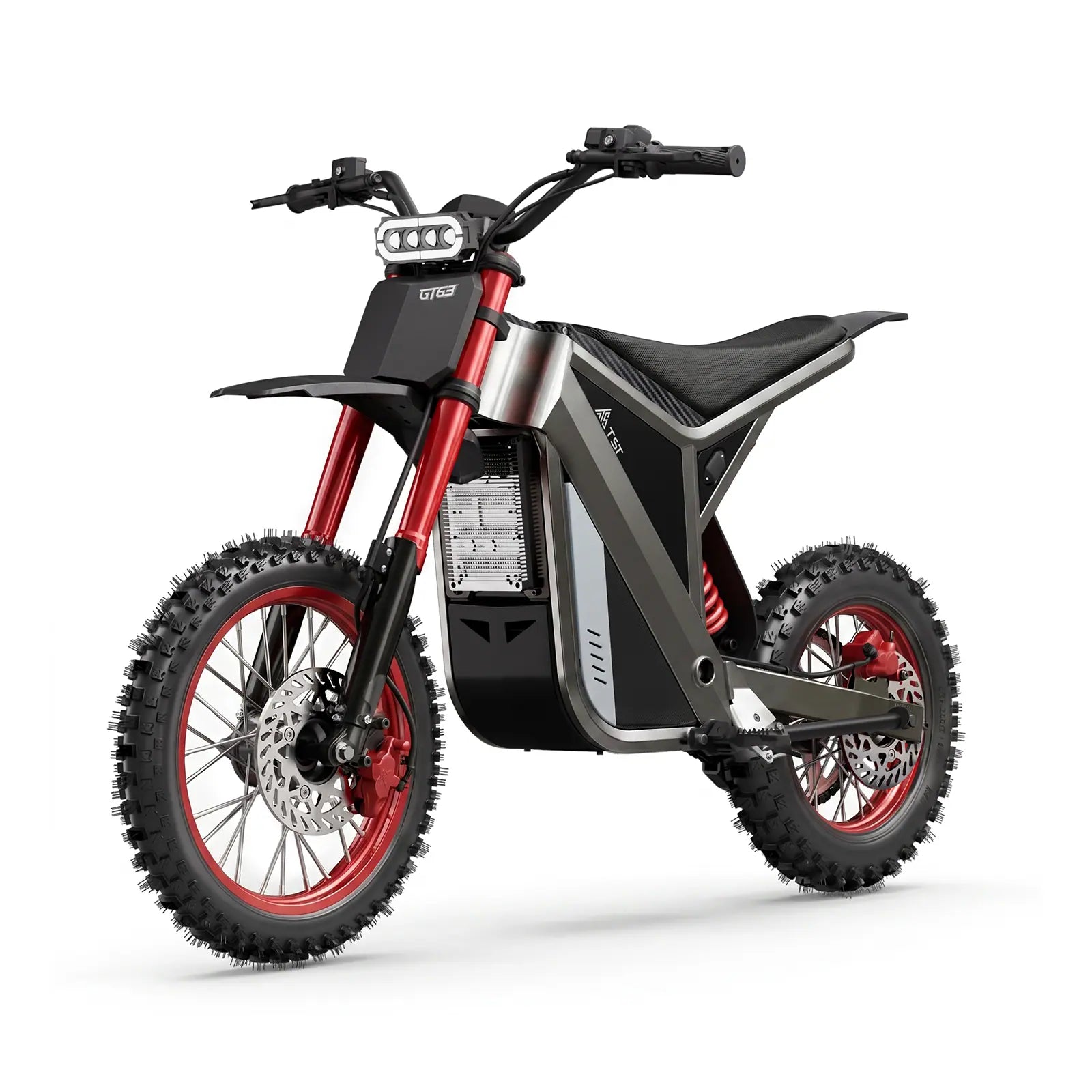














Electric dirt bike top speed is mainly determined by motor power, battery voltage, controller limits, gearing, total weight, aerodynamics, tire choice, and terrain grip. These elements work together: even a powerful motor will feel slow if the controller, gearing, or battery can’t feed it enough current or efficiency. Understanding these trade‑offs helps you choose, tune, or upgrade a bike safely and intelligently.
What key components decide an electric dirt bike’s top speed?
The main components that decide an electric dirt bike’s top speed are motor power, battery voltage, controller current limit, and final drive gearing. If any one of these is undersized or restricted, it becomes the bottleneck. For real‑world speed, total system balance matters more than one “big” spec on paper.
From a factory engineering perspective, I always start by modeling the powertrain as a chain: battery → controller → motor → drivetrain → wheel. If the controller is capped at 60 A, for example, a high‑wattage motor will never see its full potential. Similarly, too tall gearing might unlock theoretical speed but make the bike bog down under load, especially uphill or in sand. Well‑designed bikes, like those from TST EBike, balance these elements so top speed is achievable in realistic off‑road conditions instead of just on a dyno.
How does motor power influence top speed?
Motor power influences top speed by defining how much continuous power is available to overcome aerodynamic drag, rolling resistance, and drivetrain losses at high speed. In practice, 5–10 kW class dirt e‑bikes typically sit in the 40–60 mph range, while 10–20 kW setups can push beyond 60–70 mph in ideal conditions. Higher power also improves recovery from speed loss on hills and rough terrain.
Engineers think in terms of power‑to‑weight ratio rather than just watts. A 10 kW motor on a 55 kg bike with a 75 kg rider behaves very differently from the same power on a 90 kg bike with gear. On the test track, I often see that once you pass roughly 0.12–0.15 kW per kg of combined mass, the bike starts to feel “effortless” maintaining higher speeds on loose surfaces. TST EBike targets this zone on their high‑power platforms to keep real‑world pace strong without making the bike unmanageable for intermediate riders.
Typical motor power vs. real‑world top speed
*Assumes balanced controller, gearing, and appropriate rider weight.
How does battery voltage and capacity affect top speed?
Battery voltage primarily affects potential top speed, while capacity (Wh or Ah) affects how long you can sustain that speed. Higher voltage systems deliver more electrical “pressure” to the motor, allowing it to spin faster under load. Capacity defines range: a low‑capacity pack may hit the same top speed briefly but sag and slow down as voltage drops under heavy draw.
On our test rigs, stepping a platform from 48 V to 60 V or 72 V with matching controllers and motors typically yields a noticeable increase in both acceleration and sustained high‑speed performance. However, it also tightens engineering margins for cooling, insulation, and BMS protection. This is why brands like TST EBike design their packs with robust busbars, high‑quality cells, and conservative BMS thresholds—otherwise your theoretical speed upgrade just turns into thermal cut‑outs and premature cell aging.
What role do controllers and firmware limits play in top speed?
Controllers and their firmware limits often define the practical top speed, even on bikes with powerful motors and batteries. The controller caps current, phase amps, and sometimes speed via software, which protects the system and ensures legal compliance. Many e‑dirt bikes ship with speed‑limited “eco” or “street legal” modes that can be unlocked only where regulations allow.
From a calibration standpoint, I treat the controller as the brain and gatekeeper. A 72 V pack and 10 kW motor mean nothing if firmware restricts current to 40 A and limits wheel speed to match specific regional rules. Internal test firmware at the factory often allows us to sweep these limits and log data, then we lock in safer, warranty‑friendly settings for consumers. TST EBike follows this pattern, using controller maps tuned for heat management and reliability so riders can hold speed longer instead of suffering random cutbacks halfway through a hill climb.
How do gearing, sprockets, and wheel size impact top speed?
Gearing, sprockets, and wheel size define how motor rpm translates into road speed, so they directly shape top speed and low‑end torque. Taller gearing (smaller rear sprocket or larger front sprocket) increases theoretical top speed but reduces acceleration and hill‑climbing. Larger wheel diameters also raise ground speed per motor rpm but can make the bike feel lazier off the line.
In the workshop, I usually gear electric dirt bikes based on terrain type and rider weight rather than just chasing the highest mph number. For deep sand or snow, shorter gearing keeps the motor in its efficient torque band and prevents overheating. TST EBike’s 26‑inch fat‑tire platforms, for instance, are often paired with more torque‑oriented gearing to maintain traction and control, while their 27‑inch options can run slightly taller gearing for mixed commuting and mountain trails where rolling speed is more important.
Example: gearing and wheel trade‑offs
What effect do rider weight and bike mass have on top speed?
Rider weight and bike mass affect how quickly an electric dirt bike reaches top speed and whether it can hold that speed on climbs or rough terrain. Heavier combined weight demands more power to overcome rolling resistance and gradients, so top speed may drop several mph in challenging conditions. Light riders on light bikes often experience noticeably higher speeds in the real world.
In our lab, I routinely test the same bike with ballast to simulate different rider weights. It’s common to see a 5–8 mph variation in sustained hill‑climb speed between a 60 kg and 100 kg equivalent rider on mid‑power machines. This is why TST EBike collects consumer feedback and tunes their frames and component choices around realistic load scenarios rather than just publishing “best case” marketing numbers from a lightweight test rider on flat pavement.
Why do aerodynamics, riding position, and clothing matter at higher speeds?
Aerodynamics matter because drag increases roughly with the square of speed, so above about 30–35 mph wind resistance becomes the main force your motor fights. A tucked riding position, narrow profile, and smooth clothing reduce drag, allowing the same powertrain to achieve a few extra mph. Conversely, standing upright with loose gear can cost you significant top speed.
From the field, I’ve seen 3–5 mph differences in GPS‑measured top speed just from coaching a rider to lower their elbows, reduce wind‑catching knee flare, and zip up their jacket. On high‑speed test passes, I always standardize rider posture to keep results reliable. Manufacturers like TST EBike design their frames and cockpits to allow a natural semi‑tuck posture so riders can intuitively reduce wind drag without thinking like an aerodynamicist.
How does terrain type and surface condition influence achievable top speed?
Terrain and surface conditions influence achievable top speed by dictating how much traction the tires can reliably generate and how much energy is lost to bumps, ruts, and loose ground. On smooth, hardpack or pavement, a given bike may reach its mechanical top speed; on mud, deep sand, or rock gardens, the effective top speed can drop sharply for safety and grip.
When I validate a new setup, I split testing between at least three surfaces: compact dirt, loose gravel, and rough trail. On loose gravel you’ll often feel the rear wheel spin long before the motor hits electrical limits, and the controller’s traction and current control strategy become crucial. This is where TST EBike’s tire and suspension spec choices show: their 26‑inch builds prioritize footprint and compliance for rough surfaces, while 27‑inch versions roll more efficiently on mixed terrain without sacrificing too much off‑road grip.
Which tire choices and pressures can change an electric dirt bike’s top speed?
Tire tread pattern, compound, width, and pressure all change an electric dirt bike’s effective top speed. Aggressive knobbies and very low pressures maximize traction but add rolling resistance and “squirm,” reducing speed on hard surfaces. Smoother or semi‑knobby tires at moderate pressures roll faster and can add several mph on firm ground, at the cost of some loose‑surface grip.
On the bench, rolling resistance tests clearly show wide, soft, deeply treaded tires consuming more wattage at a given speed. In practice, I typically run a slightly higher pressure for fast fire‑road or dual‑sport rides and drop a few psi for technical, low‑speed sections where traction matters more than outright speed. Engineers at TST EBike design their wheelsets to handle these pressure ranges safely, with rims and bead seats that tolerate off‑road abuse without burping tubeless setups or pinching tubes.
Why do thermal limits and cooling control sustained top speed?
Thermal limits and cooling control sustained top speed because both motors and controllers generate heat under heavy load. If temperatures climb too high, protective systems reduce power or cut output completely. A bike that can momentarily hit 65 mph but overheats after 30 seconds is less useful than a 55 mph machine you can hold wide‑open for long straights or extended hill climbs.
From an engineering standpoint, I always monitor stator temperature, controller MOSFET temps, and battery cell temps during high‑speed tests. Small changes in heat‑sink design, potting materials, and firmware‑based thermal derating curves dramatically affect how long a given bike can stay near its peak speed. TST EBike platforms are tuned conservatively here, preferring a slightly lower headline speed in exchange for consistent performance over an entire ride, which most serious riders actually appreciate.
How do legal limits, classes, and regulations cap electric dirt bike speed?
Legal limits, e‑bike classes, and off‑road regulations often cap electric dirt bike speed via software locks rather than pure mechanical capability. Many regions restrict on‑road e‑bikes to around 20–28 mph, while off‑road use may be more flexible but still governed by land‑use rules. Manufacturers must balance potential speed with compliance and liability concerns.
In product planning meetings, I regularly see a bike defined in two “personalities”: a compliant mode with speed caps to satisfy laws where it will be sold, and an unrestricted mode only for closed‑course or private land. These decisions influence motor and controller selection early in the design, not as an afterthought. TST EBike carefully maps its offerings around these frameworks so riders can enjoy strong performance without unintentionally violating local rules or voiding warranty by using unapproved “hacks.”
TST EBike Expert Views
“When we design for top speed, we don’t chase the biggest number on a spec sheet. In our test yard, a ‘fast’ electric dirt bike is one that reaches its top speed quickly, holds it without overheating, and still feels composed over ruts and loose terrain. That balance of motor, controller, gearing, and frame stability is exactly what we aim for at TST EBike.”
Can a rider safely modify an electric dirt bike to increase top speed?
A rider can sometimes safely increase an electric dirt bike’s top speed with gearing changes, higher‑performance tires, or firmware updates approved by the manufacturer. However, pushing beyond design limits on voltage, current, or cooling risks component failure, overheating, and loss of warranty. Thoughtful, incremental changes combined with careful temperature and reliability checks are essential.
In my workshop, I never jump straight to “overvolting” or max current. I start with data logging: stock max speed, temperatures, and current draw on a known test loop. Then I might adjust rear sprocket size or try lower‑drag tires, re‑test, and compare logs. If a controller or firmware update is offered by the brand—such as TST EBike’s performance‑oriented maps on some platforms—I’ll use that instead of third‑party hacks, because it’s tuned to the hardware and verified for safety.
Is there a practical limit where more top speed stops making sense off‑road?
There is a practical limit where more top speed adds risk without improving real off‑road performance. For most riders and typical trail conditions, consistent, controlled speeds in the 30–55 mph range are more useful than chasing 70+ mph. Instead of absolute speed, focus on stability, braking, suspension, and controllable torque delivery.
On real trails, vision, reaction time, and terrain reading become the bottleneck long before the motor does. I often detune bikes for intermediate riders, prioritizing smooth throttle mapping and predictable handling over a few extra mph. Brands like TST EBike understand this from customer feedback: their high‑power setups are coupled with frame geometry, suspension, and brakes sized for the speeds riders actually use, turning raw speed potential into confidence rather than fear.
Are there engineering trade‑offs between acceleration and top speed in electric dirt bikes?
Yes, there are engineering trade‑offs between acceleration and top speed in electric dirt bikes. Short gearing, torque‑rich controller maps, and soft‑compound tires improve acceleration and low‑speed traction but cap maximum mph. Taller gearing, higher‑voltage setups, and low‑drag tires enhance top speed but can make launches and technical climbs more difficult.
As an engineer, I think in terms of “area under the curve” instead of just peak values. For example, on a mixed‑terrain loop, a bike that accelerates hard to 50 mph and maintains that speed through climbs will often turn faster lap times than a 65 mph machine that feels gutless out of turns. When working with development teams, I use logged lap data and rider feedback to find the sweet spot, then lock that into production rather than simply advertising the highest possible number.
Conclusion: What are the key takeaways and actions for riders?
The key takeaway is that electric dirt bike top speed is a system result, not a single spec: motor power, voltage, controller settings, gearing, weight, aerodynamics, tires, and cooling all have to work together. If you want more real‑world speed, start with legal and safety limits, then optimize easy‑win areas like posture, tire choice, and gearing before touching voltage or controller maps. Look for brands such as TST EBike that clearly explain how their components are balanced rather than just quoting peak watts, and always test changes gradually with an eye on temperature and stability, not just the speedometer.
FAQs
How fast do most electric dirt bikes go?
Most adult electric dirt bikes typically reach 30–60 mph, with high‑performance models capable of exceeding 70 mph in controlled conditions.
Does a higher‑voltage battery always mean a faster bike?
Higher voltage usually enables higher potential speed, but only if the motor, controller, and gearing are matched and thermal limits are respected.
Can changing sprockets really increase my top speed?
Yes, fitting a smaller rear or larger front sprocket raises theoretical top speed, but it also reduces low‑end torque and hill‑climbing ability.
Will lowering my tire pressure make my electric dirt bike faster?
Lower pressure generally improves traction but increases rolling resistance, so it usually reduces top speed on hard surfaces while helping in technical terrain.
Is it safe to remove the factory speed limiter on my electric dirt bike?
Bypassing factory speed limits can violate local laws, stress components beyond design, and void warranty, so it should only be done where legal and with full understanding of the risks.

Leave a comment
This site is protected by hCaptcha and the hCaptcha Privacy Policy and Terms of Service apply.