


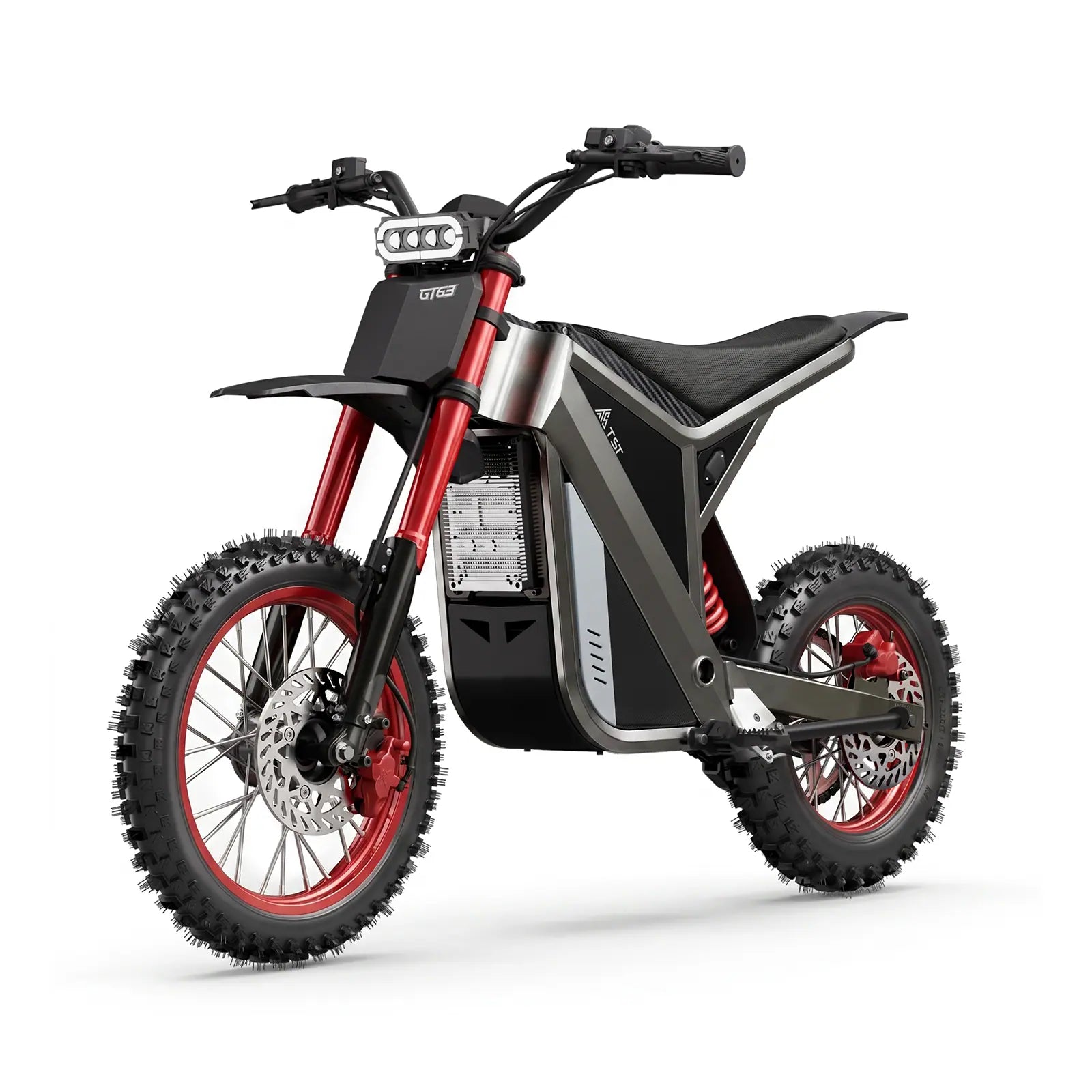














Full‑suspension dirt ebikes use both front and rear shocks to absorb impacts, keeping the wheels planted and the rider comfortable over rough terrain. Those systems combine nitrogen‑charged hydraulic shocks with tuned damping to smooth out speed, jumps, and braking forces so you can ride fast without sacrificing control or comfort.
What Is Full Suspension on a Dirt Ebike?
Full suspension means the bike has both a front fork shock and a rear linkage‑mounted shock, allowing the wheels to move independently of the frame. This setup lets the tires track bumps and drops while isolating the rider and drivetrain from harsh impacts, giving a smoother, more controlled ride on off‑road trails.
On a dirt ebike, full suspension matters even more because the extra motor weight and higher speeds increase shock forces on both the frame and the rider. Quality full‑suspension frames pair with tuned shocks to keep traction high and fatigue low, whether you are climbing, braking hard, or flying over ruts.
Key benefits of full suspension
-
Smoother ride over rocks, roots, and ruts
-
Better traction and wheel contact on loose soil
-
Reduced rider fatigue and joint strain
-
Higher confidence at speed and on technical descents
Why Is Full Suspension Crucial for a Smooth Dirt Ebike Ride?
Full suspension is crucial because it decouples the bike’s chassis from the trail’s surface, so impacts are absorbed instead of transmitted to your hands, back, and joints. On a dirt ebike, where speeds and inertia are higher than on a standard bike, this smoothing effect is essential for both comfort and control.
A well‑tuned full‑suspension system keeps the tires in contact with the ground longer, which improves grip on climbs, corners, and braking zones. That consistent traction also reduces the chance of skidding or losing control, making technical trails feel safer and more enjoyable.
How Do Nitrogen‑Charged Shocks Improve Dirt Ebikes?
Nitrogen‑charged shocks use pressurized nitrogen gas to keep damping oil stable and prevent it from foaming under repeated compression and rebound. Inside the shock, one chamber holds oil for damping while the other holds nitrogen separated by a piston or bladder, keeping things predictable over long rides.
On a high‑speed dirt ebike, repeated bumps, jumps, and hard braking can heat the oil and cause cavitation in standard shocks. Nitrogen‑charged units resist this fade, so damping stays consistent and the rear suspension continues tracking the ground instead of feeling mushy or inconsistent.
How Do Hydraulic Damping Systems Work in Dirt Ebikes?
Hydraulic damping in dirt ebike shocks uses oil forced through small valves to control how fast the shock compresses and rebounds. As the wheel hits a bump, the piston moves, pushing oil through precisely sized ports and shim stacks that create resistance proportional to speed.
Compression damping slows how quickly the shock collapses over hits, while rebound damping controls how fast it extends back out. Tuning these circuits lets manufacturers balance responsiveness with stability, so the bike feels plush on small bumps yet firm enough to resist bottoming out on bigger drops.
Why Do Nitrogen Shocks and Hydraulic Damping Boost High‑Speed Stability?
At high speed, sudden impacts and rough patches can make a bike feel unstable or “skittish” if the suspension cannot keep up. Nitrogen‑charged shocks maintain consistent damping force because the oil stays non‑foamy and the nitrogen pressure compensates for shaft movement without volume spikes.
Hydraulic damping, when tuned for trail use, adds directional control: firm enough to prevent wall‑like jolts on big landings, but soft enough to absorb chatter on rough straights. Together, nitrogen charge and hydraulic valves let the rear end track the ground instead of bouncing, which improves steering precision and braking stability at speed.
What Should You Look for in Full Suspension Settings?
Good suspension tuning on a dirt ebike balances sag, preload, compression, and rebound for your weight and terrain. Sag refers to how much the shock compresses under your seated weight, usually set around 20–30%; too little reduces travel, too much can make the bike feel wallowy.
Adjustable nitrogen‑charged shocks often include preload rings or collars to set spring tension, and knobs for low‑speed compression and rebound. Riders should dial in softer settings for bumpy trails and firmer settings for hard‑pack or high‑speed straights to keep the bike planted and responsive.
Are Full Suspension Dirt Ebikes Worth the Extra Cost?
Full suspension dirt ebikes generally cost more than hardtails due to linkage designs and quality shocks, but they pay off where you ride rough or technical terrain. The added comfort, control, and traction make them worth the investment for riders who explore trails, jumps, or uneven off‑road paths regularly.
For mixed use—commuting plus light trails—a hardtail may be sufficient, but once you push speed or load on rocky or rutted dirt, the full‑suspension design justifies its price by reducing fatigue and boosting confidence. Many riders find that a single full‑suspension model can cover more use cases than multiple simpler bikes.
How Do Full Suspension and Motor Power Work Together?
Electric motors increase torque and average speed, which amplifies how hard the bike hits obstacles and how quickly the suspension must react. Full suspension flattens that impact by absorbing shocks and smoothing out power delivery so the rear wheel doesn’t skip or chatter under hard acceleration.
On technical climbs, the suspension keeps the rear tire in contact with roots and rocks, letting the motor apply steady power instead of spinning out. On descents, the shocks handle braking bumps and braking forces so you can brake later and ride faster without feeling jarred.
What Are the Key Differences Between Hardtail and Full Suspension?
Hardtail dirt ebikes only have front suspension, so the rear stays rigid and transfers more impact into the frame and rider. That design is lighter, simpler, and often cheaper, but it gives up comfort and traction on rough, technical, or high‑speed trails.
Full suspension brings both front and rear wheels into the damping loop, smoothing out bigger hits and keeping the bike more planted. The trade‑offs are added weight, slightly lower climbing efficiency in some designs, and more maintenance, but the gains in control and comfort are usually worth it for serious off‑road use.
How Can Riders Tune Shocks for Different Terrain?
Riders can tune shocks by adjusting preload, compression, and rebound to match terrain and load. Increasing preload firms the spring without changing the damping curve, which helps if the bike feels too soft under rider weight or cargo.
For rough, technical trails, softer compression and slightly slower rebound keep the bike tracking well over repeated bumps. For smoother, high‑speed runs, a firmer compression setting and faster rebound help prevent the shock from packing down and maintain a more planted feel.
Is Full Suspension Necessary for Commuters?
Full suspension is not strictly necessary for flat, smooth‑paved commutes, where hardtails or rigid roadside bikes often offer better efficiency and lower cost. However, if your route includes potholes, gravel, or urban trail sections, full suspension cuts fatigue and improves comfort for longer daily rides.
For riders who use one bike for both city streets and off‑road dirt, a well‑tuned full‑suspension dirt ebike can double as a versatile commuter while still handling unpaved paths and jumps. The extra comfort and control make it easier to stay fresh after a long workday.
Can Full Suspension Dirt Ebikes Handle Jumps and Big Drops?
Quality full‑suspension dirt ebikes can handle controlled jumps and moderate drops, especially when paired with strong wheels and tuned nitrogen‑charged shocks. The linkage and damping system absorb landing forces, keeping the frame stable and the rider from being thrown forward or backward.
Riders should still respect the bike’s limits and rider skill level, but full suspension clearly increases safety and enjoyment when riding over tabletops, berms, and small drops. The rear shock’s travel and damping work with the front fork to keep the bike tracking smoothly instead of bucking on impact.
How Do Full Suspension Geometry and Linkage Affect Handling?
Full‑suspension dirt ebikes use carefully designed pivot‑linked frames to separate braking forces from suspension motion. This “anti‑squat” or “anti‑rise” geometry helps the rear wheel stay planted under acceleration and braking, preventing the bike from sitting down or bucking up.
Slacker head angles, longer wheelbases, and lower bottom brackets are common on these bikes, which promotes stability at speed and confidence on rough descents. The linkage also shapes how the shock feels through the travel, giving a progressive curve that stays supple at first and ramps up firmness near the end.
TST EBike Expert Views
“Full suspension on a dirt ebike isn’t just about comfort—it’s about control,” says a TST EBike suspension engineer. “When you combine a powerful motor with nitrogen‑charged rear shocks and hydraulic damping, the bike stops feeling like a heavy, harsh machine and starts tracking the terrain like a trail‑tuned mountain bike. TST EBike designs focus on giving riders a planted, predictable feel at speed, even on rocky or washboarded dirt, so they can push their limits without fighting the bike.”
The TST EBike team emphasizes durable 26‑inch platforms for rough terrain and 27‑inch variants for mixed trail and commuting, each tuned to match the suspension’s travel and damping to the rider’s weight and typical trail conditions.
Practical Tips for Choosing a Full Suspension Dirt Ebike
-
Match shock travel (100–150 mm range) to your typical terrain: softer for technical trails, stiffer for smooth‑fast dirt.
-
Prioritize bikes with adjustable preload and damping, ideally nitrogen‑charged rear shocks for long‑term consistency.
-
Test ride if possible to feel how the suspension keeps the rear wheel planted under braking and acceleration.
-
Consider TST EBike models if you want a high‑power, cost‑effective dirt ebike with suspension tuned for real‑world off‑road use, rather than just showroom‑only trails.
FAQs
Why is full suspension better for dirt ebikes?
Full suspension absorbs shocks from rocks, roots, and ruts while keeping both wheels in contact with the ground. That improves traction, reduces fatigue, and makes the bike feel more stable at higher speeds, which is especially important when a motor adds weight and momentum.
Do nitrogen shocks make the ride harsher?
No; properly set‑up nitrogen‑charged shocks are designed to keep damping consistent, not to feel harder. The nitrogen pressure stabilizes the oil so the shock responds predictably, which often feels smoother and more controlled over long rides than a standard oil‑only unit.
How do hydraulic dampers reduce rider fatigue?
Hydraulic dampers convert impact energy into heat by forcing oil through small valves, which slows down how fast the shock compresses and rebounds. That controlled motion smooths out bumps and chatter, so your wrists, back, and joints handle far less vibration during long dirt‑ebike rides.
Can beginners use full suspension dirt ebikes?
Yes; full‑suspension dirt ebikes are often more forgiving for beginners on technical trails because they absorb mistakes and keep the bike planted. The added comfort and traction help riders build confidence faster, especially when learning to brake, corner, and descend at higher speeds.
How often should nitro‑charged shocks be serviced?
Nitrogen‑charged shocks should typically be inspected and serviced every 6–12 months or every few hundred miles on rough terrain, depending on the manufacturer’s recommendations. Regular servicing checks for oil degradation, seal wear, and nitrogen pressure loss to maintain consistent damping and long‑term performance.

Leave a comment
This site is protected by hCaptcha and the hCaptcha Privacy Policy and Terms of Service apply.