
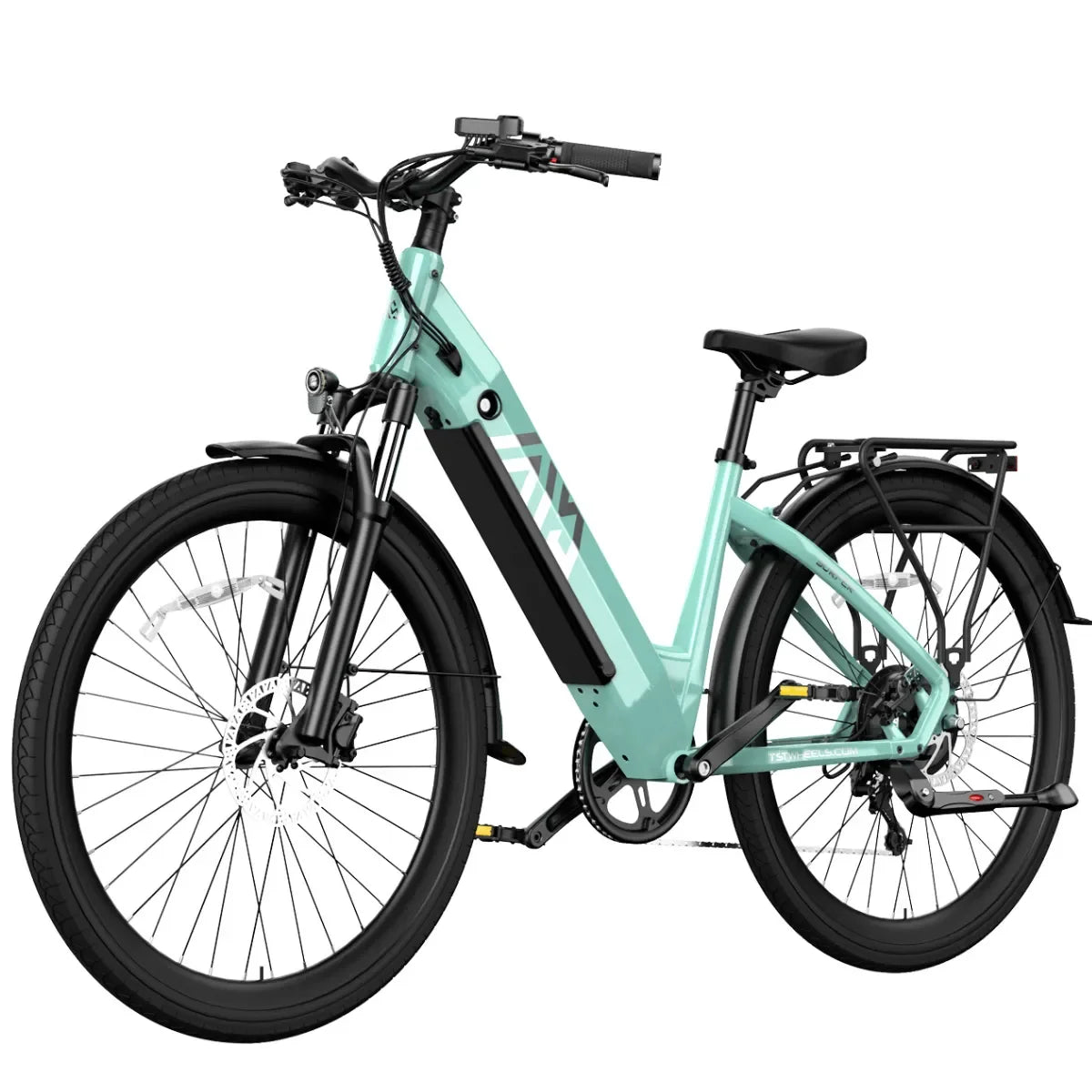
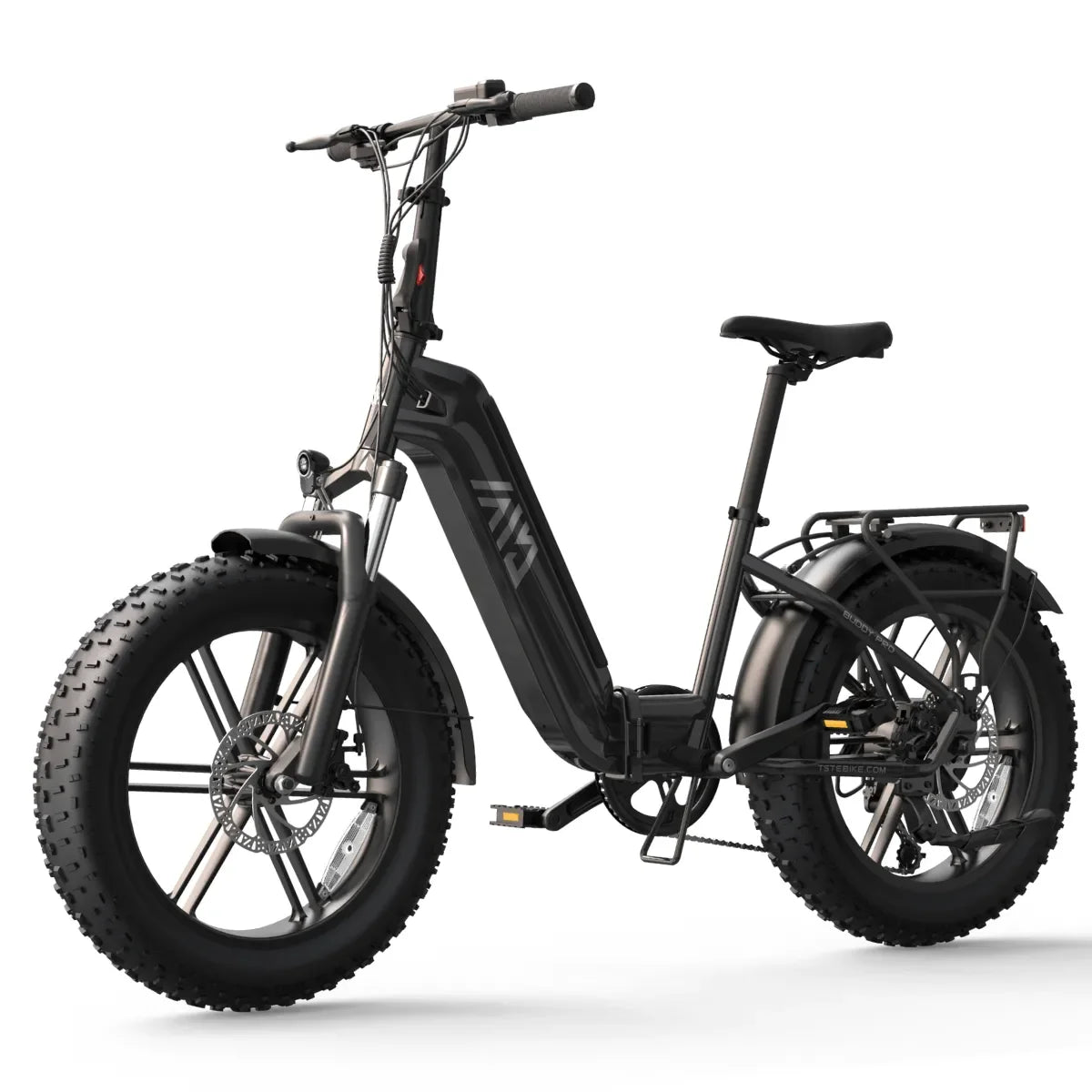

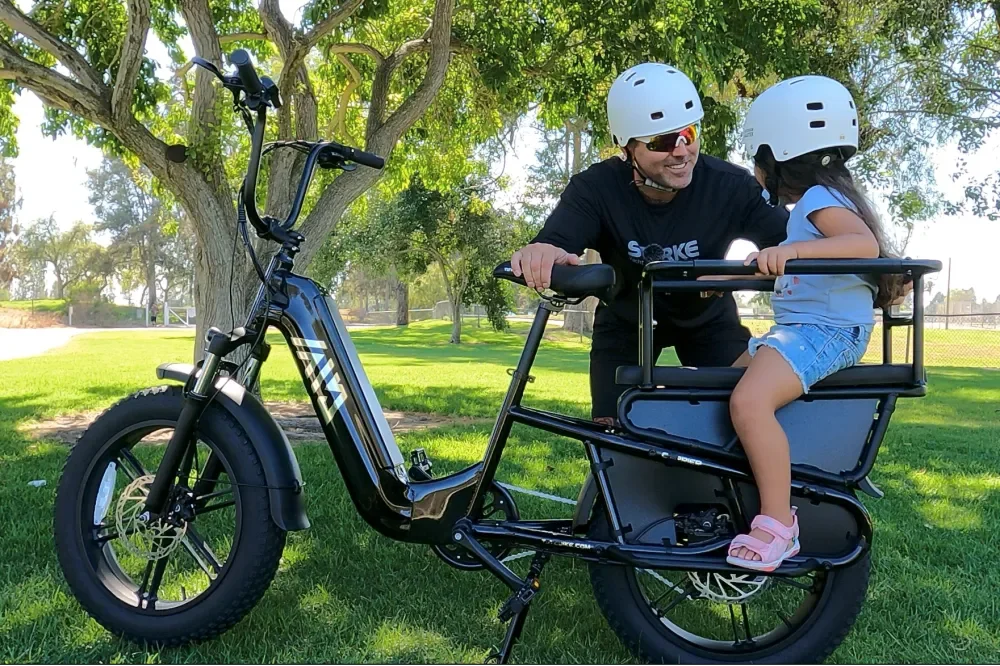


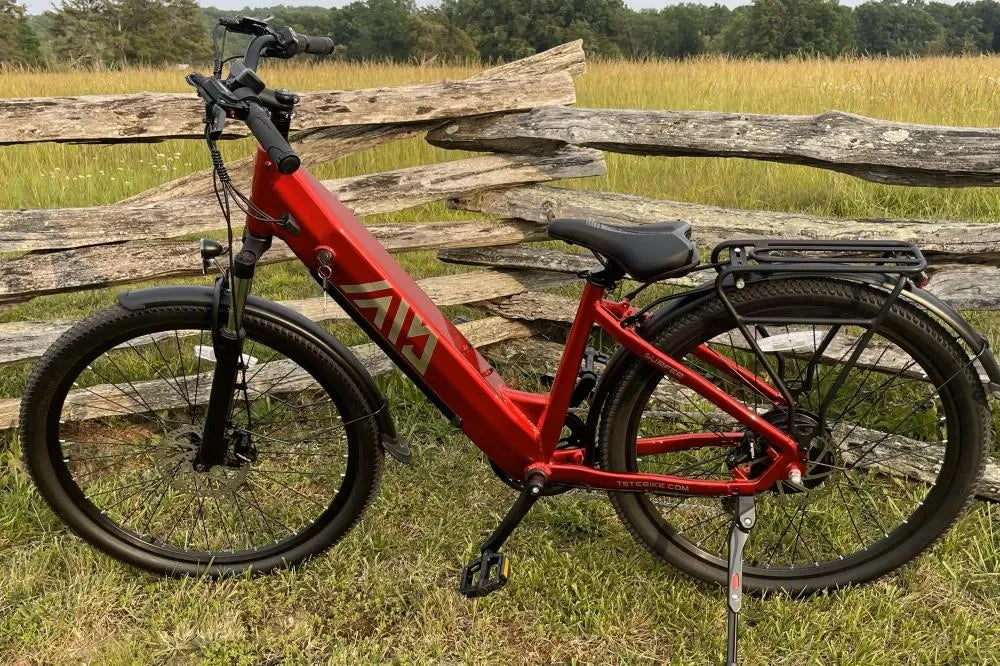

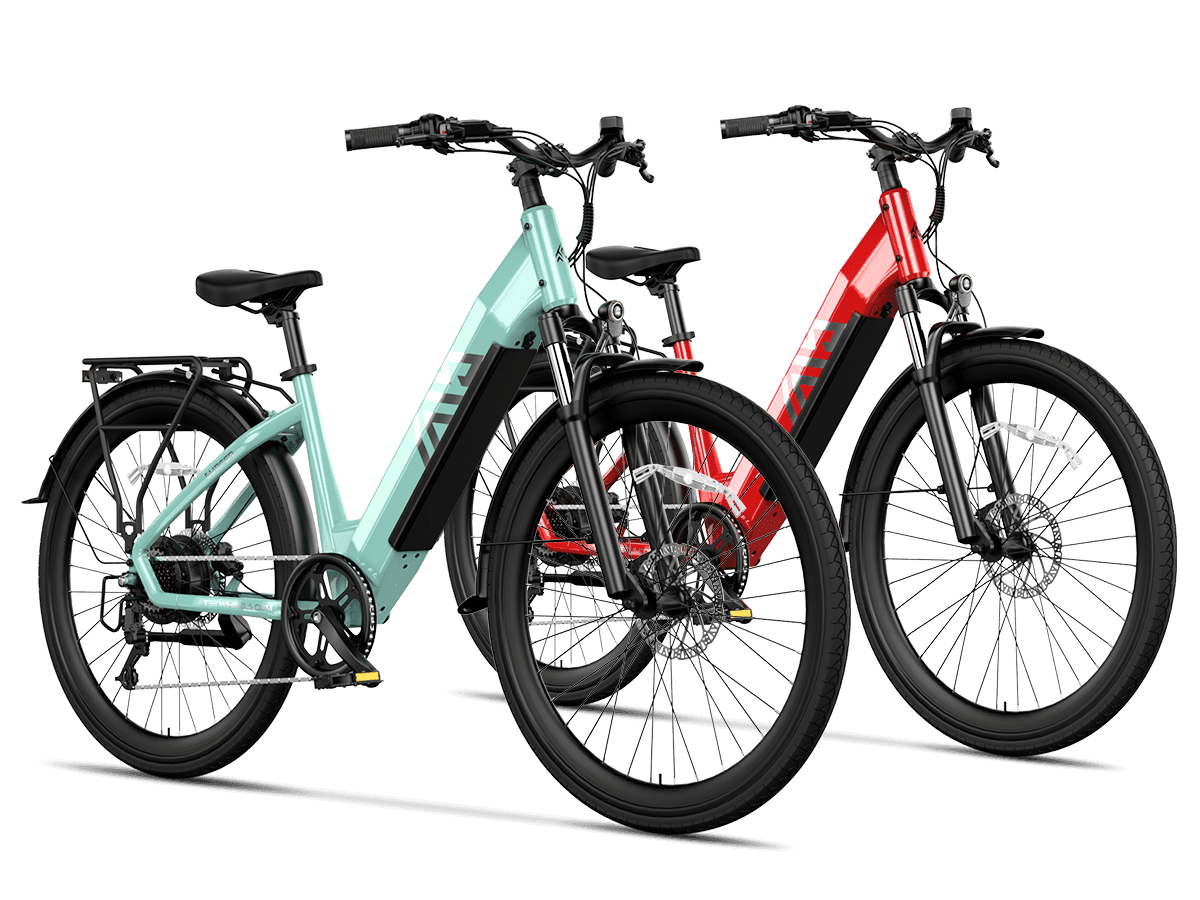
The width printed on a spec sheet is not the number that decides whether a folding e-bike fits your space. What decides it is the narrowest single point along the entire route the folded bike must travel — from the doorway or hatch, through any turn or step, to where it will actually rest — plus the clearance you need to lift it back out again next time.
Most folded-dimension listings give you a single L×W×H box, and most buying guides stop at comparing that box to a doorway width. That comparison misses the parts that actually cause a bike to get stuck or tip: a 90-degree turn in a hallway, a wheel or pedal that sticks out past the folded envelope, a battery or charging step, and the return trip when you have to lift a heavier object back through the same gap. This guide walks through all of those points in order, using two TST folding models as worked examples, so you can measure your own space with the same method before you buy.
Start With the Opening, Not the Bike
Measure your own space before you look at any spec sheet. Three numbers matter more than the bike's marketing photo:
-
Narrowest doorway or hatch width, measured at the tightest point — door stops, hinges, and weatherstripping often shave half an inch to an inch off the nominal frame size.
-
Height of the opening, including any threshold lip, storm door, or low header that a raised handlebar or seat post could catch.
-
Depth of the opening, since a folded bike carried at an angle needs more than just width to clear a thick wall or door frame.
If your doorway measures narrower than the bike's folded width, the bike will not pass through cleanly. Carrying it at an angle sometimes works for a soft-sided object but not for a rigid folded bike frame, which cannot flex to fit a gap smaller than its shortest folded dimension in any orientation you can hold it.
Match the Bike's Folded Envelope, Not Just One Number
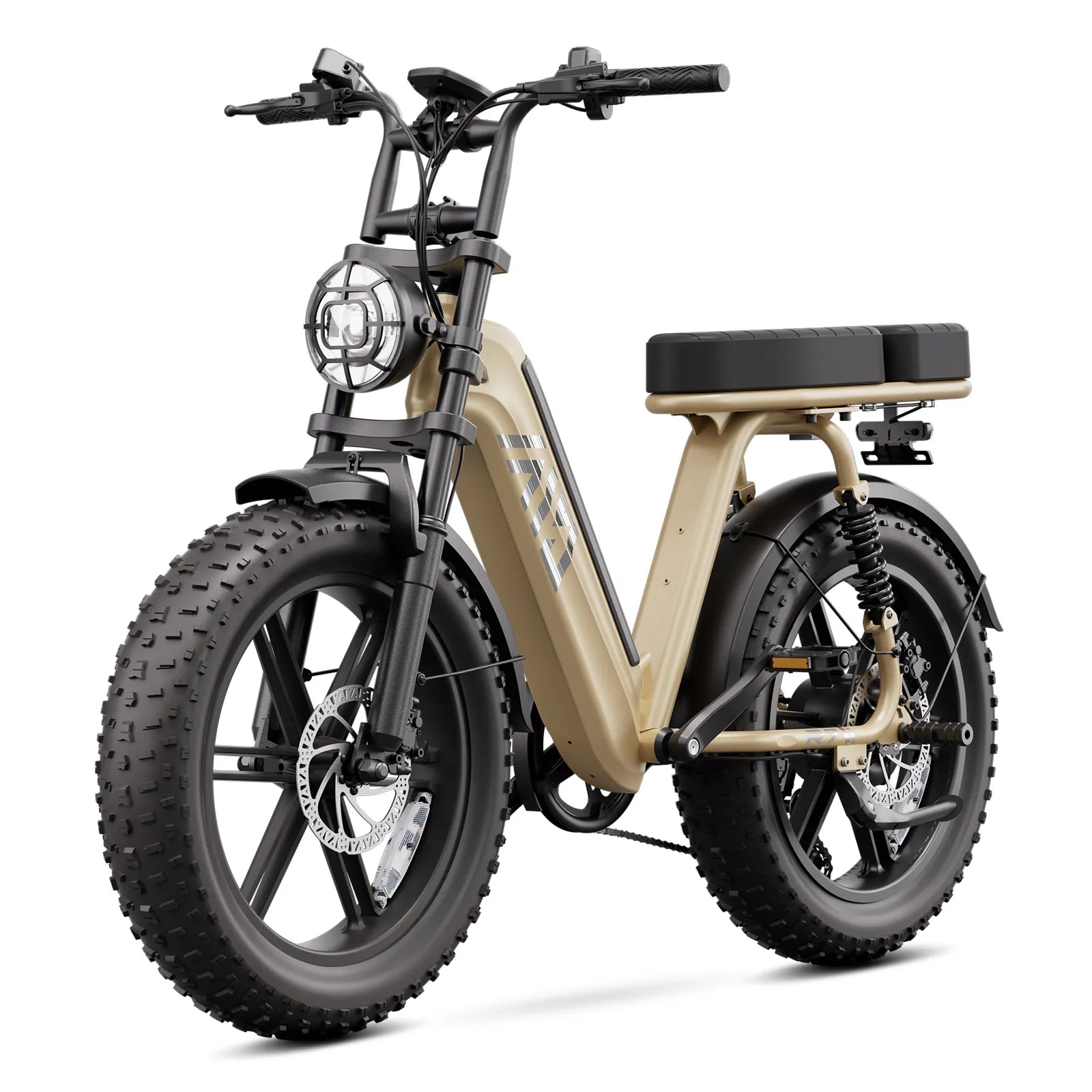
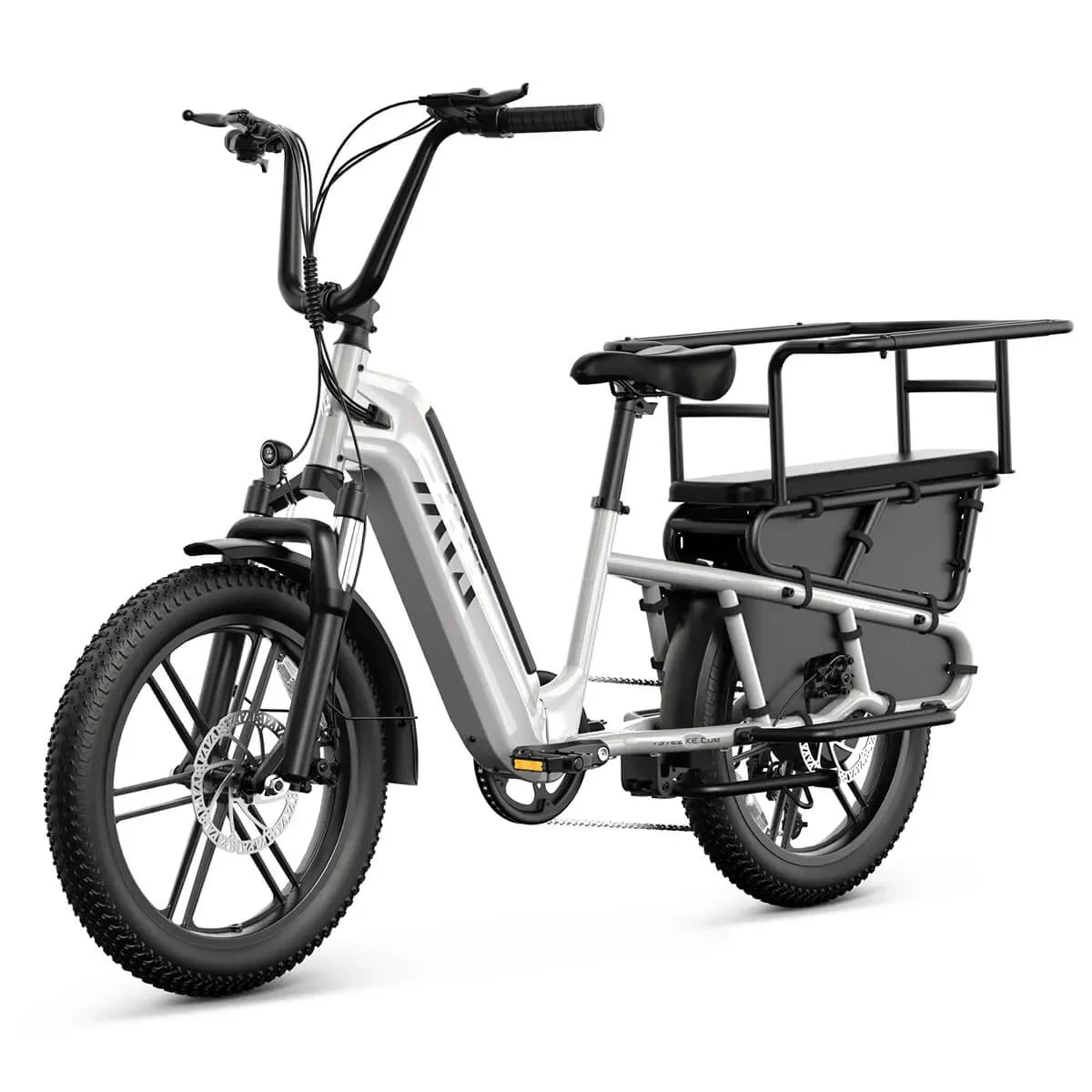
TST's current comparison page lists complete folded dimensions only for its dedicated folding models, and the two differ enough in shape that using one as a stand-in for the other will produce the wrong storage decision.
Not verified: whether either battery pack is user-removable for separate transport or storage. Check the exact owner's manual and product page before assuming you can carry the battery apart from the frame.
These two shapes create different storage problems. The Buddy folds into a long, low, narrow package — its 11-inch width is the number to test against a doorway or hatch, but its nearly 58-inch length means it needs a long, straight run to get through, and it cannot easily pivot in a short hallway. The Buddy Pro folds into a shorter, more cube-like block; its narrowest dimension, 27.6 inches, is wider than most standard interior doors, so it depends less on hallway length and more on whether the opening itself is wide enough. Neither shape is more compact in an absolute sense — each is compact along different axes, which is why the raw spec sheet number has to be matched to your actual opening, not treated as a single pass/fail figure.
Build the Full Path, Not a Single Doorway Check
A folded bike rarely travels in a straight line from outside to its storage spot. Map the route in stages and check each one separately:
-
Entry opening — front door, garage door, or vehicle hatch, measured at its narrowest point as described above.
-
Intermediate turns — any hallway corner, stairwell landing, or narrow gap between furniture where the bike must rotate rather than travel straight. A turn requires more clearance than the bike's width alone; a rigid folded frame needs roughly its full diagonal length as swing radius unless you can tip it end-first around the corner.
-
Final resting footprint — the floor or shelf space where the bike will actually sit, measured as its full folded footprint, length times width, plus a margin for the kickstand, pedals, or handlebar to swing without hitting a wall.
-
Retrieval clearance — the same path in reverse, but accounting for the fact that you are now lifting a 65-to-72-pound object rather than rolling it. A tight turn that was manageable wheeling the bike in on its own wheels can be much harder once you are carrying dead weight out.
If any single stage in that path is narrower than the bike's limiting dimension, the whole plan fails at that point. A spacious final storage spot does not help if the hallway leading to it is too narrow.
Account for Parts That Move or Protrude
Folded-dimension figures describe the bike in its designed folded state, not necessarily its most compact possible state. Before relying on a listed folded size:
-
Confirm the pedals are folded or removed, since standard bicycle pedals often extend beyond the frame's folded silhouette unless the model specifies folding pedals.
-
Check whether the handlebar stem folds flat or simply rotates — a rotated handlebar can still add several inches of width or height that the listed box does not include.
-
Note whether a rear rack, fender, or accessory needs to be removed to reach the listed folded footprint, or whether it is designed to fold with the frame. Several TST folding models ship with a rear rack and fender set as standard accessories.
-
Ask whether the bike stands upright unsupported when folded, or leans against a wall or kickstand — a leaning bike needs extra depth clearance that a purely upright folded box does not account for.
Follow the exact folded-state instructions in the model's owner's manual rather than assuming the marketing photo shows the smallest possible configuration. Manuals typically specify a folding sequence that determines whether pedals, handlebar, and mirrors are included in the stated envelope.
What Changes for RV Storage
RV and camper storage introduces constraints that a home doorway check does not cover, and the fit question is only the first of three separate checks.
Space fit follows the same path-to-storage logic above, applied to the RV's storage bay, under-bed compartment, or exterior rack opening. Measure the bay's narrowest point, not just its advertised interior volume, since bay doors and wheel wells often reduce usable width.
Load and tie-down are a separate question from fit. Exterior bike racks rated for pedal bicycles are not automatically rated for the added weight of an e-bike; a folded e-bike in the 65-to-72-lb range can exceed some rack manufacturers' per-bike weight limits, and RVs and tow vehicles have their own cargo and tongue-weight limits that a bike rack manufacturer's spec does not override. Verify the exact rack's maximum bike weight and the vehicle's rated cargo capacity before loading a folded e-bike onto or into an RV, rather than assuming that fitting means being rated to carry.
Charging and heat exposure are also separate from storage fit, and this article does not treat them as part of "fits in the space." Government and fire-service guidance on e-bike battery storage consistently advises against charging or leaving lithium-ion e-bike batteries in direct sun, in escape routes, or in spaces subject to extreme heat, conditions common inside a parked RV or trunk in warm weather. UK fire authorities specifically advise against storing or charging e-bikes on escape routes and recommend cool, dry, ventilated conditions with the manufacturer's specified charger only. A storage space that physically fits the folded bike is not automatically a safe or appropriate place to charge or leave its battery; treat those as separate checks against the manual and applicable fire-safety guidance, not as part of the fit test itself.
A Fit Decision Worth Trusting
A folding e-bike is ready for a given storage plan only when every stage of the path, entry opening, turns, final footprint, and retrieval, clears the bike's actual folded envelope with its pedals, handlebar, and any accessories accounted for, and when you have separately confirmed that lifting the bike's folded weight through that path is realistic for the person doing it. Getting a bike in once is not the same as being able to get it back out on a Tuesday morning in a hurry.
If your measured path clears the Buddy's or Buddy Pro's folded dimensions, the next step is comparing full specifications, current pricing, and availability on the TST folding e-bike collection page, which is the correct place to check exact current stock, warranty terms, and package contents before ordering. Confirm the manual's exact folding sequence and your vehicle or storage space's load rating separately. A folded bike that fits through the door is not automatically rated for a given rack, and it is never automatically safe to charge wherever it happens to be stored.

Leave a comment
This site is protected by hCaptcha and the hCaptcha Privacy Policy and Terms of Service apply.