


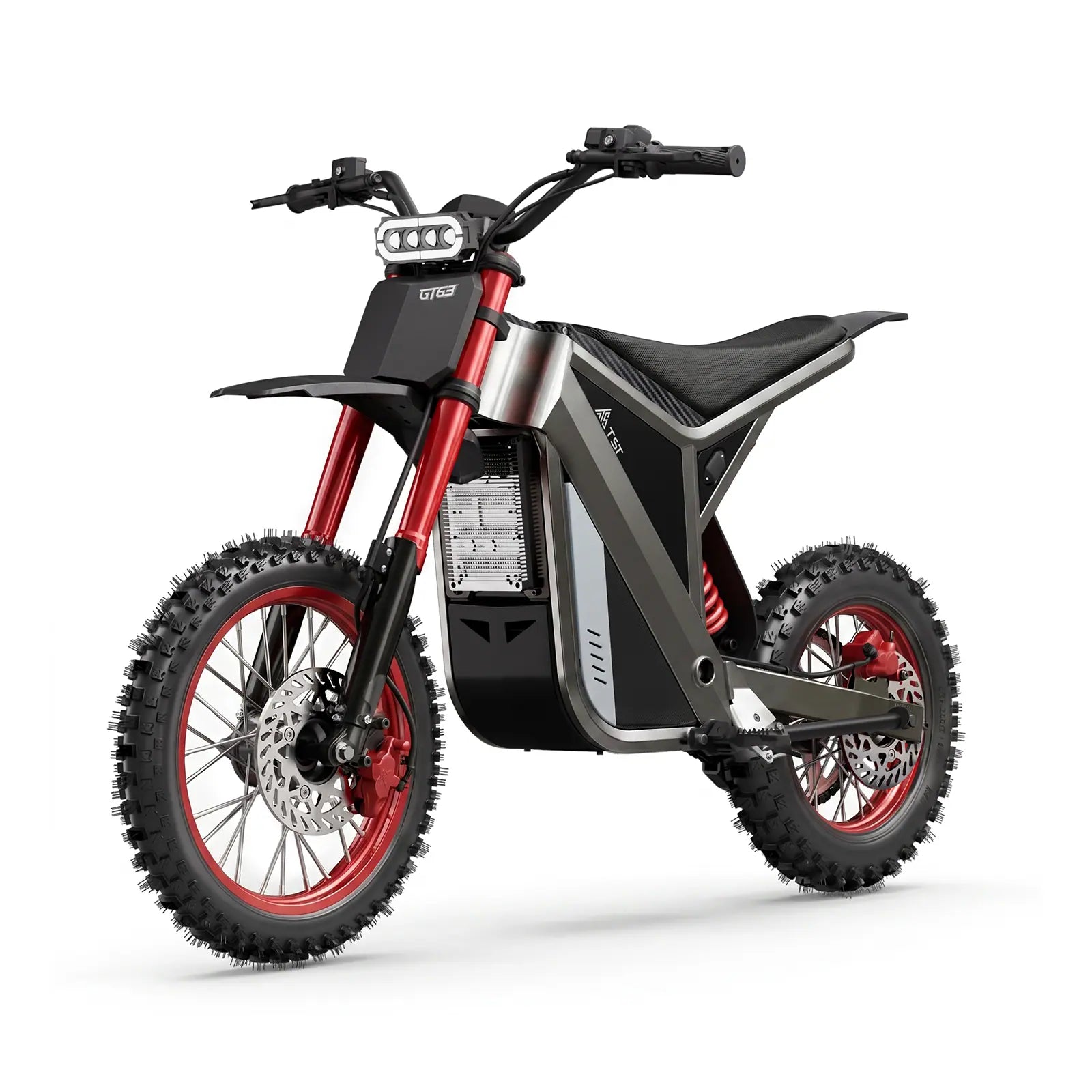














Before every ride, confirm that the primary folding latch is fully closed and that the secondary safety lock (Safety Lock) is engaged and “hooked” into the frame. Press and release the red safety lock with one finger several times: the black latch must not open, and the red lock must spring back sharply and stay locked. Any sticking, delayed return, or latch opening means do not ride and seek service immediately.
demystifying folding ebike sizes
Why Is the Secondary Safety Lock Critical for Off‑Road Riding?
The secondary Safety Lock is your last line of defense if the main latch loosens under vibration. In high‑impact riding (big bumps, jumps, sand/snow), the frame can flex enough to partially unseat the main latch; the Safety Lock prevents it from fully opening, avoiding catastrophic collapse.
In engineering terms, the secondary lock converts a single‑point closure into a redundant two‑point system, drastically reducing the probability of accidental release under dynamic load.
How Do You Perform a One‑Finger Safety Lock Check?
With the black primary latch closed, use only one finger to press and release the red Safety Lock multiple times. The black latch must not open, and the red lock must remain engaged and “hooked/locked” into the frame or handlebar when released.
This test simulates the kind of small jolts and micro‑movements that happen on rough trails. If the latch opens at any point, the bike is unsafe to ride.
What Are the Signs That Your Folding Safety Lock Is Worn?
Look for: slow or partially closed return, squeaking or sticking, visible wear on the hook surface, loose pivot, or the black latch opening when you press the red lock. Any of these indicate the self‑locking mechanism is no longer trustworthy.
In practice, a worn Safety Lock often feels “mushy” instead of crisp and springy. That loss of snap is the first warning before a real failure occurs.
Which Riding Conditions Put the Most Stress on Folding Latches?
High‑impact conditions: technical trails with roots and rocks, repeated jumps, deep sand or snow, and long downhill sections with hard braking. In these cases, the frame experiences large bending moments and repeated shock loads at the folding joint.
Even moderate commuting on rough city roads can accumulate micro‑fatigue if the Safety Lock is not fully engaged. The difference is that off‑road riding accelerates wear and increases the risk of a sudden unlatching event.
How Does TST EBike’s Self‑Locking Mechanism Improve Safety?
TST EBike designs its folding latches with a self‑locking Safety Lock that automatically snaps into the fully engaged position and resists vibration‑induced loosening. This “self‑locking” behavior means the rider does not need to manually adjust or hold the lock; it stays engaged as long as the geometry is intact.
From a factory‑floor perspective, this is a deliberate trade‑off: the lock is tuned to be slightly harder to operate than a simple spring latch, but that extra force is exactly what prevents accidental release under heavy riding loads.
TST EBike Expert Views
“In our testing, we’ve seen folding latches fail not because the metal broke, but because the secondary lock was not fully seated. Riders often think the black latch is enough; on rough trails, that assumption is dangerous. TST’s self‑locking Safety Lock is engineered so that if it clicks into place, it will stay there under repeated impacts. The cost is a slightly firmer operation, but that firmness is the safety margin you need when hitting big bumps or jumps.”
When Should You Replace Your Folding Safety Lock Assembly?
Replace immediately if: the black latch opens when you press the red lock, the red lock does not spring back sharply, or there is visible deformation or cracking around the pivot or hook. Do not attempt to “ride it out” on technical trails.
Even if symptoms are mild (slight delay, minor squeak), plan a replacement before your next serious off‑road session. Safety locks are not designed to be permanently adjusted; once the geometry changes, the self‑locking behavior is compromised.
Can You Ride If the Safety Lock Feels “Slightly Loose”?
No. If the Safety Lock feels loose, wobbly, or does not sit firmly in the locked position, treat the bike as unsafe for any trail or high‑speed riding. A “slightly loose” feeling often means the pivot or hook has worn beyond its design tolerance.
For commuting on smooth roads only, you might consider very cautious riding while arranging service, but for off‑road, jumps, or steep descents, the correct action is to stop using the bike until the lock is replaced.
Is Regular Cleaning Enough to Maintain Folding Latch Safety?
Cleaning is necessary but not sufficient. You must also: inspect for wear, test the one‑finger function, and verify that the latch does not open under pressure. Dirt removal alone cannot restore a worn spring or a deformed hook.
A good maintenance routine is: clean → dry → light lubrication on pivot → functional test → visual inspection. If the functional test fails, cleaning will not fix the problem.
How to Integrate Folding Latch Checks Into Your Pre‑Ride Routine?
Add a 30‑second “fold check” step right after unfolding the bike and before the first pedal stroke:
-
Fold and unfold the bike once, listening for a crisp click.
-
Perform the one‑finger Safety Lock test.
-
Visually confirm the red lock is fully engaged and the black latch is flush.
This becomes as routine as checking tire pressure. Over time, you’ll spot subtle changes in feel before they become dangerous failures.
Conclusion: Key Takeaways and Actionable Advice
-
Always verify that the secondary Safety Lock is fully engaged before every ride, especially on rough terrain.
-
Perform the one‑finger press‑and‑release test: if the black latch opens, do not ride.
-
Treat any delay, stick, squeak, or looseness in the Safety Lock as a warning sign; plan replacement before serious off‑road use.
-
Understand that TST EBike’s self‑locking mechanism is designed to stay engaged under vibration and impact, but only when correctly seated.
-
Integrate folding latch checks into your pre‑ride routine as a non‑negotiable safety step.
FAQs
What is the secondary safety lock on a folding e‑bike?
It is a redundant lock (often red) that hooks into the frame or handlebar to prevent the main folding latch from opening if it loosens under vibration or impact.
How often should I check my folding Safety Lock?
Check it every time you unfold the bike, and do a more detailed inspection (clean, lubricate, visual wear check) at least once a month or before any long off‑road trip.
Can I adjust the safety lock myself?
Minor cleaning and lubrication are fine, but do not attempt to adjust springs, pins, or geometry. If the lock feels wrong, replace the assembly rather than trying to tune it.
Does TST EBike use a special folding latch design?
Yes. TST EBike uses a self‑locking Safety Lock that automatically snaps into the fully engaged position and resists vibration‑induced loosening, improving safety under high‑impact riding.
What happens if I ride without the Safety Lock engaged?
You risk the main folding latch gradually loosening and eventually opening under rough conditions, which can cause sudden frame collapse, loss of control, and serious injury.
Is a slight squeak in the Safety Lock dangerous?
A small squeak may just need cleaning and light lubrication, but if it’s combined with slow return or looseness, it indicates wear and should be addressed before off‑road riding.

Leave a comment
This site is protected by hCaptcha and the hCaptcha Privacy Policy and Terms of Service apply.