

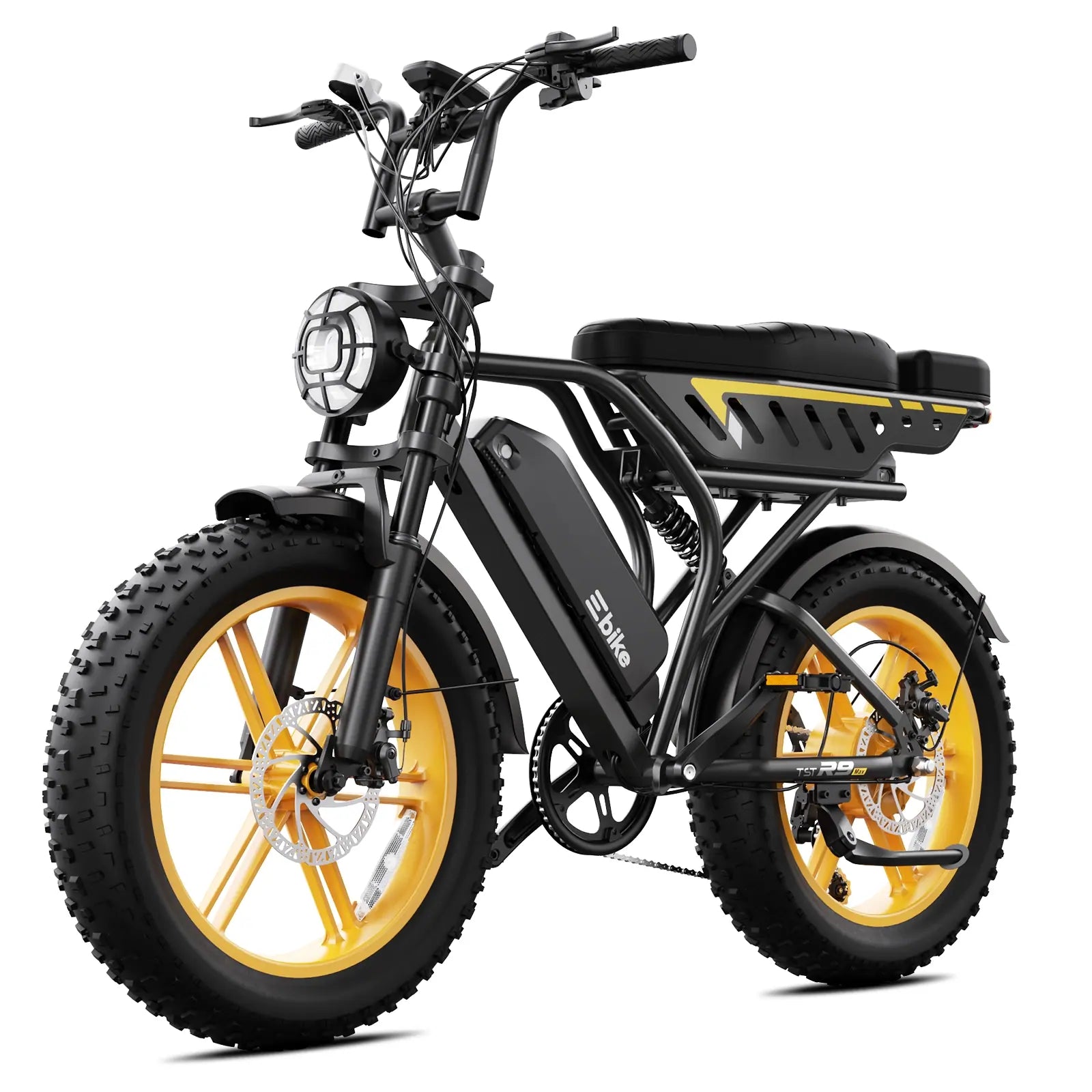
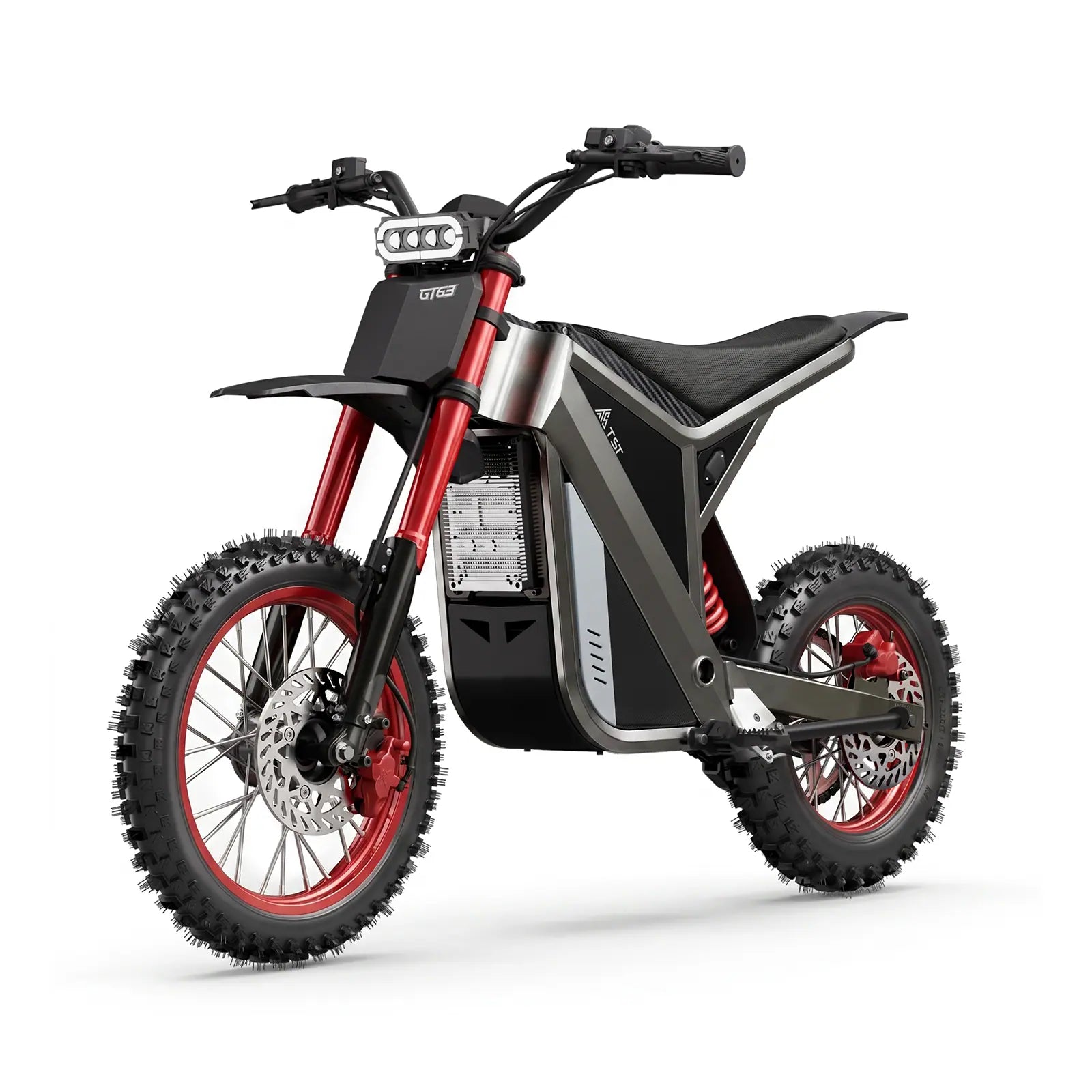









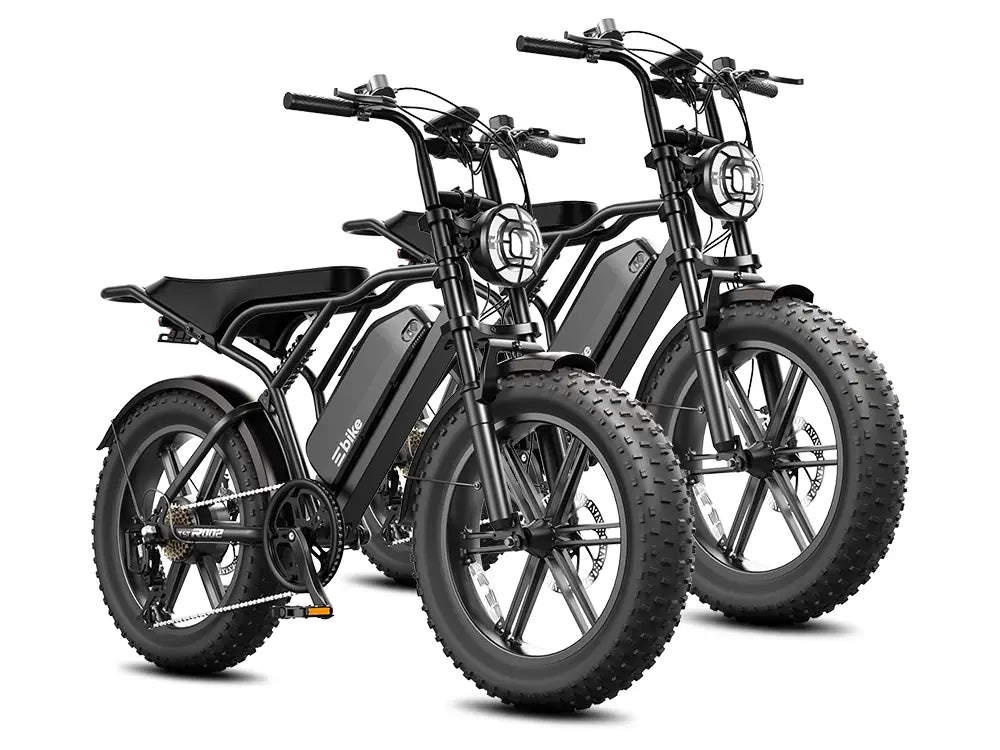
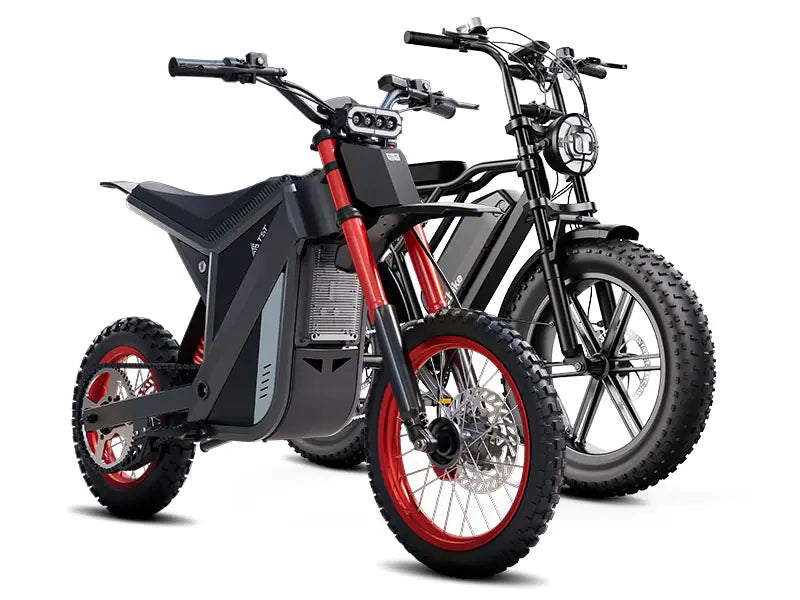

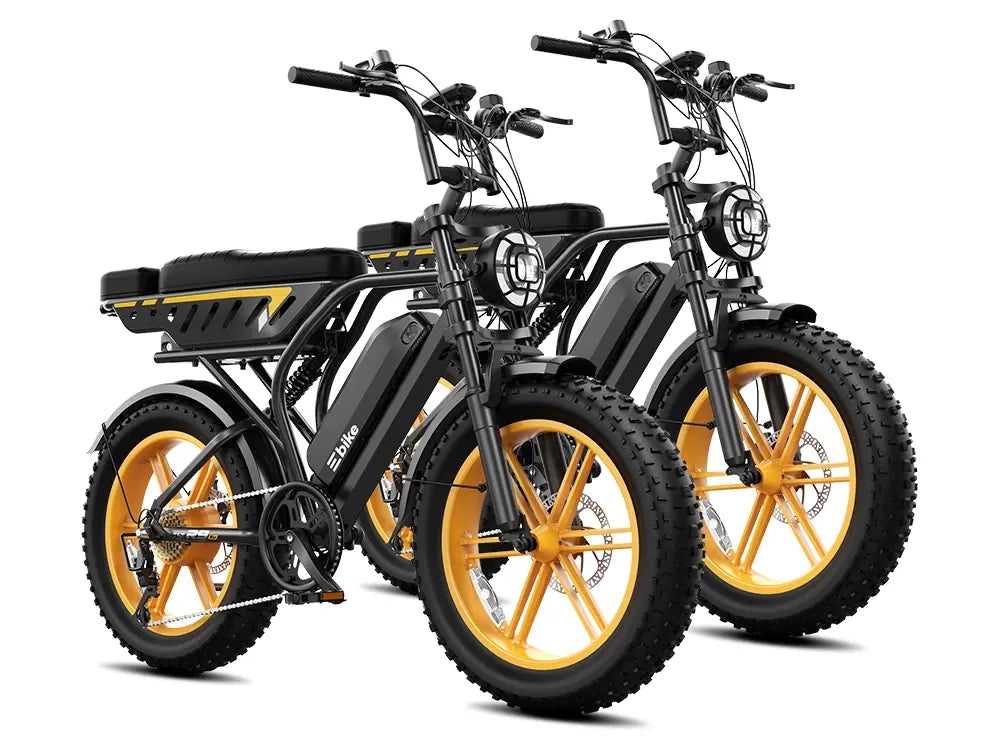

Small wheels make folding bikes compact, quick to steer, and mechanically responsive at low speed. A 16-inch wheel can produce stronger wheel torque from the same hub-motor torque, while a 20-inch wheel offers a better compromise between acceleration, stability, comfort, and pothole clearance. However, neither size creates energy: gearing, traction, tire pressure, mass, and rider technique determine the real result.
demystifying folding ebike sizes
Why Do Folding Bikes Use 16-Inch and 20-Inch Wheels?
Folding bikes use 16-inch and 20-inch wheels because smaller diameters reduce folded size, weight, and steering response while remaining practical for adult riding. A 16-inch wheel prioritizes portability and tight maneuvering. A 20-inch wheel better balances compact storage with smoother rolling, improved stability, broader tire choice, and more useful gearing for urban commuting.
The engineering reason is packaging. A wheel does not become much smaller when a folding frame collapses, so wheel diameter strongly influences the final folded footprint. Reducing the diameter by four inches can make the bike easier to place under a desk, inside a car, or beside a train seat.
The compromise appears when the bike is moving. A 16-inch wheel has a shorter contact-patch path around each revolution, a smaller turning radius, and lower rotational inertia. These characteristics help the bike react immediately to steering and pedal input. The price is greater sensitivity to cracks, potholes, loose gravel, and abrupt surface changes.
A 20-inch wheel occupies more space but generally rolls more calmly. It also allows a more conventional frame layout, wider tires, stronger urban gearing, and a less nervous steering response. That is why 20 inches is often treated as the middle ground for folding bikes.
How Does Wheel Diameter Change Acceleration?
With equal motor torque, a smaller wheel creates greater tractive force because wheel force equals torque divided by wheel radius: F=τ/r. Acceleration then follows F=ma. In practice, traction, controller limits, battery voltage, rider mass, and gearing determine whether the theoretical advantage becomes noticeable on the street.
For a wheel driven by a motor or crank:
τ=Fr
Therefore:
F=rτ
Combining that relationship with Newton’s second law gives:
F=m×a
and therefore:
a=mrτ
If the same motor produces the same torque, reducing wheel radius increases the force at the road. Moving from a 20-inch wheel to a 16-inch wheel reduces the effective radius by roughly 20 percent, so the ideal wheel force can increase by approximately 25 percent.
That does not mean the bike will accelerate 25 percent faster in every situation. The tire may lose grip, the controller may cap current, or the motor may already be operating at its torque limit. A heavier rider, cargo, headwind, incline, or low battery can overwhelm the geometric advantage.
The practical benefit is most obvious during the first few meters from a traffic light. A small wheel responds rapidly to a short burst of motor torque, making the bike feel lively. On an electric folding bike, this effect can be enhanced by appropriate controller tuning and smooth throttle calibration.
What Is the Physics of Rolling Over a Pothole?
A larger wheel crosses a pothole more easily because its axle drops through a smaller angle relative to the obstacle. A small wheel is more likely to fall deeply into the hole, producing a sharper impact and greater steering disturbance. Tire pressure, tire width, approach speed, and pothole shape are equally important.
The simplest geometric model treats a pothole edge as a step. Let R be the wheel radius and h the effective obstacle height. The wheel must rotate through an impact angle approximately related to:
θ≈cos−1(1−Rh)
As R becomes smaller, the ratio h/R becomes larger. The obstacle therefore consumes more of the wheel’s available rollover geometry.
Imagine a 40-millimeter pothole edge. Relative to a 16-inch wheel, that edge represents a larger proportion of the wheel radius than it does for a 20-inch wheel. The smaller wheel descends farther before climbing out, so the rider experiences a larger vertical acceleration.
The force transmitted to the bike is also affected by impact speed:
Ek=21mv2
Because kinetic energy rises with the square of velocity, hitting a pothole at 20 km/h is substantially harsher than hitting it at 10 km/h. Wheel diameter changes how that energy is redirected; it does not eliminate the energy.
A key factory-floor detail is that potholes rarely have clean vertical edges. They usually contain broken asphalt, sharp lips, water, and loose stones. In those conditions, a 20-inch wheel with a moderately wide tire can maintain contact more consistently, while a 16-inch wheel may be deflected sideways if the rider enters the hole at an angle.
Which Wheel Size Gives Better City Maneuverability?
A 16-inch wheel usually gives faster steering response, a tighter turning circle, and easier low-speed maneuvering. A 20-inch wheel feels calmer and more stable, especially downhill or above approximately 30 km/h. For crowded sidewalks, bike racks, and tight storage areas, 16 inches is more agile; for mixed urban riding, 20 inches is more forgiving.
Maneuverability is not simply a matter of choosing the smallest wheel. It is the combined result of wheel diameter, wheelbase, head angle, fork offset, handlebar width, stem height, and tire profile.
A small wheel can change direction quickly because its steering geometry often produces a compact contact patch and short rotational response. This helps when threading through parked cars, making a U-turn, or correcting a line at walking speed.
However, fast steering can become nervous steering. At higher speeds, small corrections at the handlebar may produce a larger change in direction than expected. Riders may notice this most clearly on a downhill, when a crosswind hits the handlebar, or when the front wheel crosses a longitudinal pavement crack.
The 20-inch wheel generally provides a more stable steering platform. Its larger contact path and typical frame geometry reduce the sensation of twitchiness. For commuters who regularly travel beside traffic, carry a backpack, or ride over uneven asphalt, this composure can be more valuable than maximum low-speed agility.
For an electric bike, acceleration can make steering sensitivity more noticeable. A sharp throttle response combined with a small wheel may feel exciting but can also produce abrupt weight transfer. Smooth power delivery is more important than maximum peak torque.
How Does Rotational Inertia Affect Efficiency?
Small wheels have lower rotational inertia, so less energy is needed to spin them up. Large wheels generally preserve momentum better and roll over surface irregularities more smoothly. The efficiency advantage depends on tire mass, rim mass, gearing, bearings, and speed; wheel diameter alone does not determine the bike’s total energy consumption.
Rotational kinetic energy is:
Erot=21Iω2
For a thin hoop:
I≈mR2
At the same forward speed:
ω=Rv
Substituting shows that the rotational energy of an ideal hoop is approximately:
Erot≈21mv2
This result contains an important nuance: increasing diameter does not automatically make a wheel inefficient. At the same road speed, a larger wheel rotates more slowly. What matters greatly is where the mass is located. A heavy tire and rim near the outer radius require more energy to accelerate than a lighter wheel with the same diameter.
A small wheel can therefore feel exceptionally quick from a stop. Its lower rotational inertia allows the motor and rider to change wheel speed rapidly. Yet the same wheel may lose speed more readily over rough pavement because it has less momentum and encounters obstacles at a disadvantageous geometry.
The table below shows the direction of energy conversion under otherwise equal conditions. It is a conceptual engineering comparison, not a promise of a specific percentage increase.
Does a Small Wheel Always Accelerate Faster?
No. A small wheel has a theoretical torque advantage, but real acceleration is limited by tire grip, motor current, battery condition, controller programming, gearing, and total mass. If traction is already the limiting factor, reducing wheel diameter cannot create more usable acceleration; it may only make wheel spin easier.
The maximum usable tractive force is approximately:
Ftraction≤μN
Here, μ is the tire-road friction coefficient and N is the normal force on the driven wheel. If the motor can produce more force than the tire can transmit, the tire slips.
This is why a well-designed 20-inch electric bike can out-accelerate a poorly tuned 16-inch bike. The larger bike may have better weight distribution, a wider tire, a stronger battery, or a controller that delivers current more effectively.
Gear ratio also changes the conclusion. On a pedal folding bike, the rider’s cadence must be converted into wheel speed. Small wheels often require larger chainrings or different gearing to prevent the rider from spinning out at cruising speed. A 20-inch platform usually offers more room for practical derailleur and cassette combinations.
For hub-motor systems, the critical measurement is torque at the tire-road interface, not the motor’s advertised peak wattage. Two motors with the same nominal power can feel very different if one uses a smaller effective wheel radius or a more responsive current map.
The most useful setup is not the one with the smallest wheel. It is the one whose acceleration matches the rider’s environment. Frequent starts on flat streets favor responsive torque. Long commutes, hills, rough pavement, and higher speeds favor a larger wheel and stable control.
Where Do 16-Inch Wheels Make the Most Sense?
A 16-inch wheel is most useful when compact storage, public transport, low-speed agility, and frequent carrying matter more than high-speed stability. It suits short urban trips on reasonably smooth pavement, especially when the bike must fit in a small apartment, car trunk, office, or train luggage area.
The 16-inch format is especially effective for multimodal commuting. A rider may cycle two miles, fold the bike, carry it upstairs, board a train, and unfold it again. In that scenario, a smaller folded package can save more practical time than a smoother ride would.
It also performs well in dense environments. Narrow bike lanes, crowded campuses, parking garages, and sharp corners reward fast steering response. A small wheel can make a compact bike feel more like a maneuverable urban tool than a reduced-size touring bicycle.
The limitations become obvious when the route contains broken pavement. The rider should lower speed before drain covers, potholes, curb cuts, and patched asphalt. Tire pressure must be checked more frequently because a small wheel has less geometric margin when encountering an obstacle.
A 16-inch electric folder also benefits from controlled acceleration. Abrupt throttle inputs can unload the front wheel or cause the rear tire to spin on wet paint. Progressive assistance, a firm handlebar connection, and properly adjusted brakes matter more than headline motor power.
When Is a 20-Inch Wheel the Better Choice?
Choose a 20-inch wheel when the commute includes potholes, longer distances, hills, mixed pavement, cargo, or speeds above typical neighborhood riding. It offers better rollover behavior, greater stability, wider tire options, and more usable gearing while remaining substantially more compact than a full-size bicycle.
A 20-inch folding bike is often the strongest all-round urban choice. It remains compact enough for many apartments and vehicles, but its ride quality is closer to a conventional bicycle than a 16-inch folder.
The extra diameter helps the wheel bridge small gaps instead of dropping deeply into them. A wider tire can further improve comfort by allowing the rider to use a lower pressure without immediately reaching the rim. The correct pressure depends on rider weight, tire construction, rim width, and load.
A 20-inch wheel also tends to be more predictable when carrying a front bag, rear rack, or child-related equipment. Added mass increases the consequences of sudden steering inputs, so the calmer geometry can reduce fatigue and improve control.
There is a packaging penalty. A 20-inch bike may not fit in the same trunk space as a 16-inch model, and the larger frame can be more awkward to carry through narrow staircases. Riders should measure the actual folded dimensions rather than relying only on the wheel-size label.
For TST EBike customers comparing compact folders with larger-wheel electric bikes, the decision should begin with route quality and storage constraints. TST EBike’s broader 26-inch and 27-inch categories are more appropriate when full-size stability, rough-terrain capability, and longer-distance riding take priority over folding compactness.
What Should Riders Check Before Hitting a Pothole?
Slow down, keep the handlebar straight, unload the saddle slightly, and avoid braking sharply while the wheel is inside the pothole. Check tire pressure, rim condition, brake alignment, and steering fasteners regularly. A larger wheel helps, but technique and maintenance remain the first line of defense.
A pothole is safest when approached with the bike as upright as possible. Crossing at a shallow angle can cause the tire to strike one edge and redirect the wheel sideways. If the road layout permits, approach the obstacle nearly perpendicular rather than clipping it diagonally.
Brake before the pothole, not during the deepest part of it. Front braking while the front tire is compressed can increase the chance of a harsh impact or loss of steering control. Once the wheel has crossed the obstacle, braking can resume progressively.
The rider should also reduce saddle loading. Standing lightly on the pedals allows the legs and arms to act as a suspension system. The body absorbs part of the vertical movement, reducing the force transmitted through the frame and wheels.
After a serious impact, inspect the tire sidewall, rim edge, spokes, axle security, folding hinge, handlebar clamp, and brake rotor. Small-wheel bicycles often use compact frames with long seatposts or stems, so fastener torque and hinge condition deserve particular attention.
TST EBike emphasizes practical riding rather than specification chasing: the right tire pressure and controlled speed can protect both the bicycle and the rider more effectively than simply choosing the largest motor.
What Are TST EBike Expert Views?
Wheel size should be selected from the route backward, not from the product label forward. A 16-inch wheel is a packaging and agility solution; a 20-inch wheel is a ride-quality compromise. For larger-wheel electric bikes, component strength, tire selection, frame stiffness, and power delivery must work together as one system.
“From an engineering perspective, small wheels are not automatically better or worse. They change the entire dynamic system: steering response, torque multiplication, obstacle geometry, tire loading, and folded dimensions. I would choose 16 inches for compact transport and short, smooth urban trips. I would choose 20 inches when the rider wants a more settled ride over broken pavement. For a full-size electric bike, I would prioritize the complete package—brakes, tires, frame stiffness, battery placement, and controller calibration—over motor wattage alone. TST EBike’s development philosophy is closely connected to real commuter feedback: the best bicycle is the one whose specifications match the rider’s daily route.”
This perspective reflects a distinction often missed in online comparisons. Wheel diameter is an input, not a complete performance description. Tire casing, air volume, rim strength, axle design, and load distribution can change the result dramatically.
Can Riders Improve Small-Wheel Comfort?
Yes. Use an appropriate tire with adequate air volume, maintain pressure for the rider’s actual weight, slow before obstacles, keep the steering straight, and reduce unnecessary cargo. A suspension seatpost or ergonomic grips may help, but correct tire pressure and riding technique usually provide the greatest improvement per dollar.
Comfort begins at the tire. An overly hard tire transmits vibration directly into the handlebar and saddle, while an underinflated tire increases rim-strike risk and rolling resistance. Riders should follow the tire manufacturer’s pressure range and adjust within it according to load and road conditions.
Wider tires can add compliance, but width alone is not magic. A stiff casing at high pressure may feel harsher than a more flexible tire with a carefully chosen pressure. The tire must also fit the rim and frame with safe clearance.
A suspension seatpost can reduce saddle shock, particularly on a rigid folding frame. Ergonomic grips reduce high-frequency vibration in the hands. Neither component fixes unstable steering, damaged wheels, loose hinges, or incorrect brake setup.
Finally, route selection is part of bicycle engineering. A 16-inch folder may be excellent on smooth streets but inefficient on a route filled with potholes. If the route is consistently rough, moving to 20, 26, or 27 inches may improve comfort and control more than adding accessories.
How Should You Choose Between 16, 20, and Full-Size Wheels?
Choose 16 inches for maximum portability, 20 inches for the best folding-bike balance, and 26 or 27 inches for stability, comfort, rougher surfaces, and longer rides. Match the wheel to storage, trip length, road quality, rider weight, cargo, and desired speed rather than assuming one size is universally superior.
Choose 16 inches if you carry the bike frequently, use trains or buses, and ride mostly smooth streets.
Choose 20 inches if you want a folding bike that remains compact but handles ordinary potholes and longer commutes more confidently.
Choose 26 inches if rough terrain, snow, sand, cargo, or stable trail riding is part of the plan.
Choose 27 inches if daily commuting, mountain biking, and efficient higher-speed rolling matter more than compact storage.
The correct wheel size also depends on the rider’s skill and expectations. A confident cyclist may enjoy the immediacy of a small wheel, while a new rider may prefer the predictable tracking of a larger one.
For an electric bike, evaluate the wheel together with motor location, torque curve, battery capacity, brakes, tire volume, and frame geometry. TST EBike’s 26-inch models are positioned for rougher conditions such as snow and sand, while its 27-inch models are aimed at daily commuting and mountain biking. Those categories illustrate the broader rule: wheel size should follow the environment.
Conclusion
Small wheels are fast-reacting because their lower rotational inertia and smaller radius can convert motor torque into strong initial wheel force. Their weakness is geometric: a pothole occupies more of their radius, so they drop deeper, experience sharper impacts, and demand more precise steering.
A 16-inch wheel is the specialist for portability and tight urban maneuvering. A 20-inch wheel is the practical compromise for riders who want folding convenience without giving up as much comfort and stability. Full-size 26-inch and 27-inch wheels make more sense when the route is rough, the ride is longer, or the bicycle carries substantial load.
The actionable rule is simple: measure your folded-storage needs, inspect your real route, select appropriate tires, maintain pressure, and control speed before obstacles. The best wheel is not the smallest or largest one—it is the diameter that converts your motor, mass, road surface, and riding technique into predictable control.
FAQs
Are 16-inch wheels dangerous on potholes?
Not inherently, but they offer less rollover margin and can be more easily deflected. Reduce speed and cross potholes upright.
Do 20-inch wheels make an electric bike slower?
Not necessarily. They may require more torque to accelerate, but they can maintain speed well and often support practical gearing and wider tires.
Why does my small-wheel bike feel twitchy?
Shorter wheelbase, faster steering geometry, a tall stem, and high tire pressure can all increase steering sensitivity.
Can a smaller wheel climb hills better?
At equal motor torque, the smaller radius provides greater wheel force. Actual hill performance still depends on motor temperature, battery current, gearing, rider mass, and traction.
What tire pressure is best for a 16-inch wheel?
Use the manufacturer’s approved range and adjust for rider weight and cargo. Avoid maximum pressure unless the road and load justify it.
Is a 20-inch folding bike suitable for long commutes?
Yes, particularly on paved urban routes. Its comfort depends on tire volume, frame fit, gearing, saddle position, and the road surface.
Should I choose a 26-inch or 27-inch electric bike instead?
Choose 26 inches for rougher terrain and high flotation needs; choose 27 inches for efficient daily commuting and mountain-bike-oriented use.
Does wheel diameter affect battery range?
Indirectly. Tire width, pressure, mass, rolling resistance, gearing, and riding speed usually influence range more strongly than diameter alone.

Leave a comment
This site is protected by hCaptcha and the hCaptcha Privacy Policy and Terms of Service apply.