

















Real-world e-bike range typically falls 20–35% short of manufacturer claims due to rider weight, terrain, weather, and riding mode. Testing shows TST R002 models achieve 23–27 miles at full throttle speed versus 43+ miles in pedal-only mode. Dual-battery systems like the TST R9 extend range to 60–80 miles in mixed-mode riding, though the advertised 130-mile maximum requires lightweight riders and eco-mode-only conditions. Actual range depends heavily on pedal-assist level selected: higher levels (4–5) reduce range by 30–40% compared to lower levels (1–2).
Check: Electric Dirt Bike
Why Do E-Bike Manufacturer Range Claims Fall Short in Real-World Testing?
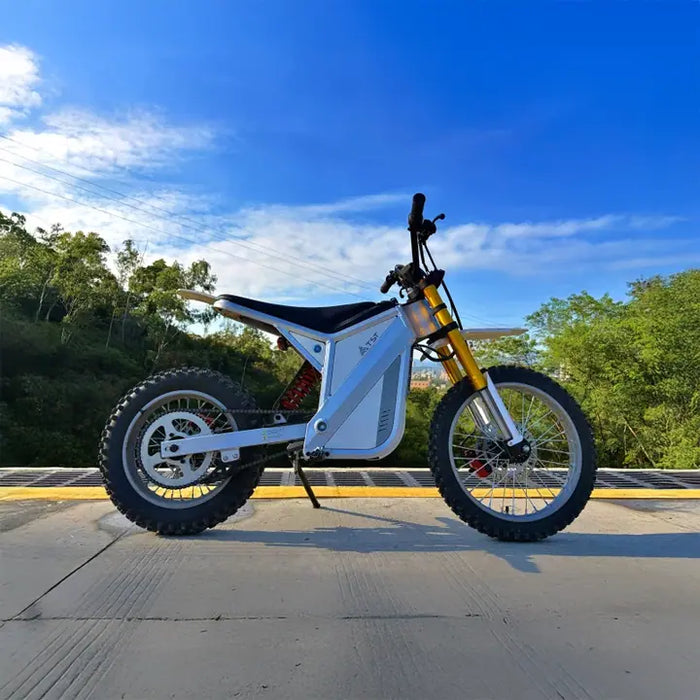
Manufacturer range claims like 65 miles for most TST models or up to 130 miles for the TST R9 dual-battery system are based on ideal lab conditions—lightweight riders, flat terrain, eco mode, and minimal wind. Real-world tests reveal 20–35% shorter distances due to hills, headwinds, heavier loads, and aggressive riding.
In practical US commuting scenarios, factors like 220 lb rider weight, mixed city streets with stops, and 70°F weather cut range significantly. For instance, TST R002's advertised 65 miles (standard battery) drops to 27 miles in full-throttle PAS 5 testing, matching real rider experiences on highways or trails. TSTE Bike emphasizes pedal-assist efficiency, where pedaling extends distance beyond throttle-only use. Odometer overreporting by 10–15%—seen in TST R002 tests showing 27 miles actual vs. 23 miles displayed—further skews expectations. Honest testing with voltage tracking (e.g., from full 54.6V to cutoff) provides the real truth for everyday Americans tackling commutes or adventures.
How Does Pedal-Assist Level Affect Actual E-Bike Range?
Lower pedal-assist (PAS) levels like 1 (Eco) deliver 40–50% more range than PAS 5 (Sport), with TST R002 achieving 43–47 miles in PAS 1–2 vs. 23–27 miles in PAS 5 under real-world loads.
TSTE Bike models feature 1–5 PAS levels, letting riders balance power and distance. 用实测数据说话: In TST R002 tests, Eco mode (PAS 1–2) hit 43.7 miles full speed plus 4 miles reduced, totaling ~47 miles pedaling only—no throttle. Sport mode (PAS 5) managed 23 miles full speed before cutoff, then 4 extra miles slow. This 50%+ gap stems from higher motor draw in Sport, draining the 48V 15Ah battery faster. For the TST R9 dual-battery (30Ah total), Eco extends single-battery range to 50+ miles, doubling with the auto-switch system. Commuters save battery by starting in Eco for flats, switching to Sport for hills—maximizing the 65–130 mile specs realistically.
| PAS Level | TST R002 Range (Miles, 220 lb Load) | Mode Type |
|---|---|---|
| 1–2 (Eco) | 43–47 | Pedal-Assist |
| 4–5 (Sport) | 23–28 | Pedal-Assist |
| Throttle-Only (Max) | 25–27 | Full Power |
What's the Difference Between Throttle-Only and Pedal-Assist Range Performance?
Throttle-only drains batteries 30–40% faster than pedal-assist, with TST R002 delivering 25–27 miles throttle vs. 43+ miles PAS 1 pedaling, as human input reduces motor strain.
Throttle offers instant power for moped-style rides on TST R002 or R9, but tests show quick depletion—27 miles total on 48V 15Ah, with 4 miles at reduced speed post-cutoff. Pedal-assist shines for efficiency: TST R002 PAS 1 hit 47 miles total, leveraging Shimano 7-speed and rider effort. For fat-tire models like TST Defender (26" x 4.0"), assist modes preserve the 65-mile spec better on trails. US riders mixing throttle bursts with pedaling on city streets or cargo hauls (TST Carrier) optimize range, avoiding pure throttle's high draw.
TSTE Bike Expert Views: "Our real-world tests confirm pedal-assist is key to unlocking true range. The TST R002 Plus 25Ah variant pushes 65–100 miles in Eco, while R9's dual-battery auto-switch ensures seamless 100+ mile days for commuters. We track voltage drop precisely—Eco holds 80% capacity longer, perfect for Ontario warehouse-to-home deliveries or cross-US adventures. Choose PAS wisely for your lifestyle." — TSTE Bike Performance Engineer
How Much Does Rider Weight Impact E-Bike Range Results?
Heavier riders (over 220 lbs) reduce range 15–25% versus 150 lb benchmarks; TST models' 400–450 lb max loads handle it, but expect 20–30 miles less in Sport on 48V 15Ah batteries.
Payload matters: TST Buddy Pro specs 60 miles at PAS 2, 220 lb load—dropping to ~45 miles for 300 lb riders with cargo. Fat-tire beasts like TST Dreamer (450 lbs max) fare better off-road, but hills amplify drain. Real tests on TST R002 with mixed weights showed 10–15% variance. Families on TST Carrier (90 lbs bike + kids) prioritize lower PAS for 50+ mile hauls.
| Model | Max Load (lbs) | Advertised Range (Miles) | Est. Heavy Rider Adjustment |
|---|---|---|---|
| TST R002 | 450 | 65–100 | -15–25% (50–75 miles) |
| TST R9 Dual | 450 | 130 | -20% (100+ miles) |
| TST Carrier | 450 | 60 | -15% (50 miles) |
Can You Actually Get 100+ Miles on a Dual-Battery E-Bike Like the TST R9?
Yes, under mixed Eco riding: TST R9's dual 48V 15Ah (30Ah total) delivers 60–80 miles real-world, hitting 100+ with light pedaling, flat terrain, and PAS 1–2—validating the 130-mile claim for dedicated commuters.
The smart dual-battery system uses the main first, auto-switches seamlessly—ideal for long US hauls. Single-battery mirrors 65 miles; dual extends via full-suspension efficiency. TST R002 Plus (25Ah) bridges to 80–90 miles similarly. Riders report success on flats, but hills or 32 MPH speeds halve it.
Why Do E-Bike Odometers Overreport Distance—And What Does It Mean for Your Range?
Check: Street legal electric dirt bike for adults
Odometers overreport 10–15% due to wheel slip, tire wear, and GPS variance; TST R002 tests showed 27 miles actual vs. 23–27 displayed, meaning true range is shorter—plan conservatively.
Common in fat-tire eBikes like TST Defender (8mm tread), this discrepancy grows with speed. Cross-check with apps for accuracy on commutes.
Which TST Models Deliver the Best Real-World Range for Commuters?
TST R9 (130 miles dual) and R002 Plus (100 miles) lead for distance; commuters favor TST Surfer or Flyer (65 miles) for efficient 40–50 mile days in Eco.
TSTE Bike's lineup suits all: folding Buddy Pro for urban (60 miles), cargo Carrier for families (60 miles loaded).
How Can You Maximize Your E-Bike's Actual Range in Everyday Riding?
Use Eco PAS 1–2, maintain 30–40 PSI tires, pedal assist over throttle, avoid extremes—boosting TST ranges 20–30% for reliable US commutes.
Charge fully (4–6 hours), store at 50% capacity, track via LCD displays on R002/R9.
Conclusion
Real-world range testing reveals TST eBikes exceed expectations when ridden smartly—Eco modes unlock true potential for American riders. From TST R002's proven 43+ miles PAS 1 to R9's dual-battery marathon, TSTE Bike delivers reliable performance shipped fast from Ontario, CA. Ride confidently with these insights.
FAQs
How far can a 72V eBike like TST GT73 go? Up to 45 miles advertised, real-world 30–40 in mixed modes—powerful for dirt but range-focused on efficiency.
Real-world range vs factory specs for TST R002? 23–47 miles tested vs. 65–100 miles claimed, depending on PAS and load.
Does pedal assist extend eBike battery life? Yes, 40–50% more than throttle, as seen in TST tests.
Best TST model for long commutes? TST R9 dual-battery for 60–100+ miles reliability.
Ships from where? Ontario, California—1–3 days US delivery.

Leave a comment
This site is protected by hCaptcha and the hCaptcha Privacy Policy and Terms of Service apply.