

















Electric mopeds evolved from 1970s fuel-crisis innovations like Mike Corbin's Quick Silver (165 mph speed record) and early prototypes achieving 30 MPH with 50-mile ranges, to 2026 models featuring 1500W motors, dual 48V 15Ah batteries for 130-mile ranges, 32 MPH speeds, full suspension, LCD displays—exemplified by TSTE Bike's R002, R7, and R9 moped-style eBikes, shipped from California in 1–3 days.
Check: Moped Style Ebikes
What Defined 1970s Electric Mopeds During the Oil Crisis?
The 1970s oil crisis sparked the first wave of electric moped innovation. Early pioneers like Karl Kordesch (1967) built fuel cell–nickel-cadmium hybrid motorcycles with 200 MPG equivalent range and 25 MPH top speed. By the early 1970s, Mike Corbin's street-legal Corbin Electric commuter and his record-setting Quick Silver (1974) demonstrated that electric propulsion could deliver performance rivaling gas mopeds, setting the stage for mass-market adoption during fuel rationing.
The 1970s represented a pivotal moment in electric mobility history. When the Organization of the Petroleum Exporting Countries (OPEC) imposed an oil embargo in 1973–1974, gasoline prices skyrocketed and fuel rationing gripped the United States. This crisis didn't just inconvenience drivers—it sparked a cultural shift toward affordable, efficient alternatives.
During this era, gas-powered mopeds like the Yamaha FS1-E and Fantic Caballero dominated youth culture in the UK and Europe, offering teenagers affordable, fun transportation without motorcycle licensing requirements. But visionaries in the electric vehicle space saw an opportunity. Karl Kordesch's 1967 fuel cell hybrid motorcycle proved that electric propulsion could be reliable and practical. Then, in the early 1970s, Mike Corbin revolutionized the field by building the Corbin Electric—a street-legal commuter motorcycle that proved electric vehicles weren't just novelties.
Corbin's most famous achievement came in 1974 when he rode his Quick Silver, powered by a 24-volt electric starter motor salvaged from a Douglas A-4B fighter plane, to set the electric motorcycle speed world record at 165.387 MPH. This wasn't a laboratory experiment—it was a real machine on a real track. Later, in 1975, Corbin built the City Bike, a battery-powered prototype street motorcycle using Yardney Electric batteries. These weren't the sleek, computerized machines we know today, but they proved a fundamental truth: electric power could be fast, reliable, and fun.
How Did Early Electric Mopeds Like Corbin and Auranthic Shape Modern Design?
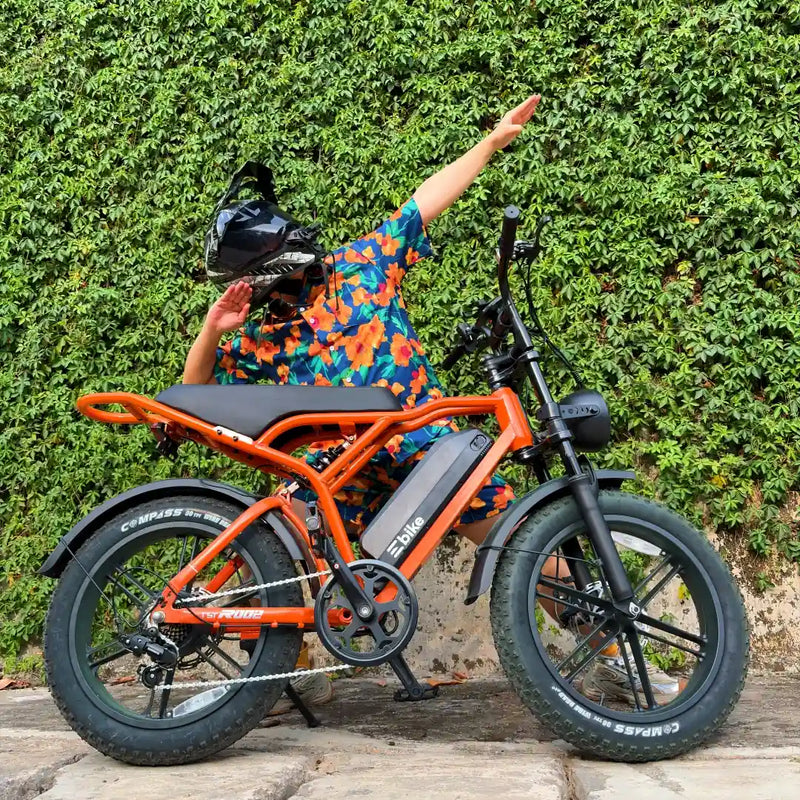
Early electric mopeds prioritized compact frames, low seat heights, and lightweight construction—design principles directly inherited by today's moped-style eBikes. Corbin's focus on practical street-legal commuting and Auranthic's emphasis on affordable range (30 MPH, 50-mile capability) established the template: lightweight, accessible, fun transportation for everyday riders. These principles define modern retro-style eBikes like TSTE Bike's R002, which combines 1970s aesthetics with 2026 performance.
The early electric moped pioneers understood something that modern designers have rediscovered: form follows function, and function must serve the everyday rider. Corbin's designs emphasized modularity and practical engineering—lessons that echo in today's cargo and passenger-capable models. Auranthic, another early innovator, focused on delivering affordable range and speed without breaking the bank, a philosophy that resonates strongly in 2026's budget-conscious eBike market.
What's remarkable is how these 1970s design principles—compact wheelbase, low center of gravity, fat tires for stability, and full-frame construction—have become the blueprint for modern moped-style eBikes. TSTE Bike's R002 20" 1500W Full Suspension Moped-Style Electric Bike, for example, echoes this heritage with a 60.3-inch total length, 37.5-inch wheelbase, and 20" × 4.0" fat tires—proportions that would feel familiar to any 1970s moped enthusiast. The key difference? A 1500W brushless motor delivering 90 Nm of torque, a 48V 15Ah lithium-ion battery system, and full suspension for modern comfort.
Why Did Electric Mopeds Fade After the 1970s and Resurge in the 1990s?
Electric mopeds declined in the 1980s–1990s due to battery limitations (lead-acid technology, short range, slow charging), cheap gasoline, and lack of charging infrastructure. However, the 1990s saw a resurgence driven by lithium-ion battery breakthroughs, environmental awareness, and companies like Peugeot introducing the Scoot'Elec (1996). This cycle mirrors today's 2026 resurgence, powered by advanced battery tech, urban congestion, and climate mandates.
The story of electric mopeds isn't one of continuous progress—it's one of cycles. After the oil crisis eased in the late 1970s and gasoline prices stabilized, electric mopeds lost their economic urgency. Worse, the battery technology of the era was genuinely limiting. Lead-acid batteries were heavy, had short ranges (typically 30–50 miles), took hours to charge, and degraded quickly. Meanwhile, internal combustion engines improved, becoming more fuel-efficient and affordable. By the 1980s, electric mopeds had largely disappeared from consumer consciousness.
But technology doesn't stand still. By the 1990s, lithium-ion battery development—driven by consumer electronics demand—began to transform the landscape. Peugeot's Scoot'Elec (1996) represented the first modern electric scooter designed for urban commuting, achieving ranges of 40–60 miles and top speeds of 25 MPH. It wasn't revolutionary by today's standards, but it proved that electric two-wheelers could be practical and desirable in the modern era.
The 2000s saw explosive growth in electric scooters and eBikes, accelerated by companies like Razor (electric scooters, 2003) and the rise of lithium-ion as the dominant battery chemistry. By 2010, eBikes had become mainstream in Europe and Asia. In the United States, the market grew more slowly due to regulatory barriers and cultural attachment to gas-powered vehicles, but by 2020, the US eBike market was booming—and by 2026, moped-style eBikes represent one of the fastest-growing segments.
What Key Milestones Bridged 1980s–2010s to Modern Electric Mopeds?
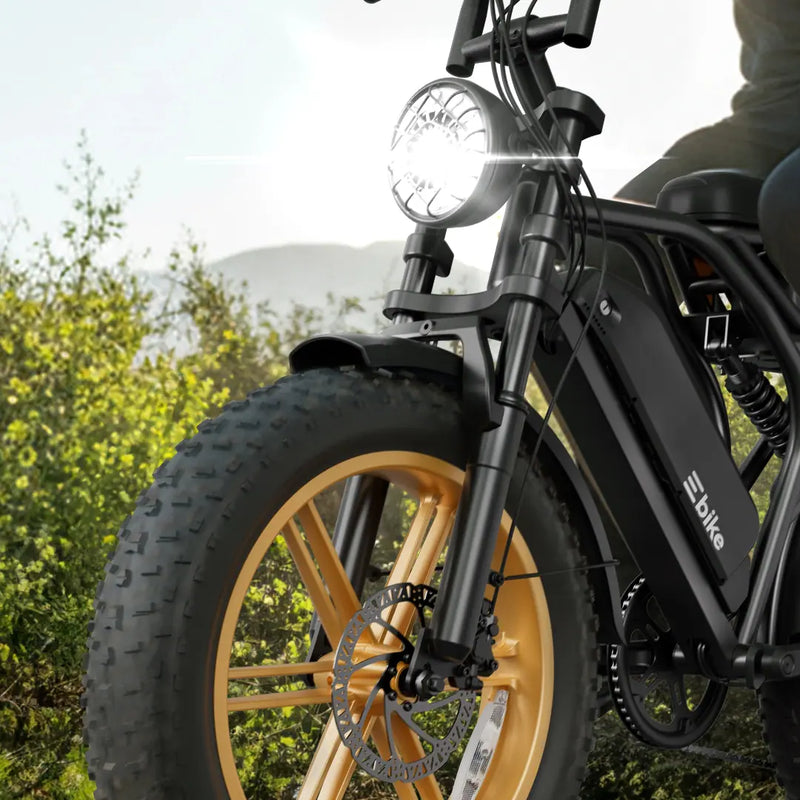
Key milestones include: lithium-ion battery commercialization (1990s), Peugeot's Scoot'Elec (1996), Razor electric scooters (2003), China's eBike explosion (2000s–2010s), US Class 2/3 eBike legalization (2016–2020), and the rise of retro-styled brands like Super73 (2015+). Each milestone expanded range, reduced weight, lowered costs, and normalized electric two-wheelers for mainstream riders, culminating in 2026's advanced moped-style eBikes with 1500W motors and 130-mile ranges.
The journey from 1970s prototypes to 2026 production models involved countless incremental innovations. The 1990s brought lithium-ion batteries, which are roughly three times more energy-dense than lead-acid and far more durable. The 2000s saw brushless hub motors become standard, eliminating maintenance-heavy chain-drive systems. The 2010s brought integrated controllers, throttle systems, and pedal-assist sensors that made eBikes intuitive and safe for non-technical riders.
A critical turning point came in the United States with the 2016 Consumer Product Safety Commission's recognition of eBikes as a distinct category, and subsequent state-by-state legalization of Class 2 (throttle, 20 MPH limit) and Class 3 (pedal-assist, 28 MPH limit) eBikes. This regulatory clarity opened the floodgates for US manufacturers and importers. Brands like Super73 (founded 2015) capitalized on nostalgia for 1970s moped culture, combining retro aesthetics with modern tech—a formula that proved wildly successful and inspired countless competitors.
By 2020, the COVID-19 pandemic accelerated eBike adoption as people sought alternatives to public transit and car travel. Supply chain improvements made lithium-ion batteries cheaper and more reliable. Motor technology advanced, with hub motors now capable of 1000–2000W continuous power and mid-drive motors offering superior torque and hill-climbing. By 2026, the convergence of these trends has created an eBike market unrecognizable from just a decade prior.
How Has Battery and Motor Tech Evolved for 2026 Moped-Style eBikes?
2026 moped-style eBikes feature 48V lithium-ion battery systems (15–25Ah capacity, 720–1200 Wh) delivering 65–130-mile ranges, brushless hub motors (1000–1500W) with 70–90 Nm torque, integrated battery management systems (BMS), fast-charging (4–6 hours), and smart LCD displays showing speed, battery level, and pedal-assist mode. Dual-battery systems (like TSTE's R9) now offer 130-mile ranges—a 6x improvement over 1970s prototypes.
The technical progress is staggering. A 1970s electric moped prototype might have delivered 25 MPH and 50 miles of range using lead-acid batteries weighing 100+ pounds. Today's moped-style eBikes achieve 28–32 MPH top speeds, 65–130-mile ranges, and weigh 70–90 pounds with lithium-ion systems that are safer, more durable, and faster to charge.
The battery revolution is the cornerstone. Modern 48V lithium-ion cells deliver consistent voltage throughout the discharge cycle, unlike older chemistries that degraded unpredictably. Intelligent Battery Management Systems (BMS) monitor individual cell health, prevent overcharging, and extend lifespan to 800–1000 charge cycles (3–5 years of typical use). Samsung and other premium suppliers now offer cells specifically optimized for eBike duty, with integrated thermal management to prevent overheating during fast charging.
Motor technology has evolved equally. Brushless hub motors eliminate the mechanical friction and maintenance of brushed designs. Modern 1500W motors deliver smooth, linear power delivery across the RPM range, with peak torque (80–90 Nm) available from a standstill—ideal for quick urban acceleration and hill climbing. Some 2026 models now incorporate regenerative braking, which captures energy during deceleration and returns it to the battery, extending range by 10–15% in urban riding.
Smart displays represent another leap. Early eBikes offered simple speedometers. Today's LCD displays show real-time metrics: speed, battery percentage, remaining range, pedal-assist level, trip distance, and average speed. Some premium models integrate Bluetooth connectivity, allowing riders to adjust settings via smartphone apps and receive diagnostic alerts.
| Feature | 1970s Electric Prototype | 2000s eBike | 2026 TSTE R002/R7/R9 |
|---|---|---|---|
| Motor Power | 2–5 kW (variable) | 250–500W | 1500W (R002/R7/R9) |
| Battery Type | Lead-acid | Lithium-ion (early) | 48V 15–25Ah lithium-ion |
| Range | 30–50 miles | 40–60 miles | 65–130 miles (dual battery) |
| Top Speed | 25–30 MPH | 20–25 MPH | 28–32 MPH |
| Weight | 100–150 lbs | 50–70 lbs | 71–96 lbs (full suspension) |
| Charge Time | 8–12 hours | 6–8 hours | 4–6 hours |
| Display | None | Basic speedometer | LCD (speed, battery, range, mode) |
| Suspension | Basic spring | Front fork only | Full suspension (front + rear, adjustable) |
What Makes TSTE Bike's R002 the Best Full Suspension Moped-Style eBike?
TSTE Bike's TST® R002 20" 1500W Full Suspension Moped-Style Electric Bike combines retro moped aesthetics with 2026 performance: 1500W brushless motor (90 Nm torque), 48V 15–25Ah lithium-ion battery (65–100-mile range), 32 MPH top speed, full front and rear suspension, LCD display. It ships from California in 1–3 days and includes a 2-year warranty—the longest in its class.
The R002 represents the convergence of 1970s moped culture and 2026 engineering. Its 20-inch fat tires, compact 60.3-inch wheelbase, and low 30.6-inch stand height evoke the proportions of classic mopeds like the Yamaha FS1-E or Fantic Caballero. But the engineering is unmistakably modern.
The 1500W brushless rear hub motor delivers 90 Nm of torque—enough to accelerate from 0–20 MPH in roughly 5 seconds and maintain 32 MPH on flat terrain. The 48V 15Ah standard battery (720 Wh) provides 65 miles of range in pedal-assist mode; the 25Ah Plus variant extends this to 100 miles, making it suitable for weekend adventures or long commutes. Charging takes just 4–5 hours from empty to full, compared to 8–12 hours for older eBikes.
Full suspension—front and rear—is a game-changer for ride quality. The 80mm hydraulic front fork absorbs road vibrations, while the rear suspension handles bumps and potholes. This setup makes the R002 dramatically more comfortable than rigid-frame competitors, especially over longer distances or rough urban streets.
The LCD display shows speed, battery percentage, pedal-assist level (1–5), and trip distance. Riders can adjust assist levels on the fly, shifting from Eco mode (maximum range) to Boost mode (maximum power) depending on terrain and riding conditions. The R002 also includes integrated LED headlight and taillight, essential for safe urban commuting.
Finally, TSTE Bike ships the R002 from its Ontario, California warehouse in 1–3 business days. No waiting weeks for overseas imports. No dealing with international shipping hassles. It arrives ready to ride, with responsive customer support available if you have questions. The 2-year warranty—double the industry standard—reflects TSTE's confidence in build quality.
Why Choose TSTE R7 or R9 for Cargo and Long-Range Retro Riding?
Check: Top-rated electric mopeds in the USA
TSTE's R7 and R9 moped-style eBikes extend the R002's formula for cargo hauling and extended range. The R7 features a modular rear system (passenger seat, cargo rack, or storage box), while the R9 adds dual batteries for 130-mile range. Both deliver 1500W motors, 32 MPH speeds, full suspension, and LCD displays. The R9's dual-battery system is ideal for riders who want weekend trips without recharging; the R7's modularity suits families and delivery riders.
If the R002 is the classic moped, the R7 and R9 are its evolved cousins—designed for riders whose needs extend beyond simple point-to-point commuting.
The TST® R7 1500W Full Suspension Moped-Style Electric Cargo Bike introduces a feature rare in the eBike world: a modular rear system. Instead of being locked into a single configuration, the R7's rear can be quickly swapped between three setups: a comfortable passenger seat (for carrying a friend or family member), a cargo rack (for groceries, packages, or deliveries), or a storage box (for securing valuables or weather-sensitive items). This modularity echoes the customization culture of 1970s mopeds, when riders personalized their bikes with different seats, racks, and accessories. The R7 delivers the same 1500W motor, 32 MPH top speed, full suspension, and LCD display as the R002, but in a 61.5-inch frame optimized for load carrying.
The TST® R9 Dual-Battery 1500W Long-Range Full-Suspension Moped Style Electric Bike takes range to the next level. Its dual 48V 15Ah lithium-ion battery system (48V 15–30Ah total capacity) delivers up to 130 miles on a single charge—a stunning improvement over the R002's 100-mile maximum. The dual-battery system is intelligent: it automatically uses the main battery first, then seamlessly switches to the second battery when the first is depleted. Both batteries can be charged independently or together, and the built-in BMS monitors both packs simultaneously to ensure balanced charging and maximum lifespan.
For riders planning weekend trips, multi-day tours, or simply wanting the security of never running out of charge during a commute, the R9 is transformative. At 130 miles, it rivals the range of many gas-powered mopeds from the 1970s, while offering zero emissions, zero fuel costs, and the ability to charge at home overnight.
| Model | Motor | Battery | Range | Top Speed | Unique Feature | Best For |
|---|---|---|---|---|---|---|
| TSTE R002 | 1500W, 90 Nm | 48V 15–25Ah | 65–100 mi | 32 MPH | Full suspension, LCD, 2-yr warranty | Daily commuting, weekend fun |
| TSTE R7 | 1500W, 90 Nm | 48V 15Ah | 65 mi | 32 MPH | Modular rear (seat/cargo/storage) | Families, delivery riders, cargo |
| TSTE R9 | 1500W, 90 Nm | Dual 48V 15Ah | 130 mi | 32 MPH | Dual-battery auto-switch, intelligent BMS | Long-range touring, extended commutes |
How Do TSTE Moped-Style eBikes Compare to Super73 and Rad Power?
TSTE's R002, R7, and R9 compete directly with Super73 S2 Pro and Rad Power RadRunner 3, offering comparable 1500W motors, 30+ MPH speeds, and fat-tire aesthetics. Key TSTE advantages: 1–3 day California shipping (vs. 5–10 day waits for competitors), 2-year warranty on R002 (vs. 1-year standard), modular cargo systems (R7), and dual-battery 130-mile range (R9). TSTE pricing is competitive or lower, making them ideal for budget-conscious retro riders.
The moped-style eBike market has become crowded with excellent options, so it's worth understanding how TSTE Bike compares to established competitors.
Super73 S2 Pro: Super73 pioneered the retro moped aesthetic for modern eBikes and remains a market leader. The S2 Pro features a 1000W motor, 28 MPH top speed, 48V battery, and distinctive retro styling. It's a solid bike, but the 1000W motor is less powerful than TSTE's 1500W offerings, and Super73 bikes typically take 7–10 business days to ship from California. Pricing is premium—often $1,800–$2,200—compared to TSTE's competitive positioning.
Rad Power RadRunner 3: Rad Power's RadRunner 3 is a capable utility eBike with a 750W motor, 20 MPH top speed (Class 2), and strong cargo capabilities. It's more utilitarian than retro, and the 750W motor is significantly less powerful than TSTE's 1500W. RadRunner 3 pricing is around $1,500–$1,700, but Rad Power's shipping times are notoriously slow (15–30 days), and customer support can be inconsistent.
TSTE Bike Advantages: TSTE's moped-style models deliver more power (1500W vs. 1000–750W), longer range (up to 130 miles with R9), faster shipping (1–3 days from California), and superior warranties (up to 2 years on R002). The R7's modular rear system is unique in the market—no competitor offers this flexibility. Pricing is competitive: R002 typically falls in the $1,600–$1,800 range, making it accessible to riders who might otherwise choose Super73 or RadRunner.
For US riders prioritizing fast delivery, long-term reliability, and retro aesthetics with genuine performance, TSTE Bike represents exceptional value.
What Does the Future Hold for Electric Mopeds Beyond 2026?
Beyond 2026, electric mopeds will likely feature AI-assisted riding modes (predictive range, adaptive power delivery), swappable battery standards (enabling universal charging networks), integrated navigation and safety systems, and lighter materials (carbon fiber, advanced aluminum). Regulatory trends favor higher speed limits (32–35 MPH Class

Leave a comment
This site is protected by hCaptcha and the hCaptcha Privacy Policy and Terms of Service apply.