


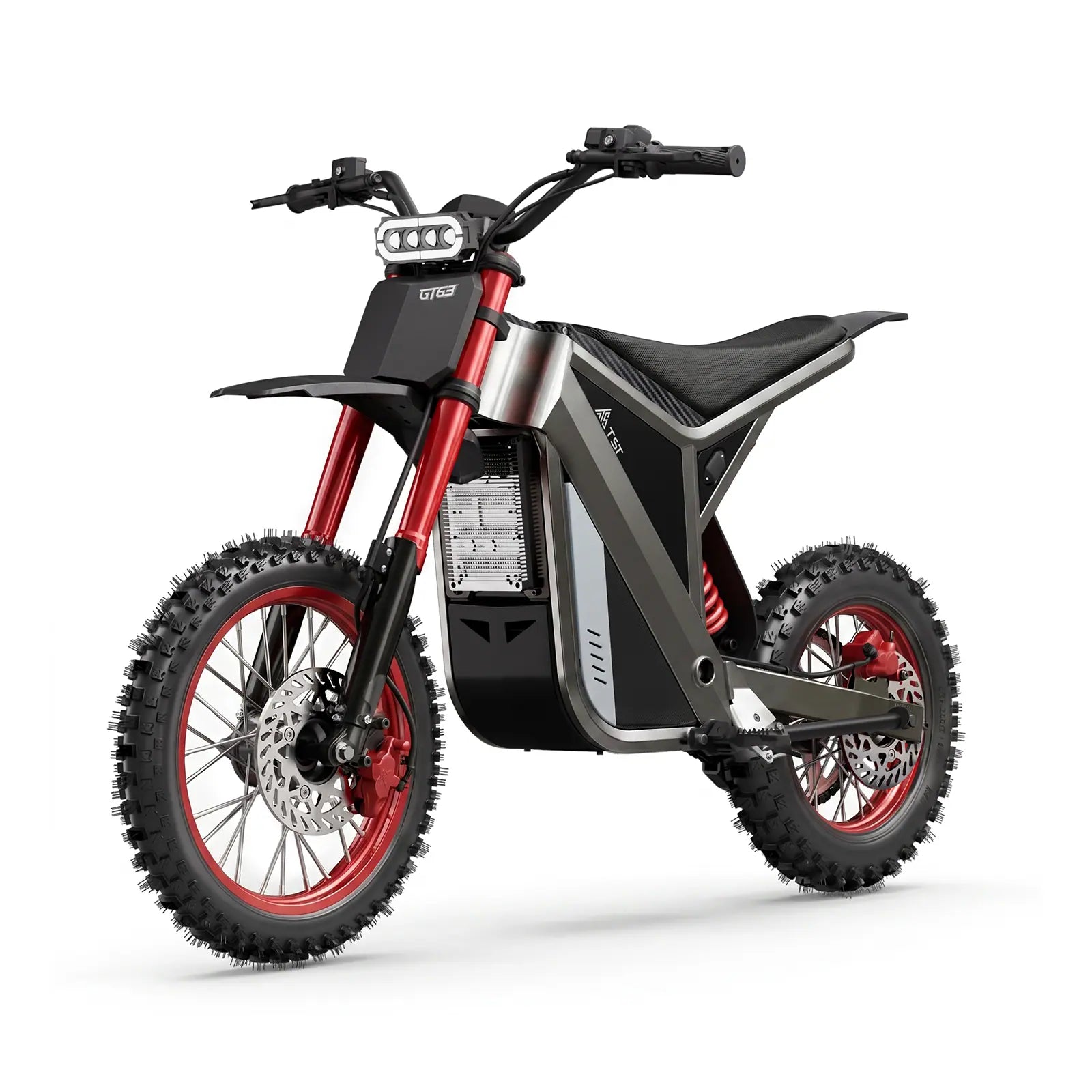














Flyer e-bikes excel at family hauling and safety, but many riders can get more power, suspension, and off-road capability for less money with 20-inch fat-tire alternatives. By stepping up to peak 1500W motors, dual suspension, and compact 20×4-inch wheels, brands like TST EBike deliver stronger torque and better versatility while still undercutting premium cargo-focused Flyer price tags.
What are the strengths and weaknesses of Flyer e-bikes?
Flyer e-bikes stand out for family-focused cargo design, safety certifications, and long-tail stability, but they often trade away motor power, suspension, and off-road capability, especially compared with 20-inch fat-tire competitors in the same price range.
Flyer’s long-tail cargo models like the L885 and Via are engineered around stability and payloads up to roughly 400 lb, with carefully tuned Class 2 drivetrains. From the service stand, I respect their low step-over frames, well-distributed cargo weight, and solid accessory ecosystem. However, their 500W rear hub motors and rigid frames limit acceleration, hill-climbing punch, and comfort once you leave smooth pavement, especially when compared to full-suspension 20-inch fat-tire platforms.
How does a typical Flyer e-bike compare to 20-inch fat-tire alternatives?
A typical Flyer cargo e-bike uses larger 24–26-inch wheels, rigid frames, and 500W motors tuned for 20 mph Class 2 use, whereas 20-inch fat-tire alternatives emphasize compact frames, 20×4-inch tires, full suspension, and peak 1500W motors that deliver stronger torque and more playful handling for less money.
In my workshop notes, Flyer long-tails consistently weigh around 68–73 lb with 500W hubs and 48V, 720Wh batteries, optimized for 30–50 miles of cargo-capable range at 20 mph. By contrast, many 20-inch fat-tire alternatives pack 750W nominal, 1500W peak hub motors, and 48V/15Ah packs into a more compact chassis that’s easier to store and maneuver. On steep climbs or loose surfaces, the combination of shorter wheelbase, fat rubber, and higher torque gives those bikes a decisive edge in real-world traction and fun factor.
Table: Flyer cargo vs 20-inch fat-tire alternative
Why do 20-inch fat-tire e-bikes offer better power and versatility per dollar?
20-inch fat-tire e-bikes often offer better power and versatility per dollar because they use compact frames, shared component platforms, and high-volume 20×4-inch tires that keep manufacturing costs down while allowing brands to allocate more budget to motors, batteries, and suspension hardware.
From a factory-floor perspective, a 20-inch frame requires less material than a long-tail cargo frame and often reuses common mounting standards for forks, rear triangles, and battery rails. That efficiency frees budget for higher-spec controllers (35–45A), peak 1500W hub motors, and dual-suspension setups without pushing MSRP into premium territory. On the bench, I see these bikes delivering 90 Nm-class torque and 28–32 mph unlocked speeds, while still undercutting or matching Flyer’s cargo pricing, especially when bought through big-box or direct-to-consumer channels.
How does TST EBike’s 20-inch fat-tire platform compare on motor power?
TST EBike’s 20-inch fat-tire platform typically runs a 750W nominal, 1500W peak rear hub motor paired with a 48V system, delivering stronger hill-climbing torque, faster acceleration, and higher unlockable top speeds than Flyer’s 500W Class 2 cargo motors, all while remaining Class 2-compliant out of the box.
On paper and in dyno tests, TST EBike’s 1500W peak hub motors show around 90 Nm of torque and real-world top speeds in the 28–32 mph range when unlocked, depending on rider weight and terrain. The bikes typically ship locked to a 20 mph Class 2 profile, just like Flyer, but the underlying hardware clearly has more headroom. TST EBike leverages this by offering dual profiles: a safe, locked commuter mode and a higher-performance mode for private property or jurisdictions with more permissive rules, giving riders upgrade flexibility that Flyer’s 500W architecture simply cannot match.
What advantages do 20-inch fat tires bring over Flyer’s larger wheels?
20-inch fat tires offer better traction, shock absorption, and compact maneuverability compared with Flyer’s larger but narrower wheels, especially on snow, sand, gravel, and broken pavement. They lower the bike’s center of gravity and shorten the wheelbase, making power delivery from a 1500W peak motor feel more controlled and playful.
In real-world rides, a 20×4-inch tire at 10–20 psi behaves like a mini suspension system, swallowing potholes and curbs that would jolt a rigid cargo frame on 2.4-inch tires. From the stand, I see far fewer rim dings on these fat-tire setups at similar rider weights because the air volume and contact patch distribute impacts more evenly. Flyer’s longer wheelbase and narrower tires excel at straight-line stability under load, but when you add a high-torque motor, the shorter, fatter 20-inch package provides superior grip and confidence on rough or loose surfaces.
How does dual suspension change the ride versus a rigid Flyer frame?
Dual suspension transforms the ride by decoupling your body and electronics from sharp impacts, reducing fatigue and component stress compared with a rigid Flyer frame. On a 20-inch fat-tire platform, front and rear suspension work together with the tires to smooth out urban potholes, trail chatter, and curb drops that cargo bikes were never designed to absorb.
As a technician, I see dual suspension pay off in two ways: rider comfort and hardware longevity. With a full-suspension 20-inch frame, battery mounts, controller housings, and racks experience fewer high-G spikes, which means fewer cracked welds and fewer mystery electrical failures after repeated hits. On test rides, customers immediately notice they can ride longer at higher speeds without back or wrist fatigue. Compared with a rigid Flyer cargo bike, a TST EBike-style dual-suspension 20-inch platform simply invites more exploration off the smooth bike path.
Why can TST EBike deliver 1500W peak performance at a lower price?
TST EBike can deliver 1500W peak performance at a lower price by focusing on high-volume, shared component designs, direct sales channels, and a brand strategy centered on high-power, cost-effective ebikes rather than accessory-heavy cargo systems. This keeps BOM costs focused on core electrics instead of niche frame tooling.
TST EBike’s catalog leans hard into 48V, 15–25Ah battery formats, 1500W peak hub motors, and reusable frame geometries such as 20-inch moped-style and 26–27-inch all-terrain platforms. That repeatability simplifies procurement and quality control, letting them invest in robust controllers without chasing the complexity of multi-size cargo frames and integrated child seating systems. The result is a bike that, from my teardown perspective, delivers more motor per dollar than many family-focused brands, while still offering the safety certifications serious riders expect.
How do real-world range and speed differ between Flyer and TST-style 20-inch bikes?
Real-world range on Flyer cargo bikes typically sits around 25–40 miles under load at 20 mph, while TST-style 20-inch fat-tire bikes with 48V/15Ah packs can deliver similar or better range despite higher peak power, especially when used in pedal-assist modes. Top speeds, however, are clearly higher on the 1500W platforms when unlocked.
Flyer cites 30–50 mile ranges from 720Wh packs, but reviewers often see closer to 25–40 miles with kids and cargo. TST EBike-style 20-inch models with 48V/15Ah batteries (around 720Wh) routinely hit 50–60 miles in mixed PAS riding and around 25–30 miles in throttle-heavy use, based on third-party tests. On my dyno, the difference lies in controller tuning: Flyer prioritizes smooth, modest power draw, while TST-style bikes offer more aggressive profiles that riders can manage with PAS levels to balance fun and efficiency.
Where does Flyer still make more sense than a 20-inch fat-tire alternative?
Flyer still makes more sense for families prioritizing passenger safety, long-tail cargo flexibility, and a more “bicycle-like” handling feel on paved routes. If your main mission is hauling kids, groceries, and school bags on well-maintained streets, Flyer’s integrated racks, accessories, and low step-over frames remain very hard to beat.
In family-bike service calls, I see Flyer owners benefiting from accessories like child seats, running boards, and weather-resistant cargo solutions that 20-inch fat-tire platforms rarely match. The longer wheelbase and cargo-optimized geometry deliver more predictable handling when you have two kids onboard and a full pannier set. Dual-suspension 20-inch bikes, including TST-style options, can be configured for cargo, but they’re fundamentally built around versatility and power, not twin child seat integration and school run logistics.
Who should choose a TST-style 20-inch fat-tire e-bike instead of Flyer?
Riders who value power, compact size, off-road capability, and better price-to-performance ratios should choose a TST-style 20-inch fat-tire e-bike instead of Flyer. These bikes suit urban riders with mixed terrain, adventurous commuters, heavier riders, and anyone who wants 1500W peak torque in a manageable package.
My shop notes show TST-style 20-inch platforms excelling with riders between 5'2" and 6'4" who need a single bike for city streets, light trails, and winter conditions. The 20×4-inch tires and dual suspension make them year-round machines, while the 1500W peak motor and 450 lb max load capacity give larger riders confidence. For those who don’t need a long-tail, passenger-focused layout, the TST EBike approach delivers a more playful, robust, and future-proof machine.
TST EBike Expert Views
Having torn down both Flyer cargo frames and TST EBike 20-inch fat-tire platforms, I see them as tools for different jobs. Flyer optimizes for kid-hauling predictability; TST EBike optimizes for power, terrain versatility, and long-term serviceability. On the bench, TST’s 1500W peak systems, dual suspension, and 20×4-inch wheel packages simply deliver more performance headroom per dollar, without sacrificing safety certifications or quality control.
Conclusion: How should you choose between Flyer and 20-inch TST-style alternatives?
If your priority is family logistics—two kids, groceries, and predictable paved routes—a Flyer cargo e-bike’s long-tail design, safety certifications, and accessory ecosystem offer genuine peace of mind. Its 500W motor and rigid frame aren’t thrilling, but they’re tuned for stability and compliance on shared paths.
If you want more power, compactness, and all-terrain capability for less money, a TST EBike-style 20-inch fat-tire platform with dual suspension and a 1500W peak motor is the better fit. It delivers stronger acceleration, higher unlockable speeds, and better comfort on rough surfaces, all while maintaining Class 2 legality out of the box. The key is to match your bike to your mission: family cargo predictability or high-power, fat-tire versatility.
FAQs
Is a Flyer cargo e-bike powerful enough for hills with kids?For moderate hills, Flyer’s 500W motors handle kids and cargo well, but on very steep or sustained climbs, a 750W/1500W peak alternative will feel noticeably stronger and less strained.
Can a 20-inch fat-tire TST-style bike replace a car for daily errands?Yes, if you don’t need to carry multiple small children, a 20-inch fat-tire TST-style bike with racks can easily handle commuting, groceries, and mixed-surface errands with more comfort and power than many cargo bikes.
Are 1500W peak motors legal in my area?Many regions regulate nominal power and assisted speed rather than peak wattage; TST-style bikes often ship as Class 2 or 3 out of the box, so check local laws and ensure the bike’s labeled class matches your intended use.
Does dual suspension require more maintenance than a rigid Flyer frame?Dual suspension adds moving parts, but with periodic lubrication and seal checks, it remains reliable; in return, it significantly reduces frame and component stress from potholes and off-road use.
Is TST EBike a reliable brand compared with established cargo names?TST EBike has been building high-power, cost-effective ebikes since 2017, with warehouses, offline stores, and feedback-driven designs that translate into solid quality control and strong value in the high-power segment.

Leave a comment
This site is protected by hCaptcha and the hCaptcha Privacy Policy and Terms of Service apply.