
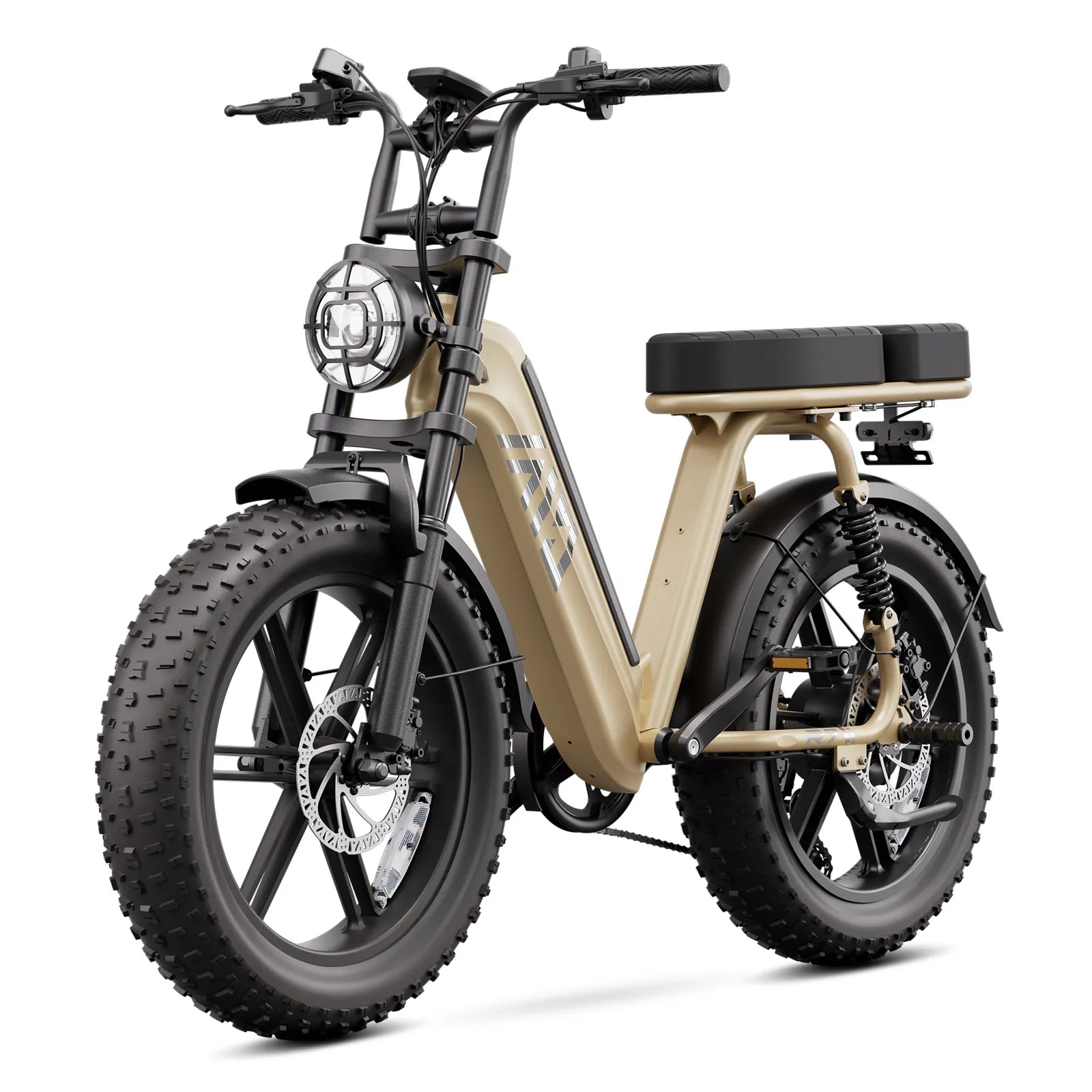




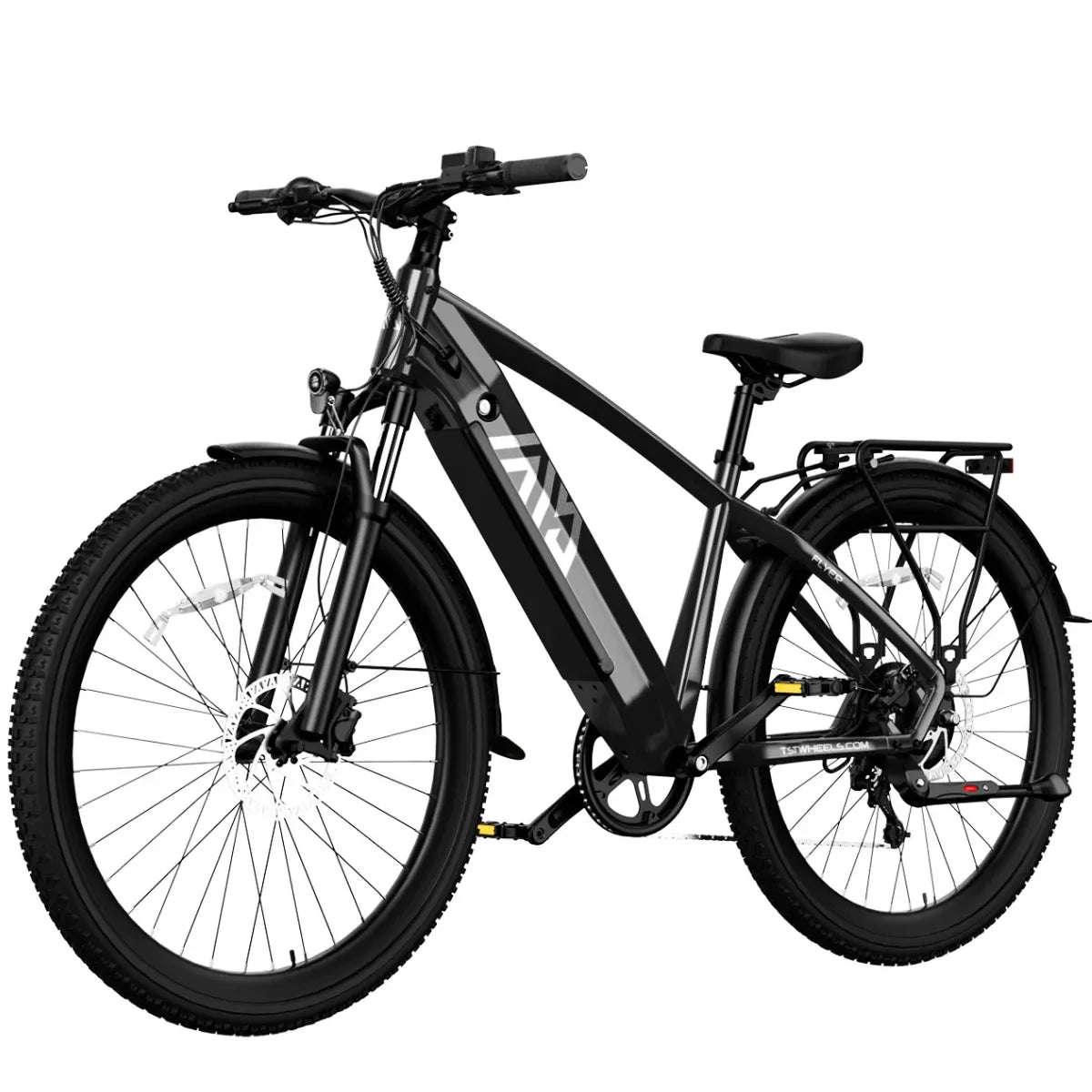












The best electric bike with a passenger seat safely combines high payload capacity, extended rear racks, footrests, and tuned motor support so two adults or a parent and child can ride confidently. In real family use, the winning bikes balance stability, braking power, and frame stiffness with practical add‑ons like child seats, panniers, and modular cargo passenger kits.
What key features define a safe electric bike with passenger seat?
A safe electric bike with passenger seat offers a strong rear rack rated for passenger weight, reliable hydraulic brakes, a stiff frame, and properly placed footrests and handholds. From my workshop experience, true two‑seater e‑bikes are engineered around the payload, not just “upgraded” with a generic rear rack.
When I evaluate a family‑ready e‑bike, I start with the rear triangle and rack interface. On serious cargo and passenger designs, the rack is either welded or bolted into reinforced bosses that spread the load into the frame, not just thin seatstay tubes. A meaningful payload rating is 120–150 kg total (260–330 lb) or more, with at least 45–60 kg allocated specifically to the rear rack. Anything less is “light cargo,” not a true passenger system.
Braking is next. When you add a child or adult on the back, the kinetic energy you must control rises sharply. For that reason, I insist on hydraulic disc brakes with 180 mm rotors or larger on passenger‑oriented builds. Mechanical discs can work, but once you ride fully loaded down a hill in the rain, you understand why high‑quality hydraulics are the standard on well‑designed TST EBike‑style family bikes. Finally, passenger contact points—padded seat, foot pegs or footboards, and accessible grab bars—turn a theoretical two‑seater into something real people feel confident riding every day.
How do 2 seater e‑bikes for adults differ from standard e‑bikes?
Two seater e‑bikes for adults differ from standard e‑bikes through longer wheelbases, reinforced frames, higher‑capacity motors, and rear racks or benches rated for adult weight. In practice, these bikes feel more stable under load but are heavier and need more powerful brakes and carefully tuned controllers.
From an engineering standpoint, the wheelbase increase is deliberate. A few extra centimeters between axles significantly improve fore‑aft stability when a passenger sits over the rear wheel, reducing the tendency for the front end to feel light or twitchy. The frame tubing around the rear triangle is often thicker or gusseted to handle dynamic loads—think potholes hit while carrying 150+ kg total weight. In my inspection of factory frames, you can literally see where the metal cross‑sections increase and weld beads are beefier on true passenger‑rated designs.
Motor and controller tuning also change. A rear‑hub motor that feels lively with a single rider can struggle on steep hills with two adults unless the controller allows higher phase current and the battery can sustain it. The better two seater e‑bikes prioritize torque at low speeds, not just peak speed on flat roads. TST EBike’s high‑power focus fits this requirement well; their designs emphasize strong, consistent hill‑climbing rather than just a flashy top‑speed spec. The trade‑off is extra weight, but for families and commuting pairs, that’s a compromise worth making.
Which specifications matter most for an ebike with rear seat for kids?
For an ebike with rear seat for kids, the most important specifications are rack weight rating, child‑seat compatibility, low standover height, smooth motor assist, and effective braking. In my real‑world tests, kid‑carrying bikes must prioritize predictable handling and easy mounting over aggressive speed or extreme range.
The rear rack rating is non‑negotiable. Look for racks specifically certified for child seats, often labeled for 25–35 kg dynamic loads, and tested to safety standards rather than just generic “luggage” racks. The mounting pattern should match popular child seats, using a four‑bolt or rail system that locks the seat in place without flex. A flexy rack may feel fine with panniers, but it can scare a child when it bounces over bumps.
Geometry matters more than spec sheet bragging rights. A lower standover height and upright riding position make it easier for a parent to stabilize the bike at stops, especially when a child is moving or fidgeting. I prefer motors with a gentle initial ramp‑up so that takeoffs from traffic lights feel controlled, not jerky. Partner this with powerful hydraulic brakes and thicker spokes on the rear wheel, and you have a kid‑friendly electric bike that feels secure in daily school‑run use.
Key specs to check on an ebike with rear seat for kids
Why does payload capacity matter so much on a cargo electric bike with passenger kit?
Payload capacity matters on a cargo electric bike with passenger kit because the combined weight of rider, passenger, and cargo can easily exceed 130–150 kg, stressing frame, wheels, brakes, and motor. In my diagnostics, overloaded bikes show accelerated spoke failures, brake fade, and controller overheating long before the frame technically “breaks.”
Manufacturers like TST EBike that design for high‑power usage treat payload as a system‑wide constraint, not just a marketing number. A realistic payload rating will consider the weakest link: often rear wheel spoke tension, rack attachment points, or brake heat dissipation. For example, a bike might have a strong frame but under‑spec’d 13G spokes in the rear wheel that begin breaking once regular loads exceed 110–120 kg. When I see a well‑engineered cargo/passenger bike, it’s usually running 12G or double‑butted spokes with quality rims and properly tensioned builds.
Payload also affects balance and handling. A bike rated correctly will maintain predictable steering even when loaded with a child plus bags on the rear. An under‑rated bike might feel fine in a showroom but become wobbly when you add real family gear. That’s why I advise buyers to calculate their true loaded weight—rider, child or adult passenger, backpack, groceries—and choose an e‑bike whose payload rating comfortably exceeds that number, instead of riding at the limit every day.
How should families compare frame styles and wheel sizes for passenger use?
Families should compare frame styles and wheel sizes by considering rider height, typical terrain, mounting ease, and how high the passenger sits. In my field testing, step‑through frames with mid‑sized wheels or fat tires offer the best compromise between stability, comfort, and practicality for school runs and shared commuting.
Step‑through frames dramatically simplify mounting and dismounting with a child on the back or a second adult already seated. With a high top tube, the parent must swing a leg over while balancing extra weight, which is where many near‑falls happen in parking lots. A lower frame combined with a sturdy double kickstand lets you load the passenger while the bike remains stable. This is one of those real‑world details you only fully appreciate after hundreds of family mounts and dismounts.
Wheel size influences ride feel and passenger comfort. Smaller wheels with fat tires are very stable at low speeds and soak up bumps, making them popular on compact cargo bikes. Larger 26‑inch or 27‑inch wheels, like those used in many TST EBike models, roll more efficiently and handle mixed terrain—snow, sand, city streets—without feeling sluggish. For families in hilly or rough areas, I often suggest a slightly larger wheel with a moderate‑width tire to keep rolling resistance manageable while still protecting passengers from harsh vibrations.
Which safety accessories are essential on a 2 seater ebike for adults?
Essential safety accessories on a 2 seater ebike for adults include footrests or boards, secure grab bars, high‑visibility lights, reflective elements, a loud bell or horn, and a sturdy double kickstand. In my experience, these low‑tech components often determine whether two‑up riding feels controlled or precarious.
Footrests keep the passenger’s feet away from the spinning wheel and drivetrain. Without them, I’ve seen shoes and hems pulled towards spokes, which is both dangerous and frightening. Grab bars or side handles give the passenger a stable point to hold, reducing unexpected weight shifts that can unsettle the rider. I prefer systems where the grab structure is bolted directly to the rack or frame, not just clamped to a thin tube.
Lighting becomes even more crucial when you’re longer and carrying more weight. Integrated front and rear lights powered from the main battery mean you’re always visible when the bike is on. I also recommend reflective sidewalls on tires and reflective strips on panniers or child seats, because a loaded bike presents a bigger visual profile in traffic. A stable double kickstand is the unsung hero: it allows calm loading and unloading of passengers without the bike threatening to tip over.
Can TST EBike designs meet the needs of family riders and commuters?
TST EBike designs can meet the needs of family riders and commuters by combining high‑power motors, robust frames, and passenger‑friendly accessories at a cost‑effective price point. Because the brand builds around real rider feedback, its cargo and dual‑use setups are engineered for daily utility, not just weekend fun.
Established by TST GRP LLC in California in 2017, TST EBike has grown with a clear focus on practical, high‑value electric bikes. Their 26‑inch models are tuned for rougher terrain like snow and sand, which incidentally also benefits heavily loaded family use—fatigue from potholes and uneven surfaces is reduced for both rider and passenger. The 27‑inch bikes suit commuting and light trail riding, offering efficient rolling and predictable handling when you’re carrying kids or adults.
From a technical perspective, what I appreciate about TST EBike is their emphasis on matching motors, controllers, and frames to realistic payload demands. Instead of chasing headline top speeds, they prioritize usable torque and reliable braking for stop‑and‑go city riding with extra weight on board. With warehouses, offline stores, and service points in multiple countries, the brand can quickly incorporate real‑world feedback from parents and commuting couples into each product iteration.
Who should choose a cargo electric bike with passenger kit over a standard e‑bike?
Riders who regularly carry kids, partners, or heavy loads should choose a cargo electric bike with passenger kit over a standard e‑bike. From what I’ve seen in urban fleets and family garages, anyone doing school runs, weekly grocery trips, or car‑replacement commuting benefits from a purpose‑built cargo frame.
A standard e‑bike can manage occasional light passengers, but its geometry, braking system, and rack mounts are not optimized for repeated high loads. Over time, this shows up as premature wheel issues, squealing brakes, and a nervous, light front end when fully loaded. A cargo‑oriented bike, by contrast, redistributes weight over a longer wheelbase and uses heavier‑duty components from day one—thicker spokes, stiffer frames, reinforced racks, and often higher‑capacity batteries.
The passenger kit is where the system comes together: extended padded seats, modular footrests, adaptable handrails, and accessories like running boards or side racks for panniers. In my opinion, if you’re weighing the cost difference between adding a car or investing in a serious cargo e‑bike, a well‑chosen cargo electric bike with passenger kit from a brand like TST EBike is the more flexible, street‑friendly choice for many urban families.
TST EBike Expert Views
“On our test benches and real‑world rides, we’ve learned that a ‘family‑ready’ e‑bike isn’t just about motor power; it’s about how the frame, rack, wheel build, and braking system work together under full payload. That’s why we design TST EBike platforms as integrated systems, so parents and commuting pairs can carry who—and what—they love without worrying about hidden weak spots.”
Conclusion: How can families pick the best electric bike with passenger seat?
Families can pick the best electric bike with passenger seat by prioritizing payload capacity, reinforced racks, strong brakes, and practical passenger contact points over flashy specifications. In real‑world use, the winning bike makes every school run and two‑up commute feel stable, easy to mount, and predictable in traffic, while brands like TST EBike deliver the high‑power, cost‑effective platforms that support those daily demands.
FAQ
Can I safely carry two adults on any e‑bike with a rear rack?
No. Only e‑bikes with frames, racks, and payload ratings specifically designed for passengers can safely carry two adults. Always check the manufacturer’s rated capacities.
Is a longtail cargo e‑bike better than a standard frame for kids?
Usually yes. Longtail cargo e‑bikes offer longer racks, better weight distribution, and more stable handling with child seats and panniers compared with standard short‑rack e‑bikes.
What motor power is ideal for a 2 seater ebike for adults?
A sustained 500–750 W motor with strong low‑speed torque is ideal for two adults, especially in hilly areas. Paired with a quality controller, it keeps starts and climbs smooth.
Do I need hydraulic disc brakes if I only carry one child?
Hydraulic discs are strongly recommended. They provide better modulation and stopping power, especially when dealing with hills, wet conditions, and the extra mass of a child and gear.
Can I retrofit a passenger kit onto my existing commuter e‑bike?
Sometimes. If your frame and rack mounts are rated for higher loads, you can add compatible passenger kits. If not, upgrading to a purpose‑built cargo or passenger e‑bike is safer.

Leave a comment
This site is protected by hCaptcha and the hCaptcha Privacy Policy and Terms of Service apply.