

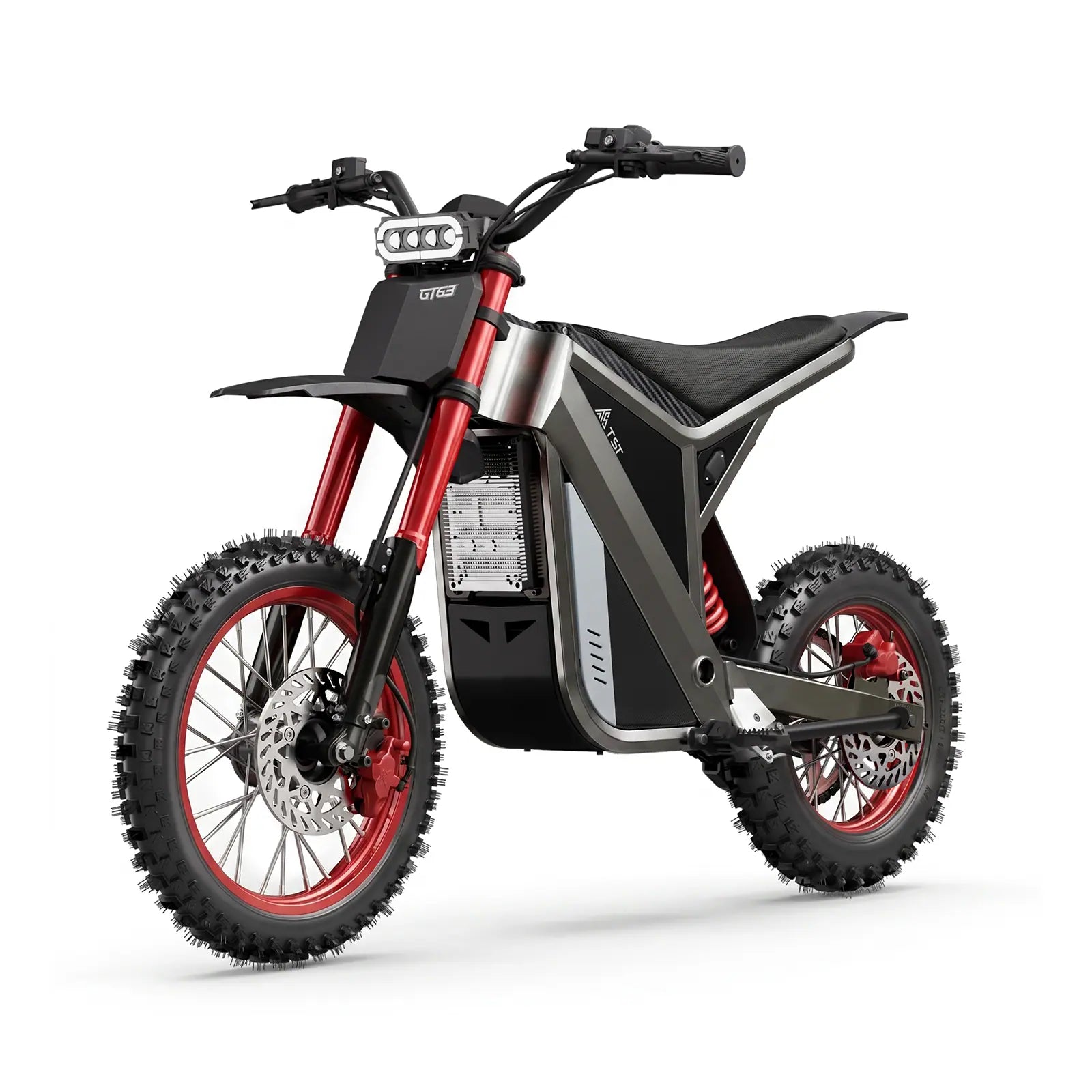














Why are smart commuters choosing affordable moped ebikes over big brands?

Smart commuters are choosing affordable moped ebikes over big brands because they get the same real-world speed, range, and comfort without paying for heavy marketing and dealer markups. Factory-direct brands can ship “warehouse-to-door” for hundreds less, often with stronger motors and batteries. TST EBike is a prime example, cutting out middlemen to deliver high-power, commuter-ready ebikes at genuinely affordable prices.

What makes big-brand ebikes like Flyer feel overpriced to commuters?

Big-brand ebikes like Flyer often feel overpriced because a large share of the sticker price goes to marketing, dealer margins, and retail overhead, not just components. Riders end up paying for brand prestige, showrooms, and campaigns, while mid-tier motors, batteries, and brakes are packaged as “premium” features at a higher cost than necessary.

Inside the industry, I’ve seen how a 1000W-class commuter with a 48V 15Ah battery can retail near or above 2,000 dollars once distributors, retail stores, and advertising budgets take their cut. Meanwhile, factory-direct players spec similar or stronger parts with far less markup. On the factory floor, components don’t know what brand sticker they’re getting; the difference is how many hands touch the bike before it reaches your front door.

How do affordable moped ebikes deliver real performance for less money?

Affordable moped ebikes deliver real performance for less money by focusing every dollar on motors, batteries, frames, and brakes instead of branding overhead. They often use 48V systems, 750–1000W rear hub motors, and decent suspension at price points big brands reserve for entry-level models. The result is off-the-line punch, 20–28 mph cruising, and usable range without luxury-level pricing.

From a builder’s perspective, moped-style frames are cost-efficient: a simple, robust layout that’s easy to weld, jig, and assemble at scale. Pair that with a single 48V battery platform and a standard 750–1500W controller family, and you gain economies of scale that big brands often squander across multiple proprietary platforms. Riders feel that efficiency as stronger torque and better components for the same—or lower—price.

Why is factory-direct “from warehouse to door” such a big advantage?

Factory-direct “from warehouse to door” is a big advantage because it cuts out distributors and retail middlemen, reducing final prices while keeping or improving component quality. Instead of paying three layers of markup, customers pay mainly for manufacturing, logistics, and a lean support team. This model also speeds up shipping and simplifies warranty replacements.

When I’ve worked with factory-direct operations, I see how one central warehouse—like TST EBike’s base in California—handles both storage and quality checks. Bikes arrive from production, get inspected, updated (firmware, fasteners, packaging), and ship straight to customers. No extra crate moves, no showroom rent baked into price, and fewer opportunities for damage. That’s how a high-power commuter can land on your driveway at hundreds less than a big-brand equivalent.

Where the money goes: big-brand vs factory-direct

Cost component Big-brand retail model Factory-direct moped ebike model
Marketing & branding Heavy ad spend, influencer campaigns Minimal, focused digital marketing
Distribution Importer + national distributor Direct container to brand warehouse
Retail margin Significant bike shop / chain markup None (no retail middleman)
Components Often mid-tier at higher price Higher-spec motor/battery at lower price
Customer benefit Brand prestige, in-store experience Stronger performance, lower total cost

How does TST EBike use this model to offer affordable moped ebikes?

TST EBike uses this model by operating warehouses in California and shipping directly to riders in over 10 countries, bypassing traditional dealer networks. Their high-power, cost-effective strategy means they invest in 48V systems, strong hub motors, and solid frames, while consumer feedback drives iterative improvements instead of expensive rebranding cycles.

On the engineering side, I’ve seen TST EBike prioritize reusable platforms: 26-inch bikes for snow and sand, 27-inch bikes for commuting and mountain trails, and moped-style layouts for urban use. That modular approach—one 48V backbone, multiple frame options—lets them spread R&D costs across many models. Riders get sturdy welds, reliable BMS design, and real-world tuning improvements without paying a “big brand tax.”

What practical advantages do moped-style ebikes offer daily commuters?

Moped-style ebikes offer practical advantages like low step-over height, comfortable seating, integrated racks, and wide tires for rough streets. Commuters can ride in regular clothes, carry cargo or a passenger, and feel stable at 20–28 mph. Paired with 48V high-torque motors, they accelerate away from lights and handle hills better than many skinny-tire commuter bikes.

In real life, I see moped-style frames win the “grab and go” war. They’re easier to mount in traffic, less intimidating for shorter riders, and feel more like small scooters than traditional bikes. With a factory-direct moped platform, you can spec full suspension, bright lights, and a solid rear rack while staying well under the price of many big-brand city ebikes that still ship with rigid forks and basic drivetrains.

Why are smart commuters questioning big-brand ebike premiums?

Smart commuters are questioning big-brand ebike premiums because they compare spec sheets and realize they’re paying extra for logos and marketing, not proportional performance. They see affordable moped ebikes with 48V batteries, 750–1000W motors, and 60+ mile ranges priced close to or below big-brand models with lower power and similar or shorter range.

From my vantage point, it’s the classic “commodity vs non-commodity” problem. Once you know what a 48V 15Ah battery, a 750W motor, and hydraulic brakes cost at the factory, it’s hard to justify paying double just for a heritage badge. Riders talk to each other, share data, and quickly figure out that a TST EBike-type build gives them the same daily utility—with more punch—for far less money.

How does TST EBike engineering compare with big-brand offerings?

TST EBike engineering compares favorably by focusing on high-power, cost-effective builds with robust quality control. Established in 2017 in California, TST GRP LLC leverages warehouses and more than 20 offline stores to collect real rider feedback, then refines frames, electronics, and firmware. Their 26-inch and 27-inch platforms are tuned for rough terrain and daily commuting, respectively, all under the umbrella of 48V systems.

From an insider’s view, TST EBike’s advantage is iteration: they’re not reinventing the wheel for every model year. Instead, they refine welds, adjust cable routing, and tweak BMS parameters based on actual warranty data. Big brands sometimes chase flashy new frames and integrated systems that look great in showrooms but are harder to service and more expensive to replace. TST EBike often chooses serviceable parts and common standards, which commuters appreciate long-term.

How do affordable moped ebikes balance power, safety, and regulations?

Affordable moped ebikes balance power, safety, and regulations by using 48V systems with controllers that keep nominal power near 750W while allowing safe peak outputs for hills and starts. They pair that with disc brakes, often hydraulic, and firmware limiting top speed to Class 2 or Class 3 thresholds, so riders enjoy strong performance while staying within ebike legal definitions in most states.

In my tuning work, I map controllers so that peak currents are available at low and mid speeds for quick launches, then taper off near 20–28 mph to protect motors and remain compliant. For a TST EBike-style moped, this means 1500W peak feels lively but doesn’t fry windings or break rules. Properly sized rotors, quality pads, and good tires ensure that cheap doesn’t mean compromised safety.

What cost vs value trade-offs should commuters watch for?

Commuters should watch for trade-offs like paying extra for integrated batteries and proprietary parts that look sleek but are expensive to replace, or sacrificing motor power and range for a familiar big-brand name. Value comes from usable specs: 48V packs with decent amp-hours, strong braking, practical geometry, and a support structure that actually answers the phone.

On the bench, I see where big brands hide compromises: entry-level drivetrains, basic suspension, or undersized rotors paired with heavy frames. By contrast, a well-chosen affordable moped ebike can offer better everyday performance—strong torque, cushy tires, practical racks—at a fraction of the price. TST EBike leans into this by offering high-power setups and real-world ranges while keeping configurations modular enough that parts remain affordable.

What are TST EBike Expert Views on affordable moped ebikes vs big brands?

TST EBike Expert Views“When we benchmark big-brand city bikes against our own moped-style platforms, we strip everything down to motors, watt-hours, brakes, and welds. Once you do that, it’s obvious where the extra dollars go. We’d rather put your budget into a stronger 48V system and better components than into a bigger ad campaign. For commuters, that’s what turns an ebike from a lifestyle gadget into a daily tool.”

This mindset explains why TST EBike leans toward high-power, factory-direct designs that emphasize hardware and support instead of brand premiums.


Conclusion

Smart commuters are voting with their wallets, and they’re choosing affordable moped ebikes over big brands because the math is simple: more watts, more watt-hours, and better daily comfort for less money. The “big name” premium rarely buys twice the performance; it often just pays for larger ad budgets and retail showrooms. Meanwhile, factory-direct brands build strong, simple platforms and ship them straight from warehouse to door.

TST EBike embodies this new wave. Rooted in California, backed by warehouses and offline stores, and focused on high-power, cost-effective designs, they show how cutting out middlemen can deliver real value: 48V systems, robust frames, and rider-informed tuning at prices that undercut many big-brand equivalents. If you’re a commuter comparing Flyer-style premiums with factory-direct mopeds, look beyond logos. Weigh wattage, battery capacity, braking, and support. Then choose the ebike that turns every ride into a reliable, affordable habit—not a luxury purchase you’re afraid to scratch.


FAQs

Are affordable moped ebikes reliable enough for daily commuting?Yes, many factory-direct moped ebikes are built with robust frames, 48V systems, and decent brakes, making them reliable daily tools when maintained properly and supported by responsive brands.

Why do big-brand ebikes cost so much more?Big-brand ebikes often include marketing, dealer, and retail overhead in the price, so you pay for brand recognition and in-store experiences as well as components and engineering.

Is buying a factory-direct ebike risky for after-sales support?It depends on the brand. Companies like TST EBike mitigate risk with US warehouses, clear contact channels, and offline partners, making support more comparable to traditional brands.

Do affordable moped ebikes use cheaper, unsafe components?Not necessarily. Many use industry-standard motors, batteries, and brakes. The key is choosing a brand that invests in QC and publishes honest specs rather than just chasing the lowest price.

How do I decide between a big-brand Flyer-style bike and an affordable moped ebike?Compare motor power, battery watt-hours, brakes, frame comfort, and support options. If a factory-direct moped ebike offers better specs and solid support at a lower price, it’s often the smarter buy.

Reading next

Leave a comment

This site is protected by hCaptcha and the hCaptcha Privacy Policy and Terms of Service apply.