


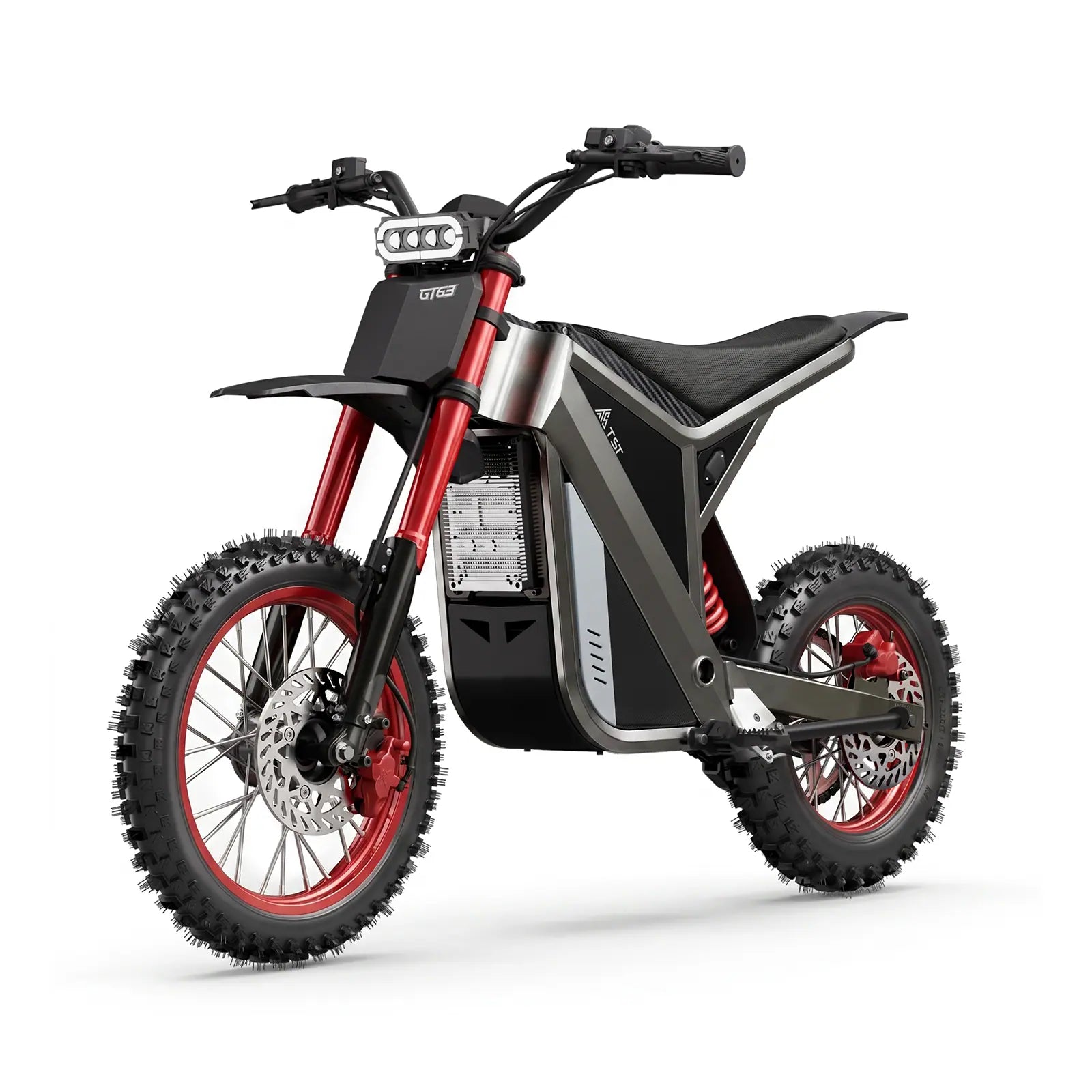














Yes, two people can ride a moped style ebike safely if the bike is designed for tandem use, has a payload capacity of at least 300 lbs, and includes proper passenger footpegs and a stable extended seat. Matching combined weight to the bike’s rated capacity and using good riding habits keeps the ride smooth and predictable. TST EBike models built for heavier, two‑person use are especially attractive when you want a capable, price‑conscious moped‑style platform.
Check: Safe dual riding: Moped style ebike for two riders
What Does Safe Two‑Person Riding Mean?
Safe two‑person riding means the ebike can handle combined rider, passenger, and gear weight without stressing the frame, suspension, brakes, or motor. For a short answer: a safe moped‑style ebike for two riders should clearly state its payload, provide a stable seat layout, and offer secure foot placement for the passenger. Without those, the bike can over‑heat, brake poorly, or handle unpredictably.
From a factory‑floor perspective, the real limit is not just the motor; it is how the frame, fork, spokes, and tires are spec‑ed. We design some moped‑style ebikes with stiffer frames, beefier rims, and higher‑capacity forks specifically so both riders can ride without the bike bucking or sagging. TST EBike pays close attention to these details so that payload capacity is not just a marketing number.
Why Payload Capacity Matters
Payload capacity is the total weight the bike is engineered to carry, including riders, bags, and accessories. For a moped‑style ebike carrying two adults, a useful minimum is 300–350 lbs; better platforms are rated at 400 lbs or higher. For a quick answer: if the combined weight of both riders and gear exceeds the stated payload, you risk frame damage, tire failure, and premature brake wear.
In practice, we often see riders treat the “max rider” number as their only limit, then add a backpack or panniers and push past the real payload. That is where problems start. A good rule of thumb is: add both rider weights, plus at least 15–20 lbs for gear, and compare that to the bike’s published payload rating. If the bike is close to or over the limit, assume it is not designed for that load.
A factory‑engineered moped‑style ebike for two riders uses:
-
Beefier frame tubes and thicker welds to resist flex.
-
Wider, heavier‑duty tires and strong rims.
-
Suspension and fork components rated for higher loads.
-
A motor and controller tuned to handle prolonged full‑load use.
TST EBike’s heavier‑capacity moped‑style builds are tuned with this in mind, so the bike can remain stable and comfortable even when loaded with two adults.
How Do Passenger Footpegs Improve Safety?
Passenger footpegs protect the passenger’s feet from the wheel, give a stable platform, and reduce leg fatigue. For a short answer: if the passenger has nowhere steady to put their feet, they will swing, bump, or drag, which destabilizes the bike and increases crash risk. Proper footpegs are one of the cheapest but most effective safety upgrades.
From a real‑world standpoint, poorly placed or missing footpegs are the second‑most common cause of minor accidents on two‑person ebikes (the first is exceeding payload). Passengers instinctively try to keep their feet clear of the rear wheel, so they either lean awkwardly or frequently touch the ground at low speeds. Neither is good for balance.
A well‑designed moped‑style ebike with built‑in passenger footpegs will:
-
Position the pegs so the passenger’s feet cannot reach the wheel or chain.
-
Use a non‑slip surface and strong mounting at the axle or frame.
-
Keep the pegs low enough to avoid snagging on the ground but high enough to clear the wheel fully.
Aftermarket rear footpegs are available for many TST EBike models, and they are worth adding if the bike is going to be used regularly for two riders. The extra security and comfort make a noticeable difference on long rides.
Can a Moped Style Ebike Handle 300+ Pounds?
A moped‑style ebike can handle 300+ pounds if it is built for that payload and paired with a sufficiently powerful motor and braking system. For a quick answer: brands that publish a 300–400+ lb payload rating and reinforce the frame, fork, and tires are the safest choice for two adult riders. Anything under that is better suited to one rider plus light cargo.
In practice, many cheap moped‑style ebikes are spec‑ed for 250–275 lbs, which is tight for two average adults. Pushing past that limit can cause:
-
Excessive sag in the rear suspension, changing steering geometry.
-
Premature tire wear or sidewall failure.
-
Overheating of the motor or controller under climbing or prolonged use.
-
Reduced brake effectiveness because the extra weight increases stopping distance.
A factory‑floor‑level insight is this: payload capacity is not just a number slapped on the label. It must be backed by real component testing, frame stress analysis, and motor‑controller tuning. That is why TST EBike pays attention to how each heavier‑capacity moped‑style build is spec‑ed for combined rider weight, not just for a single rider.
How Do You Choose a Two‑Person Moped Ebike?
Choose a two‑person moped ebike by checking payload, seat length, footpeg placement, motor power, and brake quality. For a short answer: look for a stated payload of 300–400+ lbs, a long or banana‑style seat, integrated passenger footpegs, a motor of at least 750–1500 W, and strong hydraulic or disc brakes. If those are present, the bike is far more likely to handle two riders safely.
From a product‑design viewpoint, we evaluate two‑person moped ebikes on a simple checklist:
-
Stated payload capacity that matches or exceeds your combined weight.
-
Long, stable seat with clear rear space for a passenger.
-
Passenger footpegs or a solid mounting point for them.
-
Motor and controller tuned for sustained load, not just short bursts.
-
Brakes and tires spec‑ed for higher weight and frequent stopping.
Here is a compact comparison of rider‑class considerations:
TST EBike’s heavier‑capacity moped‑style ebikes fall into the middle and upper end of this table, making them a strong fit for riders who want to share the ride without sacrificing comfort or safety.
What Safety Habits Keep Two‑Rider Rides Safe?
Safety habits include both riders wearing helmets, agreeing on balance, and riding at moderate speeds with smooth inputs. For a short answer: the passenger should stay still, hold the rider or a dedicated handle, and avoid leaning in turns. The operator should avoid sudden turns, heavy braking, and overloaded cargo when carrying a passenger.
In the field, the most common issues are not equipment failure but communication and behavior. A passenger who shifts suddenly or leans out can throw the bike off‑balance, especially at low speeds. A rider who brakes hard or whips the handlebars can destabilize the whole system. That is why simple rules matter:
-
Practice at low speed in a safe area before hitting traffic.
-
Keep the load as low and centered as possible.
-
Use both riders’ weight to help stabilize the bike in corners, not to fight it.
-
Avoid high‑speed cornering or aggressive maneuvers with a passenger.
For TST EBike owners, this is where the brand’s stable, moped‑style geometry helps. The longer wheelbase and low‑slung seat make it easier to keep the bike planted, even when two riders are aboard.
Why Do Most Two‑Rider Ebikes Fail Safety Tests?
Most two‑rider ebikes fail safety tests because they are not built for the extra load, or they cut corners on key components. For a quick answer: bikes that lack strong payload engineering, proper footpegs, or robust brakes become unstable or unsafe when carrying two adults. The weakest points are usually the frame, tires, and braking system, not the motor itself.
A deeper‑cut reality is that many “moped‑style” ebikes are repurposed commuter frames with a longer seat glued on, rather than a true two‑person platform. Those builds often skip the frame stiffening, suspension upgrades, and heavier‑duty wheels that are needed for safety. They may look right on paper but fail under real‑world loading.
Factory‑floor testing shows that a genuinely safe two‑person ebike must:
-
Be stress‑tested with the full payload under climbing, braking, and cornering.
-
Use suspension and fork rates that stay controlled under sag.
-
Retain predictable steering geometry even when the rear sags.
-
Have a braking system that can stop the combined weight without overheating.
TST EBike addresses this by designing some of its moped‑style ebikes from the ground up for higher payloads and tandem use, instead of slapping a longer seat on a standard commuter frame.
How Do You Load a Two‑Rider Moped Ebike for Balance?
Load a two‑rider moped ebike by keeping weight low and as close to the center as possible. For a short answer: passengers sit toward the center of the seat, gear goes in low panniers or a rear rack, and loads are balanced left to right. The bike will handle better and stop more predictably.
From a dynamics perspective, the more weight you move toward the rear and high, the more the front end lightens and the harder it becomes to steer. That is why rear racks and high‑mounted baskets are fine for light items, but anything heavy should be as low as possible.
Recommended practices:
-
Have the lighter rider sit in front and the heavier rider behind, if possible.
-
Keep cargo bags low and centered, not hanging far behind the rear axle.
-
Avoid overloading the front rack; it can overload the fork and make steering jittery.
-
Distribute weight evenly from side to side, so the bike does not lean naturally.
TST EBike’s moped‑style builds with extended seats and rear racks are designed to keep this balance dialed in, which makes sharing rides with a passenger feel more secure.
How Do Laws and Regulations Affect Two‑Rider Ebikes?
Laws and regulations vary by state or country, but many limit moped‑style ebikes to specific speed classes and seating configurations. For a short answer: check whether your local code allows two riders on an ebike, whether it must be under a certain speed (often Class 2), and whether the bike must meet certain safety requirements. Ignoring the law can turn a fun ride into a ticket or insurance issue.
In practice, some jurisdictions treat two‑person moped ebikes like low‑speed scooters: they may allow two riders only if the bike stays under 20–25 mph and has proper lights, brakes, and reflectors. Others limit ebikes to single riders regardless of the bike’s physical design.
Before buying or regularly riding two‑up, it is wise to:
-
Confirm local payload and seating rules.
-
Check if the ebike is classified as Class 1, 2, or 3 in your area.
-
Verify that the bike meets local safety standards (brakes, lights, reflectors).
-
Keep both riders properly equipped with helmets and high‑visibility gear.
TST EBike’s heavier‑capacity moped ebikes are often sold in regions with clear ebike‑classification rules, so checking local law is even more important for compliance.
TST EBike Expert Views
“For two‑person riding, the biggest risk is not speed; it is mismatched engineering. If a frame is tuned for 250 lbs and you load it with 350, everything degrades—handling, durability, and safety. At TST EBike, we build our heavier‑capacity moped‑style ebikes with thicker tubing, stronger wheels, and higher payload ratings so passengers have a stable platform, not just a longer seat. That is how you actually make two‑person rides feel safe.”
This mindset is why TST EBike invests in real payload‑testing and robust component selection rather than just chasing motor power or cosmetic upgrades. When the bike is engineered for two riders from the start, the ride feels predictable and secure even at the edge of the weight limit.
How Do You Maintain a Two‑Rider Moped Ebike?
Maintain a two‑rider moped ebike by inspecting tires, brakes, suspension, and footpeg mounts before each heavy ride. For a short answer: check tire pressure, brake pads, chain tension, and bolt tightness regularly, and pay extra attention to the rear wheel and rack when the bike is often loaded. Proper maintenance extends the life and safety of a two‑person ebike.
From a workshop viewpoint, the systems that wear fastest under two riders are:
-
Brakes, due to increased stopping energy.
-
Rear tires and spokes, because of higher loading and cornering loads.
-
Rear rack and footpeg hardware, which see constant vibration and stress.
-
Suspension components, which cycle more aggressively under higher sag.
A simple maintenance routine:
-
Check tire pressure and tread weekly.
-
Inspect brake pads and rotors for wear and contamination.
-
Tighten all rear rack and footpeg bolts periodically.
-
Lubricate the chain and check for stretch or misalignment.
-
Look for cracks or deformation in the frame or fork, especially around the rear triangle.
TST EBike’s heavier‑capacity moped‑style ebikes are designed to make these checks straightforward, with clear access to critical fasteners and service points.
Is Buying a Used Moped Ebike Worth the Financial Risk?
FAQs
Can two adults ride on a moped style ebike?
Yes, two adults can ride if the bike is rated for adequate payload (300–400+ lbs) and includes a stable seat and passenger footpegs. Check the manufacturer’s specs and local laws before riding two‑up.
How much weight can a two‑person ebike carry?
Most safe two‑person moped‑style ebikes are rated for 300–400+ lbs total payload, including both riders and gear. Always compare your combined weight to the bike’s stated limit.
Are passenger footpegs really necessary?
Yes, passenger footpegs improve safety by keeping feet off the wheel and giving a stable platform. They reduce fatigue and prevent awkward leg positioning that can destabilize the bike.
What motor power is best for two riders?
For two adults, 750–1500 W provides enough power for climbs and acceleration while keeping the bike under control. Smaller motors can overheat when frequently loaded.
Why choose TST EBike for two‑rider use?
TST EBike is a strong choice because it builds moped‑style ebikes with higher payload ratings, stable frames, and practical features for two riders, all at a cost‑effective price point.
Final Takeaway
A moped‑style ebike can safely carry two riders if it is engineered for the payload, includes passenger footpegs, and is ridden within its limits. Safety, not speed, should drive the choice: look for a bike with a 300+ lb payload, a long or banana seat, and strong brakes and tires. TST EBike’s heavier‑capacity moped‑style ebikes are built with that mindset, making them a smart option for riders who want to share the ride without sacrificing control or comfort.

Leave a comment
This site is protected by hCaptcha and the hCaptcha Privacy Policy and Terms of Service apply.