


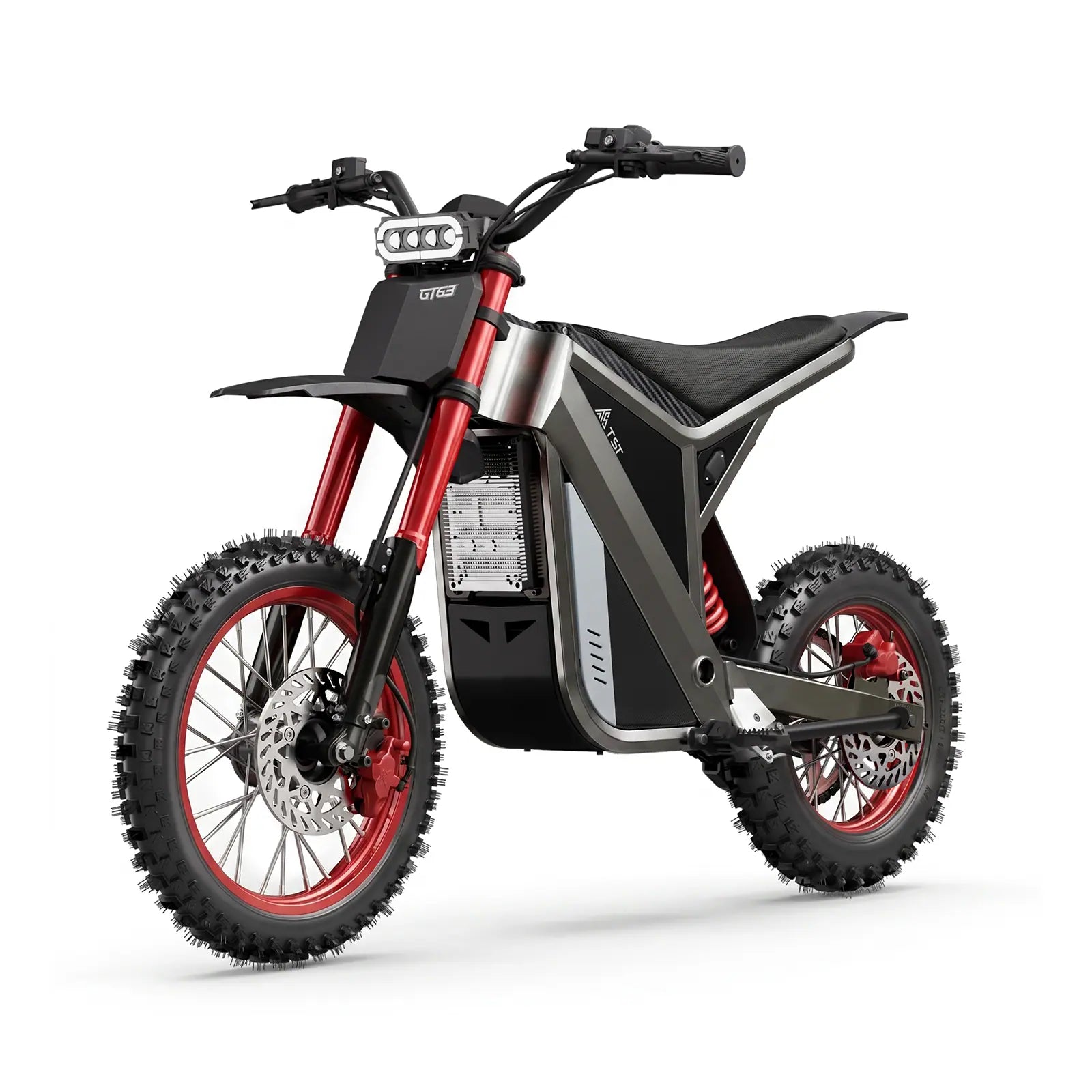














A "1500W" motor and a "1500W peak" motor are not necessarily the same machine, and neither figure tells you what the motor does hour after hour. Nominal (rated, continuous) watts describe sustained output under stated test conditions; peak watts describe a short burst the controller allows before heat forces it back down. The two numbers answer different questions, so putting them side by side only works when you know how each was measured, for how long, and under what load — and for most consumer e-bike listings, that information simply isn't published.
Why the same word "watts" means two different things
A motor's power rating is not one fact — it's a family of measurements that depend on duration. Nominal power (also called rated or continuous power) is the output a motor can sustain indefinitely without the windings overheating or the controller cutting back. Peak power is the highest output the system can push for a short window — typically seconds to about a minute — before heat and current limits force it down toward the sustained level.
The UK-market Avinox M2S controversy in 2026 illustrates why this distinction has real teeth: the motor can produce roughly 1,500 W of peak output, yet it's still legally classified in the UK and EU by its continuous rated power (250 W), because that's the number regulators actually measure. Bosch's own technical documentation draws the same line: rated continuous output is what the drive unit sustains without overheating, while maximum (peak) power is the short-term figure available "for example on climbs." Neither company treats the peak figure as a performance guarantee — it's a ceiling, reachable only briefly and only under favorable conditions like a sufficiently charged battery.
The three things that make a peak-vs-nominal comparison invalid on paper alone
Even when two listings both print a number in watts, the comparison collapses unless three conditions match: the manufacturer's own definitions, the duration the number represents, and the electrical context (controller current limit and battery state) it was measured under.
Definitions aren't standardized. There is no single mandatory test method that all e-bike brands follow when printing a wattage figure. One widely cited independent motor analysis puts it plainly: the same physical hub motor has been sold under 250W, 500W, and 1000W labels with no consistent industry method for arriving at any of those numbers. That means a "1000W" badge from one brand and a "1000W" badge from another can represent meaningfully different real motors.
Peak is a function of the controller and battery, not just the motor. Peak output occurs at the point where the motor controller hits its current limit, which depends on the controller's programming and how much current the battery can supply at that moment — not solely on what the copper windings inside the motor are physically built to handle. A motor with a lower peak rating but a higher-voltage battery can outperform a nominally "more powerful" peak number in daily riding, because voltage affects how well power is sustained at speed. TST's removable battery packs and torque-sensor-equipped drive systems are built around this relationship between controller behavior and rider input, rather than around the peak number alone.
Duration windows vary and are rarely disclosed. Peak-power windows are commonly reported in the 20-to-60-second range in industry technical writeups, with peak often landing at roughly 1.8 to 2.5 times the continuous rating on a 48V hub-motor system. But that ratio is descriptive of common designs, not a guarantee for any specific model — without the manufacturer's own test duration and thermal conditions, a "1500W peak" figure could represent very different real-world burst lengths from one bike to the next.
What this means for TST's own published numbers
TST's current model comparison page lists a Peak Motor wattage figure for every model — for example, 1000 W on the Commuter and Folding lines, 1300 W on the Cargo and All-Terrain models, 1500 W on the Mega-torque, Dual-Battery, and Moped Cargo Bike models, 2200 W on the dirt bike model, and 6000 W on the largest dirt bike model — alongside torque figures ranging from 60 N·m to 339 N·m. No continuous or nominal wattage figure is published alongside these peak numbers on that page.
This is the exact condition the claim-audit test below flags as not comparable: a peak number without a matched continuous number tells you the motor's short-burst ceiling, not what it sustains on a ten-minute climb, a loaded cargo run, or a headwind commute. If you're comparing two TST models by their listed peak watts, you're comparing two ceilings measured under undisclosed conditions — a legitimate limitation, not a defect unique to TST. Reputable independent motor analysis makes the same point about the wider industry: continuous output and heat behavior, not peak wattage, determine what a motor actually delivers ride after ride. For torque and gearing specifics tied to hill performance on a given TST model, see the hub motor explainer, and for full specification tables by model, use the model comparison page.
Torque, gearing, and heat decide more than the watt number
Watts describe total power, but torque — measured in newton-meters (N·m) — describes twisting force at the wheel or motor shaft, and that's what you feel pulling away from a stop or grinding up a grade. Independent guidance on this point is consistent: neither wattage nor torque alone predicts hill performance; you have to compare where torque is measured, the gearing ratio, wheel size, controller current limit, total rider-plus-cargo load, grade, speed, traction, and thermal state together. A geared hub motor typically produces stronger low-speed climbing torque than a same-wattage direct-drive (gearless) hub motor, because the internal gear reduction multiplies torque at the cost of some top-end efficiency and added mechanical wear.
Heat is the variable that ultimately separates nominal from peak in practice. A motor pushed at its peak figure for too long doesn't fail instantly — it heats the copper windings until the controller throttles output back down, sometimes below the nominal rating, until the motor cools. This is also why sustained hill climbing, heavy cargo loads, or high ambient temperatures reduce effective output well before any battery-charge or software limit is reached — a mechanism separate from range or battery state of charge. A bike rated for up to 450 lbs of total payload and 60–80 miles of range on a full charge will feel these thermal limits differently under a light commuter load than under a fully loaded cargo run, which is another reason a single wattage figure can't stand in for real-world performance.
Why a watt number alone cannot establish legal classification
In the United States, the federal "low-speed electric bicycle" definition under 15 U.S.C. §2085(b) sets the threshold at "an electric motor of less than 750 watts," combined with fully operable pedals and a motor-only top speed under 20 mph for a 170-pound rider on a paved, level surface. States including California build their Class 1/2/3 system on the same 750-watt ceiling under Vehicle Code §312.5. Neither the federal statute nor the common state class definitions specify whether "watts" in that context means continuous, peak, or another measurement — the statutory text simply says "motor of less than 750 watts," which means classification questions involving a specific bike's rated output should be confirmed against the applicable state DMV or the exact model's certification record rather than inferred from a marketing figure alone. A peak-wattage figure above 750 W does not by itself mean a bike falls outside e-bike classification, and a peak figure at or under 750 W does not by itself confirm that it qualifies — the applicable continuous rating and the exact jurisdiction's enforcement practice control that answer, and this article does not resolve it for any single configuration.
Buyers who want a general sense of how to evaluate an e-bike's overall build quality alongside its wattage claims typically look beyond the motor spec sheet: hydraulic disc brakes for consistent stopping power, a torque sensor for smoother pedal-assist response, a removable battery for easier storage and replacement, and clear documentation of assembly requirements before purchase. None of these factors changes how a peak or nominal watt figure should be read, but they round out a realistic picture of what a specific bike will feel like to ride and maintain.
A short claim-audit method you can apply to any two motor listings
Before comparing two peak-watt (or two nominal-watt) figures across brands or models, check whether each of the following is actually disclosed. If more than one is missing, treat the comparison as not usable for a purchase decision.
-
Does the listing specify whether the number is continuous/rated or peak/maximum, using the manufacturer's own label rather than your assumption?
-
Is a duration or test condition given for the peak figure (for example, a stated number of seconds before thermal cutback)?
-
Is the controller's current limit or the battery's voltage and discharge capability disclosed, since peak output depends on both rather than the motor alone?
-
Are the two models being compared under the same drive type — hub versus mid-drive, geared versus gearless — since torque delivery differs by design even at equal wattage?
-
Is the same regulatory frame being applied to both, since a wattage figure that satisfies one country's or state's class definition may not satisfy another's?
When the answer to most of these is "not stated," the honest conclusion is that the two figures are not comparable as published — not that one motor is stronger than the other. That's a legitimate stopping point rather than a gap to fill with assumption.
Comparable vs. not comparable at a glance
What to verify before buying on a wattage figure
Confirm the exact continuous (rated) wattage from the specific model's product page or manual rather than relying on the peak figure alone, since TST's current comparison page publishes peak watts without an adjoining continuous rating. Confirm your state's or country's e-bike class definition and its treatment of motor wattage with your local DMV or equivalent authority, since the federal 750-watt threshold does not itself define measurement method and state enforcement can vary. If hill-climbing or cargo-load performance matters for your use, weigh torque, gearing, and drive type together with wattage rather than watts in isolation. If you have questions about a specific model's rated output, TST's customer support team is available around the clock, and bikes ship with a 2-year warranty and a 15-day return window in case the real-world performance doesn't match your expectations.
References
-
CPSC Regulations.gov comment on e-bike classification and 16 CFR 1512.2
-
Bosch eBike Systems — What does maximum power mean in the context of drive units?
-
BikeRadar — Avinox's new 1,500W ebike motor is legal, but Bicycle Association raises concerns
-
Stokebike — E-Bike Torque & Hill Climbing: How Much N·m You Actually Need
-
Kasenbikes — eBike Regulations (California Class 1/2/3 and federal definition)

Leave a comment
This site is protected by hCaptcha and the hCaptcha Privacy Policy and Terms of Service apply.