
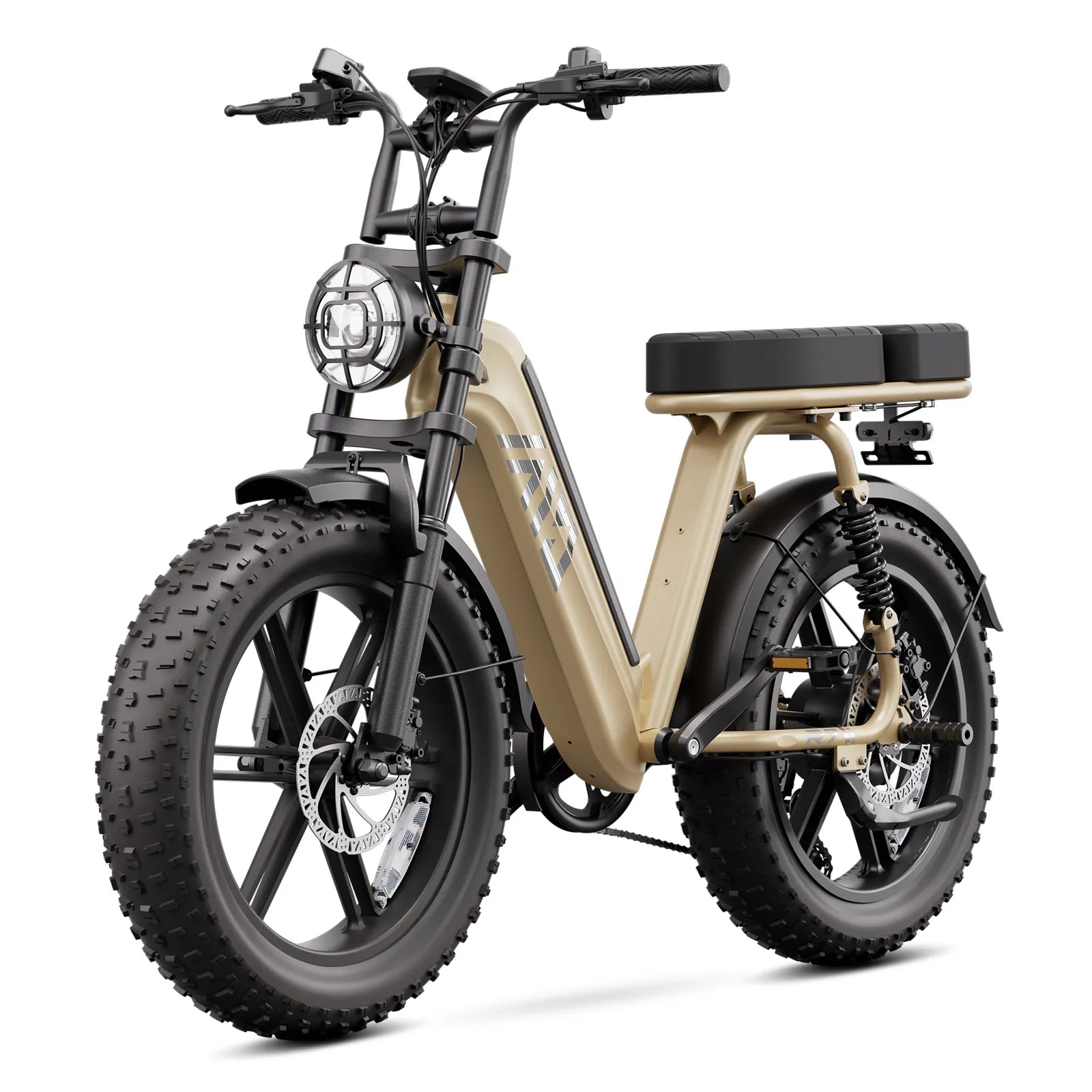
















Ebike insurance helps protect against theft, crash damage, liability, and more. Learn how to compare coverage for an electric bike and insure your TST ride wisely.
Ebike Insurance and Today’s Riding Reality
Ebike insurance has become a practical consideration as electric bikes take on bigger roles in commuting, errands, family transportation, and recreation. In the United States, 1,103 bicyclists were killed on roadways in 2024; while this figure covers bicyclists broadly rather than e-bike riders alone, it underscores the real exposure riders face when sharing roads with motor vehicles.
The risk is not limited to traffic incidents. Theft, vandalism, accidental damage, and battery-related fire hazards can all create costly disruptions. The Consumer Product Safety Commission advises riders to use manufacturer-supplied or approved chargers, remain present during charging, and avoid modified battery packs.
Where TST Ebikes Fit In
TST Ebike offers a broad range of moped-style, cargo, commuter, fat-tire, and folding e-bikes, with listed sale prices on its site generally ranging from about $799 to $1,099 for many featured models. That makes insurance worth evaluating not because a rider expects a loss, but because a replacement, repair, or liability event can quickly exceed the cost of a policy.
For example, the TST R002 full-suspension moped-style e-bike is listed with 1500W power, removable 48V battery configurations, full suspension, and up to 65–100 miles of stated range, depending on configuration.
What Is Ebike Insurance?
Ebike insurance is a dedicated or added insurance policy designed to help cover an electric bicycle against eligible losses such as theft, accidental damage, crashes, personal liability, medical payments, and roadside assistance.
Unlike basic bicycle coverage attached to a homeowners or renters policy, a standalone electric bike insurance policy may offer more tailored protection. However, exact eligibility, exclusions, deductibles, limits, and state availability vary by insurer and by the e-bike’s classification, speed, motor output, and intended use.
Why Home Coverage May Fall Short
A common assumption is that a homeowners or renters policy automatically protects every electric bike in the household. In practice, that assumption deserves scrutiny. Some policies may limit coverage for motorized vehicles, apply a lower limit to bicycles, exclude certain riding uses, or provide no liability protection while the e-bike is being ridden.
The first pain point is theft away from home. A bike stolen from a rack outside a workplace, café, train station, or apartment building may be subject to different terms than one stolen from a garage. Riders should confirm whether off-premises theft is covered and whether a specific lock requirement applies.
The second is damage after a crash. A bent wheel, damaged controller, battery enclosure, suspension component, or cargo accessory can be expensive to repair. A policy may cover collision damage, but it may also require a deductible or exclude wear, maintenance, and cosmetic marks.
The third is liability exposure. If a rider injures someone or damages property, liability coverage may be more important than reimbursement for the bike itself. This is especially relevant for frequent commuting, carrying cargo, or riding in dense urban environments.
Finally, insurance is not a substitute for safe ownership. It will not prevent theft, improve nighttime visibility, or make an unsuitable charger safe. It is a financial backstop—not a replacement for secure locking, maintenance, lawful riding, and responsible charging.
A Statistic Worth Planning Around
In 2024, 1,103 bicyclists were killed on U.S. roadways. The right ebike insurance cannot remove road risk, but it can help riders prepare for covered financial consequences after an unexpected event.
Ebike Insurance Options Compared
Ebike Insurance Features to Compare
Stated-value versus actual-cash-value coverage
Ask whether the insurer pays an agreed value, replacement cost, or a depreciated amount. Keep purchase confirmations, the serial number, photographs, and receipts for installed accessories.
Liability and medical coverage
Review whether the policy can help with third-party injury or property-damage claims, as well as medical-payments coverage for the rider. Coverage limits matter more than a low premium when a serious claim occurs.
Travel, transit, and roadside help
Commuters may value coverage for a bike damaged in transit, recovery transportation after a breakdown, or a theft event occurring away from home. These benefits differ substantially between insurers.
Three Everyday Coverage Examples
A commuter locks an e-bike outside the office, returns after work, and finds the bike missing. Off-premises theft terms, lock rules, and the deductible determine whether a claim may help.
A rider hits a pothole and damages a wheel and suspension component. Collision coverage may be useful if accidental damage is included.
A cargo-bike rider scratches a parked vehicle while maneuvering. Personal liability coverage may be the most consequential part of the policy.
Protect More Than the Bike
A good insurance decision starts with the e-bike’s real role in daily life. A commuter who rides farther and stores the bike in shared parking faces different risks from a weekend trail rider. TST’s catalog makes it possible to match the machine to the use case, then select insurance that reflects that use.
For family hauling and errands, the TST Carrier 20'' Cargo Electric Bike lists a 450 lb total payload capacity, a removable 48V 15Ah battery, and up to 60 miles of stated range. Riders should ask whether a policy includes child-seat equipment, racks, panniers, lights, and other accessories.
For extended-distance riding, the TST R9 dual-battery moped-style e-bike is positioned by TST as a long-range full-suspension model. The more equipment a rider adds, the more important it becomes to document its value.
How to Choose Ebike Insurance
-
Identify the e-bike accurately. Record the make, model, serial number, purchase date, purchase price, battery configuration, and installed accessories.
-
Check local rules first. Confirm how local and state law classifies the e-bike. Speed, power, throttle use, and where the bike is ridden can affect both legal requirements and insurance availability.
-
Read existing policies. Review homeowners, renters, auto, umbrella, and credit-card benefits before buying separate coverage. Ask specifically about electric bicycles rather than assuming “bike” includes an e-bike.
-
Request comparable quotes. Compare coverage limits, deductibles, theft terms, liability limits, medical-payments options, and exclusions—not only annual price.
-
Confirm battery and accessory treatment. Ask whether the battery, charger, helmet, cargo equipment, rear rack, display, locks, and replacement transportation are included. Use only a charger supplied or approved by the manufacturer.
-
Build a claim-ready record. Photograph the bike and accessories, retain receipts, save the serial number separately, and use a high-quality lock. For added carrying capability, consider compatible equipment such as the TST Carrier rear rack, then retain proof of purchase.
Ebike Insurance in Real Life
Scenario: Daily urban commuter
Traditional approach: The rider leaves a standard bicycle at a public rack and relies on a basic lock plus a homeowners policy they have never reviewed.
With a TST e-bike: The rider uses a higher-value electric bike for a longer commute, documents the serial number, confirms off-premises theft terms, and selects a policy that matches frequent on-road use. The goal is not to assume coverage—it is to know the conditions before an incident happens.
Scenario: Family cargo errands
Traditional approach: A parent uses a car for every short errand because carrying groceries, a child seat, or a backpack by bicycle feels impractical.
With a TST e-bike: A rider uses a cargo-focused model to combine transport and daily errands. Because cargo accessories and passenger-related exposure can add complexity, the rider verifies both accessory coverage and personal-liability limits. Safe passenger setup and local riding rules remain essential.
Scenario: Long recreational rides
Traditional approach: A weekend rider takes longer routes but has no plan for a theft stopover, crash damage, or a mechanical issue far from home.
With a TST e-bike: The rider chooses a long-range or full-suspension platform, checks whether the policy includes transport or roadside assistance, and plans charging carefully. Coverage may reduce eligible financial loss, while preventive habits—helmet use, route planning, approved charging, and visible lighting—reduce avoidable risk.
Ebike Insurance FAQ
Do I need ebike insurance if I have homeowners insurance?
Possibly. Homeowners or renters insurance may cover some theft or damage, but motorized-vehicle exclusions, coverage limits, deductibles, and liability restrictions can apply. Ask the insurer whether the exact TST model is covered both at home and while being ridden.
How much does ebike insurance cost?
Cost depends on the bike’s insured value, rider location, deductible, claims history, desired liability limit, theft exposure, and selected add-ons. Some specialist policies advertise starting prices around $100 annually, but an individual quote may be higher or lower.
Does ebike insurance cover theft from a bike rack?
It can, but coverage may depend on the policy’s off-premises theft language, the lock used, whether the bike was unattended, and proof of ownership. Before buying, ask the insurer for its lock requirements and claim documentation rules.
Does ebike insurance cover battery damage or a battery fire?
Some policies may cover accidental damage or theft involving a battery, but policies vary and may exclude damage caused by improper charging, modification, wear, manufacturer defects, or recalled products. Follow manufacturer instructions and CPSC charging guidance; insurance coverage should never be treated as permission to use unapproved batteries or chargers.
Can I insure a 1500W ebike?
Availability depends on the insurer and local regulations. Some insurers set eligibility rules based on e-bike class, motor rating, top assisted speed, throttle capability, or whether the vehicle is legally treated as an e-bike, moped, or another vehicle category. Give the insurer the exact specifications rather than selecting a generic bicycle category.
What should I document for an ebike insurance claim?
Save the purchase receipt, serial number, model name, photos, accessory receipts, maintenance records, and police-report information when applicable. Keep these records in cloud storage or another location separate from the bike.
Conclusion
Ebike insurance is most useful when it is selected with clear eyes: riders should understand their e-bike’s legal classification, existing-policy gaps, theft environment, and personal liability exposure. TST’s varied lineup gives riders practical options for commuting, cargo hauling, long rides, and all-terrain use; the next step is matching that investment with sensible documentation, safe charging habits, secure storage, and appropriately tailored coverage.
Explore TST With Confidence
TST Ebike builds electric bikes for real-world commuting, cargo, comfort, and adventure—from moped-style models to folding and fat-tire options. Explore the lineup, compare specifications for the intended ride, and speak with an insurance professional to confirm what protection fits the rider’s location and usage.
Sources
-
U.S. Consumer Product Safety Commission — Micromobility Information Center (2024)
-
U.S. Consumer Product Safety Commission — Micromobility Products-Related Deaths, Injuries, and Hazard Patterns (2024)
-
U.S. Consumer Product Safety Commission — Universal E-bike Charger Safety Warning (2024)
-
National Highway Traffic Safety Administration — Bicycle Safety
-
Governors Highway Safety Association — Bicyclists, Pedestrians & Micromobility (2025)

Leave a comment
This site is protected by hCaptcha and the hCaptcha Privacy Policy and Terms of Service apply.