


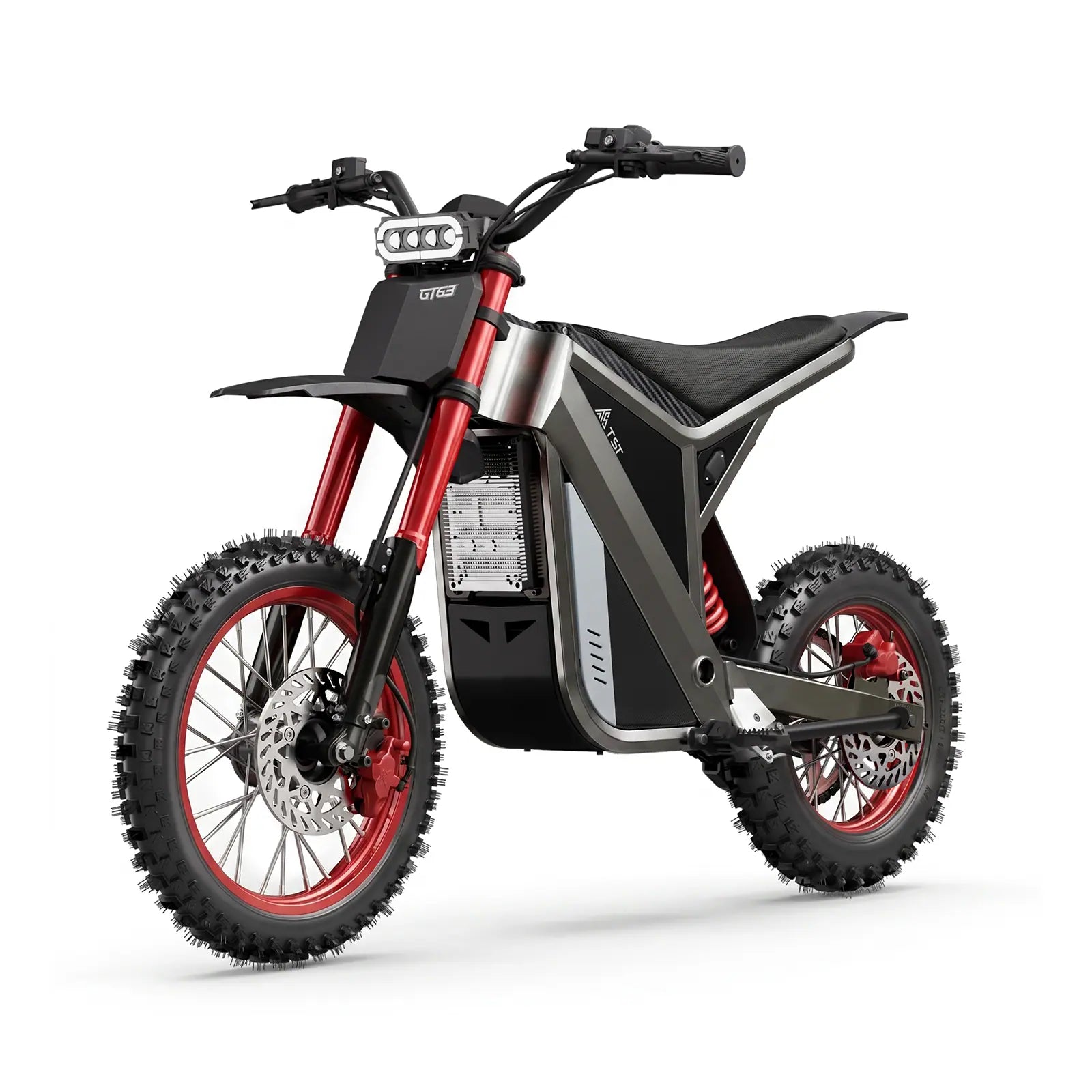














The best 48V ebike charger outputs 54.6V at 2–3A for most TSTE models like the Flyer and Defender, uses smart BMS communication to prevent overcharging, and matches your connector type (typically DC barrel or XLR). TSTE's included 54.6V/3A chargers fully charge 15Ah batteries in 4–5 hours safely, extending lifespan through 20–80% daily charging cycles—avoid generic chargers to prevent fire risks and battery damage.
Check: Smart Charging & Care
What Is a 48V Ebike Charger and How Does It Work?
A 48V ebike charger converts household AC power into controlled DC output (typically 54.6V) to safely recharge lithium-ion battery packs. The charger integrates a smart circuit that monitors voltage and current in real time, protecting your battery's cells from overcharging and heat damage. Most 48V chargers output between 2A and 5A of current, with higher amperage reducing charge time but potentially stressing older batteries. The charger communicates with your battery's built-in Battery Management System (BMS) to optimize each charging cycle and extend overall lifespan.
Modern 48V ebike chargers use a two-stage process called CC/CV (Constant Current / Constant Voltage) charging. During the first stage, the charger delivers a steady current (e.g., 3A) while voltage gradually rises. Once the battery reaches approximately 54.6V—the target voltage for a 13-cell lithium-ion pack—the charger switches to the second stage, where it holds voltage steady while current tapers down. This transition typically occurs around 70–80% state of charge, which is why charging slows dramatically in the final hours. This intelligent tapering protects individual cells from stress and dramatically improves long-term battery health.
All TSTE Bike models ship with manufacturer-matched chargers designed specifically for their battery packs. For example, the TST Flyer, Defender, and Surfer include 54.6V/3A chargers, while the TST Carrier and Buddy use 54.6V/2A chargers. This compatibility ensures safe, optimized charging every time—a key advantage over generic aftermarket chargers that may deliver incorrect voltage or current.
Why Does a 48V Battery Need a 54.6V Charger?
Check: Official Smart Charger
A 48V battery requires a 54.6V charger because lithium-ion cells charge to 4.2V per cell, and a 13-cell pack (13S) multiplies to exactly 54.6V at full charge. Using a lower voltage charger leaves cells undercharged; using significantly higher voltage risks cell damage and fire hazards. The 54.6V output is the industry standard for 48V systems and ensures your battery reaches true 100% capacity safely.
Understanding this voltage relationship is critical for US ebike owners. A 48V battery pack consists of 13 individual lithium-ion cells connected in series. Each cell has a nominal voltage of approximately 3.7V and a maximum safe charge voltage of 4.2V. When multiplied together (13 × 4.2V), the pack reaches 54.6V—the precise target your charger must deliver. If you use a charger outputting only 48V, your battery will never fully charge, reducing available range and forcing more frequent charging cycles that accelerate aging. Conversely, chargers outputting 58V or higher risk overcharging individual cells, which generates excess heat, swells the battery, and can trigger thermal runaway—a serious fire hazard.
TSTE Bike's chargers are engineered to output exactly 54.6V with integrated smart chips that cut power the instant your battery reaches full charge. This precision protects your investment and keeps you riding safely for years.
What Are the Differences Between 48V 2A vs 3A vs 5A Ebike Chargers?
The amperage (A) rating determines charging speed: 2A chargers are slow and gentle (ideal for daily use and battery longevity), 3A chargers balance speed and safety (standard for most TSTE models), and 5A chargers are fast but stress batteries more (best for high-capacity packs or time-sensitive scenarios). Higher amperage means more current flowing into the battery, reducing charge time but generating more heat and stress on cells.
| Charger Type | Amperage | Typical Charge Time (15Ah) | Best For | Battery Stress |
|---|---|---|---|---|
| Slow Charger | 2A | 7–8 hours | Overnight charging, daily commuters, maximum longevity | Minimal |
| Standard Charger | 3A | 4–5 hours | TSTE Flyer, Defender, Surfer, Dreamer, GT63 (most popular models) | Low |
| Fast Charger | 5A | 2–3 hours | Delivery drivers, cargo haulers, high-capacity packs (25Ah+) | Moderate |
For most US ebike owners, a 3A charger strikes the ideal balance. TSTE Bike's standard models—the TST Flyer (1000W, 65-mile range), TST Defender (1300W fat tire, 65-mile range), and TST Surfer (step-thru commuter)—all ship with 54.6V/3A chargers that fully charge their 15Ah batteries in 4–5 hours. This speed is fast enough for daily commuting and weekend adventures while keeping heat generation low. The CC/CV process means you'll reach 80% charge in just 2–4 hours, making quick top-ups practical before work or evening rides.
If you're a daily commuter who charges overnight, a 2A charger is perfectly adequate and extends battery lifespan by minimizing stress on cells. However, if you're a cargo hauler, delivery driver, or own a TST R002 (1500W moped-style, dual-battery capable), a 5A charger or higher may justify the trade-off. The TST Carrier (20" cargo bike, 1300W motor) ships with a 54.6V/2A charger and requires 7–8 hours for a full charge—longer than standard models due to its larger 15Ah capacity and cargo-focused design.
One critical rule: never use a charger rated for higher amperage than your battery supports. Always check your battery's maximum charging current specification before upgrading to a faster charger. TSTE Bike's removable lithium-ion batteries include this information on their labels, and the company's customer support team can confirm compatibility if you're uncertain.
How Long Does It Take to Charge a 48V Ebike Battery?
A 48V 15Ah battery charges in 4–5 hours with a standard 3A charger, 7–8 hours with a 2A charger, and 2–3 hours with a fast 5A charger, though the final 20% always takes proportionally longer due to the CV (constant voltage) taper stage. Real-world times depend on charger amperage, battery capacity, and starting charge level.
TSTE Bike's most popular models—the TST Flyer, Defender, Surfer, and Dreamer—all feature 48V 15Ah batteries and ship with 54.6V/3A chargers, delivering full charges in approximately 4–5 hours. This means you can charge overnight and have a fully topped-up battery by morning, or charge for 2–4 hours during a midday break to reach 80% capacity and extend your afternoon ride. The TST Buddy and Buddy Pro folding eBikes use 48V 10Ah and 48V 15Ah batteries respectively, with 54.6V/2A chargers; expect 4–5 hours for the Buddy Pro and slightly faster times for the smaller Buddy pack.
For cargo and moped-style riders, charging times stretch longer. The TST Carrier (cargo-focused 20" eBike) requires 7–8 hours due to its 15Ah capacity and 2A charger pairing. The TST R002 (1500W moped-style, 15Ah standard or 25Ah Plus variant) charges in 4–5 hours with its 54.6V/3A charger for the standard battery, though the Plus variant with 25Ah capacity may take longer. The TST R7 (1500W full-suspension cargo moped) ships with a 54.6V/2A charger and charges its 15Ah battery in 5–6 hours.
Remember: the CC/CV charging curve means the final 20% always takes disproportionately longer than the first 80%. If you charge to 80% in 2–4 hours and then leave the charger connected for another 2–3 hours to reach 100%, you're adding minimal range while stressing the battery. For maximum longevity, many US ebike experts recommend stopping at 80% for daily use and only charging to 100% before long weekend rides.
Which Connector Types Are Used on 48V Ebike Chargers?
Most 48V ebike chargers use either DC barrel plugs (5.5mm × 2.1mm center-positive) or 3-pin XLR connectors, with DC barrel being lighter and more portable, while XLR offers more secure locking and is common on heavier-duty systems. Always verify your TSTE Bike's connector type before purchasing a replacement or backup charger.
TSTE Bike's removable battery design means you can charge the battery directly using the included charger—no need to keep the entire eBike plugged in. This modularity is a major advantage for apartment dwellers, commuters with limited outlet access, and riders who want to charge at the office or home. Most TSTE models use standard DC barrel connectors, which are lightweight, affordable, and widely compatible. A few specialty models may use XLR connectors, which provide a mechanical lock preventing accidental disconnection—important for high-current systems and professional cargo operations.
Before purchasing any aftermarket charger or replacement, inspect your battery's charging port and note the connector type. TSTE Bike's product pages and user manuals clearly identify connector specifications, and the company's customer support team (based in Ontario, California) can confirm compatibility if you're upgrading or purchasing a backup charger. Mixing connector types or using an incompatible charger can damage your battery's BMS and void your warranty.
How to Charge Your 48V Ebike Battery Safely?
To charge safely: inspect your battery and charger for damage, ensure the charger matches your battery's voltage (54.6V) and connector type, allow the battery to cool 15–30 minutes after hard riding, plug the charger into a wall outlet first (then connect to the battery), monitor temperature during charging, and store at 40–60% charge if not riding for extended periods. Never leave a charging battery unattended in confined spaces like closets or under beds.
Safe charging begins with inspection. Before each charge, visually examine your TSTE Bike battery's exterior casing and connector for cracks, corrosion, or water damage. If you've just finished a long ride or used Boost Mode extensively, allow 15–30 minutes for the battery to cool before connecting the charger. Hot batteries are more vulnerable to BMS errors and cell stress. Next, verify that your charger outputs exactly 54.6V and matches your battery's amperage rating—TSTE's included chargers are pre-matched, but if you're using a third-party charger, double-check the label.
When connecting, plug the charger into the wall outlet first, then connect the DC barrel or XLR connector to your battery. This sequence minimizes sparking at the connector and reduces wear on contacts. Once charging begins, monitor the charger's LED indicator (typically red for charging, green for complete). Feel the battery and charger casing periodically—they should be warm but not hot. If either exceeds 60°C (140°F) or the charger shows an error light, unplug immediately and inspect for damage or debris.
For maximum battery longevity, adopt the 20–80% charging strategy. Rather than charging to 100% daily, aim for 80% most days and only top to 100% before weekend adventures or long commutes. Lithium-ion cells degrade faster when held at full charge, so this simple practice can extend your TSTE Bike battery's lifespan by 30–50%. After charging completes, wait a few minutes before disconnecting to allow the BMS to finish cell balancing. If you won't ride for several weeks, store your battery at 40–60% charge in a cool, dry location—never in freezing temperatures or direct sunlight.
TSTE Bike Expert Views: "All TSTE Bike models ship with chargers specifically engineered for their battery packs—54.6V/3A for our popular Flyer, Defender, and Surfer models, and 54.6V/2A for cargo and folding variants. Our removable battery design means you can charge at home, the office, or anywhere with a standard outlet, giving US riders unmatched flexibility. We recommend the 20–80% daily charging protocol to maximize cycle life, and we always advise customers to use their included charger to maintain warranty coverage. If you need a backup charger or upgrade, our customer support team at tstebike.com can confirm compatibility before purchase. All our batteries include smart BMS protection, but using a non-compatible charger can bypass these safeguards and void your warranty."
What Is the Best 48V Ebike Charger for TSTE Bike Models?
The best 48V charger for TSTE Bikes is the manufacturer-included charger that ships with your model: 54.6V/3A for Flyer, Defender, Surfer, Dreamer, and GT63; 54.6V/2A for Carrier, Buddy, Buddy Pro, and R7. These chargers are engineered for each model's battery capacity and BMS, ensuring optimal performance and warranty compliance. If you need a backup or replacement, TSTE Bike's customer support can recommend compatible third-party options.
| TSTE Bike Model | Battery Capacity | Included Charger | Charge Time (Full) | Ideal User |
|---|---|---|---|---|
| TST Flyer 27.5" Commuter | 48V 15Ah (720Wh) | 54.6V/3A | 4–5 hours | Daily commuters, urban riders |
| TST Defender 26" Fat Tire | 48V 15Ah (720Wh) | 54.6V/3A | 4–5 hours | Trail riders, all-terrain enthusiasts |
| TST Surfer 27.5" Step-Thru | 48V 15Ah (720Wh) | 54.6V/3A | 4–5 hours | Accessible commuting, family riders |
| TST Dreamer 26" Step-Thru Fat Tire | 48V 15Ah (720Wh) | 54.6V/3A | 4–5 hours | Accessible riders, comfort-focused |
| TST R002 20" Moped-Style | 48V 15Ah or 25Ah | 54.6V/3A | 4–5 hours (15Ah) | Recreational, moped-style lovers |
| TST Carrier 20" Cargo | 48V 15Ah (720Wh) | 54.6V/2A | 7–8 hours | Cargo haulers, delivery professionals |
| TST Buddy 20" Folding | 48V 10Ah | 54.6V/2A | 4–5 hours | Commuters, portable/compact needs |
| TST Buddy Pro 20" Folding | 48V 15Ah (720Wh) | 54.6V/2A | 3–4 hours | Foldable commuting, quick charging |
| TST R7 20" Moped Cargo | 48V 15Ah (720Wh) | 54.6V/2A | 5–6 hours | Modular cargo, full suspension |
| TST GT63 14" Electric Dirt Bike | 48V 22.5Ah | 54.6V/3A | 7–8 hours | Off-road riders, performance enthusiasts |
TSTE Bike's lineup spans commuters, cargo haulers, folding models, and high-performance dirt bikes—each with chargers optimized for their specific battery capacity and use case. The TST Flyer, Defender, Surfer, and Dreamer represent the brand's core commuter and recreational range, all equipped with 54.6V/3A chargers and 48V 15Ah batteries. These models charge in 4–5 hours, making them ideal for overnight charging or midday top-ups during work breaks. If you're a delivery driver or cargo professional, the TST Carrier (1300W motor, 450 lbs max load) uses a 54.6V/2A charger due to its cargo-focused design; plan for 7–8 hour full charges, though 80% charge takes only 4–5 hours.
For riders prioritizing portability, the TST Buddy and Buddy Pro folding eBikes ship with 54.6V/2A chargers. The Buddy Pro, with its 48V 15Ah battery and quick-release design, charges in just 3–4 hours—perfect for apartment dwellers or commuters with limited charging windows. The TST R002 (1500W moped-style, available in 15Ah standard or 25Ah Plus variants) and TST R7 (1500W full-suspension cargo moped with modular rear system) both feature 54.6V/2A or 54.6V/3A chargers, with charging times of 4–6 hours depending on capacity.
For performance enthusiasts, the TST GT63 (14" electric dirt bike, 2200W motor, 210 Nm torque) uses a 48V 22.5Ah battery and 54.6V/3A charger, requiring 7–8 hours for a full charge. All TSTE Bike chargers are shipped from the company's Ontario, California warehouse along with your eBike, ensuring you have everything needed to start riding within 1–3 business days of delivery.
Can I Use a Generic 48V Charger on TSTE Bikes?
Using a generic 48V charger on TSTE Bikes is risky and not recommended because generic chargers may output incorrect voltage (not exactly 54.6V), lack smart BMS communication, and void your warranty. Always use the manufacturer-supplied charger or contact TSTE Bike's customer support to confirm third-party compatibility before purchasing.
While it may be tempting to purchase a cheap generic 48V charger online, doing so exposes your TSTE Bike battery to serious risks. Generic chargers often lack the precise 54.6V output and smart chip integration that protects your battery's BMS. If a generic charger outputs 56V or 58V, it can overcharge individual cells, causing swelling, heat generation, and potential thermal runaway. Conversely, a charger outputting only 50V leaves your battery undercharged, reducing range and forcing more frequent charging cycles that accelerate aging.
TSTE Bike's included chargers are engineered specifically for the brand's lithium-ion battery packs, which feature intelligent BMS systems that communicate with the charger to optimize each cycle. This synergy ensures your battery reaches true 100% capacity safely and extends lifespan by 30–50% compared to using incompatible chargers. Additionally, using a non-TSTE charger voids your one-year warranty (two years for select models like the R002) and leaves you without recourse if your battery is damaged.
If you need a backup charger or replacement, contact TSTE Bike's customer support team at tstebike.com. The company can recommend compatible third-party chargers that match your model's specifications and confirm they maintain warranty coverage. For US riders, this personalized service is far safer and more cost-effective than gambling with a generic charger.
Conclusion
Choosing the right 48V ebike charger is essential for maximizing your TSTE Bike's performance, battery lifespan, and safety. The best charger for your model is the manufacturer-included unit—54.6V/3A for commuter and recreational models like the Flyer, Defender, and Surfer, or 54.6V/2A for cargo and folding variants like the Carrier and Buddy Pro. These chargers are engineered to output precisely 54.6V, communicate with your battery's smart BMS, and protect individual lithium-ion cells from overcharging and heat damage.
Understanding the CC/CV charging process, the importance of 54.6V output, and the trade-offs between 2A, 3A, and 5A chargers empowers you to make informed decisions about your charging routine. Adopt the 20–80% daily charging strategy to extend battery cycles, allow your battery to cool before charging after hard rides, and store at 40–60% charge during extended periods away from your eBike. By following these best practices and using your TSTE Bike's included charger, you'll enjoy reliable, fast charging for years to come—and the peace of mind knowing your battery is protected.
All TSTE Bike models ship from Ontario, California with full charger compatibility and responsive customer support. Whether you're a daily commuter, cargo hauler, or adventure rider, TSTE Bike's lineup delivers the range, power, and durability you need—backed by chargers designed to keep you riding safely and efficiently.

Leave a comment
This site is protected by hCaptcha and the hCaptcha Privacy Policy and Terms of Service apply.