
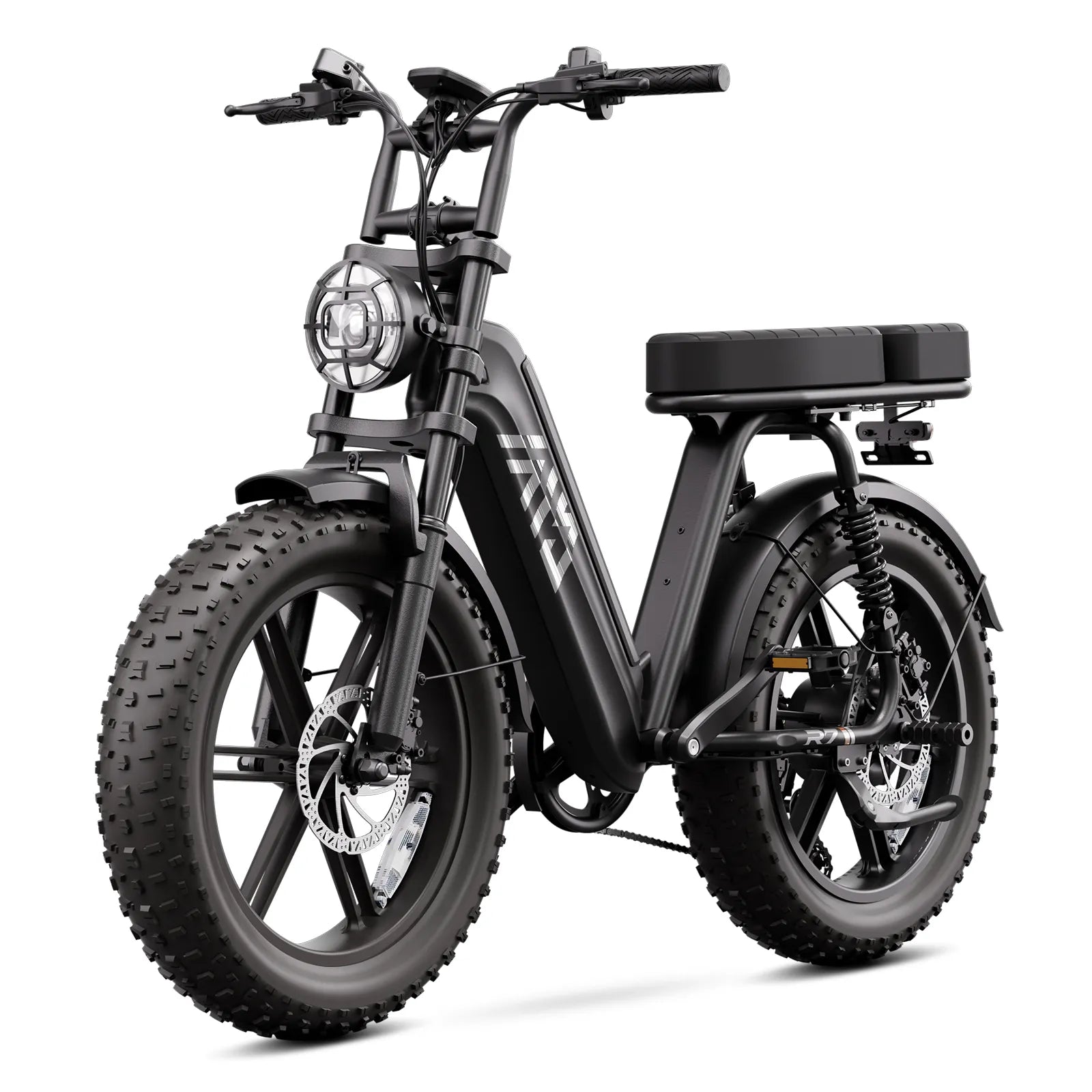
















Explore low-carbon travel ideas, practical e-bike routines, and TST models for cleaner commuting, errands, and local adventures.
Low-Carbon Travel Is Becoming Practical
Low-carbon travel is no longer limited to occasional rail holidays or car-free city breaks. It is increasingly about the repeated decisions people make every week: how they commute, buy groceries, visit friends, reach a station, or explore nearby destinations.
Transportation remains a major source of greenhouse-gas emissions in the United States and Europe, with road travel contributing substantially. Meanwhile, electric bicycles are becoming a practical bridge between walking, public transit, and private-car use—especially for trips that feel too far to walk but unnecessary to drive.
For riders, the goal is not to eliminate every vehicle journey. It is to identify the short, repeatable trips where a lower-carbon option is genuinely safe, convenient, and comfortable enough to become a habit.
Why E-Bikes Enter the Conversation Early
TST E-Bikes offers moped-style, cargo, folding, fat-tire, commuter, and long-range electric bikes designed around everyday mobility needs. Rather than treating an e-bike as a purely recreational purchase, riders can use the right model to reduce dependence on a car for selected local trips.
Models such as the TST R002 combine a moped-style frame with full suspension and wide tires, while cargo and folding models address practical needs such as errands, storage, and multimodal commuting. The best choice depends on route conditions, carrying requirements, local regulations, and charging access.
What Is Low-Carbon Travel?
Low-carbon travel means choosing ways to move that generate fewer greenhouse-gas emissions than higher-emission alternatives. It can include walking, cycling, public transportation, rail, shared transportation, and electric biking when these options replace suitable private-car journeys.
An electric bike is not impact-free: it requires manufacturing, electricity, maintenance, and eventual battery replacement. However, it can be a lower-emission alternative for many short trips when it replaces driving alone in a gasoline-powered vehicle.
The Short-Trip Problem
Short car trips can appear insignificant in isolation. A quick drive to pick up lunch, commute to a nearby office, collect a parcel, or visit a local store may take only a few minutes. But when these journeys happen several times each week, they become an established transport pattern.
Cars remain useful for many situations, including long distances, severe weather, limited mobility, multiple passengers, and large loads. The problem is not that every car trip is unnecessary. The challenge is that a car often becomes the default even when the destination is close, parking is difficult, and the rider would prefer a less stressful option.
Conventional bicycles solve part of this issue, but they do not work equally well for every rider or route. Hills, headwinds, heat, long distances, cargo, physical limitations, and uneven surfaces can make a standard bicycle feel impractical. These barriers are especially important for commuters who need to arrive without excessive exertion.
Electric assistance changes the equation. It allows riders to pedal while receiving support when climbing, accelerating, carrying supplies, or covering longer urban and suburban routes. This can make cycling a more realistic part of an everyday transport mix rather than an activity saved for weekends.
A Statistic Worth Considering
Transportation produced 28% of total U.S. greenhouse-gas emissions in 2022, and on-road vehicles generated most transportation-sector emissions.
The implication is straightforward: the most meaningful low-carbon travel opportunities often come from replacing suitable routine car trips, not from expecting one person to change every part of their travel life overnight.
Low-Carbon Travel Options Compared
TST Features for Low-Carbon Travel
Support for varied terrain
The TST R002 is listed with a 1500W brushless gear motor and 90 N·m of torque. Riders facing hills, uneven surfaces, or heavier loads may value this extra support, but they should always confirm local e-bike classifications and restrictions before riding.
Comfort for repeat rides
TST lists front and rear suspension, 20-by-4-inch puncture-resistant fat tires, front and rear disc brakes, and a Shimano 7-speed drivetrain for the R002. These features are relevant because riders are more likely to replace car trips when their bike feels stable, controlled, and comfortable across real-world streets.
Flexible charging and range options
The R002 has removable 48V battery options in 15Ah and 25Ah capacities. TST states a pedal-assist range of 65–100 miles, although actual range varies with terrain, cargo, weather, tire pressure, rider weight, speed, and assist level.
Low-Carbon Travel in Practice
Ride an e-bike to the grocery store with a rack or basket instead of taking a car for a small weekly shop.
Use an e-bike to cover the first and last mile of a rail commute rather than driving to the station.
Plan a local weekend route around cafés, parks, and waterfront paths without moving a car between stops.
Choosing the Right TST Model
A lower-carbon routine works only when the bike fits the job. Riders who regularly carry groceries, work equipment, or family essentials may find a cargo-focused platform more practical than a standard commuter frame. The TST Carrier Cargo Electric Bike is designed for this type of utility-oriented riding.
For riders whose main concern is longer local routes, the TST R9 Dual-Battery Electric Bike is positioned as a long-range moped-style option. TST advertises up to 130 miles of range under ideal conditions with its dual-battery setup, though every rider should plan around real-world range rather than maximum claims.
For apartment dwellers, RV travelers, or people combining cycling with public transit, the TST Buddy Pro Folding Ebike may offer a more manageable storage format. A folding bike can reduce the friction of indoor storage, but users should still check weight, folded dimensions, transit policies, and elevator access before purchasing.
Build a Better Charging Routine
Charging habits shape whether an e-bike remains convenient enough to replace car trips. Riders should establish a simple pattern: charge after longer rides, check battery level before leaving, and avoid assuming that advertised maximum range applies to every journey.
Use the supplied charger and follow TST’s battery-care guidance. Charge in a dry, suitable indoor location away from heat sources and avoid using visibly damaged cables, chargers, or battery packs. A removable battery can make charging easier for people who cannot bring the full bike indoors.
For longer trips, plan a comfortable range buffer. A route that looks possible on paper may become more demanding because of wind, elevation, cold temperatures, cargo, or frequent stop-and-go riding.
How to Start Low-Carbon Travel
-
Identify repeatable trips. Write down the destinations you visit every week, including work, school, local shops, parks, transit stations, and friends’ homes.
-
Measure realistic distance. Check route distance, elevation, traffic conditions, bike-lane coverage, road quality, and safe parking—not just the fastest driving route.
-
Select the appropriate format. Choose a cargo bike for loads, a folding bike for constrained storage, a moped-style bike for comfort and support, or a long-range model for broader local riding.
-
Learn local requirements. Review local e-bike classifications, speed limits, helmet rules, trail access, lighting regulations, age requirements, and registration obligations.
-
Prepare the rider and bike. Use a helmet, lights, reflective gear, reliable lock, tire pump, and weather-appropriate clothing. Practice braking, turning, signaling, and using assist levels in a low-traffic area.
-
Track trips replaced. For one month, record how many practical car trips were replaced. This creates a more useful picture of impact than focusing on one ride or one week.
Safety Makes Travel Sustainable
Low-carbon travel must also be safe travel. A bike that stays unused because a route feels dangerous will not reduce anyone’s car dependence. Riders should prioritize routes with protected lanes, lower traffic speeds, good lighting, predictable intersections, and reliable surfaces whenever possible.
Before every ride, check tire pressure, brake response, lights, chain condition, and battery security. Cargo should be fastened securely and should not interfere with steering, pedals, wheels, lights, or braking. Riders should reduce speed on wet pavement, gravel, sharp turns, crowded paths, and unfamiliar descents.
High-power e-bikes demand particular attention. Local regulations may limit where certain models may be ridden or whether they can use bike lanes and shared paths. Checking these rules before purchase and before every new route is an essential part of responsible ownership.
Scenario: The Daily Commute
Traditional approach
A commuter drives a few miles to work, spends time in traffic, searches for parking, and repeats the same route five days per week. The journey may be short, but its fuel use, parking cost, and congestion exposure add up.
With a TST e-bike
A TST e-bike can handle the local leg of a commute, either all the way to work or as a connection to a rail or bus station. Pedal assist can reduce the effort of hills and headwinds, while a removable battery supports convenient charging at home or, where permitted, at work.
Best practice
Start with one or two commuting days each week. This lets riders test clothing, parking, battery use, route timing, and weather without making an all-or-nothing commitment.
Scenario: The Weekly Errand Run
Traditional approach
A household uses a car for every grocery run, pharmacy visit, coffee stop, or package collection because carrying items by bicycle feels inconvenient.
With a TST e-bike
The TST Carrier can offer a more suitable approach for regular cargo trips. Riders can use compatible accessories such as racks, baskets, or cargo solutions while staying within the official payload limits and securing every item before departure.
Best practice
Reserve the bike for smaller, predictable errands. Large bulk purchases or trips requiring major cargo may still call for a car, delivery service, or shared vehicle.
Scenario: The Local Weekend Escape
Traditional approach
A rider drives to a nearby park, trailhead, beach, or scenic neighborhood, then drives again between separate stops. The car becomes part of the experience even when the attractions are close together.
With a TST e-bike
A full-suspension, fat-tire model such as the R002 can support a longer local route across mixed surfaces where permitted. Riders can combine sightseeing, coffee stops, parks, and local businesses in one connected trip.
Best practice
Check trail and park rules in advance. Not every shared path, natural-surface trail, or public area allows all e-bike classes, and access rules can vary by city, county, state, or land manager.
FAQ: Low-Carbon Travel and E-Bikes
What are the best low-carbon travel options for short trips?
Walking, conventional cycling, public transportation, and electric bikes are all useful options for short trips. The best choice depends on distance, weather, safety, accessibility, luggage, and available infrastructure. An e-bike is particularly useful when walking is too slow and a standard bicycle feels too physically demanding.
Can an e-bike reduce the carbon footprint of commuting?
An e-bike can reduce a commuter’s travel emissions when it replaces a car journey, especially a solo drive. The full environmental impact still includes electricity generation, manufacturing, maintenance, and battery production. It is best understood as a lower-emission mobility option rather than a zero-impact product.
Is the TST R002 good for low-carbon daily commuting?
The TST R002 may suit riders who value suspension, wide tires, a removable battery, disc brakes, and moped-style comfort. TST lists 15Ah and 25Ah battery options and an advertised pedal-assist range of 65–100 miles. Before using it for commuting, riders should verify that the bike’s settings and classification are legal for their streets, lanes, and paths.
How far can a TST electric bike go on one charge?
TST lists an advertised 65–100-mile pedal-assist range for the R002, depending on battery configuration. The R9 dual-battery model is advertised with a maximum range of up to 130 miles under ideal conditions. Real-world range will be affected by speed, terrain, load, weather, tire pressure, elevation, rider input, and assist level.
Can I combine an e-bike with public transportation?
Yes, many riders use an e-bike for first-mile and last-mile transportation before taking a train, subway, or bus. Check the operator’s current rules for bicycle carriage, peak-hour restrictions, folding-bike policies, station storage, and whether batteries are subject to special requirements.
What should a beginner consider before buying an e-bike for low-carbon travel?
A beginner should consider route safety, local laws, bike storage, charging access, range needs, frame fit, bike weight, cargo requirements, and maintenance. A helmet, lock, lights, weather gear, and secure parking are part of the real ownership cost. Choosing a model that fits the most common trip is generally more valuable than choosing one based only on maximum power or range.
Conclusion
Low-carbon travel is most effective when it is designed around habits rather than ideals. Replacing suitable local car trips with cycling, e-biking, walking, or public transportation can reduce reliance on fuel while making everyday travel more active and flexible.
For many riders, an e-bike is not a complete replacement for a car. It is a practical second option that can handle commuting, errands, station connections, and local exploration. That flexibility is what makes it easier to adopt over time.
Explore TST for Everyday Riding
TST E-Bikes offers electric-bike options for riders seeking moped-style comfort, cargo capability, long-range potential, folding storage, or fat-tire versatility. Explore the lineup to match the bike to your route, cargo needs, local rules, and preferred way of traveling.
Sources
-
U.S. Environmental Protection Agency — Transportation Sector Emissions, 2025
-
U.S. Environmental Protection Agency — Inventory of U.S. Greenhouse Gas Emissions and Sinks, 2024
-
International Energy Agency — Breakthrough Agenda Report: Road Transport, 2024
-
International Energy Agency — Global Road Transport Emissions and COP28 Pathway, 2024
-
European Environment Agency — Sustainability of Europe’s Mobility Systems, 2024
-
World Health Organization — Health Economic Assessment Tool for Walking and Cycling, 2024

Leave a comment
This site is protected by hCaptcha and the hCaptcha Privacy Policy and Terms of Service apply.