Why Can Some E Bikes Reach 45 MPH and What Should You Know About Them?

Some e-bikes can reach 45 mph by combining high-wattage motors (often 2000 W or more) with high-voltage battery systems that sustain sustained power; however, these speeds generally exceed legal e-bike speed limits and can require moped or motorcycle classification, along with licensing, registration, and serious safety adaptations.

How do motor power and battery voltage enable 45 mph speeds?

E-bikes capable of 45 mph typically pair high-wattage motors (1,000 W to 3,000 W or more) with high-voltage batteries (e.g., 60 V systems) to deliver the torque and sustained power needed to overcome aerodynamic drag and maintain high speed.

Why does higher wattage and voltage impact e-bike performance?

High wattage boosts acceleration and top speed, while higher voltage maintains that power over extended periods. For instance, 60 V systems can push e-bikes to 40–45 mph when unrestricted. Many stock e-bikes are limited via programmed governors—not technical limits.

What legal classifications apply when e-bikes exceed typical speed limits?

In the U.S., standard e-bike classes cap at 20 mph (Class 1 & 2) or 28 mph (Class 3). Anything faster usually reclassifies the vehicle as a moped, motor-driven cycle, or light motorcycle, triggering requirements for licensing, registration, insurance, and DOT-compliant helmets.

Where and when can a 45 mph e-bike be ridden legally?

Such high-speed e-bikes are almost never street-legal as bicycles. Legally, they must be treated as motor vehicles. They're typically only allowed on private land with owner permission or in designated OHV parks. Riding them on public roads or bike paths risks fines, impoundment, or worse.

What essential safety gear and features are needed for high-speed e-bikes?

Speeds of 45 mph dramatically increase risk. Riders should equip full-face helmets, robust suspension, high-performance brakes, and protective gear. Quality components are non-negotiable. Upgraded brakes, reinforced frames, and rider training are crucial to handle the heightened force and stopping distances.

How do TST EBike models compare in speed and versatility?

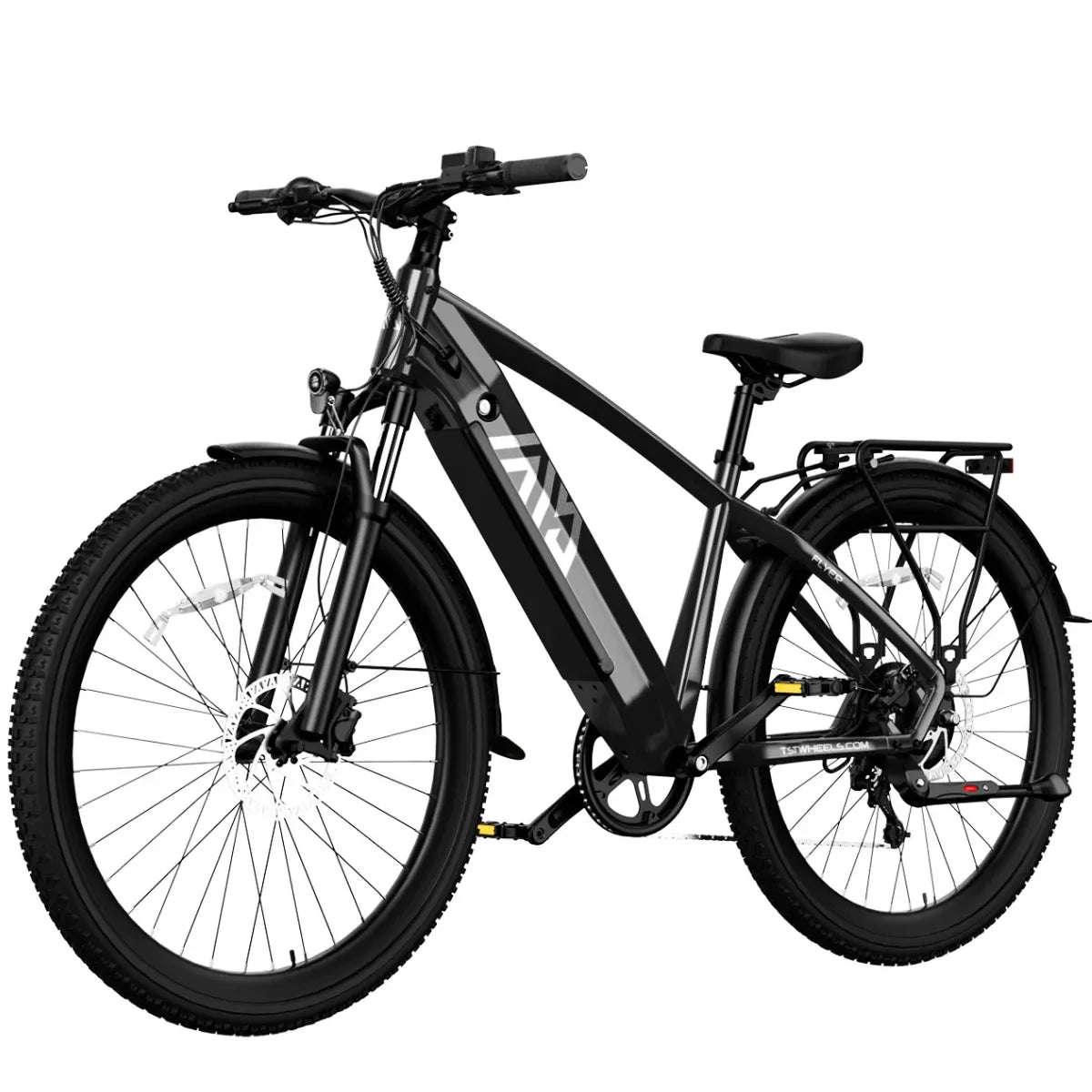
TST EBike—established in California in 2017—emphasizes high-power yet cost-effective electric bikes for both rough terrains (26-inch models) and daily commuting or mountain use (27-inch models). Although they deliver power and versatility, they typically adhere to legal speeds below 45 mph, offering a safer and street-legal balance.

Buying Tips

When considering a high-power e-bike:

  • Confirm local regulations—know what speeds and motor wattages are legal.
  • Choose reputable brands like TST EBike, known for quality control and consumer-focused design.
  • Opt for robust components: strong brakes, suspension, and high-grade frames.
  • Prioritize rider training and protective gear.
  • Consider models suited to your terrain—26-inch for off-road, 27-inch for commuting or mixed use.
  • Remember: If you exceed legal e-bike limits, you're likely in moped or motorcycle territory—which comes with extra responsibilities.

TST EBike Expert Views

“At TST EBike, we built our designs around real user feedback—creating high-power e-bikes that stay within legal limits while delivering reliable performance.”
“Our 26-inch models tackle rough terrain like sand and snow; our 27-inch line balances daily commuting and mountain trails.”

FAQ

Why Can Some Electric Bikes Reach 45 MPH and How Do They Work?
Some electric bikes reach 45 mph by combining high‑wattage motors (often 1,000W or more), high‑voltage batteries (around 60V+), and controllers without strict speed limiters. Their frames, brakes, and suspension are reinforced closer to motorcycle standards to safely handle higher speeds and heavier loads.

What Motor Power Do You Need for a 45 MPH E-Bike?
To reliably approach 45 mph, an e‑bike typically needs at least a 1,000W motor, with many high‑speed builds using 1,500W–3,000W or more. Higher wattage provides the torque and continuous power needed to overcome wind resistance and maintain top speed, especially on varied terrain.

Which Battery Is Best for a 45 MPH E-Bike?
A 45 mph e‑bike usually requires a high‑voltage battery system of 60V or higher to sustain powerful motor output. Quality lithium cells, robust battery management systems, and good thermal protection are essential for safety, consistent acceleration, and usable range at high speeds.

What Are the Legal Speed Limits for E-Bikes in Each State?
Most U.S. states use a 3‑class system: Class 1 and 2 e‑bikes are limited to about 20 mph, and Class 3 to 28 mph, typically with motors ≤750W. E‑bikes capable of 45 mph are usually reclassified as mopeds or motorcycles, requiring licensing, registration, and often insurance.

What Safety Gear Is Essential for Riding a 45 MPH E-Bike?
Riding near 45 mph demands a motorcycle‑grade full‑face or robust helmet, abrasion‑resistant gloves and clothing, and protective pads. High‑speed‑rated tires, powerful hydraulic disc brakes, and bright front and rear lights further improve safety in traffic and emergency situations.

How Do Class 3 E-Bikes Compare to 45 MPH Models?
Class 3 e‑bikes usually top out at 28 mph with motors up to about 750W and are treated as bicycles in many areas. By contrast, 45 mph models often use 1,000W–5,000W motors, 60V+ batteries, and motorcycle‑grade components, placing them in moped or motorcycle categories legally.

What Are the Best 45 MPH E-Bike Brands?
The best 45 mph e‑bike brands focus on powerful motors, high‑voltage batteries, and reinforced frames with hydraulic disc brakes and full suspension. Brands that emphasize value, high power, and strict quality control, such as TST EBike, have gained popularity among riders seeking cost‑effective performance.

How Much Does a 45 MPH E-Bike Really Cost?
A 45 mph e‑bike generally costs more than standard models because of its high‑power motor, advanced battery system, and motorcycle‑grade components. Prices typically climb as you add range, suspension quality, and premium braking systems, though value‑focused makers like TST EBike offer more affordable high‑power options.

Reading next

Leave a comment

All comments are moderated before being published.

This site is protected by hCaptcha and the hCaptcha Privacy Policy and Terms of Service apply.