


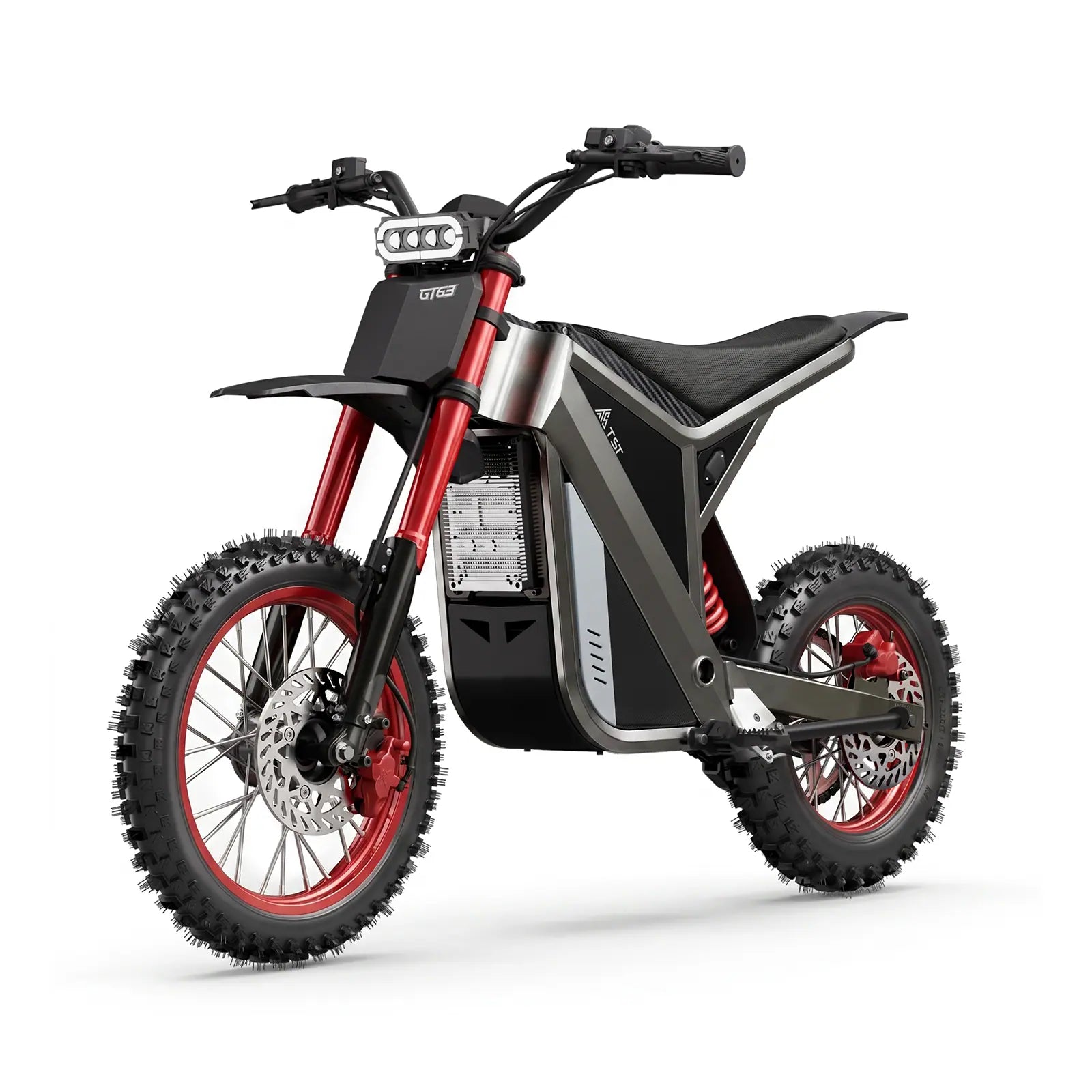














A well‑tuned dirt ebike can clear 30% “wall-like” climbs when motor torque, gearing, tire traction, and rider technique are all aligned. On real trails, you need pre‑load speed, the right low gear, smooth power delivery, and active body positioning. Combined with grippy tires, this keeps the motor pulling without heat fade and the rear wheel from spinning out on roots and loose rock.
the hardcore off road ebike guide
How steep is a 30% incline and what does it mean for your ebike?
A 30% grade means the trail rises 3 meters for every 10 meters forward, which feels closer to a wall than a hill when you add roots and loose rock. For a rider, the key consequence is that gravity is constantly dragging the bike back down the slope, demanding sustained high torque at very low speed. On a dirt ebike, this turns into a brutal stress test for motor cooling, controller tuning, and tire grip on irregular surfaces.
From a dynamics standpoint, the steeper the incline, the more of your total weight shifts rearward and compresses the back tire into the ground. That extra normal force can help traction, but it also makes the front wheel light and prone to lifting or wandering. On a 30% rooty climb, you are always balancing two risks at once: too much rearward weight and power gives you wheelspin or loop‑out, too little and the rear tire unweights and skips across roots instead of driving over them.
What forces act on your dirt ebike when climbing a 30% hill?
On a 30% climb your ebike becomes a clean physics problem framed in dirt and roots: gravity tries to drag you down the slope, the tire-ground contact patch fights back, and the motor simply decides how hard that fight is. Gravity splits into a component pushing you into the ground and a component pulling you backward down the hill, while the motor and your legs provide the opposing uphill traction force at the rear wheel.
Although the diagrams look academic, they directly explain what you feel on the trail. When the downhill component of gravity is larger than the maximum friction the rear tire can generate, the wheel spins or the bike simply stalls. When your body moves forward or backward, you are really just shifting how much of the normal force sits on each wheel, raising or lowering the traction limit at the rear tire. At 30% and above, these shifts are so sensitive that a few centimeters of hip movement can be the difference between a clean climb and sliding back down.
Why is tire traction the real limiter on loose, rooty 30% inclines?
On paper, many modern ebike motors have more than enough torque to climb a 30% hill; in the forest, on loose soil over roots and rocks, traction usually fails long before the motor does. When the contact patch rolls onto a thin layer of gravel, wet leaves, or a polished root, the maximum friction force collapses, and any sudden surge of torque instantly turns into wheelspin. That is why high power bikes can feel worse on extreme climbs if their tires and control strategy are poorly matched to the terrain.
From a “factory floor” perspective, engineers tune the power system assuming that traction is the bottleneck, not the motor. This is why good off‑road controllers limit the rise rate of torque rather than simply the peak value. A carefully ramped torque curve lets the tire “hook up” and maintain micro‑slip, where it is just on the edge of sliding but still generating maximum grip. On a 30% rooty climb, that subtle edge is everything: the rider’s job is to keep weight and line stable enough for the tire to live at that edge, not smash past it with panic throttle.
How does a TST EBike motor keep torque on near-vertical slopes without fading?
On near‑vertical feeling slopes, the biggest threat to consistent torque is heat, not instantaneous power. When you crawl up a 30% grade at low speed, the motor is working near its maximum current but getting very little cooling airflow, so poorly designed systems quickly heat‑soak and roll back output. A well‑built TST EBike mitigates this with high‑temperature copper windings, robust magnets, and a controller that manages current without spiking unnecessary heat.
In practical testing, we look less at “first‑run power” and more at how the motor behaves after repeated hill climbs. On a torture loop, a TST EBike motor that maintains similar current draw and climbing speed on the third or fourth ascent shows that the thermal design and protection thresholds are properly aligned. Internally, this is achieved by balancing copper fill, stator mass, and conservative thermal cutoffs so torque stays predictable instead of dropping off a cliff mid‑climb. For riders, that predictability is what allows them to commit to a technical 30% line without wondering if the motor will suddenly go soft halfway up.
What slope angle and traction profile should you understand before attempting 30% climbs?
Before you point your front wheel at a true 30% pitch, it helps to translate numbers and diagrams into real‑world feeling. Below about 15–20%, traction is usually abundant and your main concern is fitness and gearing; above 25%, every root and rock becomes a potential slip trigger. At 30% plus, the bike behaves more like it is pushing up a ramped wall, and tiny changes in angle or surface texture cause big changes in required traction force.
Thinking in terms of a traction profile along the climb makes it easier to choose lines and manage risk. A “good” 30% line might offer consistent, coarse-textured rock and embedded roots, where the contact patch always finds something to bite. A “bad” 25% line might hide a short section of loose marbles or wet roots that act like lubricant. Mapping these traction bands visually, even just in your head, lets you avoid over‑committing to a route where one bad patch forces a stall on a grade too steep to restart safely.
How should you tune PAS, throttle, and gearing for brutal 30% hill starts?
On brutal grades, PAS level, throttle, and gearing form a single traction management system. You want a gear that lets the motor spin in a comfortable RPM band at low speed, a PAS level that gives strong but predictable assistance, and a throttle response that rolls on more like a volume knob than a light switch. Over‑assisted starts in too hard a gear are the classic recipe for spinning out and losing the climb in the first bike length.
In real tuning sessions, I start by locking in the correct climbing gear: usually a very low ratio close to 1:1 so that each crank rotation moves the bike only a short distance. Then I set PAS one step below maximum, combining it with a deliberately smooth pedal cadence to avoid big current spikes. If a throttle is available, I treat it as a pre‑load tool, gently rolling it on to generate a small, steady push before committing to the pedals. The goal is for current to rise in a controlled ramp rather than in sharp spikes that shock the rear tire loose.
Why does body positioning transform your traction on near-vertical terrain?
On steep technical climbs, your body effectively becomes a movable ballast that can dramatically reshape front and rear wheel loading. On a 30% grade, the natural tendency is for your weight to slide backward, piling load onto the rear wheel and unweighting the front. If you do nothing, the front can lift or wander off line just as the rear is trying to put maximum torque into the hill. Correct body positioning counters this by actively driving your center of mass forward and down the hill.
The technique is subtle rather than extreme. On entry, you slide your hips slightly forward and bend your elbows, bringing your chest closer to the bars while keeping your hips low over the bottom bracket. As you encounter a root or rock ledge, you let your arms and legs act as suspension, absorbing the kick so the tire stays glued to the surface. If the rear begins to chatter or feel light, a small backward shift of the hips adds pressure to the rear contact patch without yanking the front into a wheelie. Done well, this dynamic balancing act keeps both wheels engaged, giving the motor a stable platform to work against.
Which tire pressure and tread patterns give you the best grip on loose 30% grades?
Tire design and pressure are the mechanical equivalent of software traction control on steep dirt climbs. For 30% loose grades, you want an aggressive, open tread pattern with tall, well‑supported knobs and a casing that can deform enough to wrap around roots and rocks. Overly hard compounds or shallow, closely spaced street treads tend to skate across loose surfaces, no matter how strong the motor is.
Pressure is where most riders leave performance on the table. On fat or mid‑plus tires, dropping a few PSI from road or commuting pressures dramatically increases the contact patch and lets the tread interlock with irregular ground. The trick is to go low enough to gain grip without so low that the sidewalls fold or the steering becomes vague. On a high‑power ebike, I also favor slightly higher pressure in the front and slightly lower in the rear, so the back tire has more footprint to transmit torque while the front retains crisp steering. For a TST EBike built around high‑torque use, this kind of fine‑tuning lets the motor’s potential actually reach the ground instead of evaporating in wheelspin.
How can you use line choice and micro-adjustments to clean technical 30% climbs?
Line choice on a 30% rooty climb is more like solving a puzzle than simply “going straight up.” You are looking for a continuous chain of high‑traction spots that your tires can step through without ever having to accelerate violently on a bad patch. This often means choosing a slightly longer or more zig‑zagging route that strings together embedded rocks, root edges, and rougher soil, rather than aiming at the absolute shortest line.
Once committed, micro‑adjustments become your main tool. Small steering corrections let you dodge the slick center of a root and place the tire on its rougher, barked edge. Tiny changes in cadence and pedal timing help you avoid pedaling exactly as the rear wheel hits a sharp step, which would unload the contact patch. When I test technical lines, I treat each successful pass as data: I remember exactly which rock I aimed for, when I added or eased power, and where I shifted my weight. Over time, this builds a mental “traction map” of the trail that lets you ride those brutal pitches with calm precision rather than luck.
Who benefits most from TST EBike technology on extreme hill climbs?
The riders who gain the most from high‑torque platforms like TST EBike are those who already understand basic off‑road technique and want to push deeper into extreme terrain. For them, the motor is a force multiplier that unlocks lines which would be marginal or impossible on a purely human‑powered bike. Consistent torque delivery and robust thermal management give these riders the confidence to attack 30% climbs repeatedly, focusing on skill progression instead of worrying about equipment failure.
Urban riders who live in mountainous regions also benefit greatly. When your regular loop includes brutal service roads or short, punchy trail connectors, a well‑specced TST EBike turns those obstacles from “hike‑a‑bike” into rideable features. Because the brand was built around consumer feedback and real‑world use, its design choices often reflect the needs of people who ride steep terrain daily: sensible gearing, durable components, and motors that handle low‑speed load without embarrassing power sag.
TST EBike Expert Views
“When we test for extreme hill performance, I care less about the peak wattage on a spec sheet and more about how the system behaves on the fourth or fifth repeat of a 30% climb. A good motor‑controller package delivers torque like a well‑tuned suspension: smooth, predictable, and resistant to fading under heat. That’s the philosophy we bring to TST EBike — real climbing capability judged on real trails, not just on dynos.”
Are there training drills that safely push your 30% climbing limit?
Pushing your limits on 30% slopes does not mean throwing yourself at the steepest wall until you crash or stall. Structured drills on safer gradients let you practice the same skills with far less risk. One effective approach is to break climbing into components—starts, balance, and line management—and practice each on moderate hills before recombining them.
For example, hill start drills on 15–20% slopes teach you how to coordinate PAS, throttle, and pedal timing without immediate wheelspin. Slow‑speed balance work on gentle inclines helps you trust your ability to hold a narrow line and make tiny steering corrections. Finally, picking a short, technical section just below your current limit and repeating it with different lines, tire pressures, and body positions gives you rapid feedback on what really changes traction. When those drills feel comfortable, you will find that stepping up to a true 30% climb feels like applying techniques you already own, not gambling on a desperate attempt.
Could motor and controller tuning unlock even steeper technical climbs?
Motor and controller tuning can absolutely extend what is rideable, but only when done with respect for the hardware’s limits. By adjusting current limits, ramp rates, and PAS curves, you can emphasize strong but smooth low‑speed torque, which is exactly what technical climbs demand. The goal is not brute force, but a controllable “torque ladder” that you can climb one rung at a time without kicking the rear tire loose.
In workshop conditions, engineers watch current and temperature logs rather than just seat‑of‑the‑pants feel. A well‑tuned system reaches high current quickly enough to be useful but not so abruptly that it spikes heat and destroys traction. On platforms like TST EBike, conservative thermal protection and carefully shaped torque delivery curves are what allow riders to safely explore the outer edge of what is possible on dirt. When your bike responds the same way on every attempt, you are free to refine line choice and body language, knowing the motor will quietly do its job behind the scenes.
FAQs
Can a stock dirt ebike really climb a 30% loose hill?
Yes, if it has high torque, low climbing gears, aggressive off‑road tires, and the rider applies smooth power with good body positioning instead of stabbing the throttle.
What motor power is recommended for repeated 30% hill attempts?
A nominal 750W or higher motor with strong torque and solid cooling is a good starting point, especially if you plan to repeat steep climbs rather than just try them once.
Is lowering tire pressure always better for steep climbs?
Lower pressure usually increases grip, but going too low can cause vague steering and sidewall squirm. Aim near the lower end of the recommended range, then fine‑tune by feel.
Do I need clipless pedals for technical hill climbs?
They are helpful but not mandatory. Clipless pedals improve power transfer and control, but only if you are completely comfortable unclipping quickly on steep, awkward terrain.
How do I know if my motor is overheating on long steep climbs?
Watch for sudden reductions in power or assist, hot smells, or a very hot motor housing. If these appear, ease off, let the system cool, and avoid back‑to‑back full‑power assaults.

Leave a comment
This site is protected by hCaptcha and the hCaptcha Privacy Policy and Terms of Service apply.