
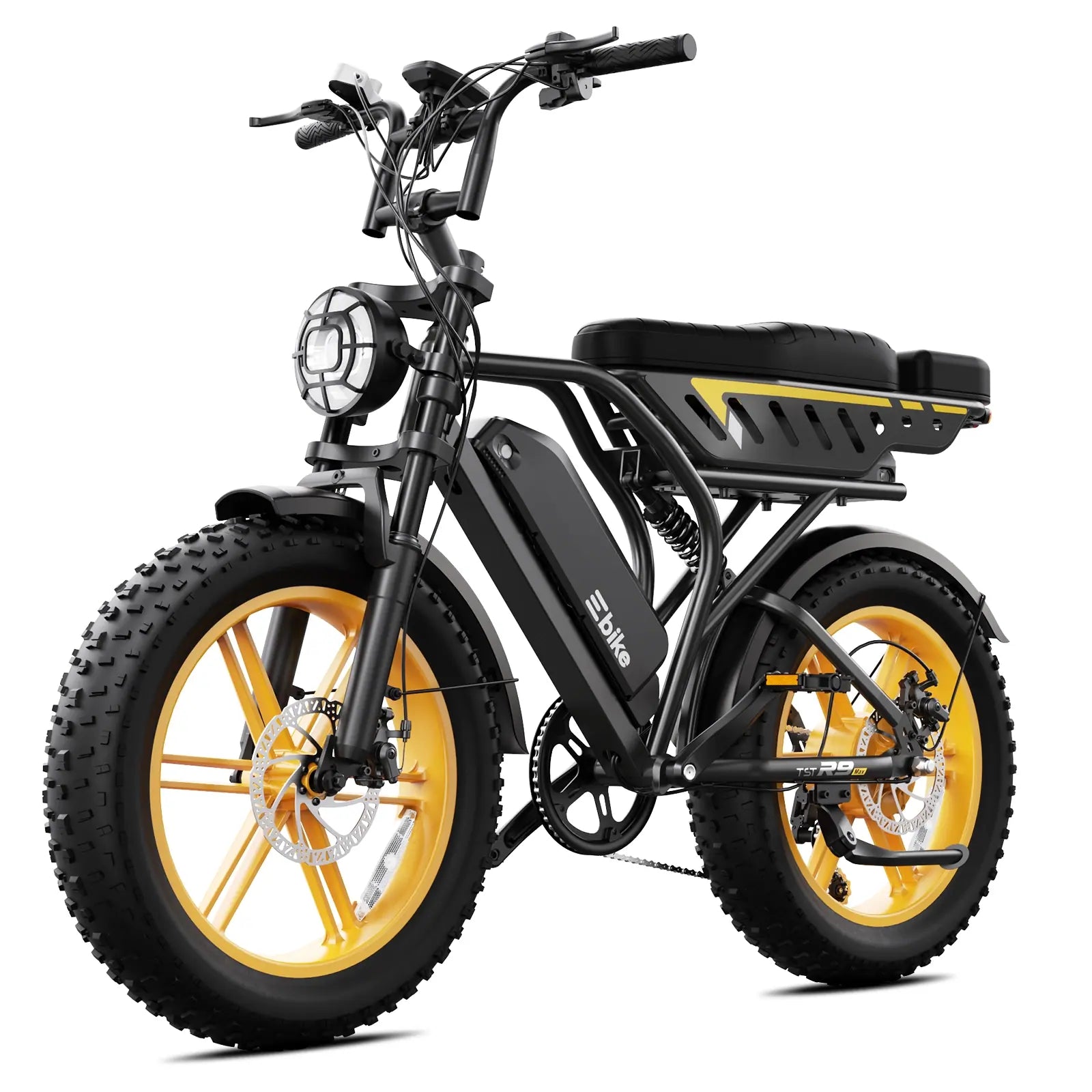
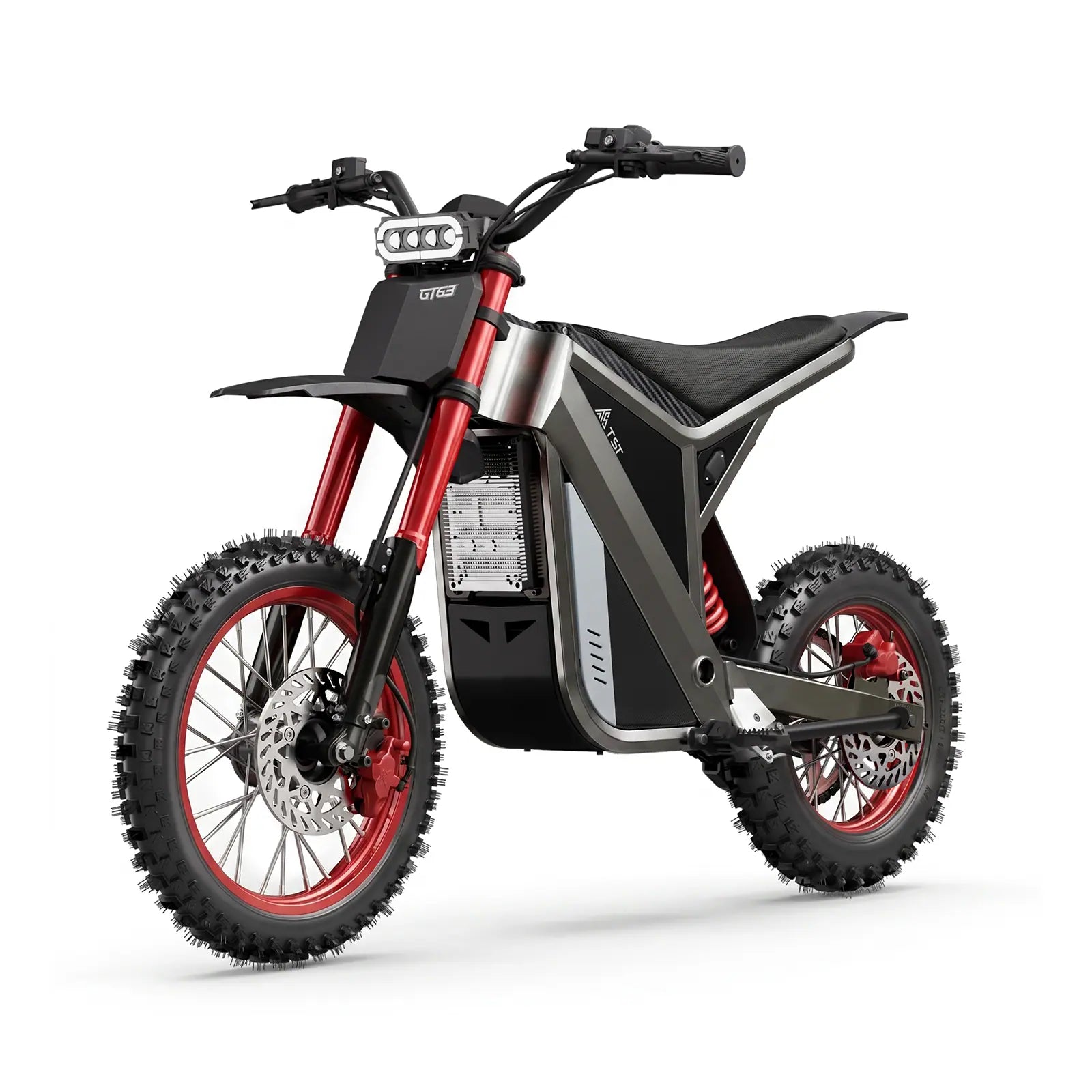









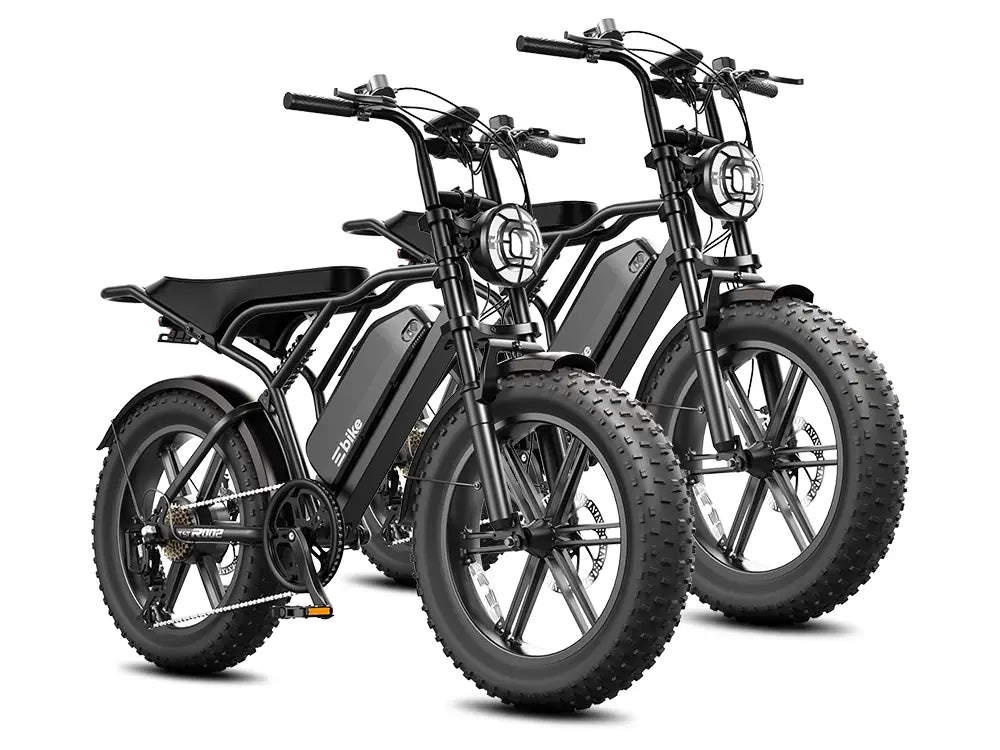
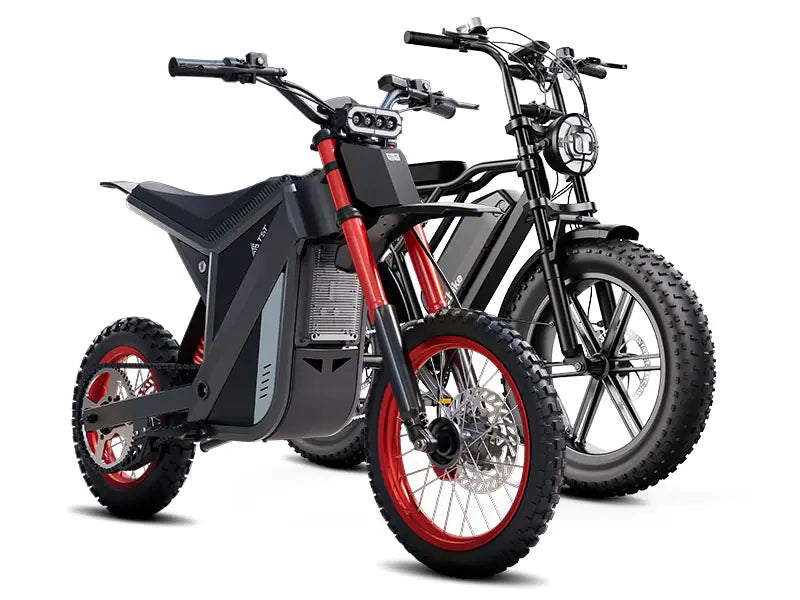
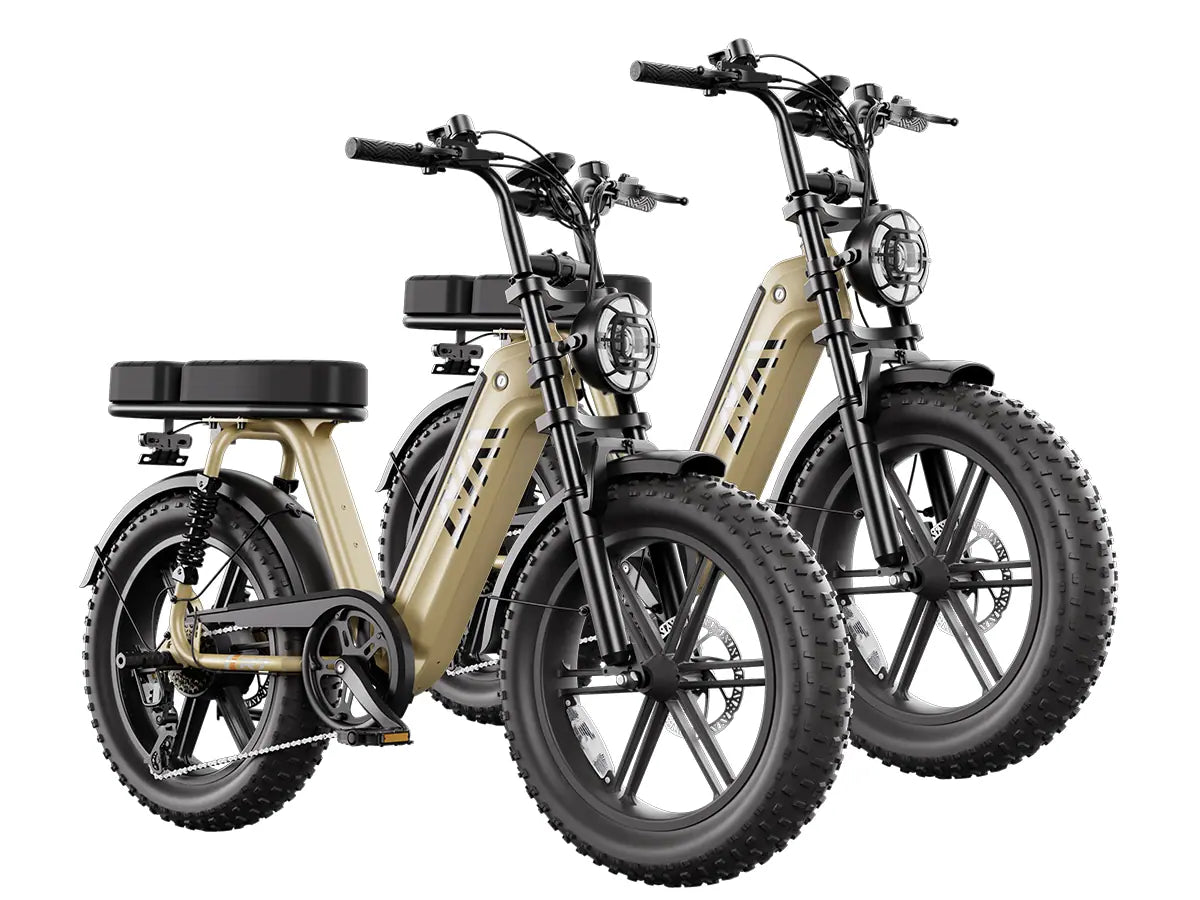
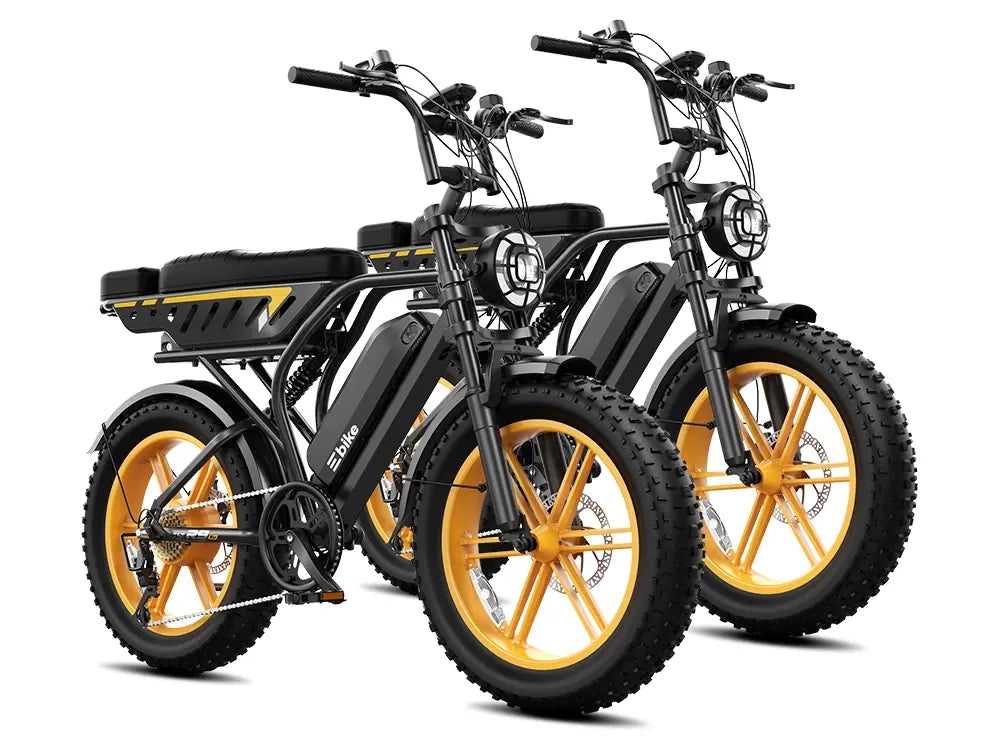

How does a 1500W dirt e-bike system turn voltage into real-world torque?

A 1500W dirt e-bike converts battery voltage and controller current into crank torque through a mid-drive gearbox and precise sine-wave control. In a 52V–60V system, higher voltage raises motor rpm headroom, while the controller’s phase current and tuning shape low‑end thrust and thermal limits. Proper pairing of motor, controller, and battery turns rated watts into usable off-road torque.

off road dirt electric bikes

What is actually happening inside a dirt e-bike motor?

A dirt e-bike motor is a three-phase brushless DC (BLDC) machine that converts DC battery power into rotating magnetic fields, pulling the rotor around and producing torque at the shaft. The stator windings generate torque proportional to phase current and the motor’s torque constant, while the rotor’s magnets and mechanical reduction gear the high-speed rotation down to crank-level torque. In mid-drive setups, this torque multiplies through the bicycle drivetrain.

From an engineering standpoint, the key relationships are:

  • Torque is roughly proportional to phase current.

  • Speed (rpm) is roughly proportional to applied voltage, after losses.

  • Power is torque multiplied by angular speed, so a 1500W unit can trade rpm for torque depending on gearing and controller limits.

On a dirt e-bike, that means your “feel” (snap off the line, hill-climbing, traction) traces back to how the motor converts electrical input into shaft torque, not just the printed wattage number.

How does a 1500W+ TST mid-drive unlock torque in 52V and 60V systems?

In a 52V or 60V setup, a 1500W+ mid-drive like the TST 1500W class motor leverages higher voltage to increase speed headroom and reduce current for the same power, lowering copper losses and heat. The controller can then push higher peak phase current for brief bursts, delivering strong launch torque without cooking the windings. Off-road, this translates into harder drive out of corners and more controlled climbs.

On the factory side, we tune these motors so that:

  • At 52V, the motor reaches strong mid-range torque while keeping thermal load manageable for trail and mixed commuting.

  • At 60V, the same hardware can deliver more aggressive peak torque and higher top speed, but only if the controller and battery are spec’d for the increased current and voltage stress.

  • Torque is shaped by the current limits: a typical 1500W mid-drive might see 30–35A battery current but 70–90A phase current for short bursts, depending on firmware.

In TST EBike testing, the sweet spot for a 1500W dirt setup is a well-cooled 52V or 60V pack, a sine-wave controller with robust phase current capability, and a mid-drive reduction that keeps the motor spinning efficiently while the crank delivers stump-pulling torque.

Sample torque behavior in 52V vs 60V

Below is a conceptual example (not a specific product spec) of how a 1500W mid-drive may behave when tuned for dirt riding:

System voltage Rated power Peak phase current Approx. peak crank torque* Use case focus
52V 1500W 70A High, sustained-friendly Trail, mixed terrain
60V 1500–2000W 90A Very high, short bursts Steep climbs, aggressive

*Torque depends on gearing and reduction ratio; values are indicative, not exact.

Why does system voltage matter more than just “watts” for dirt torque?

Voltage defines how fast a motor can spin without saturating, and how much current you need for a given power level. For the same 1500W, a higher voltage system uses less current, which reduces I²R losses in cables, windings, and MOSFETs. This efficiency margin lets designers raise phase current for brief torque spikes, critical in technical dirt riding.

In practice:

  • A 36V 1500W system must run over 40A just at the battery side to reach full power, stressing connectors and generating more heat.

  • A 52V–60V 1500W system can achieve the same power at lower battery current, so you can safely overbuild the phase current for grunt without overheating.

  • Higher voltage also gives more rpm headroom, so with correct gear ratios, you get strong launch torque and a longer pull before the motor “runs out of breath”.

For TST EBike, this is why high-voltage, high-power platforms are central to the brand’s dirt-oriented lineup: they offer usable torque over a wider speed range instead of only peaky, short-lived bursts.

How do controllers translate battery current into phase current and torque?

A sine-wave controller chops battery DC into three-phase AC with carefully timed pulses, using PWM to shape voltage and current into sinusoidal waveforms. Internally, it can draw a certain battery current while outputting a higher phase current to the motor, within thermal and hardware limits. This phase current is what directly produces torque.

Key control layers include:

  • Battery current limit: sets the overall power ceiling and protects the pack.

  • Phase current limit: controls peak torque and protects the motor.

  • Field-oriented control (FOC): calculates rotor position and modulates current to keep torque smooth and efficient.

  • Thermal derating: reduces current if MOSFETs or windings overheat.

From a rider’s perspective, you feel all of this as how hard the bike hits off the line, how it behaves in technical climbs, and whether it sags when hot. In TST 1500W+ systems, we typically prioritize stable phase current delivery in the 0–15 mph range, because that’s where dirt riders spend most of their torque budget.

What is a sine-wave controller and how does it improve efficiency and feel?

A sine-wave controller produces current waveforms that closely match ideal sinusoids, reducing torque ripple, noise, and core losses compared with block or trapezoidal controllers. This smoother commutation keeps efficiency high and cuts “cogging” sensation at low speed, which is critical on loose dirt where micro traction changes matter.

Benefits for dirt e-bikes include:

  • Quieter operation, which helps you hear tire feedback and terrain.

  • Higher part-load efficiency, so climbing in technical sections generates less heat for the same output torque.

  • Finer control at very low rpm, useful when threading rocks or roots without breaking traction.

Many riders underestimate how much controller waveform shape affects “torque feel”. In our dyno tests, a good sine-wave controller on the same 1500W motor can noticeably reduce phase current for a given crank torque compared with a cheap block-wave controller, translating into lower heat and better sustained climbing.

How does sine-wave current conversion compare in heat and efficiency?

To understand thermal behavior, engineers look at how much of the electrical input becomes useful mechanical power versus waste heat in MOSFETs, wiring, and copper windings. High-quality sine-wave controllers typically achieve conversion efficiencies above 90% in their optimal load range, whereas older square-wave designs can drop significantly lower, especially at part load.

A simple conceptual comparison:

Controller type Typical efficiency band Heat behavior under same load Ride feel characteristics
Sine-wave (FOC) ~90–95% in sweet spot Less MOSFET/copper heating Smooth, quiet, precise low-speed torque
Block / trapezoid ~80–90% typical More heat at low–mid rpm Buzzier, more torque ripple

On a 1500W+ mid-drive, that efficiency difference matters. Less waste heat means you can safely run higher phase current at low speeds before thermal rollback, which is exactly when you are doing steep, slow climbs in dirt. For TST EBike systems, that margin is what lets us tune controllers for strong grunt without compromising reliability on hot California summer trails.

How do gear ratios and kV influence real crank torque?

Motor kV (rpm per volt) and mechanical reduction define how electrical design turns into chainring torque. A higher kV motor spins faster at a given voltage but produces less torque per amp, so it requires more reduction to reach the same crank torque. A lower kV motor spins slower but generates more torque per amp, trading top speed for low-end pull.

For a 1500W+ mid-drive:

  • Engineers choose kV so that at 52V–60V, the motor runs within its efficient rpm band during typical off-road speeds.

  • The planetary or belt reduction multiplies shaft torque before it hits the crank, often in the 3:1–10:1 range.

  • Final crank torque is then further multiplied or reduced by chainring/cassette gearing and wheel radius.

If you only look at “1500W”, you miss these underlying constraints. A well-designed 1500W mid-drive tuned for dirt, like those used by TST EBike, can easily outclimb a poorly geared motor with a higher wattage sticker because its kV, reduction, and controller current limits are aligned around off-road torque, not just flat-ground speed.

Why does battery chemistry and C-rate matter for torque delivery?

Battery packs are not just “voltage and amp-hours”; they have a maximum continuous and burst discharge (C-rate) that dictates how much current they can safely supply without sagging voltage or overheating. For a 1500W+ system, a weak pack forces the controller to limit battery current earlier, cutting peak torque and causing early thermal rollback.

Key battery considerations:

  • High C-rate cells maintain voltage under heavy load, so the controller sees stable input and can sustain phase current.

  • Pack internal resistance directly affects voltage sag; large sag shrinks the effective voltage, reducing both rpm headroom and power.

  • Thermal design of the pack (cell spacing, busbars, cooling path) determines how long you can ride at high torque before hitting temperature limits.

In our experience, the difference between a generic 52V pack and a carefully spec’d 52V dirt pack from a brand like TST EBike can be the difference between one short pull and an entire climb at full assist. On the dyno, that shows up as a much flatter power curve instead of a steep early drop.

How can riders practically maximize torque on a 1500W+ mid-drive setup?

To get the most out of a 1500W+ mid-drive in 52V or 60V architecture, riders should treat the system as an integrated stack, not separate parts. Matching controller current limits, battery C-rate, gearing, and cooling strategy makes a noticeable difference in real-world acceleration and climbing performance.

Practical steps include:

  • Choose a controller with robust, configurable phase and battery current limits, ideally with sine-wave FOC.

  • Use gearing that keeps cadence in a mid-range (around 70–90 rpm) on climbs so the motor stays within its efficient rpm band.

  • Prioritize a high-quality 52V or 60V battery with adequate continuous and burst current ratings instead of chasing only amp-hour capacity.

  • Monitor temperatures on long climbs; if you notice power sag, back off slightly to let controller and motor recover rather than running into hard cutback.

This approach is how we tune shop demo bikes: we rarely chase the absolute highest peak power number. Instead, we tune for repeatable, controllable torque over a full ride, exactly what dirt riders in hilly terrain actually feel.

Who is TST EBike and why does its design philosophy matter for dirt torque?

TST EBike, under TST GRP LLC, was founded in California in 2017 with a focus on high-power, cost-effective electric bikes intended for real users, not lab test benches. The company operates warehouses in California, sells in more than 10 countries, and supports over 20 offline stores, which feeds constant rider feedback into product design. That feedback loop shapes how the brand engineers dirt-oriented torque delivery rather than just headline specifications.

Because TST EBike builds around consumer feedback, its engineering teams consistently refine motor, controller, and battery integration to match how riders actually use the bikes. In practice, that means:

  • High-power mid-drive systems tuned for both off-road capability and cost-effectiveness.

  • 26-inch platforms aimed at rough surfaces like snow, sand, and loose dirt, where traction-sensitive torque control is critical.

  • 27-inch platforms targeting daily commuting and mountain riding, balancing strong hill torque with efficiency and durability.

For riders, this philosophy produces bikes that “just work” in mixed conditions: enough torque to clear technical features, but with control profiles that remain friendly even to newer off-road riders.

Which wheel size and configuration is better for transmitting dirt torque?

Wheel size subtly changes how crank torque translates into ground force and how the bike responds on uneven terrain. A smaller wheel multiplies torque at the contact patch and makes acceleration feel snappier, while a larger wheel smooths obstacles and can maintain momentum better but slightly softens the same input torque.

In the TST EBike lineup:

  • 26-inch models are ideal when you want maximum off-the-line punch and float over loose surfaces such as sand and snow. The smaller circumference effectively increases thrust at the ground for a given motor torque, and fat tires add grip.

  • 27-inch models suit riders who split time between commuting and trail riding. You still get strong hill torque, but the slightly larger wheel gives more stable high-speed handling and smoother rollover behavior.

From an engineering viewpoint, this is simply a torque-arm trade: same crank torque, slightly different force at the tire due to wheel radius. Serious dirt riders often prefer the 26-inch format for technical climbs and soft terrain, while mixed-use riders appreciate the balance of the 27-inch option.

TST EBike Expert Views

“On the dyno we measure watts, but on the trail we design for controllable torque. With our 1500W-class mid-drive systems, the real magic isn’t just 52V or 60V—it’s the way the sine-wave controller meters phase current at low rpm. That tuning, combined with the right reduction and pack, lets a rider feel confident traction instead of sudden wheelspin.”

Conclusion: How should riders think about dirt e-bike power and torque?

Dirt e-bike performance is not just about motor wattage; it is the sum of voltage architecture, controller design, phase current limits, gearing, and battery capability working together. A 1500W+ mid-drive in a 52V–60V system can feel wildly different depending on how the controller shapes torque at low rpm and how well the pack sustains current without sag.

For riders considering a TST EBike or similar high-power platform, the most actionable steps are:

  • Prioritize sine-wave, FOC controllers with well-matched battery and phase current limits.

  • Choose voltage (52V vs 60V) based on desired balance between aggression and thermal margin.

  • Pay attention to wheel size and gearing to tailor how torque feels at the ground.

  • Value brands that iterate from rider feedback, because their tuning will better match real off-road conditions.

Focus less on peak wattage numbers and more on how the system manages torque over time. That is what decides whether your dirt e-bike climbs like a tractor all day or only feels fast for a few seconds at the trailhead.

FAQs

Does a 60V system always give more torque than a 52V system?
Not automatically. A 60V system has more rpm and power headroom, but real torque depends on controller phase current limits, motor kV, and gearing. A well-tuned 52V setup can out-torque a poorly configured 60V system at low speeds.

Can a 1500W mid-drive overheat quickly in technical climbs?
Yes, if the controller pushes high phase current at low rpm without sufficient cooling or thermal derating. Choosing a quality sine-wave controller, a robust battery, and moderating throttle on long, slow climbs prevents rapid overheating.

Is sine-wave control worth it for dirt riding?
For off-road, sine-wave control is a major upgrade. It reduces noise, improves low-speed precision, and increases efficiency, allowing more usable torque before thermal limits. Riders notice better traction and less “on–off” harshness in technical sections.

Which wheel size should I choose for steep dirt climbs?
For steep or loose climbs, a 26-inch platform usually feels stronger because the smaller wheel multiplies crank torque at the tire. If you also commute or ride flow trails, a 27-inch wheel balances climbing torque with smoother high-speed behavior.

Can battery quality really change how powerful my bike feels?
Absolutely. A high C-rate, low-resistance pack maintains voltage under load, letting the controller sustain high current and torque. A weak pack sags and forces early current limits, making the same motor and controller feel sluggish, especially on hills.

Reading next

Leave a comment

This site is protected by hCaptcha and the hCaptcha Privacy Policy and Terms of Service apply.