



1

Looking for a long-range electric bike that can handle longer commutes and weekend rides without frequent charging? A dual-battery eBike is worth considering.
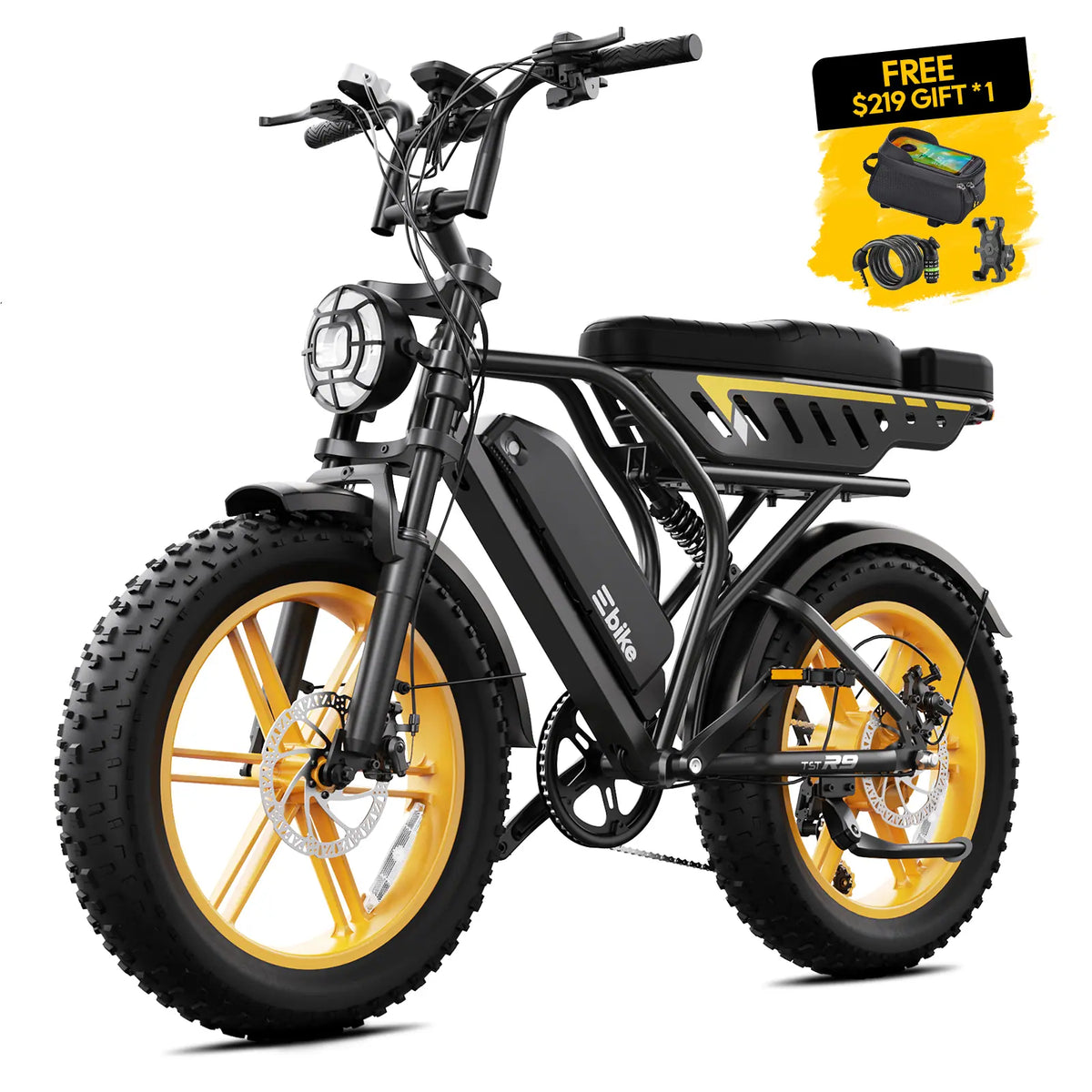
The TST R9 offers both single- and dual-battery configurations, with up to 130 miles of advertised pedal-assist range on the dual-battery version. Here's what the R9 offers, who can benefit from its dual-battery setup, and what to consider before buying a long-range electric bike.
TST R9: Single vs. Dual Battery
The TST R9 is designed for riders who want a combination of extended range and everyday riding versatility. Its biggest difference is the choice between a standard single-battery setup and an optional dual-battery configuration.
Here's how the two versions compare:
| Specifications | Single Battery | Dual Battery |
|---|---|---|
| Battery | 48V 15Ah | 48V 30Ah |
| Energy Capacity | 720Wh | 1,440Wh |
| Max Pedal-Assist Range | Up to 65 miles | Up to 130 miles |
The dual-battery version combines two 48V 15Ah batteries for a total capacity of 1,440Wh. Its smart battery management system uses the main battery first and automatically switches to the second battery when needed.
Both batteries are removable, and TST lists an approximate charging time of 5–6 hours per battery.
Beyond its battery options, the R9 comes with these features:
| Key Specifications | TST R9 |
|---|---|
| Motor | 1500W peak motor |
| Motor Torque | 90Nm |
| Top Speed | Up to 32 MPH |
| Suspension | Full Suspension |
| Tires | 20" × 4.0" fat tires |
| Drivetrain | 7-speed |
| Maximum Payload | 450 lbs |
What Makes the TST R9 Worth Considering?
1. Up to 130 Miles of Pedal-Assist Range
The dual-battery R9 combines two 48V 15Ah batteries to provide 1,440Wh of total energy capacity and up to 130 miles of advertised pedal-assist range. That's a useful option for riders who regularly travel longer distances and don't want to recharge after every ride.
The single-battery version, with up to 65 miles of advertised range, may be sufficient for shorter daily trips.
2. Smart Dual-Battery System with Automatic Switching
You don't need to stop and manually replace a depleted battery during a ride. The R9's smart system uses the main battery first and automatically switches to the second battery when needed.
Both batteries are removable, giving you more flexibility when charging at home or in the office.
3. 1500W Peak Motor for Everyday Riding
The R9 features a 750W rated brushless hub motor with 1500W peak power and 90Nm of torque. Its listed top speed is up to 32 MPH.
Actual performance will depend on riding conditions and applicable local regulations.
4. Full Suspension and Fat Tires for Varied Terrain
Longer rides can involve more than smooth pavement. The R9 features 140mm of front suspension travel, 55mm of rear suspension travel, and 20" × 4.0" fat tires. This combination is designed to help absorb bumps and provide traction across different riding surfaces.
The bike also comes with 180mm mechanical disc brakes and a 7-speed drivetrain, adding practical features for everyday riding. Its maximum payload capacity is 450 lbs, including the rider and cargo.

Who Can Benefit from a Dual-Battery Electric Bike?
A dual-battery setup isn't necessary for every rider. Its value depends on how far you travel and how much battery capacity your usual rides require.
Longer Daily Commutes
If your commute covers a considerable distance, additional battery capacity can give you more flexibility between charges. You may also have more room for unexpected detours or additional stops.
Weekend Rides and Outdoor Exploration
For riders who enjoy longer weekend trips, exploring new routes, or spending more time outdoors, a dual-battery eBike can provide additional energy for the journey. Just remember that hills, rough surfaces, and higher assist levels can reduce actual range.
Frequent Riders Who Prefer Fewer Charging Stops
Some riders simply use their eBikes more often than others. If you ride regularly throughout the week, having two batteries can reduce how frequently you need to recharge, depending on your daily mileage and riding conditions.
What Should You Look for in a Long-Range Electric Bike?
When choosing a long-range electric bike, battery capacity and advertised range should be among your top priorities. But there's more to a good long-range eBike than just mileage.
Motor power and torque, suspension, tire design, braking performance, and payload capacity all affect how well a bike performs on different routes.
It's also important to remember that actual range varies with assist level, rider and cargo weight, terrain, speed, and weather.
Here are the key factors to compare before you buy.
1. Battery Capacity and Advertised Range
Check the battery's total watt-hours and whether the advertised range applies to the single- or dual-battery configuration. It's also worth looking at the riding mode and test conditions behind the maximum range figure, since advertised range may differ from everyday results.
2. Motor Power and Torque
Motor power and torque influence acceleration and climbing performance, especially when riding uphill or carrying extra weight. Check both the rated and peak motor power, and remember that a more powerful motor doesn't automatically mean longer battery range.
3. Suspension and Tire Design
If you plan to ride for extended periods or across mixed surfaces, suspension and tire design matter. Front and rear suspension can help absorb bumps, while wider tires provide a larger contact area with the ground. Consider the terrain you ride most often when comparing different setups.
4. Braking System and Payload Capacity
A reliable braking system and sufficient payload capacity are important for control and stability, particularly when carrying extra weight. Check the manufacturer's specifications for the brakes and maximum payload, including the combined weight of the rider and cargo.
Is a Dual-Battery Electric Bike Worth It?
It depends on how you use your eBike. A single-battery model may be enough for short commutes, errands, and occasional rides around town. However, if you regularly cover longer distances, enjoy extended weekend rides, or prefer fewer charging stops, a dual-battery electric bike can be a worthwhile upgrade.
With the TST R9, you can choose between a 720Wh single-battery setup and a 1,440Wh dual-battery configuration. Think about your typical mileage and charging habits before deciding whether the extra battery capacity is worth the additional cost.
Warranty and Customer Support
Battery capacity and motor performance are important, but after-sales support deserves attention too, especially when purchasing an eBike for regular use.
According to TST's published warranty terms, the R9's frame is covered for 2 years, while the battery, motor, and controller are covered for 1 year. The front and rear brakes are listed with a 6-month warranty. Coverage is subject to the policy's conditions and exclusions.
Before purchasing, read the full TST Warranty Policy so you understand what's covered and how to request support if needed.
Explore the TST R9 During Black Friday
Looking for a long-range electric bike this Black Friday? The TST R9 is worth a closer look if you want the flexibility of a single- or dual-battery configuration.
Compare the two battery options, review the available features, and check the latest promotional details on the official product page before placing your order.
Explore the TST R9 Dual-Battery Electric Bike
FAQs About Long-Range Electric Bikes
1. Is a dual-battery electric bike better for long rides?
A dual-battery eBike provides more combined energy capacity than a comparable single-battery setup. It can be a practical choice for longer commutes, weekend trips, and riders who want more range available between charges.
2. How does a dual-battery electric bike work?
A dual-battery electric bike uses two batteries to provide more total energy than a single-battery model. Depending on the system, the batteries may supply power simultaneously or work in sequence. On the TST R9, the main battery is used first before the system automatically switches to the second battery.
3. How far can a dual-battery electric bike go?
Range depends on battery capacity, pedal-assist level, rider weight, terrain, and riding speed. The TST R9 offers up to 65 miles of pedal-assist range with its 48V 15Ah single battery, or up to 130 miles with the dual-battery 48V 30Ah configuration. These are advertised maximum ranges, not guaranteed distances.
4. How long does it take to charge the TST R9?
TST lists an approximate charging time of 5–6 hours per battery. The R9's dual-battery version has two removable batteries, so check the charging arrangement and allow for the charging time of each battery.
5. Is the TST R9 suitable for long-distance commuting?
The R9's optional 1440Wh dual-battery configuration and advertised range of up to 130 miles make it worth considering for longer-distance commuting. Its full suspension and fat tires also add versatility for different riding surfaces. Before buying, compare the bike's specifications with your commute, local regulations, and expected riding conditions.

Leave a comment
This site is protected by hCaptcha and the hCaptcha Privacy Policy and Terms of Service apply.