
















California defines three e-bike classes in its Vehicle Code, caps e-bike motors at 750W, allows Class 1 and 2 bikes on most bike paths, and requires Class 3 riders to be at least 16 and to wear a helmet; bikes beyond these definitions are not street-legal e-bikes and can be treated as mopeds or motor vehicles. This summary was last reviewed on August 21, 2026, and it is general information, not legal advice.
How Does California Define an Electric Bicycle?
California's Vehicle Code defines an electric bicycle as a bicycle with fully operable pedals and an electric motor of 750W or less, divided into three classes by speed and throttle. The definition matters because anything above 750W, or without operable pedals, is not an electric bicycle under state law and falls into a different category.
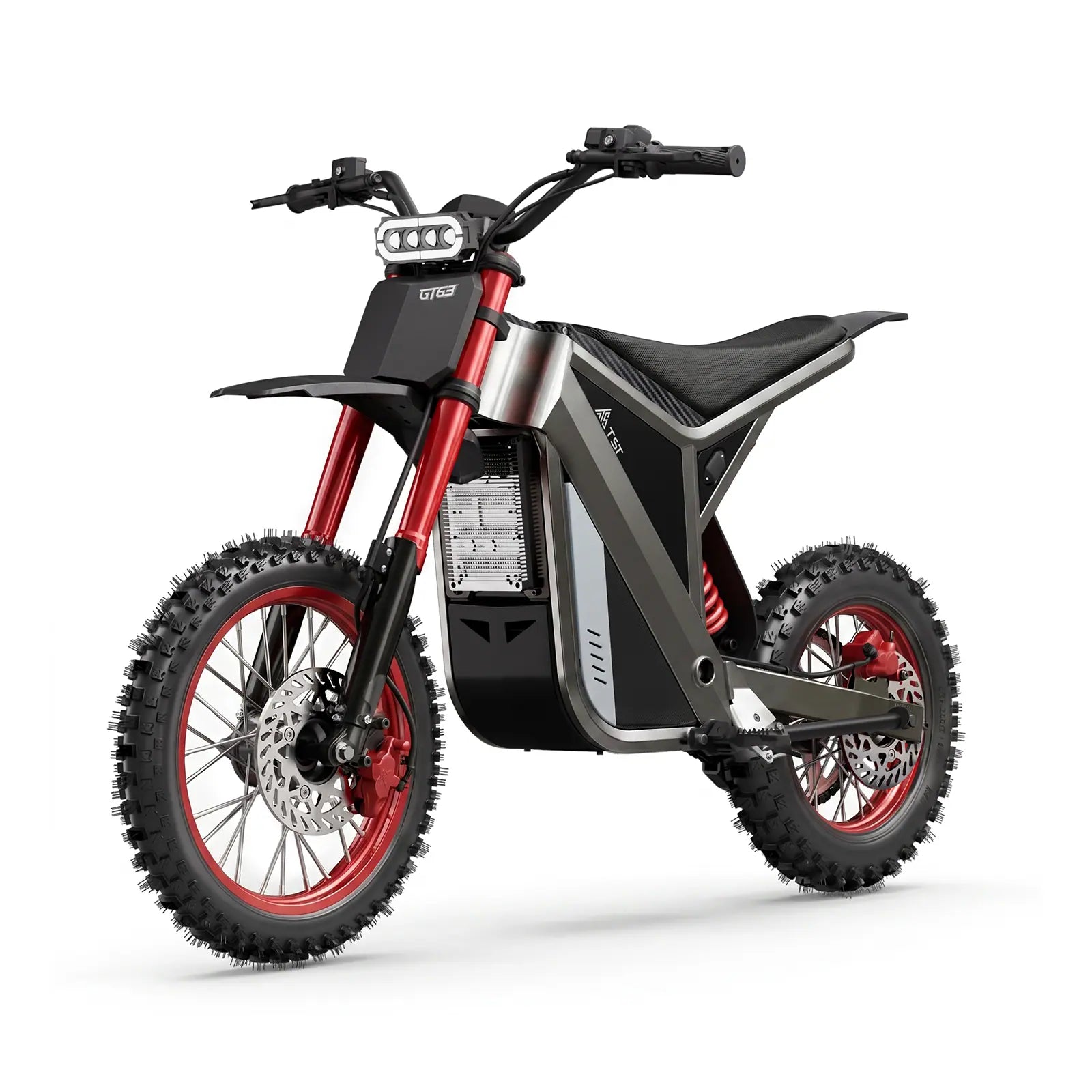
The practical consequence for buyers is simple: a 1500W model like TST's R002 is not a California "electric bicycle" under the statute, so its legal treatment depends on how the state classifies it, which is why the classification check matters before riding on public roads.
California's Three E-Bike Classes at a Glance
The class label matters at the point of sale: California requires the class to be displayed on the bike, so a compliant model carries a visible Class 1, 2, or 3 label, and buyers can check it before the purchase rather than after.
California mirrors the national three-class framework: Class 1 has pedal assist up to 20 mph with no throttle, Class 2 adds a throttle up to 20 mph, and Class 3 has pedal assist up to 28 mph with a throttle that cuts off at 20 mph. All three classes share the 750W motor cap.
The class on the label determines path access and equipment rules, and California requires the class to be displayed on the bike, so buyers should see a visible class label on compliant models.
The Places California Riders Can Take an E-Bike
The access pattern in practice: a Class 2 commuter can ride in the bike lane on city streets, cross town on a multi-use path, and reach a beach path where the city allows bikes, which is the everyday route most buyers imagine. The same bike can be turned away at a specific boardwalk or trailhead if the local ordinance restricts it, so the city check is part of the route planning. The safest habit is to treat bike lanes and paths as the default, look up the specific trail or beach before the first visit, and respect posted signs, because local restrictions are usually posted where they apply.
Class 1 and 2 e-bikes are generally allowed wherever bicycles are allowed, including bike lanes and most multi-use paths, with local exceptions. Class 3 bikes are subject to the same general rules as Class 1 and 2 for road use but are more likely to be restricted by local trail and path rules, so check the specific path before riding.
Sidewalk riding is set by local ordinances rather than state law, so it varies by city; the state rule is that e-bikes follow bicycle rules, and each city decides its sidewalk policy.
What Are the Age and Helmet Rules in California?
The age and helmet rules matter more in practice than the class definitions, because they are the rules most likely to be enforced: a 17-year-old on a Class 3 bike without a helmet is a clear violation, while a Class 2 rider under 18 without a helmet is also breaking the general minor helmet rule. Parents should treat the rules as the minimum, not the target, and set the same standard for any e-bike ride: helmet on, supervision for new riders, and low assist until skills are proven.
California requires Class 3 riders to be at least 16 years old and to wear a helmet, and riders under 18 on any class should wear a helmet under general bicycle helmet law. The state does not require registration, a license, or insurance for compliant Class 1-3 e-bikes, which is one of the main reasons riders prefer compliant models.
For high-power bikes that fall outside the class system, the age, helmet, license, and registration requirements can all change, so the classification check determines the whole set of rules.
California E-Bike Class Summary Table at a Glance
| Class | Assist limit | Throttle | Age | Helmet |
|---|---|---|---|---|
| Class 1 | 20 mph | No | No state minimum | Under 18 |
| Class 2 | 20 mph | Yes, 20 mph cap | No state minimum | Under 18 |
| Class 3 | 28 mph | Yes, 20 mph cap | 16+ | Required |
The table summarizes the state-level rules; local ordinances can add restrictions on paths, sidewalks, and specific areas.
What Happens If Your Bike Exceeds the 750W Limit?
A motor above 750W takes the bike outside the California electric bicycle definition, and the bike is then classified under a different vehicle category, which can bring registration, license, insurance, and equipment requirements. The exact classification depends on the bike's speed and other features, and it should be confirmed with the DMV rather than assumed.
TST EBike's product pages publish the motor watts and speed for every model, so buyers can run the classification check with the actual numbers instead of guessing.
The Local Layer: How City Rules Differ
The local layer is where California surprises riders: the same Class 2 bike can be welcome on one city's beach path and restricted on the next city's boardwalk, and downtown areas in Los Angeles and San Francisco have their own rules for e-bikes in pedestrian zones. Before riding in a new city, search the city name plus "e-bike ordinance" or check the municipal code, because the local rule is often stricter than the state rule. The practical habit is to look up the rules when you cross a city line, the same way you would check a new trail's regulations.
Local rules vary by city: some cities restrict e-bikes on specific paths or beaches, some require helmets beyond state law, and some have special rules for downtown areas and boardwalks. Los Angeles, San Francisco, and beach communities all have their own ordinances, and a bike that is fine in one city may be restricted in the next.
Before riding in a new city, check that city's municipal code for e-bike and sidewalk rules, especially if you plan to ride on paths or near beaches, where local restrictions are most common.
California Law and the TST EBike Buyer
For California buyers, the practical checklist is: choose a class-compliant model if you want bike path access without registration, or complete the classification check if you choose a high-power model. TST EBike offers both types, and the brand's California warehouses in Ontario and Diamond Bar make local pickup and test rides available so buyers can see the bike before committing.
The brand's own guidance tells riders to confirm local rules before riding, which is exactly the right habit in a state where local ordinances layer on top of state law.
TST EBike Expert Views
"California's 750W cap and class labels are the rules our local buyers ask about most. The honest answer is that a class-compliant model rides like a bicycle under state law, while a high-power model needs a DMV classification check. TST EBike's California warehouses make it easy to ask these questions in person at pickup, and our product pages publish the numbers you need for the check."
— TST EBike Compliance Team (this article is written by TST EBike's editorial team, which works for the manufacturer)
Conclusion: Classify, Then Ride
California's e-bike law runs on three classes with a 750W cap: Class 1 and 2 ride most paths, Class 3 requires 16+ and a helmet, and anything more powerful is outside the e-bike definition. Verify your bike's class and power, check the local city rules, and keep this summary's date in mind, because laws and ordinances change.
California Rider Checklist
- [ ] Confirm the bike's class label and 750W-or-less motor.
- [ ] Verify the DMV classification for high-power models.
- [ ] Check local city and path ordinances before riding.
- [ ] Wear a helmet (required for Class 3; under 18 on all classes).
- [ ] Confirm sidewalk rules for each city you ride in.
See the TST EBike lineup for class-compliant models, and the commuting e-bike collection for path-friendly options.
Related reading: the complete state-by-state e-bike law guide
FAQs
Is a 1500W e-bike legal in California?
Not as an "electric bicycle": California caps e-bike motors at 750W, so a 1500W bike falls outside the definition and its classification must be confirmed with the DMV.
Do I need a license for an e-bike in California?
No, for compliant Class 1-3 e-bikes; licensing and registration may apply if the bike is classified as a moped or motor vehicle.
Are Class 3 e-bikes allowed on California bike paths?
Class 3 bikes follow general bicycle rules for road use, but local path and trail rules vary, so check the specific path before riding.
Can I ride an e-bike on the sidewalk in California?
Sidewalk rules are set by each city, so the answer depends on the local ordinance; check your city's code.
Do California e-bike rules apply on private land?
No, the state e-bike law governs public roads and rights of way; private land and off-road parks set their own rules, so check the land owner or park regulations.
What happens if I ride a high-power bike in a bike lane?
If the bike is classified outside the e-bike definition, riding it in a bike lane can result in a citation and liability, because it is legally a motor vehicle in that lane.

Leave a comment
This site is protected by hCaptcha and the hCaptcha Privacy Policy and Terms of Service apply.