


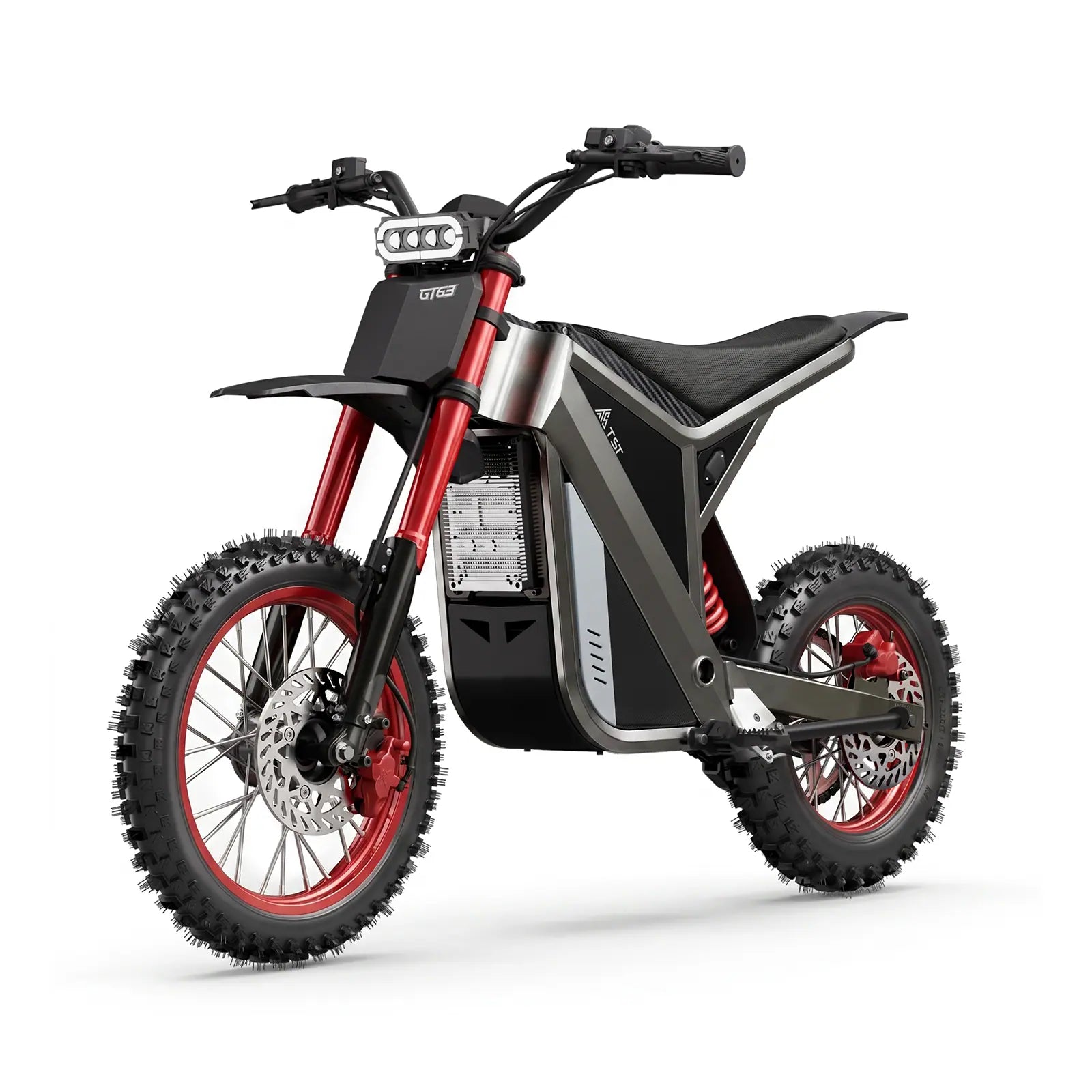














A cargo e-bike's payload rating tells you almost nothing about whether it can legally and safely carry two children at once. That answer depends on four separate approvals stacking together: the manufacturer's stated passenger count, a compatible seat or restraint for each child, your jurisdiction's e-bike and passenger rules, and your own ability to control the loaded bike at low speed. If any one of those fails, the honest answer is no, even if the weight math works.
Why Payload Capacity Doesn't Equal Passenger Approval
Manufacturers publish a "max load" or "total payload capacity" figure that combines the rider, cargo, and any passengers into one number. A bike rated for 450 lb of total payload is not the same as a bike approved to carry two named seating positions. The TST Carrier 20" Cargo Electric Bike, for example, lists a 450 lb payload capacity and ships with one children's seat as part of a promotional accessory bundle, not two. TST's own product literature elsewhere states plainly that the children's seat is a separate accessory that mounts to the reinforced rear rack, and it is sold as a single unit. Nothing in the current product page, accessory listing, or specification table states that the bike or its rack is approved to carry two seated children simultaneously.
This distinction matters because a rack or deck rated to hold weight is not automatically rated to hold two independent, moving human passengers safely positioned with restraints. A real-world account posted to a cycling forum describes a Carrier owner whose bike tipped over twice with two children aboard, once when the kickstand was released and once at an intersection when the throttle engaged unexpectedly during a balance correction, spinning the loaded bike near traffic. The rider had researched the bike's payload number beforehand and believed it "should" work for two kids; the incident illustrates why a weight rating alone is not a passenger-count approval, and why practicing at low speed before carrying any child matters as much as the spec sheet.
The Two-Passenger Constraint Ledger
Treat two-child carriage as a chain of five separate approvals. The weakest link determines the answer, not the strongest.
Model and accessory authorization. Check whether the exact bike model and the exact seat or bench accessory you intend to use are sold and documented together as a passenger system, not simply purchased separately and installed. A single children's seat mounted to a general-purpose cargo rack is not the same as a factory dual-passenger bench with independent restraints for two riders. If the manufacturer does not sell or document a two-child configuration for your model, that alone answers the question: not approved.
Individual and combined weight limits. Confirm the seat manufacturer's per-seat weight and age limit, then confirm the rack or deck's combined limit with both children, cargo, and the adult rider included, not just the bike's headline payload number. A 450 lb total payload disappears quickly once a 200 lb adult, a fully loaded pannier, and two children are all added together, and running near the ceiling of a weight rating changes handling even before you consider comfort margin. If either individual limit or the combined total is unclear from the manual or seat documentation, do not estimate; contact the manufacturer's support line for the exact figures for your serial number and configuration.
Restraints, guards, and foot support. Each child needs a harness or seat belt appropriate to their age and size, spoke or wheel guards to keep hands and feet away from moving parts, and dedicated foot pegs or footrests that do not require them to dangle their legs near the chain, wheel, or hot motor housing. Many states codify a version of this rule directly. California, for instance, requires children under five years old, or weighing 40 lb or less, to ride in a seat fitted with a harness, alongside footrests that keep feet clear of moving parts. A second child riding on an open cargo deck without an equivalent restraint and footrest system does not meet that standard even if the first child's seat does.
Mounting order and cargo displacement. If you're combining a front seat, rear seat, or a seat plus a cargo box, install and load in the sequence the manual specifies, and remove any groceries, delivery boxes, or gear that the seats are meant to replace rather than share space with. Loading two children and cargo into the same rated capacity at once, rather than substituting one for the other, is a common way owners exceed a combined limit without realizing it.
Local law for your exact jurisdiction. E-bike classification and passenger rules are set state by state and sometimes city by city, and they change. As of 2026, California defines three e-bike classes by pedal-assist and throttle speed limits, with Class 1 and Class 2 topping out at 20 mph and Class 3 at 28 mph pedal-assist only, and caps legal e-bikes at 750 watts of nominal motor power. California's Attorney General has specifically warned that two-wheelers exceeding 750W, or providing throttle assistance beyond 20 mph, are legally mopeds or motorcycles rather than e-bikes, which can trigger licensing, registration, and age requirements that ordinary e-bike riders, and the children on the back, do not expect. This is directly relevant to the TST Carrier, which is advertised with a 1300W motor and throttle-capable operation up to 28 mph; whether that configuration qualifies as a legal e-bike, a limited or throttle-restricted e-bike, or a moped in your state is a fact you must confirm locally before treating "throttle up to 28 mph" as a feature rather than a legal question. Separately, some cities are now restricting who can ride any class of e-bike at all. San Diego, for example, barred children under 12 from riding Class 1, 2, or 3 e-bikes on city roads, paths, trails, and boardwalks starting in August 2026, with citations beginning after a 60-day grace period. A rule like that can apply to a young rider, not just an operator, so check whether your city treats a young passenger the same way it treats a young rider before assuming a seat accessory settles the legal question.
How Two Passengers Change Handling Before You Ride
Two seated children shift the bike's center of gravity higher and further from the frame's centerline than an equivalent weight of cargo would, because children move, lean, and react to the ride rather than sitting inert like boxes. The forum account above describes exactly this: the rider judged the payload number sufficient but hadn't accounted for how a loaded, top-heavy cargo bike behaves when the kickstand releases or when a foot slips at a stop, and a partial release of the brake in pedal-assist mode was enough to jerk the bike forward unexpectedly. None of that is unique to one brand; it's a structural property of any two-wheeled cargo bike carrying passengers rather than fixed freight.
Before the first ride with two children aboard, walk the bike, not ride it, through mounting, dismounting, and kickstand deployment with both seats loaded to their expected weight, so you feel where the balance point sits. Practice starting and stopping at walking pace in an empty parking lot, with the assist level set to its lowest setting, until you can release the brake smoothly without a lurch. Confirm that both children can be belted in before you release the kickstand, since an unrestrained child shifting weight during dismount is a common tipping trigger. If the loaded bike feels unstable at low speed on flat, dry pavement during this test, it will not become more stable in traffic, on a hill, or in wind; that instability is a signal to stop, not a learning curve to push through.
What to Check Before the First Ride
Run through this list with the bike, both seats, and both children present, not from memory or the product page.
-
Confirm in writing (manual, official spec sheet, or a support response you can save) that your exact model and seat or accessory combination is described as suitable for two child passengers, not inferred from a payload number alone.
-
Weigh each child and compare against the seat manufacturer's individual limit, then add the adult rider's weight and any planned cargo to check the combined total against the rack or deck's stated capacity.
-
Fit a harness or belt sized to each child, verify wheel or spoke guards are installed on any exposed wheel near a foot or hand, and confirm both children have a footrest that keeps their feet clear of the chain and drivetrain.
-
Decide the mounting order for which child boards first, and remove any cargo the seats are meant to displace, rather than trying to carry both children and a full cargo load simultaneously.
-
Verify your state's and city's current e-bike class definitions, motor wattage limits, minimum passenger or rider age, and helmet requirements, since these vary and change; a rule that applied last year in your area may not apply now.
-
Practice loaded starts, stops, and kickstand deployment at walking pace before taking either child into traffic.
If your bike, seat combination, or local rules fall short on any single point, whether the seat isn't rated for two, the combined weight exceeds the rack's stated limit, your city restricts child passengers, or you can't get the loaded bike to start smoothly at low speed, the fallback is not to improvise a workaround. Carry one child at a time, use a second bike or a trailer rated and marketed for two-child capacity, or hold off until you've confirmed the missing approval directly with the manufacturer or your local authority. A cargo e-bike that comfortably carries one child under a properly fitted seat is not the same product, legally or physically, as one confirmed for two.
Where TST's Current Lineup Fits
Among TST's current models, the Carrier 20" Cargo Electric Bike is the passenger-oriented option, built around a reinforced rear rack and a low standover frame, and it ships with one children's seat as part of its included accessory set. TST also sells that children's seat as a standalone accessory for owners replacing a worn or missing unit. Neither the current product page nor the standalone accessory listing documents a second, independently rated child seat position or a factory two-child bench for this model. If you're evaluating the Carrier specifically for two children, treat the single-seat documentation as your starting point, and use TST's support line to get written confirmation of any combined weight limit and accessory compatibility for your specific configuration before assuming the bike's overall payload rating extends to a second passenger seat. TST's Carrier product page and its children's seat accessory page list the manufacturer's current specifications and accessory inventory; the printed owner's manual included with the bike remains the controlling authority for load limits and setup once you have the bike in hand.

Leave a comment
This site is protected by hCaptcha and the hCaptcha Privacy Policy and Terms of Service apply.