


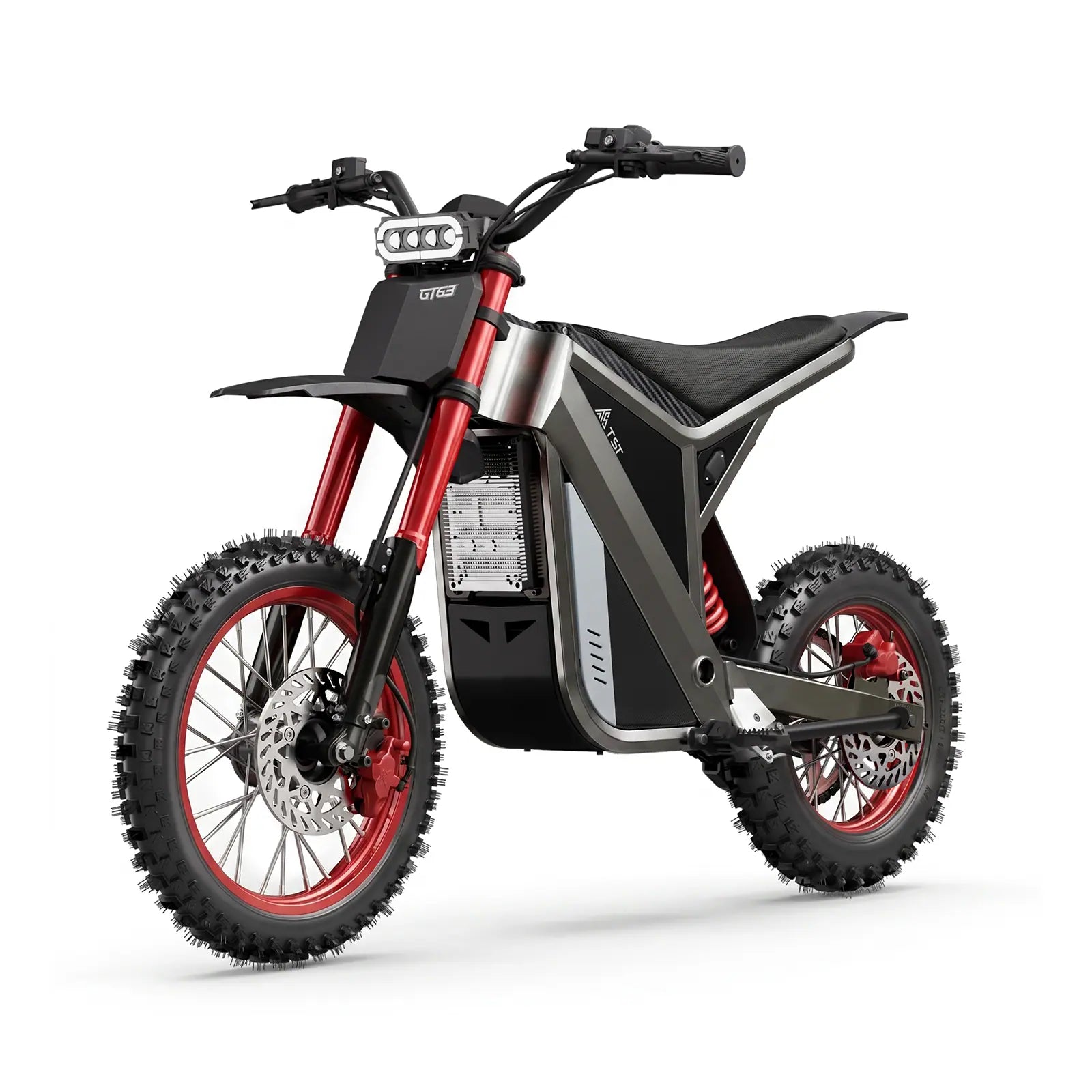














A charger that shares your battery's voltage rating and plugs in without force can still be the wrong charger. The U.S. Consumer Product Safety Commission has documented 156 fire and thermal incidents tied specifically to chargers marketed as "universal" or broadly compatible between January 2023 and mid-May 2024, and it now tells consumers not to use any charger with a micromobility device unless that charger has been tested and approved to work safely with that exact device. Voltage and connector shape are only two of several fields that have to align, and none of them, alone or together, substitute for the manufacturer's own confirmation that a given charger is approved for your specific battery.
This matters most in the exact moment a lost or damaged charger creates pressure to find a fast replacement. The safer path is slower: identify your exact battery and bike variant, gather the label data that actually determines compatibility, and get that confirmed against the manufacturer's own documentation or a direct answer from support before the battery is connected to anything.
What "Same Voltage" Actually Leaves Unverified
Nominal battery voltage (36V, 48V, 52V) describes a family of packs, not a single specification. Two 48V batteries can differ in charge cutoff voltage, maximum charge current, communication protocol between the charger and the battery management system (BMS), and connector pinout, even when the printed voltage on both labels matches. A charger that outputs the right nominal voltage but the wrong charge current, the wrong polarity, or lacks the communication signal a smart BMS expects can still overcharge, undercharge, or fail to detect a fault condition properly.
This is exactly the failure mode CPSC describes: chargers described as "suitable for use with e-bikes" or even "suitable for use with X brand e-bikes" have fit into devices they were not actually compatible with, and using one of them caused batteries to ignite. The connector fit and the voltage label gave a false sense of confirmation. Neither is proof.
A battery charger must be compatible with the specific battery and certified as a component intended for use with that specific e-bike, and only the charger provided with the e-bike should be used for charging it.the standard covering e-bike electrical systems, evaluates the battery, motor, controller, and charger as an interacting system, not as interchangeable parts that pass or fail independently. A charger's compatibility is inseparable from the specific system it was certified alongside.
The Fields That Actually Determine Compatibility
Before contacting anyone, pull the following directly off your existing charger's label (if you still have it) and your battery's label or manual. Do not rely on memory or a generic spec sheet for your bike model.
-
Battery identity: exact model number, variant (standard, plus, dual-battery), and generation. The same bike name can span multiple battery designs across model years.
-
Charger output voltage: the actual DC output printed on the charger (for example, 54.6V), not just the nominal battery voltage it's paired with. This is the figure the battery's BMS expects to see at full charge.
-
Charger output current: printed in amps. A current rating higher than the original charger's is not automatically safe just because the voltage matches.
-
Polarity and communication requirements: whether the connector carries only power or also a signal line the BMS uses to authorize or regulate charging. A charger without the expected signal line can behave unpredictably even if the physical pins fit.
-
Connector type and part number: shape, pin count, and keying. Visually similar barrel or multi-pin connectors from different manufacturers are not guaranteed to be wired the same way.
-
Certification marks: UL, CE, ETL, or equivalent marks on the charger itself, understood as evidence that the individual component met a listed safety standard, not as proof it is authorized for your specific battery.
None of these fields, read individually or matched against a generic lookup table, functions as authorization on its own. They are the information you send to the manufacturer or an authorized dealer so a human or documented system can confirm the match. If your manual lists an exact replacement part number for your battery, that number is useful evidence to raise with support, not a substitute for asking.
When the Manual or Label Doesn't Settle It
Manuals age, model numbers get revised mid-production, and batteries sold as accessories sometimes differ subtly from the battery originally shipped with a bike. If you cannot find your battery's exact model number and charger part number stated together in current documentation, or if the manual's compatibility language is ambiguous about your specific variant, do not proceed on inference. Written confirmation from the manufacturer or an authorized dealer, a specific answer tied to your battery's model number and any identifying codes on the label, is the step that actually closes the gap that voltage and connector matching leave open.
When you contact support, provide clear photos of both labels (the battery's identity label and the charger's input/output label), the exact bike model and purchase date, and the part number of the charger you're considering. Ask directly whether that specific charger is approved for that specific battery. A vague answer, or one that only confirms voltage and plug shape, has not actually confirmed compatibility.
Conditions That Should Stop a First Charge Entirely
Even a charger that has been confirmed compatible on paper should not be used if any of the following are present. Stop and contact support before connecting anything:
-
Visible damage, corrosion, or discoloration on either the charger or the battery's connector pins.
-
A port that feels loose, requires force to seat the connector, or doesn't click into a secure fit.
-
Any history of the battery or charger overheating, smoking, swelling, or producing an unusual smell during previous use.
-
An active recall notice matching your bike or battery model, or a manufacturer safety warning you haven't yet resolved.
-
Any documentation conflict, for example the manual states one part number while the charger you have states another, and support hasn't resolved which is correct for your unit.
CPSC's broader guidance for micromobility charging reinforces the same operating principle regardless of which charger is confirmed compatible: charge only with a device present, never overnight while sleeping, and unplug promptly once the cycle completes. These practices reduce risk from the charging system generally; they do not substitute for confirming the charger itself is the right one.
What Not to Do When a Charger Is Missing or Uncertain
Adapters, rewiring, or "trial and error" testing are not acceptable ways to resolve uncertainty about a charger. Do not test polarity yourself with a meter and then proceed on that basis, modify a connector to force a fit, or open a battery or its BMS to inspect or adjust anything internally.Explicitly lists using only the manufacturer-supplied battery and charger, and not modifying the device or battery, as core safety practices for micromobility products. A charger that requires an adapter to connect was not designed for that battery, regardless of what the adapter's packaging claims.
If a charger is genuinely unavailable through the original manufacturer, discontinued, out of stock, or the company is unresponsive, the CPSC's position is still to seek a charger that has been tested and approved for that specific device, not simply one that shares a voltage rating and plug. A specification match on paper, without manufacturer or authorized-dealer confirmation, is the exact pattern CPSC's fire data associates with incidents.
Getting a Confirmed Replacement
Once you have your exact battery model number, the charger's printed output specifications, and written confirmation of compatibility from the manufacturer or an authorized dealer, the appropriate next step is the manufacturer's own approved replacement-charger listing for that exact battery and bike variant, not a general marketplace search. That page, not this one, carries the current price, stock status, and the manufacturer's explicit fit statement for your model. If you own a TST e-bike, TST's support and warranty page outlines how to request a replacement part, and TST's contact page is the direct channel for confirming your exact battery and charger match before ordering.

Leave a comment
This site is protected by hCaptcha and the hCaptcha Privacy Policy and Terms of Service apply.