













Standover height tells you whether you can plant both feet on the ground while straddling a bike's frame — nothing more. To use it correctly, you need three things to match: the manufacturer's exact measurement point, your actual inseam measured in shoes, and an understanding that a sloped or step-through top tube changes what that number means in practice. Get any one of those wrong and a "safe" spec on a chart can still leave you unable to catch your balance at a stoplight.
The confusion around this measurement is not you misunderstanding geometry — it's a real inconsistency in the industry. Framebuilder discussions and bike-fit references note there is no single agreed point on the top tube where standover must be measured: some brands measure at the tube's midpoint, others at the point nearest the saddle nose, others in front of the bottom bracket, and sloped or curved tubes make the choice even more arbitrary. That means two bikes listing the same standover number are not necessarily equally easy to straddle.
What the measurement actually captures
Standover height is the vertical distance from level ground to the highest point of the frame you straddle when stopped with both feet flat on the floor. On a bike with a horizontal top tube, that point is usually near the tube's midlength. On a sloped or curved top tube — common on step-through and many commuter and cargo e-bikes — the "highest point you'd contact" shifts toward wherever your body lands relative to the saddle, not the geometric middle of the tube. A bike geometry reference explains that the measurement is normally taken at a point halfway along the top tube, but is sometimes taken at the lowest point instead, and manufacturers are inconsistent about which convention they follow.
This is why comparing a spec sheet number across two brands can mislead you even when both numbers look precise. One custom builder explains that some companies measure from the bottom bracket axis, others 15 mm forward, others 200 mm forward — different reference points that are not interchangeable, and notes that unless two bikes are measured the identical way, the numbers amount to comparing apples to oranges.
Matching units and the exact frame or variant
Before comparing anything, confirm two things: that your inseam and the bike's standover figure are in the same unit (inches to inches, or centimeters to centimeters — do not eyeball a conversion), and that the standover number belongs to the exact frame size and variant you are considering, not a sibling model. A step-through and a step-over version of what is otherwise "the same bike" can carry meaningfully different top-tube heights even though the rest of the geometry, motor, and battery are identical. If a listing shows one standover figure for an entire size run, ask whether that number applies to your specific frame size — many charts list standover per size, and applying the wrong row defeats the purpose of measuring at all.
Measuring your own clearance correctly
Do this measurement in the shoes you will actually ride in, since sole thickness changes your effective inseam by a measurable amount.
-
Stand barefoot-in-shoes with your back against a wall and feet 6–8 inches apart, mimicking a straddling stance rather than a narrow standing posture.
-
Take a firm, flat object — a book works — and press it upward between your legs until it contacts your body the way a saddle nose or top tube would, not merely touching fabric.
-
Mark the top edge against the wall and measure straight down to the floor. That distance is your effective inseam for bike-fit purposes.
-
Compare that number, in matching units, against the manufacturer's stated standover height for the exact frame size and variant you're evaluating.
A commonly cited starting point is at least about 2–5 cm (roughly 1–2 inches) of clearance between your inseam and the bike's standover figure on pavement, with more clearance recommended for rougher or uneven terrain where you may need to land off-balance. That is a general starting guideline, not a guarantee — it does not account for how the bike balances when stopped, how heavy it is to catch, or how your specific shoe sole and riding stance affect real clearance.
Where TST's published numbers stop short — and what to check instead
TST's current model comparison page lists a recommended rider-height range for each model (for example, 5'1"–6'4" for several step-thru and commuter frames) but does not publish a standover-height figure on that page. Rider-height range is a coarser number than standover height: it reflects an overall size recommendation, not the exact clearance at the top tube for your inseam. If standover clearance is decision-critical for you — because you have a shorter inseam relative to your height, or because you plan to ride in variable footwear — verify the exact top-tube or step-through height for your chosen frame size directly against the product's own geometry listing or by requesting the measurement before ordering, rather than inferring it from the height range alone.
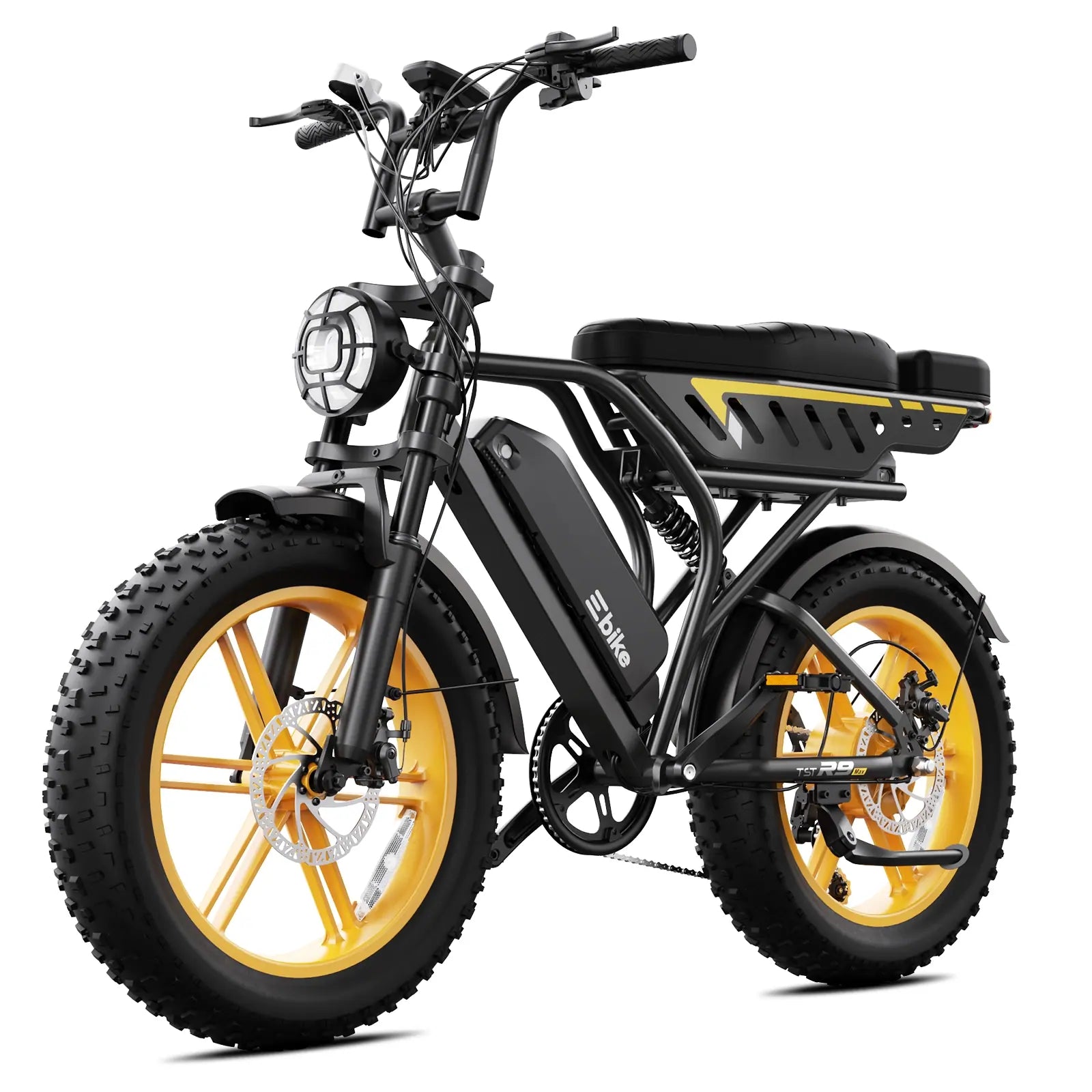
TST markets several step-through frames, including the Surfer 27.5" and the Buddy, specifically around lower top-tube geometry for easier mounting and dismounting. That structural difference is real and verifiable from the product description, but "step-through" describes a frame shape, not a specific clearance number — two step-through frames can differ in actual standover height depending on where their tube dips lowest and how far forward that low point sits relative to the saddle.
Standover clearing is not proof you can stop safely
This is the gap most sizing charts skip. Standover height only confirms that you can plant your feet without the top tube contacting your body while stationary and balanced. It says nothing about four separate things you still need to check before trusting a bike at a stop:
-
Saddle height and position. Your saddle needs to sit low enough, or drop fast enough, that you can get a foot down the instant you need to — a bike can pass the standover check and still leave your saddle too high to dismount quickly if you haven't also set seat height for your riding style.
-
Reach to the handlebar. Standover says nothing about whether you can comfortably reach the grips and brake levers while seated, which affects control during normal riding, not just at a stop.
-
Lever reach and braking control. Whether your hands can pull the brake levers firmly and quickly is a separate hand-size and lever-adjustment question from leg clearance.
-
Bike mass at a standstill. A heavier e-bike is harder to catch and steady if your balance shifts the moment your feet land, regardless of how much standover clearance you have. Battery placement, frame material, and total curb weight all affect how a bike behaves in your hands when stopped, not just how it measures on paper.
A short inseam paired with a step-through frame typically clears the standover check more easily than the same inseam paired with a sloped-tube step-over frame, because the step-through geometry removes or drastically lowers the obstruction near the point where you'd normally straddle. But clearing standover does not automatically mean the bike handles well at a stop for that rider — a lightweight frame with good balance can still feel easier to control than a lower-standover but heavier bike, particularly for riders managing hip mobility limits or carrying cargo.
After standover clears, what to verify next
Once your inseam and the frame's stated standover — matched in the correct units, for the exact size and variant — give you comfortable clearance, three questions remain before you can be confident about mount, dismount, and stop control on a specific model:
-
What is the saddle height range for this frame size, and can you set it low enough for quick foot-down access without sacrificing pedaling efficiency?
-
What is the bike's total curb weight, including battery, and how does that compare with a bike you've handled before?
-
Does the brake lever reach adjust to your hand size, and have you test-ridden or otherwise confirmed you can apply full stopping force quickly?
None of these are answered by a standover number, and no chart substitutes for physically straddling the bike or test-riding it when that option is available.
Where to go from here
If you've confirmed your inseam and clearance needs against the exact frame size and variant, TST's current model comparison page lists rider-height recommendations, frame types (including step-thru options), and full specifications side by side so you can narrow to models suited to your fit before checking any model-specific geometry detail with TST directly.
Compare TST e-bike models and step-thru options

Leave a comment
This site is protected by hCaptcha and the hCaptcha Privacy Policy and Terms of Service apply.