


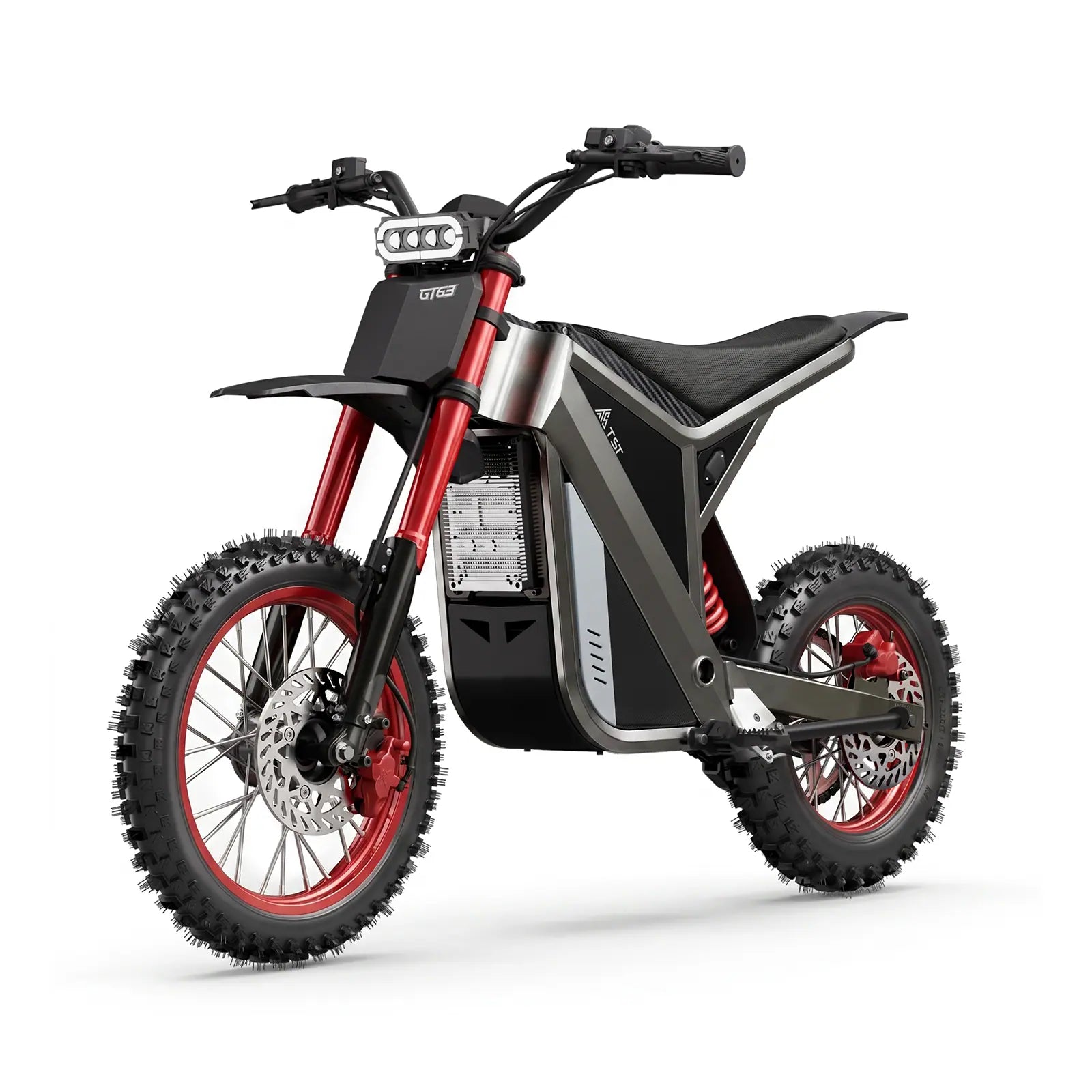














An e-bike’s total cost of ownership includes the purchase price, necessary accessories, tax, delivery, financing, charging, maintenance, repairs and other costs over a stated period and mileage. Battery replacement, downtime and resale belong in the calculation too—but as clearly identified assumptions, not guaranteed future events.
The five-year model below uses TST’s R002 as a purchase-price example, with editable low, base and high scenarios. TST sells the bike discussed here. This is a source-based budgeting guide, not an independent road test or a forecast of R002 reliability.
Establish your purchase baseline
Start with the configuration you intend to buy, not a general model name or promotional headline. Record the battery option, included equipment, checkout price and date before estimating future expenses.
Use the TST e-bike model comparison to identify a suitable configuration, then confirm its battery and included equipment on the exact product listing. Keeping these details together prevents your budget from combining prices or specifications from different variants.
On October 7, 2026, TST’s comparison and collection pages displayed the R002 at $799. That is the purchase-price input used in this example, not a guaranteed future price. Replace it with your actual checkout price before using the model.
Your initial purchase budget should include:
-
Bike and selected battery configuration.
-
Necessary accessories not already supplied.
-
Sales tax for your delivery address.
-
Shipping, assembly or delivery charges.
-
Financing interest and fees, if applicable.
-
Storage or transport equipment you need.
TST’s shipping policy lists free delivery within the lower 48 states. Confirm the charge for your actual address at checkout.
Build your accessory budget from the items your purchase configuration requires. Review the TST e-bike accessories for relevant options, and verify compatibility before adding anything to the total.
Do not count a supplied light, rack or fender again as an extra purchase. Conversely, an item pictured with a bike should not be treated as included unless the listing or order confirmation says so.
If you finance the bike, count the purchase price once and add interest and fees. Adding both the full bike price and all loan repayments would count the principal twice. Track the monthly repayment schedule separately if your main concern is cash flow.
Estimate costs from actual usage
Choose an ownership period and annual mileage before estimating operating expenses. A bike used occasionally and one used for daily commuting should not share an unexplained annual budget.
For a commute, multiply the round-trip distance by the number of days you realistically expect to ride. Add other journeys separately, allowing for holidays, seasonal conditions and days when you will use another mode of transport.
Charging
The clearest charging estimate uses electricity measured at the outlet:
Annual charging cost=Annual charging kWh×Electricity rate per kWh
If you do not have outlet measurements, use a provisional calculation:
Annual charging cost=1,000×Charging efficiencyAnnual miles×Battery Wh per mile×Electricity rate
This method requires assumptions about energy consumption and charging losses. Battery capacity alone does not establish consumption per mile, and an advertised maximum range should not be treated as a measured commute result.
For illustration, use 20 Wh per mile, 85% charging efficiency and $0.183 per kWh. These are editable inputs, not measured R002 performance:
-
At 1,500 miles annually, estimated charging uses about 35 kWh and costs roughly $6.50.
-
At 3,000 miles annually, estimated charging uses about 71 kWh and costs roughly $13.
-
At 5,000 miles annually, using 30 Wh per mile and a higher $0.35 electricity rate, estimated charging uses about 176 kWh and costs roughly $62.
Replace the rate with your utility’s applicable per-kWh charges. Do not allocate an existing fixed household account charge to the bike unless charging creates an additional charge.
Maintenance and repairs
Get a quote from a shop willing to service your exact bike. Ask what the estimate includes, whether consumable parts are separate and which electrical work the shop can perform.
Separate routine service, replacement parts and unexpected repairs. Tires, brake pads or drivetrain parts should not appear twice if they are already included in a service allowance.
The model below uses annual maintenance budgets of $150, $300 and $500, plus separate repair allowances. These are planning placeholders—not verified R002 service costs, repair frequencies or maintenance schedules. Replace them with local quotes and the applicable manufacturer requirements.
Only reduce the labor budget for work you can appropriately perform. Uncertain battery, electrical, steering, frame, wheel or brake-critical faults should go to TST support or a qualified service professional.
Insurance, storage and downtime
Ask your insurer whether the exact bike and intended use are covered. GEICO notes that homeowners or renters policies may have low equipment limits and may not cover certain bicycle or e-bike damage.
Enter the premium, deductible and relevant restrictions from your actual quote. If you choose no additional insurance, a zero premium is appropriate—but it does not mean theft or damage carries no financial risk.
Add these costs where they apply:
-
Paid bicycle storage or parking.
-
Compatible transport equipment.
-
Delivery or transport charges for servicing.
-
Transit, rideshare or other backup travel during repairs.
Use local prices and your expected travel needs. These expenses are excluded from the worked example rather than assumed to be zero for every reader.
Run three ownership scenarios
Use the same period and intended mileage when comparing low, base and high cases. The example below uses five years and a $799 R002 purchase price.
Apart from that dated bike price, all amounts are illustrative assumptions. Tax, financing, paid storage, service transport and downtime must be added where applicable. Resale receives no credit because no verified estimate is available.
The last row spreads accessories, recurring expenses and contingencies across five years. It is not a prediction of identical annual payments; an accessory purchase or battery replacement may occur in a single year.
The low case assumes no battery replacement, lower service spending and no additional insurance premium. The base and high cases reserve progressively larger amounts. They are budgeting scenarios, not evidence of how long a battery will last or how often repairs will occur.
The $400 and $900 battery contingencies are not verified quotes for the selected R002 configuration. Obtain a price for the exact compatible replacement battery, including delivery and any installation cost, before relying on either amount.
Calculate your own scenario as:
Modeled ownership cost=Initial purchase and setup+Recurring expenses+Selected contingencies−Resale credit
Keep actual spending separate from the scenario budget. An unused repair allowance remains a reserve, not an expense. Resale is likewise a future assumption, not cash available to fund the purchase.
How mileage changes the result
At 3,000 miles annually, five-year mileage is 15,000 miles. The example totals work out to approximately $0.14 per mile in the low case, $0.28 in the base case and $0.50 in the high case.
Using the $4,189 base total, the effect of changing mileage alone is:
This table holds the expense total constant to show the effect of the denominator. It does not establish that higher mileage leaves maintenance, electricity or replacement costs unchanged. Revisit those inputs whenever you change usage.
A longer ownership period also spreads the initial purchase across more years, but it adds operating expenses and extends exposure to replacement risk. Recalculate the full model rather than simply dividing the same total by more years.
Check the assumptions that matter
Change one uncertain input at a time:
-
Substitute an exact replacement-battery quote.
-
Enter your local service estimate.
-
Add your insurance premium and deductible.
-
Reduce expected riding days.
-
Include realistic backup-transport costs.
-
Remove speculative resale value.
If the purchase makes sense only when every uncertain input is favorable, the budget is fragile. A low sticker price alone does not resolve that risk.
Compare alternatives and confirm coverage
Compare the e-bike with transport costs you can actually avoid. An e-bike trip does not automatically eliminate the full ownership cost of a car.
AAA’s 2025 study estimated average new-vehicle ownership and operating costs at $11,577 annually. That includes expenses you may continue paying even when you drive less.
If you keep your car, focus on fuel, mileage-related wear, parking and tolls that the replaced journeys would otherwise require. Insurance, registration, financing and much of depreciation may remain. If the bike replaces transit or rideshare, use your actual fares and consider whether you still need a transit pass.
Compare the same journeys over the same period. Include backup travel on days when the bike is unavailable, and check applicable route and access rules before counting a trip as replaceable.
Confirm warranty assumptions
Review the TST warranty policy before assigning a repair or replacement cost to warranty coverage. Because the published pages differ on warranty duration, ask TST to confirm the terms for your exact model and battery in writing.
The dedicated policy states up to two years of coverage and lists one year for the battery, while the collection header says “One Year Warranty.” A broad headline does not confirm that every component or expense is covered for that period.
Ask whether the applicable terms cover parts, labor, shipping, battery degradation and the circumstances relevant to your use. Do not remove a service or replacement allowance solely because a warranty exists.
Returns can also affect the purchase budget. TST’s return page lists buyer-paid return freight for change-of-mind returns, with conditions depending on timing and bike condition. Confirm those terms before assembling or riding the bike to evaluate fit.
A sound purchase decision should survive realistic assumptions about mileage, service and replacement risk. Once it does, confirm the current configuration, obtain missing quotes and save the order details and written coverage terms with your budget.

Leave a comment
This site is protected by hCaptcha and the hCaptcha Privacy Policy and Terms of Service apply.