


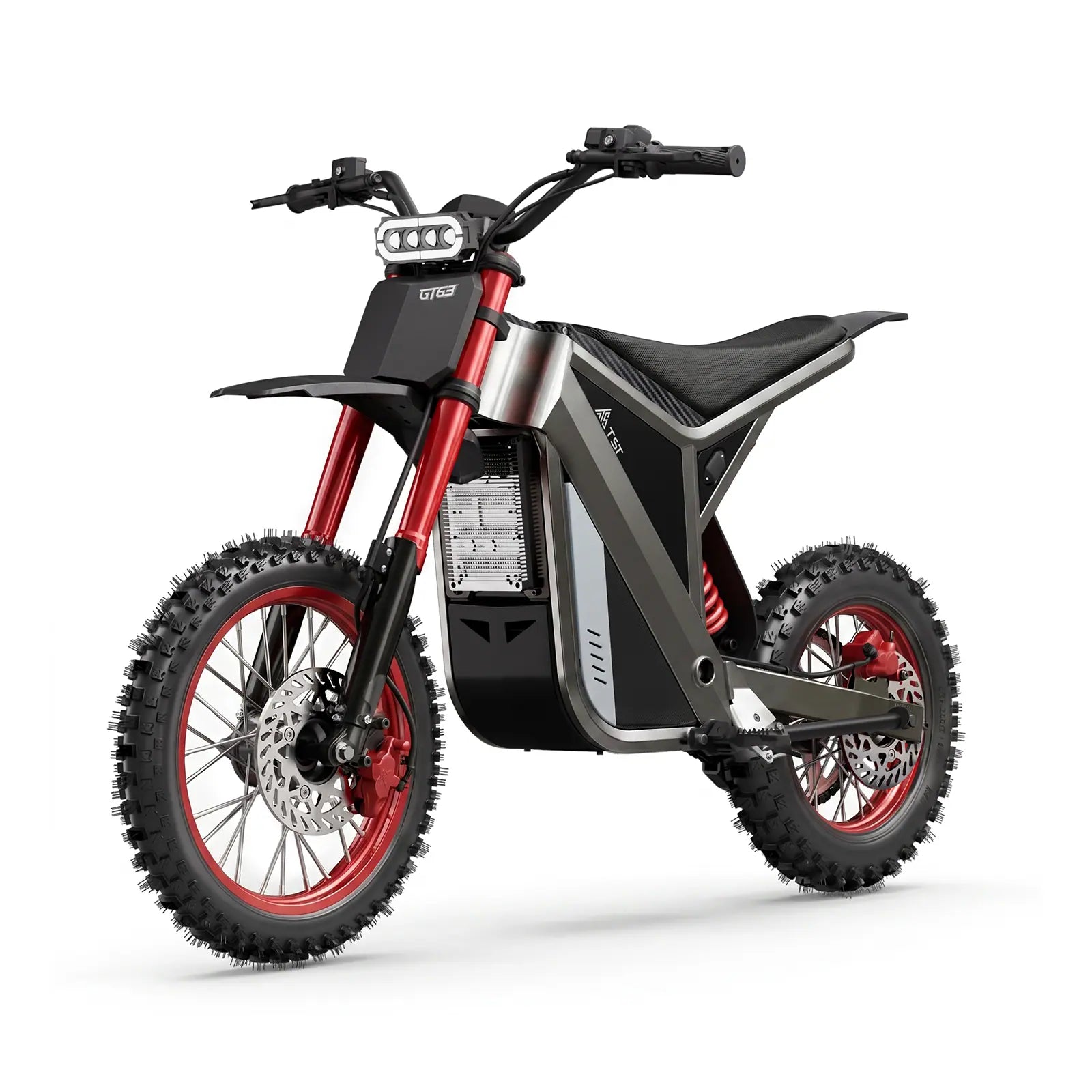














The useful question in a budget e-bike vs premium e-bike comparison is not how many features the more expensive bike adds. It is whether those features solve a problem you will encounter regularly—and whether the lower-cost option leaves an important requirement unresolved.
Start with fit, load, route, storage and support. Then compare the exact bikes against those requirements. A premium model may justify its price by making a difficult daily task easier. A budget model may offer better value when it meets the same essential needs without adding complexity you do not want.
Price alone does not establish safety, quality or long-term value. This guide uses a requirements ledger and a transparent cost framework rather than unverified product specifications or projected savings.
Write Your Must-Have Ledger First
Describe your hardest regular trip before comparing bikes. Include where you ride, what you carry, where the bike stays and how you would get it serviced. A feature that sounds attractive on a product page may have little value if it does not help with that trip.
Separate non-negotiables from preferences:
-
Fit and handling: Can you mount, stop and maneuver comfortably? Check frame dimensions and adjustment options rather than treating a recommended rider-height range as proof of fit.
-
Load: Identify the rider and cargo you intend to carry. Check how the manufacturer defines total payload, rack capacity and any passenger or child-seat limits; do not treat those figures as interchangeable.
-
Route: Record distance, hills, surfaces and frequent stops. For public-road or path use, leave space in your ledger to verify the rules that apply to your location and the exact bike configuration.
-
Storage and charging: Consider doorways, stairs, available space and access to a suitable charging location. A folding frame does not answer whether you can lift the bike.
-
Support: Decide whether you need local service, manufacturer assistance or both. Identify who would handle a fault before placing an order.
Put optional features in a separate column. A display, app, suspension system or larger battery should earn its place by addressing a defined need—not by making the specification list longer.
Where a Budget Bike Creates Ownership Trade-Offs
A lower price becomes a problem when it leaves you paying for an essential item later or accepting a limitation you cannot work around. The same test applies to a premium bike: a higher price does not excuse missing information.
Use the ledger below to connect each purchasing question to its ownership consequence.
Missing information is not proof that a bike is poor quality. It is a reason to pause the comparison until the seller supplies an answer.
Keep unrelated benefits separate. A return window, warranty or responsive support channel may improve the ownership proposition, but none substitutes for documented charging instructions, appropriate fit or a clear service plan.
Using TST's Own Listings as a Worked Example
Use the TST model comparison page to identify candidates, then check each candidate against your ledger on its exact product page and manual. Treat the comparison page as a starting point, not a substitute for model-specific documentation.
For a buyer who stores a bike upstairs, the decisive comparison may be weight and handling rather than battery size. For someone carrying shopping, it may be rack compatibility and clearly defined load limits. For a daily commuter, it may be replacement-part access and a service arrangement that fits their schedule.
Build the cost comparison only after those requirements are resolved:
-
Starting cost: the current bike price, applicable tax and delivery charges, plus necessary accessories, assembly or setup.
-
Planned running costs: charging and scheduled service, using your own electricity rate and actual service quotes.
-
Repair scenario: the quoted cost and availability of a compatible replacement part, with any shipping or labor stated separately.
Keep the repair scenario separate from planned expenses. Knowing the price of a replacement battery does not establish when you will need one.
If you calculate nominal battery energy, use the voltage and amp-hour rating documented for the exact configuration:
Nominal energy in Wh=voltage in V×capacity in Ah
That calculation compares stated energy capacity; it does not establish riding range. Likewise, a charging-cost estimate needs an explicit assumption about electricity drawn from the outlet. Do not silently equate nominal battery capacity with a measured full-charge consumption figure.
This method leaves unanswered values visible instead of filling them with convenient assumptions.
Warranty and Service Decide Real Cost
Read the warranty as a set of terms, not just a headline duration. Check coverage for the frame, battery, motor, controller, display and charger separately. Look for exclusions, claim requirements and responsibility for diagnosis, labor and shipping.
Apply the same scrutiny to returns. Establish when the return period starts, what condition the bike must be in, and whether assembly, riding or packaging affects eligibility. Do not count a return policy as a low-risk trial unless its terms support that interpretation.
Next, identify a workable service route. Ask your intended shop whether it will service the exact bike and which jobs it accepts. Ask the manufacturer how parts are identified, ordered and supplied. A general promise of support is less useful than knowing what happens when a specific component needs attention.
Separate routine care from uncertain faults. Follow the exact manual, and direct battery, electrical, frame, steering or brake concerns to the manufacturer or a qualified service professional. Do not make owner-performed battery repair or controller modification part of a savings plan.
Buy Less, Buy Different, or Delay
Choose the least expensive option that meets your non-negotiables with adequate documentation—not automatically the cheapest bike.
-
Buy less when the lower-cost option meets your requirements and the additional features would see little use.
-
Buy different when the main obstacle is fit, cargo, stairs, storage or service access. A more expensive version of the wrong design does not resolve that mismatch.
-
Delay when important answers about charging, load limits, warranty coverage, parts or route suitability remain missing.
Once your ledger is complete, compare current TST candidates and confirm the exact variant, included items and ownership terms before purchasing. The reason to pay more should be identifiable: a task the bike handles better, an essential item already included or a support arrangement you can use.

Leave a comment
This site is protected by hCaptcha and the hCaptcha Privacy Policy and Terms of Service apply.