
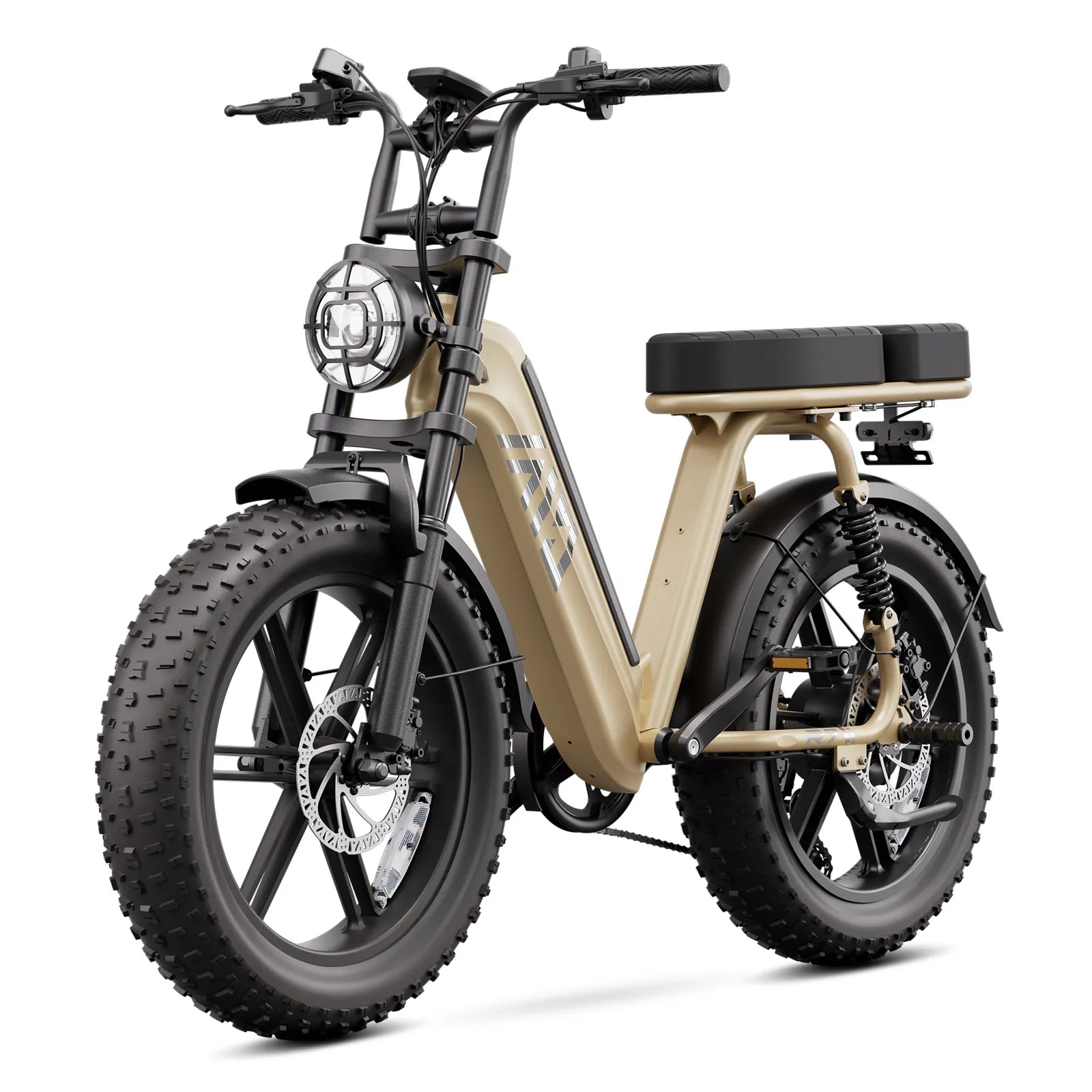
















The safe way to clean an e-bike is to remove power the way your manual specifies, keep water pressure low and directed away from the battery interface, charge port, display and connectors, and dry every opening before you reconnect anything. A water-resistance rating like IPX4 or IP65 tells you the bike can handle rain and splashes, not a hose jet, a pressure washer, or a puddle deep enough to submerge the motor. Most electrical damage on e-bikes happens not during the ride but during the cleanup afterward, when someone treats a splash rating as a green light for a full wash.
This matters more in fall and winter, when salt, sand, and standing meltwater sit on the bike far longer than a summer rain shower does, and corrosion has more time to work into connectors that a garden hose would never reach on its own.
What "Water-Resistant" Actually Covers
IP ratings describe a lab test, not a use case. An IPX4 rating means the tested component survived water splashed from any direction; IPX6 means it withstood a stronger jet; IPX7 covers brief submersion up to about one meter. None of these figures describe pressure-washer force, a hose sprayer set to jet, or standing water that surrounds the battery box for an extended period, and manufacturers are explicit that the rating does not extend that far. TST's own FAQ page states plainly that its e-bikes are rated IP6 and can handle rain or a puddle crossing, but adds that customers should not use high-pressure jets to clean the bike, in order to avoid damaging the electrical components. TST's warranty policy separately excludes water damage to the battery, motor, and controller from coverage, which means an owner who pressure-washes a bike and later finds a dead controller is unlikely to get that repair covered — the manual and warranty terms control here, not the marketing claim of being "waterproof."
Other manufacturers describe the same boundary in their own service guidance. Bosch's eBike Systems team advises that water is fine as long as it doesn't come from a steam cleaner, because high-pressure water can penetrate motor and hub bearings even on a bike with a good splash rating. Giant's cleaning guidance for its e-bikes says the same about avoiding power washers directed at the motor, battery, display, or bearings. Treat any e-bike's water rating as a description of what it survives while riding in rain, not an instruction for how to wash it.
The Cleaning Sequence That Protects Electronics
Follow your bike's exact manual for the shutdown and battery-removal steps. TST's R002/R002 PLUS manual specifies charging and storing the bike and battery only between 32°F and 86°F, letting the bike dry completely before use, and confirming the battery is locked and undamaged before charging. The general sequence that applies across most current e-bikes:
-
Power off the bike completely and remove the battery if your model allows it. If the battery is not removable, close and secure the charge-port cover before any water touches the bike.
-
Cover or avoid direct spray on the display, controller housing, motor casing, brake calipers' internal hydraulics, and any exposed connector. These are the parts every manufacturer singles out for extra caution, not because the whole bike is fragile, but because these specific interfaces are where water finds a path to circuitry.
-
Use a bucket, soft sponge or brush, and a mild bike-specific cleaner or dish soap rather than a degreaser or solvent on painted or plastic-covered electrical housings.
-
If you rinse, use a garden hose on a gentle, low-pressure setting. No sprayer nozzle set to jet, and never a pressure washer. Multiple manufacturer and shop sources converge on this exact restriction because forced water is what drives moisture past seals that a light rinse would not challenge.
-
Dry the bike fully before charging or riding. Bounce or shake off loose water, then wipe connectors, bolts, and battery contacts with a dry microfiber cloth, and let the bike air out in a ventilated space rather than direct sun, which can bake cleaning residue onto surfaces.
-
Reinstall the battery, confirm it locks into place, and run a short function check on lights, display power-up, and drive response before your next ride.
Do not open the battery casing, force connectors apart to clean inside them, or use compressed air at close range into a sealed connector. These actions can defeat the seal that made the component water-resistant in the first place, and TST's warranty explicitly does not cover water damage that follows unauthorized modification. If a battery becomes swollen, unusually hot, or shows any leakage or smoke, stop and follow the U.S. Consumer Product Safety Commission's current charging and battery-handling guidance rather than attempting to service it yourself. CPSC also advises never using a battery pack that has been modified or reworked by unqualified personnel.
Which Parts Never Get Direct Water or Pressure
Some components need visibly different handling because they either house electronics or depend on a grease or fluid seal that water pressure disrupts.
-
Battery contacts and the charge port: wipe with a dry cloth only; never spray directly, and never charge a pack that is still damp at the contacts.
-
Display and any handlebar-mounted controller: wipe down, don't submerge. Several current guides recommend covering permanently mounted displays with a cloth during washing rather than relying on the housing alone.
-
Motor housing, whether hub or mid-drive: tolerates a damp sponge wipe but not a direct jet, because water forced past the motor seal can pool inside a housing that is designed to shed water while the wheel is turning, not while the bike sits still or is flipped upside down.
-
Hydraulic disc brakes: keep degreaser and chain lube away from the rotor and pads entirely. Contamination here reduces stopping power, and this is a safety-critical fault, not a cosmetic one.
-
Suspension seals and bearings, including fork, rear shock, headset, and hubs: a soft brush and low-pressure rinse only, since forced water strips lubrication from seals faster than normal riding does.
-
Folding or locking joints on foldable frames: dry and lightly lubricate per the manual after a wet ride, since standing moisture in a fold hinge is a common source of hidden corrosion that isn't visible until the joint binds or develops play.
Seasonal Contamination Changes the Inspection, Not Just the Cleaning
A fixed weekly or monthly cleaning calendar misses the point when the contamination itself is seasonal. Road salt, sand, and slush behave differently from summer dust, and each demands a different first move before any water touches the bike.
Salt film from winter roads is corrosive on contact with any moisture, so the priority is a low-pressure fresh-water rinse soon after exposure rather than letting salt sit through several rides. Corrosion accelerates wherever salt and residual moisture combine on exposed metal such as bolt heads, spokes, and brake hardware.
Dry sand should be brushed or shaken off before it gets wet, since wet sand turns into an abrasive paste that grinds into chain links, derailleur pivots, and brake surfaces. Adding water to sand before removing the bulk of it makes the job worse, not better.
Mud carries organic grit that packs into bearing seals and brake calipers under repeated riding. A soft brush loosens dried mud before any rinse, and any residual film left at the caliper or hub seal should be treated as a sign to inspect that seal rather than simply add more soap.
After any of these exposures, check the same points a shop mechanic would flag first: bottom bracket area, headset, brake calipers and rotors, and pedal or crank threads, since these are where salt and grit concentrate fastest during winter or beach riding. This inspection matters more than the wash itself. A clean-looking bike with grit worked into a bearing seal is worse off than a slightly dusty bike with intact seals.
The Charging Re-Entry Gate
Do not plug in the charger immediately after any wet cleaning, rain ride, or snow or slush exposure. Use this sequence as a gate before reconnecting power.
Confirm the battery contacts and charge port are visibly dry and free of residue. Confirm there is no water pooling at the display, controller, or any connector housing. Confirm the battery locks fully into its mount with no play. Only then plug in the charger, and charge within the temperature range your manual specifies. TST's published range for the R002/R002 PLUS is 32°F to 86°F, or 0°C to 30°C. If the bike was ridden through deep water, heavy rain, or a wash that involved any pressure beyond a gentle rinse, wait for a full air-dry period of several hours in ventilated conditions rather than charging on a fixed schedule regardless of moisture.
If you see corrosion on a connector, water inside the display housing, a battery that won't seat correctly, or any abnormal behavior after charging, such as unexpected shutdowns, error codes, unusual heat, or a burning smell, stop and route the bike to manufacturer support or a qualified e-bike service technician rather than continuing to ride or attempting a repair. CPSC's current micromobility guidance similarly directs consumers to always be present during charging, use only the charger provided with or approved for the device, and report unusual battery behavior rather than working around it.
When a Part Needs Replacing
If inspection turns up a corroded connector, a cracked battery contact, or a brake component contaminated beyond a simple clean, that's a replacement decision, not a cleaning one. Confirm the exact fault with your manual or with manufacturer support before ordering a part, since components vary by model and wheel size. TST owners can review the manufacturer's guidance on sourcing original parts to verify a genuine battery, motor, or brake component matches their specific bike before buying. Matching the wrong part to your model or wheel size is its own risk on top of the original contamination issue.

Leave a comment
This site is protected by hCaptcha and the hCaptcha Privacy Policy and Terms of Service apply.