
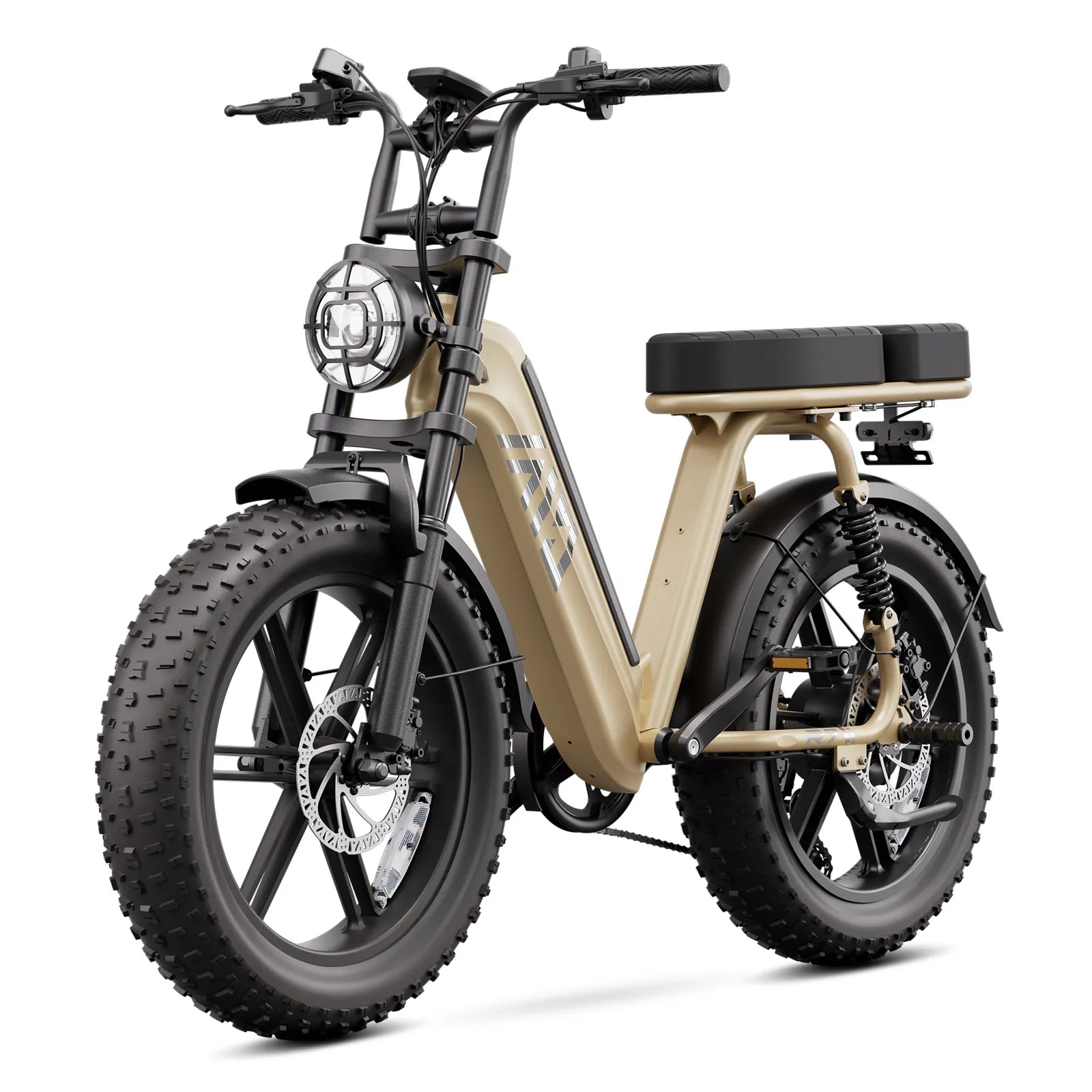
















The TST R002 is the best e-bike for heavy riders on a budget, with a verified 450 lb payload rating and 90 N·m of torque for $799 as of August 21, 2026; the TST R7 adds step-through comfort at the same payload, and the Himiway Big Dog is the premium cargo choice near $2,100 if you want a larger brand and longer-range battery. Payload rating, torque, brakes, and tire stability are the four specs that matter, not motor watts alone. This guide covers only e-bikes for heavy riders; use the complete buyer's guide for the step-by-step framework across every e-bike type.
Which Four Specs Matter Most for Heavy Riders?
Heavy riders should shop by payload rating first, torque second, brakes third, and tire stability fourth. Payload is the total limit for rider plus cargo, and exceeding it stresses the frame, spokes, and battery mounts. Torque determines whether the motor pulls a heavier load uphill without strain. Brakes determine stopping distance under load. Wide tires keep the bike stable at speed and on loose surfaces.
Skip any bike that does not publish a payload figure. A listing that only brags about motor watts is hiding the number that actually protects you.
Add a margin rule before you shop: your total weight (rider plus cargo) should sit at 80-90 percent of the rated payload, not at the limit. A 450 lb-rated bike comfortably carries a 360-405 lb total; a rider at 440 lb on the same bike leaves almost no reserve for a backpack, a child seat, or gear added later. The margin is what keeps the frame, spokes, and brakes working within design limits for years.
Candidate Pool: Verified Payload Numbers Compared
| Model | Payload | Torque | Price (8/21/2026) |
|---|---|---|---|
| TST R002 | 450 lb | 90 N·m | $799 - $1,099 |
| TST R7 | 450 lb | 90 N·m | $799 (official sale) |
| TST Carrier | 450 lb | 90 N·m | About $1,000 promo |
| RadExpand 5 Plus | 315 lb | 750W-class | $1,899 |
| Himiway Big Dog | Large cargo rating | Gear-hub | About $2,099+ |
The table shows the practical reality: TST's 450 lb platforms with 90 N·m appear at $799-$1,100, while mainstream and premium alternatives cost more for equal or lower payload.
TST R002: The Budget Pick with Maximum Reserve
The R002 pairs a 1500W motor with 90 N·m of torque, a 450 lb payload rating, 20x4-inch fat tires, and full suspension for $799 (15Ah) or $1,099 (25Ah), with a 2-year direct warranty. For a heavy rider, the combination of torque reserve and payload margin is what makes hills and starts feel effortless rather than strained.
The trade-offs: its 32 mph top speed may exceed local e-bike classes, the 71.9 lb bike is heavy to move when not riding, and direct purchase means assembly at home. For the money, no verified competitor matches its capacity.
TST R7: The Step-Through Pick for Comfort and Cargo
The R7 carries the same 450 lb rating and 90 N·m of torque in a step-through frame with hydraulic disc brakes and a modular rear seat that swaps between passenger, rack, and storage box. For heavy riders who also want easy mounting and cargo versatility, the R7 is the comfort-first version of the same platform.
At its August 2026 promotional price of $799, the R7 matches the R002's price while adding step-through ergonomics and cargo flexibility. If mounting ease or family hauling matters as much as payload, the R7 is the better fit.
Himiway Big Dog: The Premium Cargo Pick When Budget Allows
The Big Dog is a purpose-built cargo e-bike from an established brand, pairing a 750W motor with a 20Ah battery and large rear rack, priced around $2,099 at US retailers as of the check date. Its long-range battery and mature cargo accessory ecosystem make it attractive for heavy riders who also haul professionally or want maximum range per charge.
The trade-offs: it costs roughly double TST's heavy-rider platforms, its gear-hub motor delivers less torque than TST's 90 N·m, and its larger battery adds weight. Buy it for brand history, range, and cargo depth; buy TST for capability per dollar.
R002 vs Big Dog vs RadExpand: Payload and Torque Compared
On the numbers that matter, TST's trio leads: 450 lb payload and 90 N·m across three body styles at $799-$1,100. The RadExpand 5 Plus at $1,899 offers only 315 lb, which is a hard limit for heavier riders and cargo. The Big Dog offers cargo capability and range but less torque and a higher price.
The practical takeaway: if your total weight (rider plus cargo) is anywhere near 300 lb, a 315 lb-rated bike leaves almost no margin; a 450 lb-rated platform changes the ride entirely.
Why Should You Test-Ride with Your Normal Load?
Payload numbers do not tell you how a bike feels. A heavy rider should test the bike with their normal cargo: feet flat at stops, no wobble in corners, and braking confidence at speed. Check seat height range, handlebar reach, and standover clearance, because a bike that fits badly is uncomfortable at any weight.
If you cannot test ride, compare frame geometry and wheelbase: longer wheelbases and wider tires generally feel more stable under load. Read owner reviews from riders near your weight, not just marketing pages.
Weight matters for fit, not just for stability: a 450 lb-rated bike weighs 70-95 lb, and a rider who must lift or walk it frequently should test that reality too. The bike needs to feel manageable at stops and when moving it around the garage, which is a fit issue a spec sheet cannot answer.
How Does a Heavy Load Change Maintenance?
A 450 lb load multiplies wear. Plan for more frequent brake pad changes, spoke retensioning, tire pressure checks, and suspension service. Hydraulic disc brakes are strongly preferred; both TST platforms use them (the Carrier and R7 run 180mm rotors). Charge and store the battery per the manufacturer's guidance, and never exceed the payload rating, because the frame and battery mounts are not designed beyond it.
TST EBike covers manufacturing defects for 2 years and sells replacement parts directly, which matters for a bike that works hard. Whatever you buy, service it on schedule.
Set a service calendar in the first week: check tire pressure and brake feel before every ride, inspect spokes and chain monthly, and book a full service at 500 miles. On a 450 lb-loaded bike, brake pads and drivetrain components are consumables, so expect to replace them more often than a light rider would and treat that cost as part of the monthly transport budget rather than an emergency.
TST EBike Expert Views
"Heavy-rider bikes are a geometry problem as much as a power problem. We rate the R002, R7, and Carrier at 450 lb because the frame, spokes, tires, and battery mounts are built as a system for that load, not just the motor. The torque reserve is what a heavier rider feels on a hill; the payload margin is what keeps the bike safe in year two. Our advice: weigh yourself with your normal cargo, add a 10-15 percent margin for gear you will add later, and buy the platform with that margin built in. A 300 lb-rated bike with 450 lb on it is a different, unsafe machine."
— TST EBike Engineering and Service Team (this article is written by TST EBike's editorial team, which works for the manufacturer)
Conclusion: Buy Payload Margin, Not Just Watts
For heavy riders, the TST R002 is the best budget pick with 450 lb payload and 90 N·m at $799, the R7 adds step-through comfort at the same capacity, and the Himiway Big Dog is the premium long-range cargo choice if price is secondary. Weight yourself with your cargo, add margin, and buy the platform with the margin built in.
Heavy-Rider Checklist
If you take one number away, make it the payload margin: rider plus cargo plus a 10-15 percent reserve should fit comfortably inside the rating.
- Weigh myself with normal cargo and add 10-15 percent margin.
- Confirm the payload rating, torque, and brake type on the official page.
- Test ride with my normal load if possible.
- Verify local class rules for the motor and top speed.
- Plan brake pad, tire, and spoke maintenance into the budget.
See the TST R002 product page for current pricing, or compare the cargo e-bike collection for hauling-focused platforms.
Related reading: how TST EBike compares to Himiway for heavy riders
FAQs
What payload rating do I need as a heavy rider?
Add your body weight, normal cargo, and a 10-15 percent margin, then choose a bike rated at or above that total; 450 lb-rated platforms like the TST R002, R7, and Carrier provide that margin.
Is motor wattage more important than payload?
No: payload is the hard limit that protects the frame and wheels, while torque determines how the load rides uphill; check both.
Can a heavy rider use a 315 lb-rated bike?
Only if your total weight stays comfortably below 315 lb with margin; near the limit, the bike handles and brakes poorly.
Which brake type should a heavy rider choose?
Hydraulic disc brakes are strongly preferred under load; the TST R7 and Carrier use 180mm hydraulic discs.

Leave a comment
This site is protected by hCaptcha and the hCaptcha Privacy Policy and Terms of Service apply.