


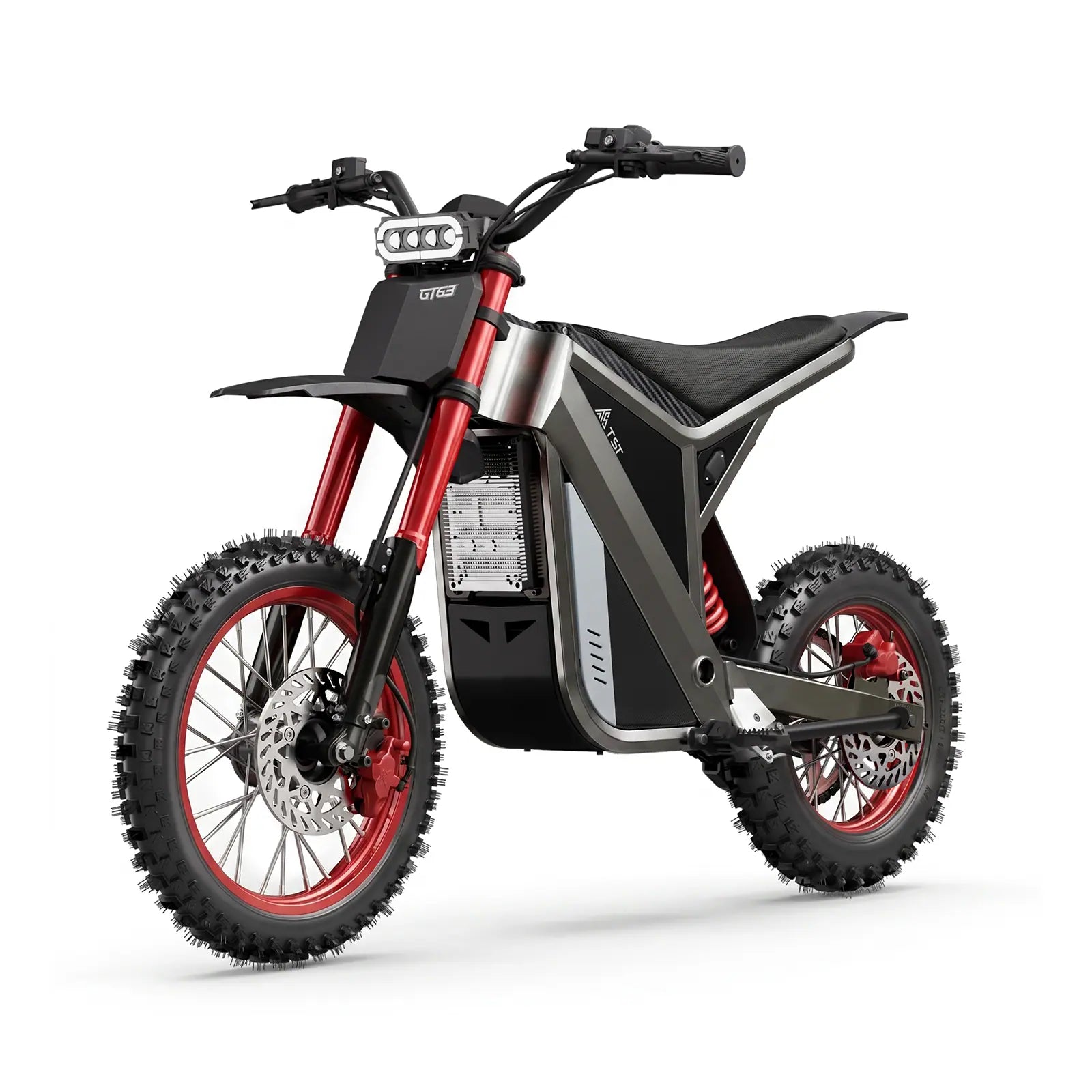














You calculate ebike battery energy in watt-hours by multiplying pack voltage by amp-hours: Wh = V \times Ah. With that number, divide by your typical power draw in watts to estimate range. Under heavy load (for example 400 lbs total), rolling resistance, air drag, and motor current all rise, so real-world range can drop to half the “ideal” spec on the label.
demystifying cargo ebike motors
How does the basic formula Wh = V × Ah work for ebike batteries?
The battery’s usable energy is the product of its nominal voltage and capacity in amp-hours: Wh = V \times Ah. This tells you how many watt-hours the pack can deliver, which is the starting point for any honest range estimate.
From a factory perspective, I treat the Wh number as the “fuel tank size” in electrical form. Voltage reflects how hard each cell can “push” current, while amp-hours reflect how long it can push at a given rate. When we specify a 48 V, 15 Ah pack on a TST EBike, that’s roughly 48 \times 15 = 720 Wh. In practice, you never extract 100% of that without hurting cycle life, so engineers usually reserve 5–15% as a buffer in the BMS.
Inside the pack, serial cell strings create the nominal voltage, and parallel groups create the amp-hour capacity. That means any change in cell chemistry or layout directly alters Wh. When I’m optimizing range, I don’t just “make the pack bigger”—I balance Wh against weight, cost, and frame integration so the bike remains controllable and doesn’t turn into a battery with wheels.
What is the step‑by‑step method to estimate range from battery Wh?
Start by calculating total watt-hours with Wh = V \times Ah. Then estimate average power draw (in watts) at your typical speed and conditions, and divide Wh by that power to get hours of assist, finally converting hours to distance using your speed.
In the workshop, I walk riders through a simple example. Suppose your TST EBike uses a 48 V, 15 Ah battery: 48 \times 15 = 720 Wh. If you cruise around 20 mph and the system draws roughly 360 W on mixed terrain, then 720 / 360 \approx 2 hours of assist. At 20 mph, that’s about 40 miles. When we add weight, hills, or higher assist levels, that average power draw climbs, so those same 720 Wh buy fewer hours—and fewer miles.
The key non-commodity nuance is that average power is not “stamped” on the motor; it’s a moving target shaped by rider mass, wind, tire choice, and riding style. If you want realistic range, you must calibrate this average for your own routes rather than trusting a brochure number based on a 150 lb rider on a flat lab track.
Why does range drop so sharply under heavy loads like 400 lbs?
Heavy loads increase rolling resistance, climbing power, and peak current, so the motor spends more time in less efficient operating regions, burning more watt-hours per mile. At around 400 lbs total system weight, it’s common to see real range fall to about half of the rated “ideal” figure.
In physics terms, the energy cost per mile is dominated by three factors: fighting gravity on climbs, overcoming rolling resistance, and pushing air. Gravity scales directly with mass; the heavier the system, the more work the motor must do just to hold speed on inclines. Rolling resistance also grows roughly linearly with weight, especially on wider, softer tires often used on moped-style ebikes.
On the factory dyno, we see this clearly. Load a test rig with an extra 150–200 lbs and the current trace spikes during every acceleration and ramp. The cells run warmer, the controller spends more time near its current limits, and efficiency curves sag. When you sum that over an entire ride, the “cost per mile” in Wh increases enough that the same battery delivers roughly half the distance it could at lighter loads. That is the core physics behind the “400 lbs load = half range” rule of thumb.
How can you model 400 lb range loss with simple physics and numbers?
You can model heavy-load range loss by comparing energy per mile at light and heavy weights, using approximate formulas for climbing power, rolling resistance, and motor efficiency. This doesn’t require lab equipment—just a calculator and realistic assumptions about your route.
For rolling resistance, we often use P_{rr} \approx C_{rr} \times m \times g \times v. Here, m is total mass, g is gravity, v is speed, and C_{rr} is a coefficient linked to tires and pressure. Double the mass, and the power spent on rolling resistance doubles at the same speed. On hills, climbing power obeys P_{climb} \approx m \times g \times v \times \sin(\theta). A fully loaded ebike climbing the same grade consumes proportionally more power, pushing the system closer to its efficiency cliff.
In the lab, I’ll plot Wh per mile at different total masses for a given TST EBike frame and tire. At around 220–250 lbs total, Wh/mile might sit near 18–20 Wh. At roughly 400 lbs, that number often climbs into the 35–40 Wh/mile range, particularly on mixed hills. With a 720 Wh battery, that’s the difference between roughly 36–40 miles and around 18–20 miles—essentially halving practical range.
What simple “energy budget” can riders use to track real‑world Wh per mile?
You can keep a personal “energy budget” by noting battery percentage used over a known route and converting it back to Wh per mile. Over time, this lets you see how payload, hills, and speed change your actual cost per mile.
The practical method is simple. First, compute total pack Wh: 48 V × 15 Ah = 720 Wh. Ride a known 10-mile loop at your typical speed and load. Suppose you use 30% of the battery. That’s roughly 0.3 \times 720 = 216 Wh. Divide 216 Wh by 10 miles and you get about 21.6 Wh/mile.
Repeat the same loop loaded to 400 lbs total. If you now burn 60% of the pack—432 Wh—for the same distance, your cost per mile is 43.2 Wh. When you run the full 720 Wh tank at that heavier cost per mile, theoretical range is about 720 / 43.2 \approx 16.7 miles. This notebook-style accounting is exactly how I teach riders to grab their own “bottom-line physics” rather than relying on brochure claims.
Example Wh/mile tracking table
Once you build this kind of table for your TST EBike, range estimates stop being guesses—they become data-driven.
How does rider plus cargo weight change rolling resistance and motor efficiency?
Rider and cargo weight increase the normal force on the tires, growing rolling resistance and requiring more torque at the hub or crank. More torque at the same speed means more current, which shifts the motor into less efficient regions of its torque-speed curve.
In a simplified view, rolling resistance is F_{rr} = C_{rr} \times N, where N is the normal force, approximately m \times g. Double total mass from 200 to 400 lbs equivalent and F_{rr} doubles. Because power is force times velocity, you are paying double the rolling power if you insist on the same speed.
Motor efficiency isn’t flat. On the bench, we map efficiency against torque and speed: light loads at moderate speed often sit in the 80–85% bracket, while heavy torque at lower cadence pushes efficiency down into the 70% or worse zone. That means not only are you using more mechanical energy per mile; more of the electrical energy becomes heat rather than motion. Combine these effects, and the Wh/mile curve steepens at high loads.
Which riding behaviors under 400 lb load most quickly destroy range?
Aggressive throttle use, high average speed, and repeated stop‑and‑go accelerations are behavioral amplifiers that massively increase Wh per mile under heavy load. Smooth acceleration, lower cruise speeds, and smart gear use can recover a surprising amount of lost range.
From my time tuning controllers, I’ve seen that full-throttle launches at high load draw near-peak currents, creating copper losses and heat. When you do that at every intersection with 400 lbs aboard, you waste energy on heat instead of forward motion. Riding 25 mph instead of 18 mph also spikes aerodynamic drag; because drag scales roughly with the square of speed, the penalty is larger than most riders expect.
The insider tip is to treat a fully loaded ebike like a freight train, not a sports car. Use lower assist levels and mechanical gearing to get moving, then let the motor support rather than dominate. On a TST EBike, riders who shift and modulate assist under heavy load routinely reclaim 20–30% more real range compared to “always max assist” habits.
Why do voltage sag and battery internal resistance matter more at high loads?
Under heavy load, higher current causes voltage sag and more power lost inside the battery due to internal resistance, shrinking usable Wh. This sag also limits peak performance and can trigger early low-voltage cutoffs, further reducing apparent range.
Inside any lithium pack, internal resistance causes a voltage drop that follows V_{drop} = I \times R_{internal}. At light loads, current is modest and the drop is small. At 400 lbs load and hard acceleration, current spikes, and the voltage seen by the controller falls more sharply. The system may reach its minimum voltage threshold sooner, even though there is still chemical energy in the cells.
In practical terms, that means the “effective Wh” accessible under heavy current is less than the nominal Wh printed on the label. As a factory engineer, I account for this by using conservative current limits and realistic internal resistance values when estimating heavy-load range. If the pack is aging or built with lower-grade cells, high-load sag can be severe enough that riders see dramatic loss of both power and distance on hills.
Can you use kWh per 100 km style metrics to compare ebikes under load?
Yes, you can adopt a kWh-per-100 km metric, similar to electric cars, to compare ebike efficiency at different loads and routes. Converting your Wh/mile into Wh/km or kWh/100 km gives a clear, comparable figure.
To do it, take your measured Wh/mile and convert: 1 mile ≈ 1.609 km. Suppose your TST EBike uses 25 Wh/mile at moderate load. That’s about 25 / 1.609 \approx 15.5 Wh/km. Over 100 km, that becomes 1.55 kWh/100 km. Under a 400 lb load with 40 Wh/mile, you get roughly 40 / 1.609 \approx 24.9 Wh/km, or about 2.49 kWh/100 km.
This metric makes it very clear that heavy load behaves like driving an electric car uphill with a trailer: the energy cost per distance climbs, and the gap between “light” and “heavy” scenarios can be huge. When customers bring usage logs into a TST EBike store, we often convert their phone-recorded ride data into kWh/100 km sheets to help them visualize how their riding style and payload affect efficiency.
Does terrain (hills, surfaces) amplify heavy‑load range loss?
Yes, terrain amplifies heavy‑load range loss because hills and rough surfaces demand more power from the motor, especially when total mass is high. Smooth, flat pavement is forgiving; repeated climbs and rough ground are not.
On climbing segments, the power term P_{climb} = m \times g \times v \times \sin(\theta) becomes dominant. Add weight, and the required power rises accordingly. At 400 lbs equivalent total mass, each vertical meter climbed consumes a much larger chunk of your Wh budget. If your route includes long grades, the energy penalty can overshadow the flat-ground portion entirely.
Surface quality matters, too. Fat tires on snow or sand have higher rolling coefficients than narrow commuter tires on smooth asphalt. TST EBike’s 26-inch models, designed for rough terrain, are tuned to manage this, but physics still apply: a heavy rider on soft ground will burn through Wh faster than a light rider on a smooth commute route. Knowing your terrain mix is essential to honest range expectations.
TST EBike Expert Views
When I design a battery system at TST EBike, I don’t stop at “48 V, 15 Ah” and call it a day. I pull real ride logs from our 20+ offline stores, including cargo runs at close to 400 lbs system weight. On those traces, you can see the Wh/mile spike on hills and during hard launches, and you can see voltage sag nibble away at usable capacity. That’s why we size packs, controllers, and wiring together: the goal isn’t a big printed range number, it’s a battery that still feels honest when your ebike is fully loaded with kids, groceries, or tools.
What are the key takeaways and actions for riders worried about heavy‑load range?
Heavy load doesn’t magically break your battery; it simply increases Wh per mile by raising rolling resistance, climbing power, and current losses. If you understand and track this, you can predict and manage your real‑world range rather than being surprised.
Action-wise, start by calculating your pack’s Wh with Wh = V \times Ah. Measure your personal Wh/mile on a known loop at normal and heavy loads. Use this to build an energy budget that reflects your terrain and habits. Smooth your throttle use, moderate speed, and leverage gears when fully loaded to keep current—and losses—under control.
Above all, choose ebikes from brands like TST EBike that engineer battery, motor, and frame as a system, with high-power capability and realistic range expectations under real payloads. When design and data work together, a “400 lb load” becomes a manageable physics problem, not a mystery.
FAQs
Can I trust brochure range claims when carrying 400 lbs?
Treat brochure ranges as light-load baselines. Under 400 lbs total weight, expect roughly half the printed distance unless the brand explicitly tests and publishes heavy-load data.
Does a higher‑Wh battery always guarantee double range?
Not exactly. Higher Wh increases potential range, but terrain, payload, and riding style can erode that gain. A 50% Wh increase might give 30–40% more range under heavy use.
Are dual‑battery setups better for heavy riders?
Dual packs help by spreading current and reducing sag. They are useful for cargo or heavy riders, but proper wiring, BMS, and mounting are crucial for safety and reliability.
Which is more important for range: voltage or amp‑hours?
Both matter. Voltage affects how efficiently the motor operates, while amp-hours determine how long it can deliver current. Their product—Wh—is the key measure for distance.
Can I improve heavy‑load range without changing batteries?
Yes. Lower your average speed, smooth accelerations, keep tires properly inflated, and optimize gear use. Small behavior changes can recover a significant portion of heavy-load range.

Leave a comment
This site is protected by hCaptcha and the hCaptcha Privacy Policy and Terms of Service apply.