
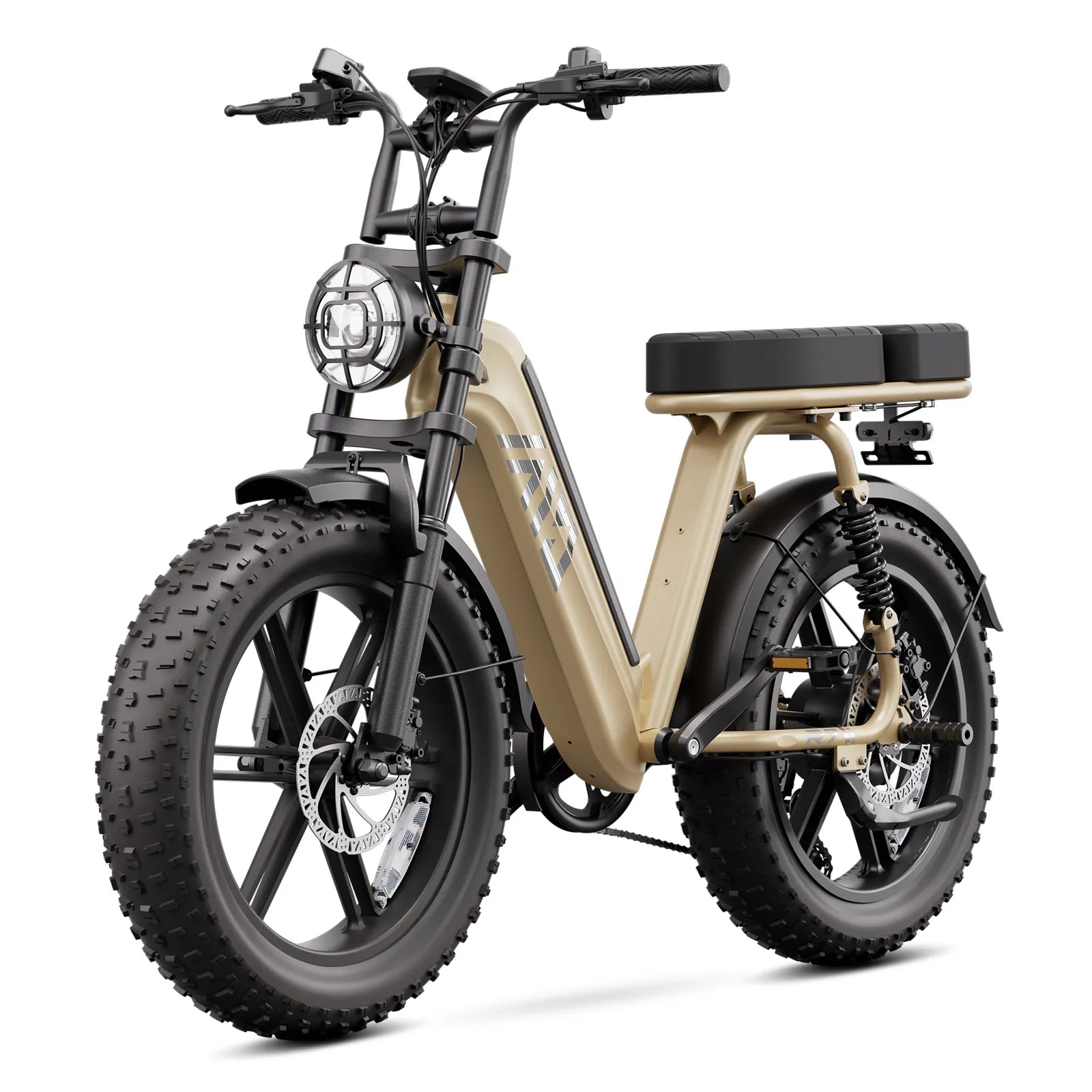
















Torque matters more than watts on cargo ebikes because torque (in N·m) is what actually gets a loaded bike moving, climbs hills, and holds speed at low RPM. Watts only describe total power. A well-tuned 90 N·m cargo motor—like the 1500 W unit used by TST EBike—delivers strong pull from standstill, making starts, ramps, and heavy loads feel easy and controlled.
What is the real difference between watts and torque on a cargo ebike?
Watts measure total motor power over time, while torque measures the twisting force at the wheel that actually moves weight. For cargo ebikes, torque determines how easily you start with a heavy load or climb a hill, so a lower‑watt motor with high torque can feel stronger than a high‑watt motor with weak torque.
From an engineering standpoint, power and torque are linked but not interchangeable. Electric motors for cargo use are designed to deliver high torque at low RPM, because that’s where your real-world problems live: steep driveways, stop‑and‑go traffic, and starting with kids and groceries onboard. I’ve tested 750 W motors with excellent low‑end torque that feel stronger off the line than “1200 W” units tuned mainly for high‑speed cruising.
TST EBike’s 1500 W cargo‑oriented hub motor is built around this principle. Its 90 N·m torque rating at the wheel is what you actually feel when you twist the throttle or start pedaling with a fully loaded rack. The wattage keeps you within legal and thermal limits; the torque gives you that “tractor pull” feeling that makes a cargo bike genuinely useful.
How are power and torque mathematically related on an ebike motor?
Power and torque are related by motor speed: power equals torque multiplied by rotational speed. At low speeds, a motor can deliver high torque with modest power; at higher speeds, the same torque results in much higher power. For cargo riding, we care most about the high-torque, low‑RPM zone where heavy bikes struggle.
The core relationship is:
P=τ⋅ω
where P is power in watts, τ is torque in newton‑meters, and ω is angular speed in radians per second. At very low wheel speeds—like starting from a stop—ω is small, so even a 1500 W motor is mostly acting as a high‑torque “push” rather than a high‑speed machine.
That’s exactly what you want on a cargo ebike: big torque at low RPM to get you moving, then enough power to maintain speed once rolling. When I map torque curves on the dyno, the best cargo motors show a strong, flat torque plateau from zero up to typical city speeds, instead of chasing maximum wattage only at high RPM.
Why does torque matter more than watts when starting a heavy cargo ebike from a stop?
Torque matters more at starts because the bike’s wheel speed is near zero, so you need raw twisting force to overcome inertia and gravity. A cargo ebike with high torque can launch smoothly and confidently with kids and groceries onboard, while a high‑watt but low‑torque motor may feel sluggish or require more rider effort.
At a traffic light with a fully loaded bike, you aren’t asking, “What’s my peak power at 25 mph?” You’re asking, “Can I move without wobbling or standing on the pedals?” In this moment, the controller dumps current into the motor to produce maximum torque at low RPM, and the torque rating tells you how strong that shove will be.
With a 90 N·m cargo motor like TST’s 1500 W hub, you can feel the difference the first time you pull away from a stop. Instead of a slow, uncertain glide, the bike stands up and moves with authority, letting you keep both hands relaxed and focus on traffic and your passengers, not on wrestling the bike into motion.
How does a 90 N·m, 1500 W motor feel on a loaded cargo ebike?
A 90 N·m, 1500 W motor feels like a strong, predictable push that makes a fully loaded cargo bike behave as if it were almost empty. You get quick, controlled launches, confident hill starts, and the ability to maintain speed against headwinds without overworking your legs.
On the test bench, 90 N·m at the wheel is enough to move a combined system weight (bike plus rider plus cargo) of well over 150 kg up typical city gradients without bogging. In real riding, that translates to being able to roll away from stop signs with one or two kids on board, even if the intersection is slightly uphill.
TST EBike’s 1500 W motor is tuned not just for the number but for how it delivers torque: fast ramp‑up at low speed with smart limits to avoid wheelspin or abrupt surges. It’s the difference between a cargo bike that feels like a small delivery truck and one that feels like a tired commuter bike straining under too much weight.
What does a low-RPM high-torque curve look like on a cargo motor?
A low‑RPM high‑torque curve on a cargo motor usually shows torque peaking near stall (zero RPM) and staying relatively flat through the lower to mid speed range, then tapering off as speed increases. This shape gives you strong, predictable pull precisely where a loaded bike needs it most: starts, ramps, and slow-speed maneuvers.
Visually, imagine a graph with wheel RPM on the horizontal axis and torque on the vertical. The line starts high on the left, stays nearly horizontal for the first half of the speed range, then gradually slopes downward as speed climbs. When I test motors designed for cargo use, that “flat plateau” is what I want to see—no big drop in torque just when you’re crawling up a hill with kids.
A 1500 W, 90 N·m TST‑style motor is engineered specifically around that curve. You feel the full force at low cadence and speed, then as you approach cruising speed, torque gently backs off while power remains sufficient to hold 20–28 mph (depending on legal settings) comfortably on flats.
How do torque and watts affect hill-climbing performance with cargo?
Torque determines if you can get moving and keep turning the wheel on a hill; watts determine how quickly you can climb and how long you can sustain that effort. For cargo ebikes, ample low‑end torque is what prevents stalling on steep ramps, while sufficient power keeps motor temperatures under control during extended climbs.
On steep, short ramps—like driveways or neighborhood hills—what matters is that instant twist at the wheel. A 90 N·m cargo motor will lift a heavy setup up these ramps with minimal rider strain in a low gear. On longer climbs, the controller balances torque and RPM to maintain a steady power output, ensuring you don’t cook the windings or the controller.
From a design standpoint, TST EBike’s 1500 W motor and controller pairing is built to handle sustained hill loads at cargo weights. The motor’s torque curve, thermal capacity, and control algorithms are chosen so that real‑world hills at family weights stay in the safe, comfortable part of the performance envelope, not on the edge of overheating or stalling.
Why do cargo ebike shoppers over-focus on watts and ignore torque?
Shoppers over‑focus on watts because wattage is easier to market, easier to compare in a spec sheet, and often conflated with “speed” in casual conversation. Torque requires more explanation, is measured in different ways, and doesn’t translate directly into a single top-speed number, so it gets neglected—even though it defines how the bike feels under load.
In the showroom, I’ve watched many riders scan for “750 W vs 1000 W vs 1500 W” and assume the bigger number will automatically climb better or feel stronger. But two motors labeled “1000 W” can behave very differently: one might be tuned for top speed, another for low‑end torque. Without a torque figure or torque curve, you’re buying blind.
That’s why TST EBike is deliberate about quoting torque values and real‑world use cases. When we say 90 N·m on a cargo‑ready motor, it’s shorthand for “this bike can actually haul what we claim, on real streets, without you having to be a powerlifter.” Torque is the spec that tells the truth about starting, climbing, and hauling—exactly what cargo riders care about.
Which motor specs matter most when choosing a cargo ebike?
For cargo ebikes, the most important motor specs are torque (N·m), controller current limits (A), motor winding and reduction ratio (for low‑speed pull), and continuous power rating under sustained load. Nominal wattage and peak power matter, but only when combined with a torque‑rich, cargo‑oriented tuning.
Here’s a quick prioritization:
-
Torque (N·m): core indicator of launch and climbing strength.
-
Controller current (A): tells you how much “push” the system can feed the motor.
-
Continuous power: whether the motor can handle hills without overheating.
-
Thermal design: heat‑sinking, stator design, and enclosure choices.
Torque and current together tell you how the bike will feel the moment you load it up. TST EBike’s 1500 W platform pairs a 90 N·m motor with a controller sized to deliver that torque repeatedly, not just for a short burst, which is critical for real cargo duty.
How do different torque levels feel in real cargo riding?
In real cargo riding, 40–50 N·m feels barely adequate with heavy loads, 60–70 N·m feels acceptable on moderate hills, and 80–90 N·m feels confidently strong for family and utility use. Above 90 N·m, you start to get that “motorcycle‑like shove” even when the bike is fully packed.
To make this more concrete:
-
~50 N·m: Fine for light cargo, but hill starts with two kids can feel labored.
-
60–70 N·m: Good compromise for mixed use; hills require some pedaling but feel manageable.
-
80–90 N·m: Purposeful cargo level; hills and starts feel easy, even when you’re tired.
A 90 N·m, 1500 W TST‑style motor sits squarely in that last category. Test riders often comment that it “just goes” even with a full load, and that they rely on PAS and throttle more than on standing climbs. That is exactly the feedback you want on a family or utility platform.
TST EBike Expert Views
“When we tune a 1500 W motor for a TST EBike cargo platform, we don’t chase the biggest watt number we can print on the brochure. We start from the torque curve. Our lab dynos are set up to simulate heavy starts and real hills with 150+ kg loads. A flat 90 N·m plateau at low RPM tells us the bike will pull cleanly away from lights, up ramps, and through headwinds without forcing the rider to ‘help’ more than they want. That’s when we know the motor is truly cargo‑capable, not just fast on an empty frame.”
Conclusion: How should you prioritize torque and watts when choosing a cargo ebike?
When you choose a cargo ebike, treat torque as the headline and watts as the supporting detail. A strong, low‑RPM torque curve—like the 90 N·m output of TST EBike’s 1500 W motor—is what makes a fully loaded bike launch confidently, climb naturally, and feel safe in stop‑and‑go city traffic. Watts determine how long and how fast you can sustain that performance, but torque decides whether the bike ever feels “effortless” with real cargo on board. If the spec sheet lists big wattage but vague torque, ask deeper questions. If it lists honest torque numbers and is backed by real cargo‑use testing, you’re looking at a motor designed for the work you actually need done.
FAQs
Is a higher-watt motor always better for cargo?
Not necessarily. A 750 W motor with strong low‑end torque can outperform a poorly tuned 1000 W motor on hills and starts. For cargo, prioritize torque and controller tuning over headline watts.
Can I feel the difference between 60 N·m and 90 N·m?
Yes, especially with heavy loads. At 90 N·m, starts and hills feel noticeably easier and more controlled. You’ll rely less on standing climbs and more on relaxed pedaling or throttle.
Does higher torque mean more battery drain?
It can if you constantly use full torque, but higher torque also means the motor finishes hard tasks faster and spends more time in efficient zones. Smart riding and good gearing keep consumption reasonable.
Are mid-drive motors always better for cargo torque than hub motors?
Mid‑drives leverage the bike’s gears, which helps on very steep hills. However, well‑designed high‑torque hub motors, like TST’s 1500 W 90 N·m unit, can match or exceed mid‑drive feel for many urban cargo scenarios with less drivetrain wear.
How can I tell if a motor is truly cargo-ready, not just fast?
Look for a torque rating of at least 80 N·m, a controller with solid continuous current, and real‑world reviews mentioning hill starts and heavy loads. If the focus is only on top speed, be cautious for cargo use.

Leave a comment
This site is protected by hCaptcha and the hCaptcha Privacy Policy and Terms of Service apply.