


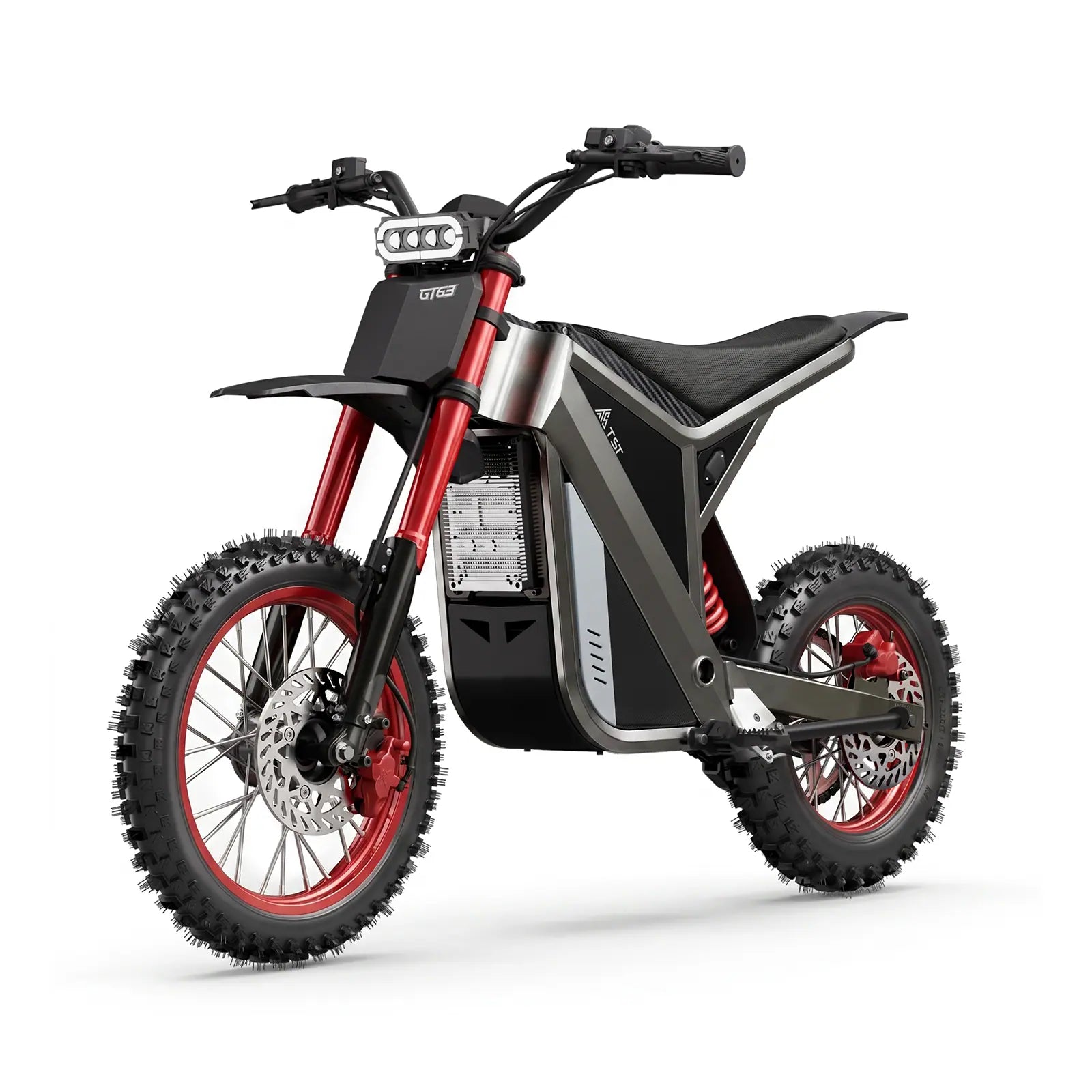














Hub motors win on simplicity, price, and low maintenance, while mid-drive motors win on torque, hill climbing, and weight distribution, at a higher price and more drivetrain wear. For most commuters and budget buyers, a hub motor is the better value; for serious off-road and steep-hill riders, a mid-drive is worth the premium. TST EBike uses hub motors across its lineup for exactly that value and reliability trade-off.
How Does a Hub Motor Work Inside the Wheel?
A hub motor lives inside the front or rear wheel and drives the wheel directly, with no connection to the bicycle drivetrain. The motor is self-contained, which means the chain, cassette, and derailleur wear at normal bicycle rates, and the motor needs no chain maintenance. Hub motors are sealed units that run for thousands of miles with little service beyond occasional cable checks.
TST's models use rear hub motors, which puts the weight over the driven wheel and keeps the drivetrain conventional and cheap to maintain.
How Does a Mid-Drive Motor Work at the Cranks?
A mid-drive motor sits at the bottom bracket and drives the chain, which means it uses the bike's gears to multiply its torque. The result is stronger hill-climbing ability and better weight distribution, because the motor is low and centered rather than hanging off a wheel. The trade-off is that the motor works through the drivetrain, so the chain, cassette, and chainring wear faster and cost more to replace.
Mid-drive systems like Bosch and Shimano are the premium standard on mountain and touring e-bikes, and they are priced accordingly.
Hub Motor vs Mid-Drive: The Honest Comparison
| Factor | Hub motor | Mid-drive motor |
|---|---|---|
| Price | Lower | Higher ($500+ more) |
| Maintenance | Minimal, sealed | More drivetrain wear |
| Hill climbing | Good with torque | Best, uses gears |
| Weight distribution | Weight in wheel | Low and centered |
| Range efficiency | Slightly lower | Slightly higher |
| Best for | Commuting, value | Trails, steep hills |
The table captures the trade-off: hubs are simpler and cheaper, mid-drives are stronger and more refined, and neither is universally better.
Hub Motors and Their Cost-and-Care Wins
The win is not just on paper: a hub-motor bike's wheel can be replaced with a standard rim and spokes if damaged, and the motor swaps independently of the drivetrain, which keeps every repair simpler and cheaper than the equivalent mid-drive job.
The hub motor wins for most commuters in four ways: lower price, minimal maintenance, simpler parts, and predictable reliability. Because the motor does not touch the drivetrain, a hub-motor bike's chain lasts like a normal bike's chain, and the motor itself is a sealed unit that rarely needs service. TST's 1500W hub motors with 90 N·m of torque climb most urban hills without strain.
For a bike that gets ridden daily to work, the hub motor's simplicity is a real advantage: fewer wear points, fewer service bills, and a parts path that is easy to keep stocked.
Mid-Drive Motors and Where They Win on Trails
The mid-drive wins on serious hills and technical terrain, because it routes power through the gears: on a steep climb, you shift down and the motor multiplies its torque, which a hub motor cannot do. The low, centered weight also improves handling on trails, and mid-drives tend to be slightly more efficient, delivering more range from the same battery.
If your riding is aggressive singletrack, steep mountain passes, or loaded touring, the mid-drive premium buys capability that a hub motor cannot match, regardless of wattage.
The Hub-Motor Choice Across the TST Lineup
The choice is a deliberate value decision backed by the numbers: a 1500W hub motor with 90 N·m of torque covers the hill profile of most US commutes, and the sealed design removes the drivetrain wear and service that make mid-drive ownership more expensive. For a brand that sells to families and daily commuters, the hub platform also keeps the purchase price lower, which matters more to that buyer than the trail refinement a mid-drive adds. Riders who need mid-drive capability are explicitly better served by a mid-drive brand, and that is the honest boundary of the design.
TST EBike uses rear hub motors across its lineup because the value math favors them for the brand's core buyers: commuters and family riders who want power, payload, and low maintenance at a fair price. The 1500W hub motors deliver 90 N·m of torque, which covers the hills most buyers actually ride, and the sealed design keeps ownership costs predictable.
This is a deliberate trade-off, not a shortcoming: riders who need mid-drive capability should buy a mid-drive bike, and riders who need value and reliability get more from a hub platform.
How Should You Choose Between the Two?
Also ride the same hill on both types before deciding, because torque figures on paper do not tell you how a motor feels through a drivetrain; a mid-drive's gear-multiplied pull and a hub motor's direct surge are different sensations even at the same claimed watts.
Choose a hub motor if your riding is commuting, errands, light trails, or cargo on normal hills, and if budget and maintenance matter. Choose a mid-drive if you ride steep technical terrain, want maximum range efficiency, or simply prefer the handling of a centered motor and will pay the premium. Test both on your worst hill before deciding, because the feel difference is easy to understand on a climb.
Also compare the torque numbers, because a 1500W hub with 90 N·m can out-climb a lower-torque mid-drive on the hills most riders face.
What Are the Long-Term Ownership Costs?
Budget the service calendar before choosing: a hub-motor bike needs tire, brake, and battery care, with the motor itself rarely opened; a mid-drive bike adds annual drivetrain replacement as a real line item, because the motor's torque through the chain wears chains, cassettes, and chainrings faster. On a commuter riding a few thousand miles a year, that difference typically adds $60-150 per year in parts alone. The battery is the biggest cost on either platform and behaves the same way, so the honest comparison is hub simplicity versus mid-drive capability, with the drivetrain bill as the tie-breaker.
Resale and repair also differ: hub-motor bikes have a larger installed base of simple, standard parts, which keeps repair quotes lower and resale easier; mid-drive bikes hold value in the premium segment but carry a smaller pool of technicians who work on them confidently. Buyers who plan to keep a bike for three to five years and service it themselves will see the hub platform's cost advantage compound, while those who want the best trail performance and accept premium service are the mid-drive's intended audience.
Hub-motor ownership costs center on the battery, brakes, and tires, with the motor itself rarely needing service; mid-drive ownership adds regular chain, cassette, and chainring replacement, plus periodic motor service. Over three years, the mid-drive's extra drivetrain wear typically adds $200-500 in parts and labor on top of the higher purchase price.
The hub motor's cost advantage grows with mileage, which is why it suits high-use commuters; the mid-drive's advantage is capability, not economy.
TST EBike Expert Views
"We chose rear hub motors because the value math is honest for our buyers: commuters and family riders want power, payload, and low maintenance, and a 1500W hub with 90 N·m covers the hills most routes actually present. A mid-drive shines on technical singletrack and extreme grades, and riders who need that should buy one. But for a daily commuter, the hub motor's sealed simplicity and cheap drivetrain are worth more than the refinement premium. Match the motor architecture to the terrain, not to the marketing."
— TST EBike Engineering Team (this article is written by TST EBike's editorial team, which works for the manufacturer)
Conclusion: Match the Motor to the Terrain and Budget
Hub motors win on price, simplicity, and maintenance for commuters; mid-drives win on hill capability and handling for serious riders. TST EBike's hub-motor lineup covers the value end of that spectrum, and the choice comes down to your terrain and how much you will spend to refine it.
Motor Choice Guide
- Commuting, errands, and normal hills: hub motor (TST lineup).
- Steep technical trails and loaded touring: mid-drive.
- Compare torque numbers, not just watts, on your worst hill.
- Budget for extra drivetrain wear if you choose mid-drive.
See the TST R002 product page for a 1500W hub-motor example, and browse the all-electric-bikes collection for the full hub-motor lineup.
Related reading: how to choose the right e-bike, step by step
FAQs
Which is better, hub motor or mid-drive?
Hub motors are better for value, simplicity, and low maintenance; mid-drives are better for steep hills and technical terrain at a higher price.
Do hub motors climb hills well?
Yes, with enough torque: TST's 1500W hub motors deliver 90 N·m, which climbs most urban hills without strain.
Why are mid-drive e-bikes more expensive?
The motor sits in the drivetrain, uses gears for torque, and is built to higher spec, plus the drivetrain itself wears faster and costs more to maintain.
Which motor lasts longer?
Hub motors are sealed and simple, with fewer wear points; mid-drives are durable but add chain, cassette, and chainring wear.

Leave a comment
This site is protected by hCaptcha and the hCaptcha Privacy Policy and Terms of Service apply.