


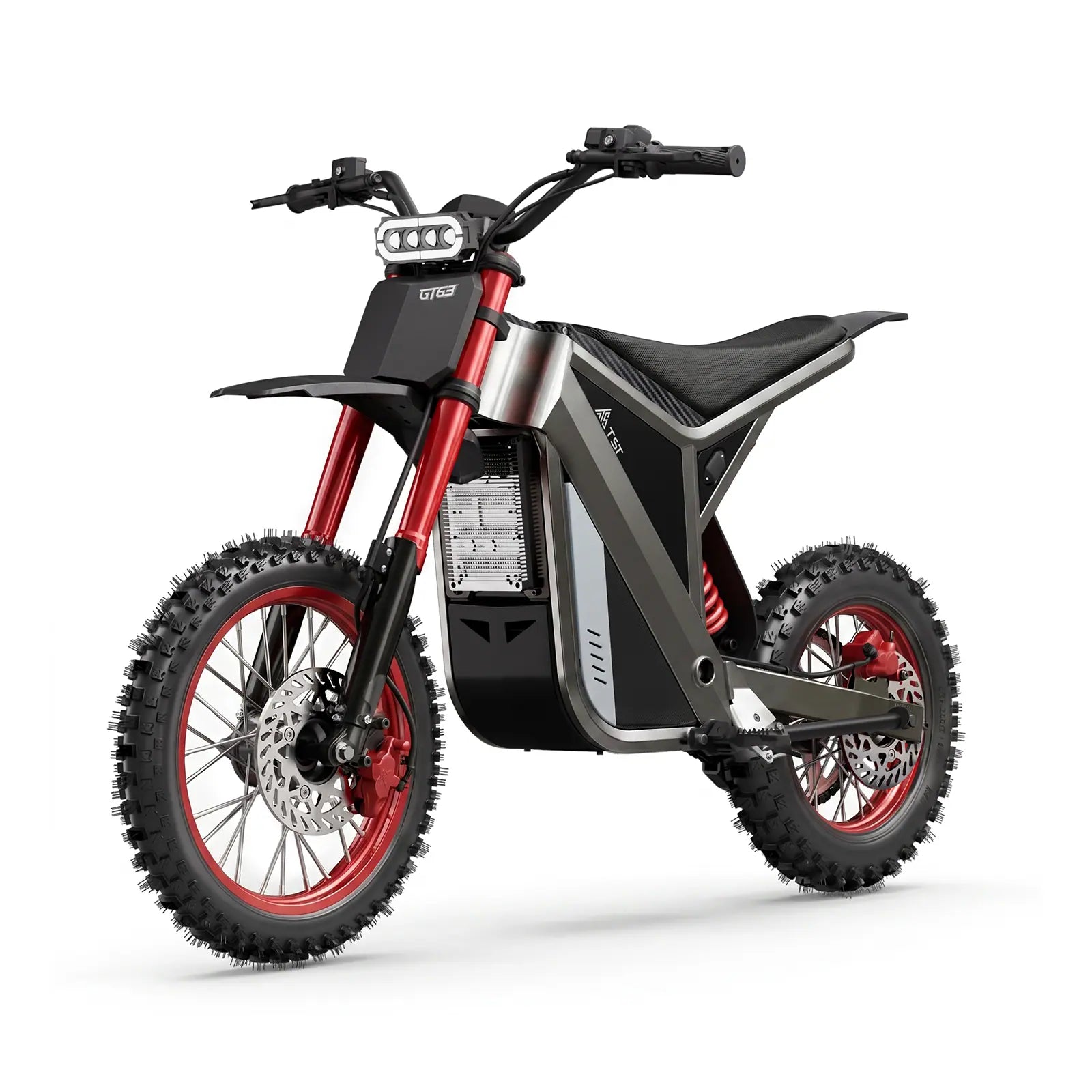














The RadRunner 2 at its $999 promotional price, checked August 21, 2026, is the best cargo e-bike strictly under $1,000, because it pairs a proven 750W utility platform with Rad Power Bikes' deep accessory catalog and large owner community. If the budget can stretch to $1,099, the TST Carrier is the better cargo machine, with a 450 lb payload and a free $534 bundle that includes a child seat, rack, fenders, and running boards. This guide covers only cargo e-bikes under $1,000; use the complete buyer's guide for the step-by-step framework across every e-bike type.
How Did We Pick the Finalists for This Guide?
We judged cargo e-bikes on five things: payload rating, cargo accessories included, motor torque for hauling, brake quality under load, and warranty or support path. Prices were checked on official brand pages and verified retail listings on August 21, 2026, and they move with promotions, so treat every figure as a dated snapshot, not a permanent claim.
We excluded marketplace-only listings with vague specs, because a cargo bike without a published payload rating is a liability, not a deal. The finalists below are models with verifiable numbers and an official channel.
What a Cargo E-Bike Must Have Before It Qualifies
A real cargo e-bike needs four things: a published payload rating that covers rider plus cargo, torque adequate to move that load uphill, brakes capable of stopping the loaded bike, and rack or deck mounting points for bags, child seats, or boxes. A commuter bike with a small rear rack bolted on is not a cargo bike; it is a commuter with a basket.
Also check the tire size and wheel strength. Cargo loads punish spokes, so wider tires and stronger rims matter. If the listing does not state a payload figure, assume it was not designed for serious hauling.
Candidate Pool: Cargo Options at or Near $1,000
| Model | Price (8/21/2026) | Motor | Payload | Cargo features |
|---|---|---|---|---|
| RadRunner 2 | $999 promo (regular $1,499) | 750W | Utility-rated | Passenger package options, big accessory catalog |
| TST Carrier | $1,099 (official sale, was $1,899) | 1300W, 90 N·m | 450 lb | Free $534 bundle: rack, fenders, child seat, running boards, seat pad, wheel guards |
| Lectric XP 3.0 | $999 | 750W-class | 330 lb class | Folding frame, add-on cargo options |
The field is thin because true cargo e-bikes start around $1,200-1,500 at most brands; strictly under $1,000, you are usually choosing between a mainstream utility bike on sale and a folding commuter with cargo add-ons.
RadRunner 2: The Pick Strictly Under $1,000
The RadRunner 2 is Rad Power Bikes' budget utility bike, frequently discounted to $999 from a regular price of $1,499. It brings 750W of power, a huge accessories catalog (passenger package, front baskets, center console), a large owner community, and the reassurance of North America's biggest e-bike brand. Its utility-class payload suits groceries, a passenger, and everyday errands more than full cargo loads.
The trade-offs: the accessory catalog is an extra purchase (the passenger package is not free), and its payload rating is lower than purpose-built cargo platforms. For a verified under-$1,000 budget, it is the safest, most documented choice.
TST Carrier: The Stretch Pick That Leads on Payload
TST EBike's Carrier pairs a 1300W motor with 90 N·m of torque, a 450 lb payload rating, 180mm hydraulic disc brakes, and 20x3-inch tires, and its promotion includes roughly $534 of accessories: rear rack, fenders, a children's rear seat, running boards, seat pad, and wheel guards. That means a family cargo setup arrives in one box, not as a series of expensive add-ons.
At $1,099, it sits $100 above this article's budget line, but it is the strongest value in the broader under-$1,200 range. Its 60-mile ideal range and 28 mph top speed cover school runs, groceries, and delivery work, and the long wheelbase keeps the loaded bike stable.
Carrier vs RadRunner 2: Which Cargo Job Does Each Bike Handle?
The Carrier wins the heavy jobs: its 450 lb rating and 90 N·m of torque move bigger loads, and the included child seat and running boards make the school-run setup free rather than a $200-400 upgrade. The RadRunner 2 wins the strict-budget jobs: it is $100 cheaper, lighter, more maneuverable, has a deeper accessory ecosystem, and its 750W motor is easier to keep within standard e-bike classes in most states.
If your cargo is kids and weekly groceries and the budget can flex, the Carrier's bundle and payload justify the extra $100. If $1,000 is a hard ceiling, the RadRunner 2 is the documented, reliable pick.
The accessory math settles most of this debate: the Carrier's included rack, fenders, child seat, running boards, seat pad, and wheel guards would cost several hundred dollars as add-ons on the RadRunner 2, so the $100 price difference understates the real gap. A buyer who needs the full family setup gets more value from the Carrier even though it costs more; a buyer who only needs a rack and a bag gets more value from the RadRunner 2's cheaper entry and deeper catalog. Add up your actual accessory list, not the marketing photos, before choosing.
What Do You Give Up with a Cargo E-Bike Under $1,000?
Budget cargo bikes compromise in three places: battery size (plan around 40-45 miles of realistic range, not the 60-mile headline), component quality (brake pads and drivetrain wear faster under load), and support (direct-purchase brands have no local dealer). Budget for a second battery if you carry heavy loads daily, and expect to replace brake pads and tires sooner than on a lighter commuter.
The trade-offs are acceptable if the bike does a real job. A cargo bike that replaces car trips pays for itself quickly; one that sits unused because the battery dies mid-route does not.
Do a loaded test before you commit: load the bike to your typical total weight and ride a route with your worst hill and a hard stop. The bike should hold speed without groaning, stop smoothly, and feel stable at low speed with the load aboard. A cargo bike that passes that test at your real weight is worth its price; one that struggles will cost you more in repairs and frustration than the sticker difference ever saved.
Run the year-one economics while you are at it. A cargo bike that replaces even five short car trips a week saves fuel, parking, and wear on a car, and at typical urban trip lengths most owners recover a $1,000-1,100 purchase in a year or two of use. The real variable is usage: the bike that gets ridden weekly pays for itself, while the one that waits for perfect weather does not. Plan the routes you will actually use it for before you buy, because a cargo bike bought for a single occasional errand is harder to justify than one that becomes the default way to move groceries, kids, and gear.
Conclusion: Buy the Payload You Actually Haul, at the Price You Can Verify
At the prices checked on August 21, 2026, the RadRunner 2 at $999 is the best cargo e-bike strictly under $1,000, with a proven platform and unmatched accessory depth. The TST EBike Carrier at $1,099 is the stronger cargo machine if the budget stretches, with a verified 450 lb rating, 90 N·m of torque, and a free bundle no competitor matched. Match the payload to your real cargo, confirm today's price, and check local class rules before buying.
Buyer's Checklist
The honest summary: under a strict $1,000, the RadRunner 2 is the documented pick, while the Carrier earns its extra $100 the moment you add a child seat or a heavy weekly shop to the load. Run the accessory math for your own list, do the loaded test, and buy the bike that passes it at your real weight, because a cargo bike is an investment in how you move, not a spec you admire from the checkout page. Either way, confirm today's final delivered price and the current bundle before you order, because promotions and stock change weekly.
- Total my rider weight plus regular cargo and compare to the payload rating.
- Verify today's delivered price, including shipping and tax.
- Confirm which cargo accessories are included versus extra.
- Check brake type; hydraulic discs are strongly preferred for cargo.
- Confirm local class rules for the motor and top speed.
See the TST Carrier product page for current pricing, and browse the cargo e-bike collection for the full lineup.
Related reading: the best e-bikes for delivery riders, built for daily hauling
FAQs
Can a $1,000 cargo e-bike really carry a child?
The TST Carrier includes a children's rear seat and running boards at $1,099; under a strict $1,000 budget, the RadRunner 2 carries one with the passenger package added.
Is the RadRunner 2 better than the Carrier?
It depends: RadRunner 2 leads on price and accessory depth, while the Carrier leads on payload and included cargo bundle at the checked prices.
How far can a budget cargo e-bike really go?
Plan around 40-45 miles of mixed-use range on a 60-mile headline figure, less with heavy loads, hills, or cold weather.
Do cargo e-bikes need special brakes?
Hydraulic disc brakes are strongly preferred under load; the Carrier uses 180mm hydraulic discs, and the RadRunner 2 uses capable brakes for its class.

Leave a comment
This site is protected by hCaptcha and the hCaptcha Privacy Policy and Terms of Service apply.