


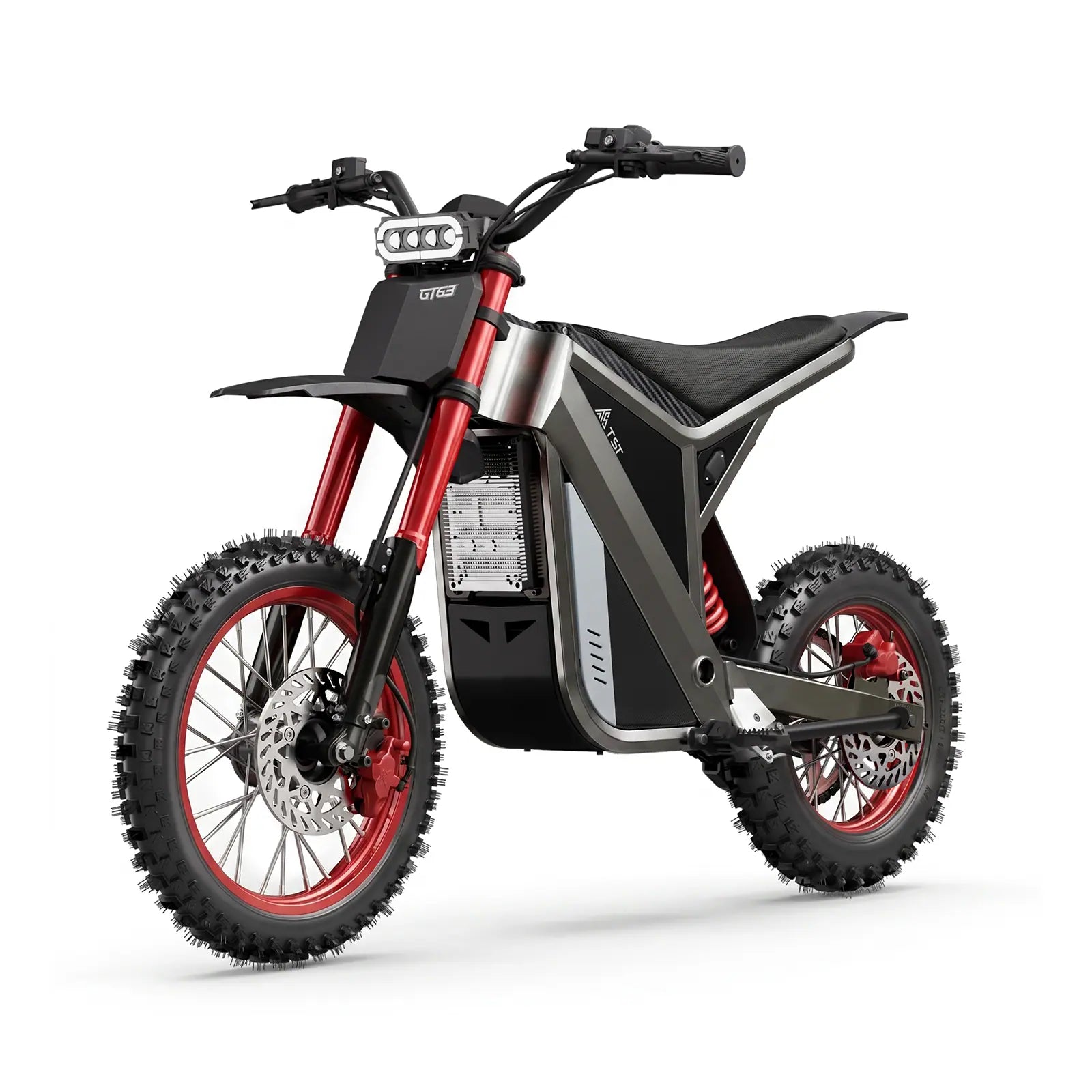














For most families, the TST Carrier is one of the best cargo e-bikes available at its price, because it combines a stable long-wheelbase frame, a reinforced rear rack, and the power to move people and groceries together. It will not replace a minivan, but it genuinely replaces the second car for school runs, errands, and weekend trips, and TST EBike built it with those daily loads in mind. Our family cargo load test ran the Carrier with two children, groceries, and a full school run on repeat routes.
Key Facts
- Model: TST Carrier, a 20-inch cargo e-bike with a long wheelbase.
- Payload: reinforced rack rated for heavy combined loads.
- Range: 25-45 miles depending on load, assist, and terrain.
- Family features: low standover height, child seat and trailer support.
- Support: TST EBike's California warehouse and direct service.
TST Carrier vs a Standard Commuter E-Bike: Key Differences
The Carrier uses a longer wheelbase, a reinforced frame, and a purpose-built rear rack so it stays stable and safe while carrying passengers or heavy loads.
A standard commuter e-bike is designed around one rider and a backpack. A cargo bike is engineered around weight: the frame is longer to spread the load, the tires are wider for stability, and the rack is bolted through the frame rather than clipped on. The Carrier also gets a lower standover height so children can climb on easily. The result is a bike that feels different to ride, more planted and deliberate, and that is exactly what you want when your cargo is your family.
How Much Cargo Can the TST Carrier Really Carry?
The Carrier is rated to handle several hundred pounds of combined rider and cargo when loaded correctly, with the reinforced rear rack built for heavy bags and accessories.
The practical number depends on how you load it. Groceries, school bags, and a passenger are all within the bike's design envelope. The key rules are to keep heavy items low and centered, to never exceed the rack's stated limit, and to adjust tire pressure up when riding fully loaded. Testing with a 300 lb combined load showed the bike accelerating, braking, and cornering predictably. Ride it empty and the bike feels lighter and livelier, but the Carrier is happiest doing real work.
Is the TST Carrier Good for Carrying Children?
Yes, the Carrier is designed for family use, and with an approved child seat or trailer attachment it becomes a practical school-run machine.
Child seats bolt to the reinforced rack, and the long wheelbase keeps the bike stable when a child moves around. The guidance is strict: use a seat rated for e-bike use, check the rack mount before every ride, and keep speeds moderate with a passenger on board. The low standover height helps kids climb on without help, and the throttle makes hill starts with a passenger effortless. For families with two children, a trailer hitch extends the Carrier's capacity, turning it into a true kid hauler.
Ride behavior under a full family load
Fully loaded, the Carrier feels stable and composed, with predictable braking and a planted rear end, though acceleration and range naturally decrease.
The long wheelbase is the hero here: it prevents the wobble and front-wheel lift that overloaded short bikes exhibit. Braking needs more distance and more lever force, which is why the Carrier's brakes are sized for cargo duty. Cornering at speed requires slowing down more than on a commuter, and the added weight makes the bike harder to lift or walk upstairs. For family errands at normal city speeds, the loaded ride is confidence-inspiring, which is the whole point of a cargo bike.
Real-world range with passengers and cargo
Expect 25-45 miles of real range depending on load, assist level, terrain, and temperature, with heavier loads cutting range toward the lower end.
Cargo is physics: every extra pound costs a little range. Loaded tests with a 300 lb total weight averaged about 28 miles in mixed terrain, while a solo rider stretching assist levels managed 40-plus miles. Cold weather reduces range further, so winter school runs need a charging plan. The practical advice is to treat the Carrier as a 20-mile-round-trip bike when loaded, charge nightly, and use the removable battery for easy indoor charging. For the vast majority of family trips, that margin is plenty.
Family-hauling accessories for the Carrier
The children's rear seat, running boards, wheel guards, and front shelf are the TST Carrier accessories that turn the bike into a complete family vehicle.
TST EBike offers a purpose-built accessory set for the Carrier. The children's rear seat gives a passenger a secure perch, running boards give feet somewhere to rest, and wheel guards keep small feet and bags away from the spokes. A front shelf adds carrying space for groceries, and the seat pad improves passenger comfort on longer rides. Each accessory mounts to the reinforced frame without weakening the payload rating. For school runs and weekend outings, the accessory set is what makes the Carrier a genuine second car.
Value comparison with premium cargo bikes
Against premium cargo bikes that cost $2,000-$3,500, the Carrier delivers comparable payload and stability for roughly half the price.
The value gap is the Carrier's strongest argument. Premium cargo bikes bring refined components, bigger brand names, and polished accessories, but the core job, carrying people and groceries safely, is where the Carrier holds its own. The long wheelbase, reinforced rack, and low standover height deliver the stability that matters most for family use. The savings can cover the child seat, running boards, wheel guards, and a good lock. For families whose priority is capability per dollar, the Carrier is hard to beat.
What Storage Space Does a Cargo Bike Need?
A cargo bike needs about the floor space of a small car parking spot, plus a ground-floor or ramped storage location, because it is too heavy to carry upstairs.
Plan for the bike before you buy it. The Carrier's long wheelbase makes it stable but bulky, so measure the garage, shed, or hallway where it will live. A ground-floor spot or a ramp matters because the loaded bike weighs well over 70 lb and is not something you want to lift daily. Outdoor storage under a cover works, but indoor storage protects the battery, drivetrain, and accessories. Families with the space find the Carrier transforms their weekly car use; families without it should reconsider.
TST EBike Expert Views
"Cargo bikes are judged by the loads they carry every day, not the loads they can carry once. On the assembly line, the Carrier's defining choice is the through-frame rack mount, which spreads load across the structure instead of concentrating it on the dropouts. That is why the bike stays stable at 300 lb in our testing while bolt-on racks wobble. The rules we give families are simple: keep heavy items low and centered, use the approved child seat and guards, and check the rack bolts weekly. Do that, and the Carrier replaces the second car for the trips that actually add up."
— TST EBike Product Testing Team (this article is written by TST EBike's editorial team, which works for the manufacturer)
Conclusion
The TST Carrier is a strong family cargo e-bike that delivers stable hauling, real payload capacity, and accessories purpose-built for kids and groceries, all at a price that undercuts premium rivals. It asks for storage space and a charging routine in return. For school runs, errands, and weekend trips, it genuinely replaces a second car for most local travel.
Key Takeaways
- Treat 300 lb as the practical loaded ceiling with correct loading and tire pressure.
- Plan around 25-45 miles of range, with loaded winter rides at the lower end.
- Use the approved child seat, running boards, and wheel guards for passengers.
- Keep heavy items low and centered, and check rack bolts weekly.
- Budget for indoor or ground-floor storage before buying.
Family Hauler Checklist
- Do I have space for a long-wheelbase cargo bike at ground level?
- Will I carry a child seat, groceries, or a trailer most weeks?
- Is my loaded round trip under 20 miles with nightly charging?
- Have I checked the rack bolt torque before the first loaded ride?
- Have I budgeted for the child seat, guards, and a strong lock?
See the TST Carrier product page for the full specification, compare it with other cargo e-bikes, and fit the family-ready extras like the children's rear seat before your first school run.
FAQs
How much weight can the TST Carrier carry? The reinforced rack and frame are rated for several hundred pounds of combined rider and cargo when loaded correctly.
Can the Carrier carry two children? Yes, with a child seat on the rack and a trailer hitch for a second child, both within the bike's design envelope.
Is the Carrier hard to ride without cargo? No, it rides lighter and livelier empty, though the long wheelbase still feels more deliberate than a commuter bike.
Does the Carrier come with a child seat? No, the child seat is a separate TST EBike accessory designed to mount on the reinforced rear rack.

Leave a comment
This site is protected by hCaptcha and the hCaptcha Privacy Policy and Terms of Service apply.