
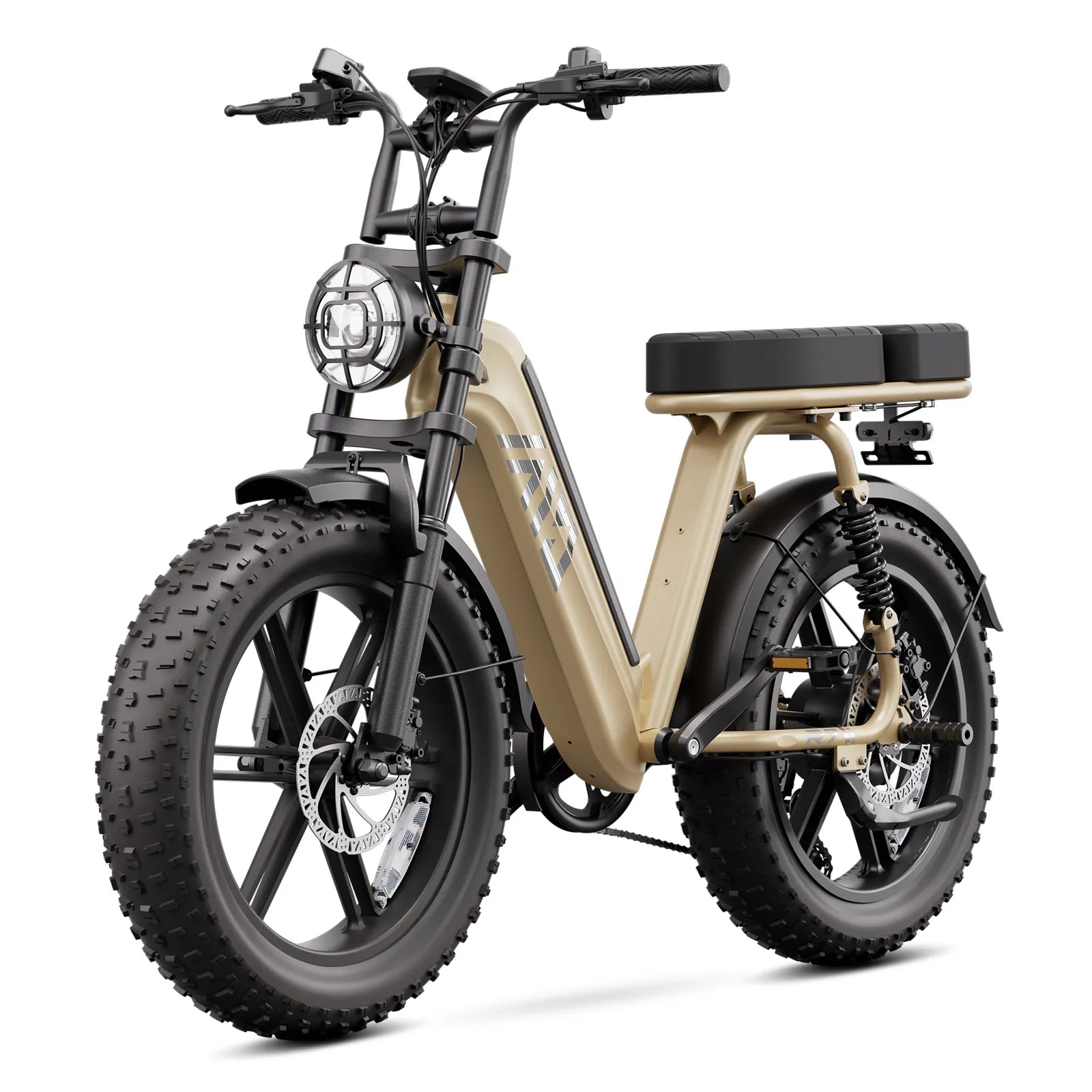
















Longtail cargo ebikes excel in handling and agility for daily commutes with 2 kids or gear (150-300 lbs capacity), while front loaders prioritize sheer volume for 3-4 kids or bulky loads (up to 500+ lbs) with superior stability—choose based on family size and storage space.
Check: Electric cargo bike 2026
What Is a Longtail Cargo Ebike?
A longtail cargo ebike features an extended rear rack behind the rider, supporting 150-300 lbs for 2 kids, groceries, or gear while maintaining bike-like handling and maneuverability on city streets and paths.
Longtail cargo ebikes extend the frame rearward with a reinforced platform, ideal for families or commuters. This design keeps weight distribution balanced, mimicking a standard bike's feel despite added length. Typically under 100 lbs empty, they use 20-inch wheels for low center of gravity.
Accessories like child seats, panniers, or cargo bags mount easily. TST EBike offers versatile 27-inch models perfect for urban commuting, blending power with practicality since 2017. Riders enjoy nimble turns and easy pedaling, even loaded.

What Defines a Front Loader Cargo Ebike?
A front loader cargo ebike places a large box between rider and front wheel, hauling 100-200+ lbs or 3-4 kids in a stable, visible setup with high-volume capacity but wider turning radius.
Front loaders, or bakfiets-style, feature a prominent cargo box upfront connected via linkage steering. This creates exceptional stability for heavy loads, often exceeding 500 lbs total capacity including rider. The design shines for parent-child interaction, with kids in easy view.
Two-wheeled versions handle like extended bikes; three-wheel adds rock-solid balance. Bulkier footprint suits deliveries or large families, though parking challenges arise in tight spaces.
How Does Handling Compare Between Longtail and Front Loader?
Longtails offer superior handling like a regular bike for tight urban turns and speed; front loaders provide low-center stability for heavy loads but require practice for wider turns and parking.
Handling defines daily usability. Longtails maneuver effortlessly through traffic, bike lanes, and elevators due to familiar geometry. Rear weight feels intuitive, though tail-heaviness appears when stopped—strong kickstands help.
Front loaders excel once rolling, with linkage steering smoothing inputs. Initial learning curve involves anticipating wider arcs, but stability prevents tip-overs on stops. For city commuting, longtails edge agility; front loaders win loaded downhill control.
Which Offers More Cargo Capacity and Volume?
Front loaders provide maximum volume for 3-4 kids or bulky items in a spacious box (500+ lbs total); longtails handle 150-300 lbs flexibly on rear racks but less sheer space.
Capacity hinges on needs. Front loaders' enclosed boxes fit groceries, dogs, or multiple passengers securely, often with benches and covers. Total payloads reach 500-600 lbs, ideal for car-replacement hauls.
Longtails prioritize versatility: strap lumber, surfboards, or two kids with bags. Rear platforms limit to ~300 lbs max, but modular racks adapt endlessly. TST EBike's high-power designs enhance both for heavy daily loads.
What Are the Pros and Cons of Each Design?
Longtails: Pros—agile handling, versatile cargo, compact storage; Cons—limited to 2 kids, tail-heavy parking. Front loaders: Pros—huge volume, kid visibility; Cons—bulky size, steering learning curve.
Pros/cons guide decisions. Longtails shine as all-rounders: nimble, car-rack compatible, and storage-friendly at 7 ft. Drawbacks include rear visibility challenges and max 2-kid setups.
Front loaders dominate volume and supervision, perfect for families or deliveries. Bulkiness hampers indoor storage and narrow paths. Both slash fuel costs, but match lifestyle first.
How Do They Perform for Family Use with Kids?
Longtails suit 1-2 older kids with bike-like fun and speed; front loaders excel for 3-4 young kids with direct visibility, safety benches, and enclosed comfort.
Family dynamics vary. Longtails foster independence for school-age children via rear seats, maintaining ride excitement. Parents glance back easily on straight paths.
Front loaders transform outings: kids face forward, chat freely, and stay protected. Boxes accommodate infants to teens, with rain covers for all-weather fun. TST EBike emphasizes family-focused commuting since 2017.
Which Is Better for Urban Commuting and Storage?
Longtails win urban commuting with agile handling and easier storage/parking; front loaders suit spacious garages but struggle in tight apartments or bike lanes.
Urban life demands practicality. Longtails slip through doors, fit standard racks, and park curbside without fanfare. Their standard width navigates crowds seamlessly.
Front loaders require garages or porches, with 30-inch wide boxes blocking narrow gates. Once adapted, they haul weekly shops effortlessly. Choose longtail for apartments; front loader for suburbs.
Can Longtails and Front Loaders Handle Rough Terrain?
Both manage light off-road with fat tires and suspension, but longtails offer better agility on trails; front loaders prioritize stability for urban potholes over speed.
Terrain tests durability. Longtails, like TST EBike's 26-inch rough-terrain models, tackle snow, sand, or gravel nimbly with balanced weight. Smaller wheels boost obstacle clearance.
Front loaders' low center and wide stance conquer curbs and bumps steadily, though length hinders sharp turns. Cargo shifts less, ensuring safety. Prioritize suspension for mixed paths.
How Much Do Longtail and Front Loader Ebikes Cost?
Longtails range $2,500-$5,000 for versatile family use; front loaders $4,000-$8,000 reflecting higher capacity and build complexity.
Pricing reflects features. Entry longtails start accessible, scaling with motors (750W+) and batteries. TST EBike delivers cost-effective power across 10+ countries.
Premium front loaders command more for engineering: reinforced frames, linkage systems, and enclosures. Factor accessories like seats ($200+) and covers.
Check: How longtail and front-loader designs compare in our best cargo ebike review
TST EBike Expert Views
"At TST EBike, founded in 2017 in California, we see longtails thriving for agile urban families hauling 2 kids or gear, while front loaders dominate high-volume needs like groceries or 3-4 passengers. Our 27-inch commuters blend handling with power for daily wins; 26-inch models conquer rough paths. Consumer feedback drives our affordable, high-quality builds—choose based on space and load. Both designs cut emissions and costs, transforming transport."
— TST EBike Product Specialist
Summary
Longtails deliver agile handling for 1-2 kids and versatile cargo on commutes; front loaders maximize volume and stability for larger families or bulk hauls. TST EBike offers tailored options for both.
Actionable Advice: Measure storage space first. Test ride locally; prioritize 750W+ motors and 400+ lb capacities. Add locks and lights for safety.
FAQs
What carries more kids: longtail or front loader?
Front loaders fit 3-4 kids in the box; longtails max 2 on rear seats.
Are longtails easier to ride?
Yes, bike-like handling suits beginners; front loaders need practice for turns.
Can cargo ebikes replace cars?
Absolutely—for errands under 20 miles, saving $1,000+ yearly on fuel.
Which is best for one child?
Longtail for older kids (agile fun); front loader for infants (visibility).
Do they handle hills well?
Yes, 750W motors with torque sensors climb loaded at 15-20 mph.

Leave a comment
This site is protected by hCaptcha and the hCaptcha Privacy Policy and Terms of Service apply.