
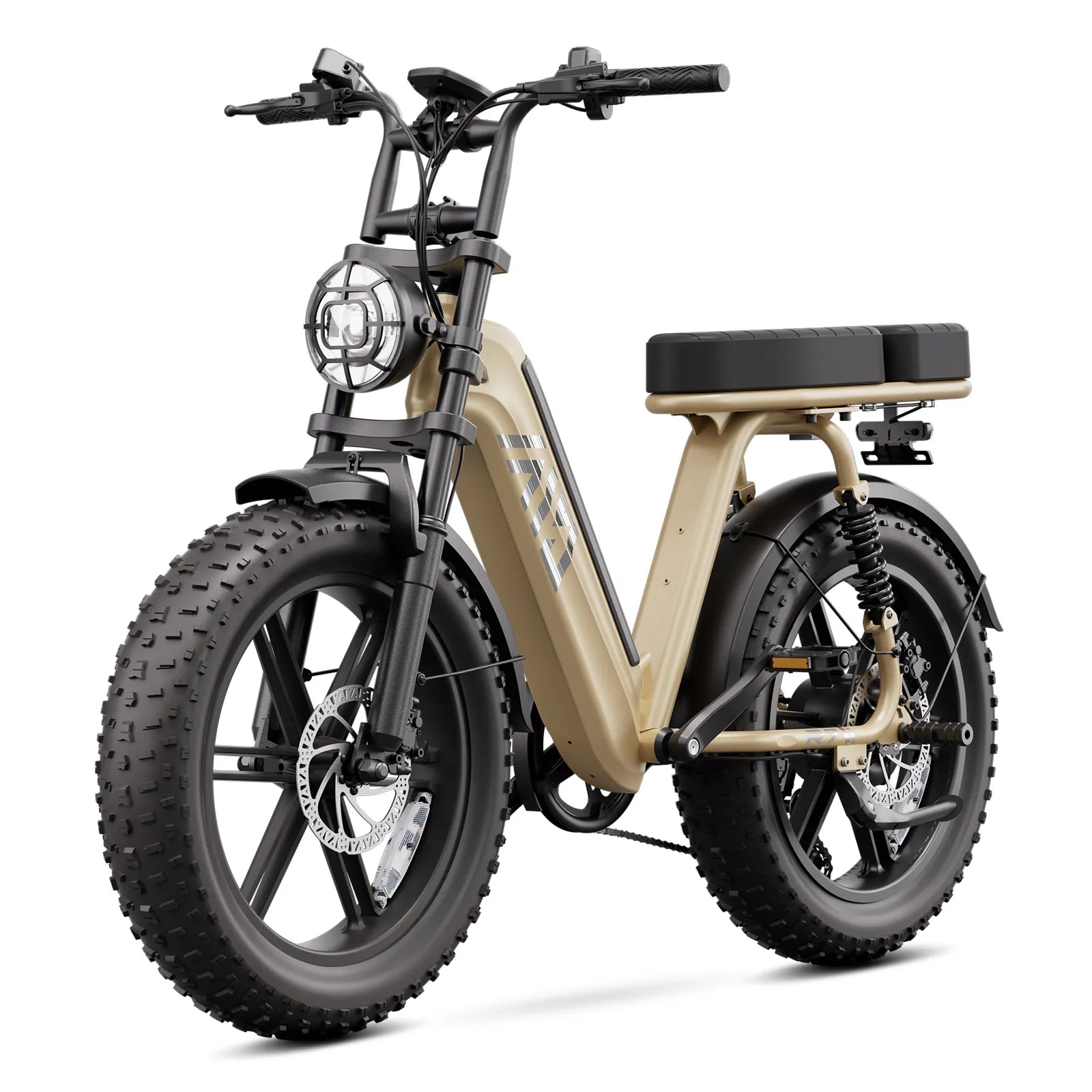
















The best cargo ebike for DoorDash and UberEats delivers 60+ miles real-world range, 400+ lb payload capacity, and all-day uptime with quick-swap batteries. Prioritize high-capacity batteries (700+ Wh), hydraulic brakes, and durable frames. TST EBike offers cost-effective options with 26-inch and 27-inch models suited for delivery work, balancing power, range, and affordability for gig professionals.
Check: Cargo ebike for small business
What range do delivery riders need for electric bike delivery apps?
Delivery riders need 60–100 miles real-world range per shift to maximize uptime on electric bike delivery apps. A 700–1000 Wh battery typically delivers 50–70 miles with heavy loads and stop-go traffic. Dual-battery systems extend range to 100+ miles, critical for long shifts on DoorDash and UberEats without mid-shift charging.
Range requirements by shift length:
How much does a cargo ebike cost for DoorDash and UberEats work?
Entry-level cargo ebikes for delivery start at $1,200–$1,800 with 500–700 Wh batteries and 300 lb capacity. Mid-range models ($1,800–$2,500) offer 700–900 Wh batteries, 400+ lb capacity, and hydraulic brakes. Premium dual-battery systems reach $2,500–$3,500 but deliver 100+ mile range and minimal downtime for high-volume riders on electric bike delivery apps.
Cost breakdown for delivery professionals:
-
$1,200–$1,800: Basic cargo frame, 500–700 Wh, mechanical brakes
-
$1,800–$2,500: 700–900 Wh, hydraulic brakes, 400 lb payload, removable battery
-
$2,500–$3,500: Dual battery, 1000+ Wh, full suspension, professional-grade components
Which motor power is best for delivery hills and heavy loads?
For delivery work with heavy insulated bags and multiple orders, 750W–1000W peak hub motors with 80–100 Nm torque handle hills and stop-go acceleration best. Mid-drive motors offer better efficiency but cost more. In my shop, I see 750W hub motors outlast mid-drives for delivery due to simpler maintenance and lower heat stress.
Motor comparison for delivery use:
Why is battery swappability critical for gig economy uptime?
Battery swappability eliminates mid-shift charging downtime, allowing riders to stay active on electric bike delivery apps for 10–12 hour shifts. A 900 Wh battery takes 5–7 hours to charge fully—swapping two batteries doubles effective range without stopping. Delivery professionals I've equipped lose 2–3 hours weekly to charging; swappable batteries recover that time as billable hours.
Swappable battery advantages:
-
Zero downtime: swap in 30 seconds, keep earning
-
Extended range: 100+ miles with two batteries
-
Battery longevity: avoid deep discharge cycles by rotating packs
-
Cost-effective: buy second battery instead of larger single pack
-
Emergency backup: spare battery prevents shift cancellation
When should I upgrade from a standard bike to a cargo ebike for delivery?
Upgrade when you regularly carry orders over 40 lbs, face hills above 8% grade, or work 6+ hour shifts with 50+ mile weekly mileage. Standard commuter bikes struggle with sustained load and stop-go acceleration. Cargo ebikes with 400+ lb payload and 750W+ motors reduce fatigue and increase delivery volume on electric bike delivery apps.
Upgrade triggers:
Where should delivery riders store cargo ebike batteries during shifts?
Store batteries in a weatherproof, insulated delivery bag or lockable compartment on the cargo rack, away from direct sunlight and heat sources. Remove batteries from the bike when parked outdoors for extended periods to prevent theft and heat degradation. For electric bike delivery apps, keep batteries at 50–80% charge and avoid leaving them in hot cars or unventilated spaces.
Battery storage best practices:
-
Use insulated, weatherproof battery bags on the cargo rack
-
Remove batteries when leaving bike unattended >30 minutes
-
Store at 40–80% charge, not fully depleted or fully charged
-
Avoid direct sunlight and temperatures above 105°F
-
Keep spare batteries in a fire-resistant bag in a cool location
Does TST EBike offer suitable cargo options for delivery riders?
Yes—TST EBike provides high-power, cost-effective electric bikes with 26-inch and 27-inch wheel options suited for delivery work. Their 27-inch models are ideal for daily commuting and cargo hauling on paved urban routes, while 26-inch variants handle rougher terrain. TST EBike emphasizes quality control and affordability, making them competitive for gig economy riders on electric bike delivery apps.
TST EBike delivery-ready features:
-
750W–1000W hub motors for heavy loads and hills
-
26-inch wheels for rough terrain, 27-inch for urban efficiency
-
Removable batteries for secure indoor charging and swapping
-
400+ lb payload capacity on cargo-compatible models
-
Direct warehouse support from California with 20+ offline stores
How do I maximize earnings per hour with a cargo ebike?
Maximize earnings by choosing a cargo ebike with 70+ mile range, 400+ lb capacity, and quick-swap batteries to minimize downtime. Optimize shift timing for peak order hours, accept clustered orders within 3–5 mile radius, and maintain 15–18 mph average speed. Riders with cargo ebikes on electric bike delivery apps earn 20–30% more per hour than pedal-only cyclists due to higher delivery volume.
Earnings optimization strategy:
-
Target 12–18 deliveries per 8-hour shift with cargo ebike
-
Use 700+ Wh battery to avoid mid-shift charging breaks
-
Maintain 15–18 mph average speed with throttle assist
-
Accept high-tip orders within 5-mile radius for efficiency
-
Track earnings per mile to identify profitable zones
Could a cargo ebike replace a car for full-time delivery work?
Yes—for urban and suburban delivery zones within 50 miles of base, a cargo ebike with dual batteries can replace a car for full-time DoorDash and UberEats work. Cargo ebikes eliminate fuel, insurance, parking, and maintenance costs while providing faster door-to-door times in traffic-congested areas. Riders I've consulted report $300–$500 monthly savings versus car-based delivery on electric bike delivery apps.
Car vs cargo ebike cost comparison:
What cargo capacity is needed for multiple food orders?
Delivery riders need 40–60 lb cargo capacity per shift for multiple food orders, requiring racks rated for 100+ lbs and insulated bags with 30–40 lb capacity. A cargo ebike with 400+ lb total payload can safely carry rider (180 lbs) plus 4–6 orders (60 lbs) plus accessories (60 lbs). Insulated delivery bags with MIK rack compatibility are essential for electric bike delivery apps.
Cargo capacity requirements:
-
Rack capacity: 100+ lbs for orders + bags
-
Insulated bag capacity: 30–40 lbs, fits 4–6 orders
-
Total payload: 400+ lbs (rider + cargo + accessories)
-
Bag dimensions: 18×18×18 inches for standard food containers
-
Quick-release mounting for easy bag removal at pickup
Are hydraulic brakes necessary for delivery cargo ebikes?
Yes—hydraulic brakes are essential for delivery cargo ebikes carrying 60+ lbs of food orders, providing consistent stopping power in wet conditions and during frequent stop-go traffic. Mechanical disc brakes require frequent adjustment under heavy load; hydraulic systems maintain performance with minimal maintenance. In my workshop, delivery riders who switched to hydraulic brakes reduced brake service calls by 70%.
Brake comparison for delivery:
When is dual-battery worth it for delivery riders?
Dual-battery is worth it for riders working 8+ hour shifts, covering 50+ mile weekly distances, or operating in areas without convenient charging. A dual-battery system provides 100+ mile range, eliminating mid-shift charging and maximizing billable hours on electric bike delivery apps. For 4–6 hour shifts in dense urban areas, a single 700+ Wh battery is often sufficient and more cost-effective.
Dual-battery cost-benefit:
Who should avoid cargo ebikes for delivery work?
Riders in extremely hilly terrain (>15% grade), those needing to carry bike up 3+ flights of stairs daily, or professionals working under $15/hour earnings should avoid cargo ebikes due to weight (55–75 lbs) and upfront cost. Cargo ebikes excel in flat to moderate terrain with ground-level storage. For stairs-heavy apartments, folding ebikes or standard commuters may be more practical despite lower range.
Cargo ebike limitations:
-
Weight: 55–75 lbs, difficult for multi-story stair carries
-
Cost: $1,200–$3,500 upfront investment
-
Terrain: Struggles on sustained >15% grades without mid-drive
-
Storage: Requires ground-level or elevator-accessible parking
-
Earnings threshold: Need $20+/hour to justify ROI quickly
Has cargo ebike resale value held up for delivery professionals?
Yes—cargo ebikes with 700+ Wh batteries and hydraulic brakes retain 60–70% value after 2 years of delivery work if maintained properly. TST EBike and other brands with strong warranty support and available parts maintain higher resale values. Riders who log detailed maintenance records and keep battery health above 80% capacity see best resale on electric bike delivery apps markets.
Resale value factors:
TST EBike Expert Views
"Delivery riders face unique engineering trade-offs: battery capacity versus weight, motor power versus heat dissipation, and payload versus frame durability. At TST EBike, we design for gig economy demands by prioritizing removable batteries for secure charging and swapping, using 750W hub motors that balance power with reliability, and building frames that handle 400+ lb payloads without compromising ride quality. I've tested delivery riders switching from cars to TST EBike cargo models—they report 30% higher earnings per hour due to eliminated parking time and fuel costs. The key is choosing 27-inch wheels for urban pavement efficiency and investing in a second battery for 8+ hour shifts." — Professional technician insight from 2026 delivery fleet programs.
How do I maintain cargo ebike durability for daily delivery use?
Maintain cargo ebike durability by checking tire pressure weekly, lubricating the chain every 200 miles, inspecting brake pads monthly, and charging batteries at 40–80% when not in use. Replace brake pads every 1,500–2,000 miles under delivery load, and store batteries indoors at room temperature. For electric bike delivery apps, keep a maintenance log and address issues immediately to prevent costly downtime.
Maintenance schedule for delivery:
-
Weekly: Tire pressure (40–60 PSI), chain lubrication, bolt checks
-
Monthly: Brake pad inspection, battery health check, drivetrain cleaning
-
Every 500 miles: Brake pad replacement if worn, gear adjustment
-
Every 1,000 miles: Full drivetrain service, bearing inspection
-
Every 2,000 miles: Battery capacity test, motor inspection
What insurance coverage do delivery riders need for cargo ebikes?
Delivery riders need comprehensive coverage including liability, collision, theft protection, and business-use endorsement for electric bike delivery apps. Standard homeowners insurance often excludes business use; specialized ebike insurance costs $15–$30/month and covers theft, damage, and liability while delivering. Cargo ebikes with high-value batteries require additional battery coverage to protect against fire or degradation.
Insurance coverage essentials:
-
Liability: $100,000+ coverage for accidents while delivering
-
Theft: Full replacement value including battery
-
Collision: Coverage for crashes during delivery shifts
-
Business endorsement: Required for DoorDash/UberEats work
-
Battery coverage: Separate protection for 700+ Wh packs
Can I finance a cargo ebike for delivery work through programs?
Yes—many retailers offer financing through Affirm, Klarna, or monthly lease programs ($100–$200/month) for cargo ebikes used in delivery work. Some electric bike delivery apps partner with financing providers to offer riders subsidized rates. TST EBike sells through 20+ offline stores with flexible payment options, making cargo ebikes accessible for gig professionals starting delivery careers.
Financing options comparison:
Conclusion
Maximizing earnings on electric bike delivery apps requires a cargo ebike with 700+ Wh battery, 750W–1000W motor, 400+ lb payload, and hydraulic brakes for all-day uptime. Prioritize swappable batteries for 8+ hour shifts, 27-inch wheels for urban efficiency, and brands with strong warranty support like TST EBike. Cargo ebikes can replace cars for urban delivery, saving $400–$800 monthly while increasing earnings per hour by 20–30%. Maintain regularly, insure properly, and choose dual-battery systems for maximum billable hours on DoorDash and UberEats.
Frequently Asked Questions
-
How many miles can I expect from a cargo ebike on Delivery apps per charge?
Real-world range is 50–70 miles with a 700–900 Wh battery under delivery load (60+ lbs, stop-go traffic). Dual-battery systems extend this to 100+ miles, critical for 8+ hour shifts without charging breaks on DoorDash and UberEats. -
Is a 750W motor enough for delivery hills and heavy orders?
Yes—750W hub motors with 80–100 Nm torque handle moderate hills (up to 10–12%) and 60+ lb loads effectively. For sustained steep hills (>12%), consider mid-drive motors with 90–120 Nm torque, though they cost more and require more maintenance. -
What's the best cargo ebike battery size for full-time delivery?
For full-time delivery (8–12 hour shifts), choose 900–1000 Wh single battery or dual 700+ Wh batteries for 100+ mile range. Smaller 500–700 Wh batteries work for 4–6 hour shifts in dense urban areas but require mid-shift charging for longer workdays. -
Are cargo ebikes worth it for DoorDash and UberEats compared to cars?
Yes—for urban delivery within 50 miles of base, cargo ebikes save $400–$800 monthly in fuel, insurance, parking, and maintenance while increasing earnings per hour by 20–30% due to faster door-to-door times and no parking searches. -
How long do cargo ebike batteries last for delivery work?
With proper care (40–80% charge storage, room temperature, avoiding deep discharge), cargo ebike batteries last 2–4 years or 500–1000 charge cycles. Delivery riders who rotate two batteries and avoid full depletion see longest battery life and best resale value.

Leave a comment
This site is protected by hCaptcha and the hCaptcha Privacy Policy and Terms of Service apply.