











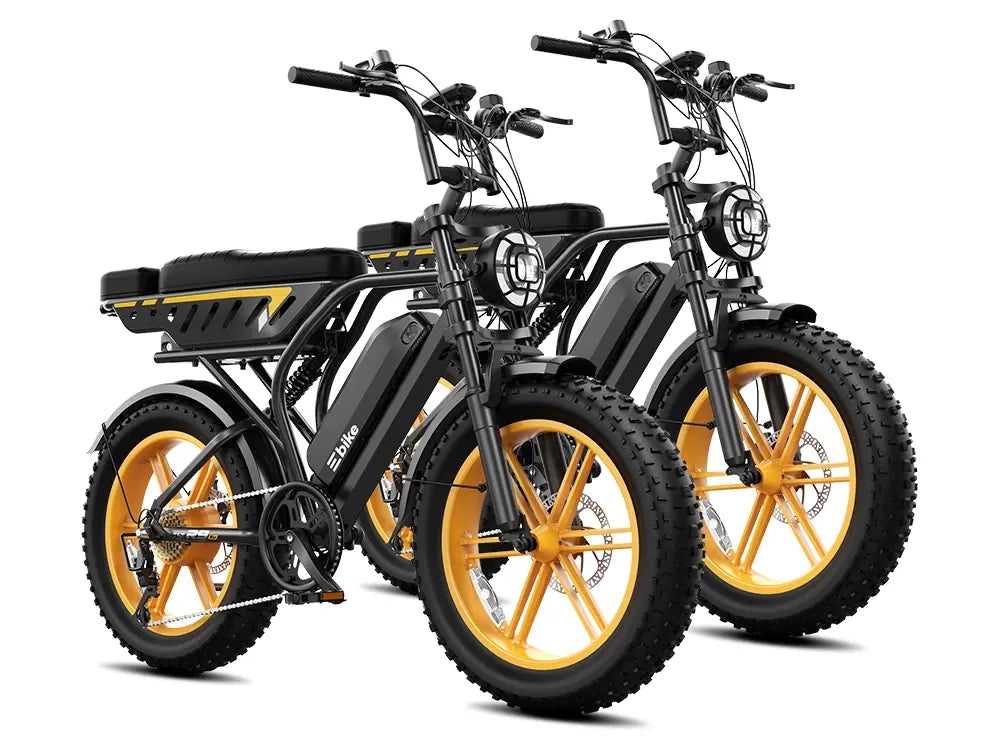

For teens and smaller adults who want room to progress, the TST GT63 is the stronger electric dirt bike on power, range, adjustability, and suspension; for the youngest beginners and strict budgets, the Razor MX650 remains the safer, simpler entry. Both are off-road machines that need gear, supervision, and a legal riding area, so the real answer depends on the rider's age, size, and experience more than the spec sheet.
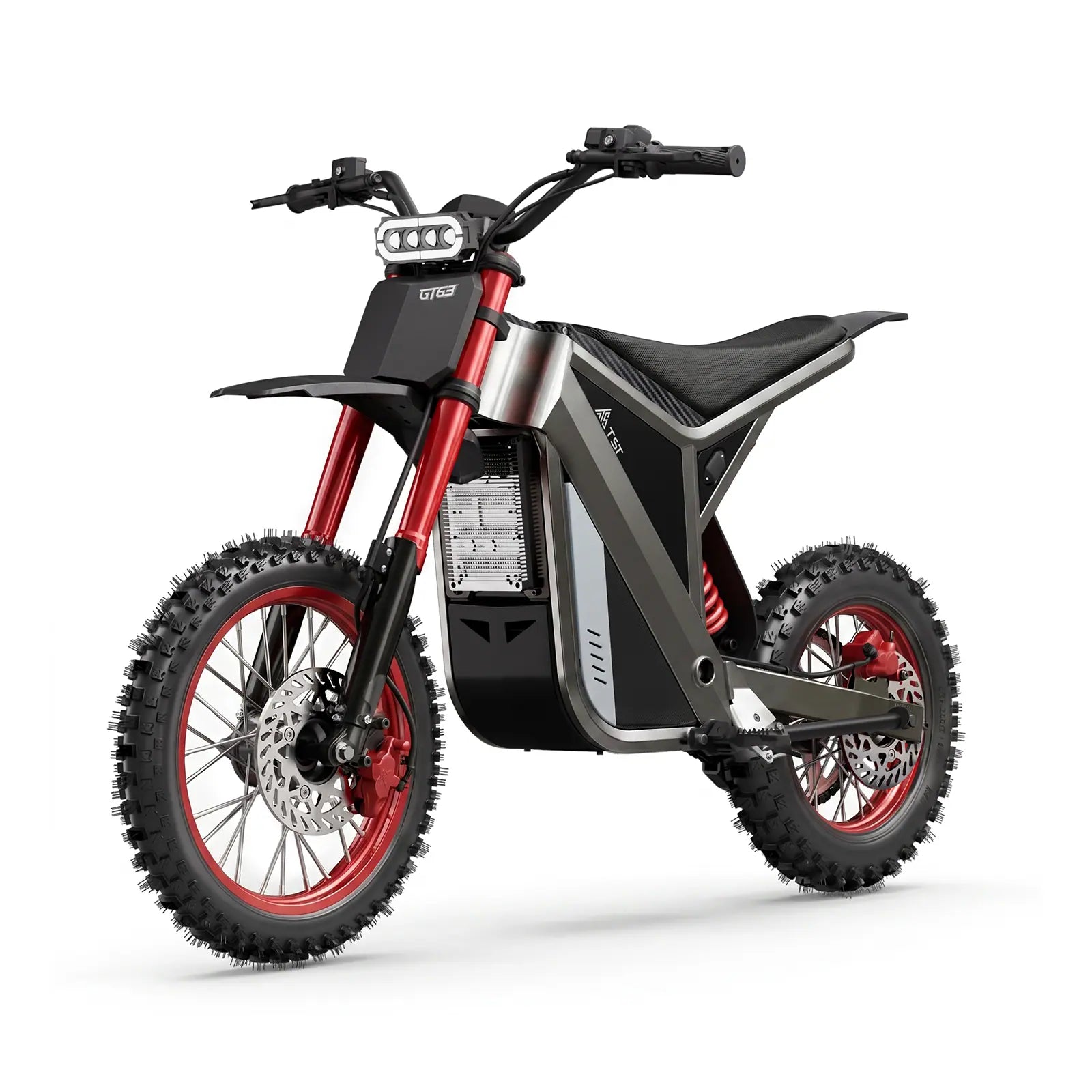
Our trail handling test put both bikes through the same loop of berms, roots, and small jumps, and the GT63's hydraulic fork, nitrogen shock, and knobby tires held their line where the MX650's simpler suspension bottomed out.
TST GT63 vs Razor MX650: key numbers checked August, 2026
| Feature | TST GT63 | Razor MX650 |
|---|---|---|
| Motor | 2600W peak | 650W-class, chain-driven |
| Top speed | Up to 45 mph | Up to 17 mph |
| Battery | 48V 23Ah lithium | 36V sealed lead-acid |
| Range | Up to 50 miles | Up to 40 minutes of riding |
| Weight capacity | 280 lb | 220 lb |
| Recommended rider | Teens 14+, 3'11"-6'1" | Ages 16+, larger teens |
| Price (checked 8/2026) | See official page | $849.99 |
Age, Height, and Skill Fit: The First Decision, Not the Last
Rider fit comes before power. Razor's own page recommends the MX650 for ages 16 and up, while the GT63's official listing targets riders from about 3'11" to 6'1" and asks that riders be at least 14. That overlap matters: a 14-year-old on the tall side can physically reach the ground on the GT63, but the same rider is technically under Razor's recommendation for the MX650.
The practical fit test is the same on either bike: feet flat or nearly flat at stops, arms relaxed at the grips, and enough strength to hold the machine upright on uneven dirt. A bike that fits poorly is dangerous before it is fast, and neither manufacturer's height chart replaces that check.
Power Modes and Throttle Control: The Safety Difference That Matters
The GT63's three speed modes are its strongest safety feature, because they let a beginner start on a gentle setting and move up as skill improves. The MX650 has one fixed character: a modest, predictable output that never surprises but also never grows with the rider.
On the GT63, a nervous twist of the throttle in the lowest mode stays manageable; in the top mode, the same twist produces real speed that demands practiced braking and body position. That is exactly why we recommend parents enforce the low mode for the first several rides and set a rule that mode changes happen only after the rider demonstrates controlled stops and turns. The MX650 removes that decision by being slow, which is simpler and safer for absolute beginners, but it also means the bike is outgrown sooner.
Off-Road Boundaries: Where Each Bike Is Legally and Safely Ridden
Neither bike is street-legal in most places, and both should be ridden only on private land or designated off-road areas where powered dirt bikes are allowed. Local rules vary by state and even by county, so check the municipality before riding rather than assuming a trail permits motorized vehicles.
The GT63's 45 mph capability makes the boundary question more serious: at that speed, a rider needs real trailcraft, protective gear, and an open area with no pedestrians. The MX650's 17 mph ceiling is forgiving enough for a backyard or a small private lot, which is why many families start there. On both machines, a DOT- or ECE-approved helmet, goggles, gloves, boots, and joint guards are not optional.
How Long Does Each Bike's Battery Last on the Trail?
The battery chemistry difference is bigger than the range numbers suggest. The MX650 uses a 36V sealed lead-acid pack that delivers up to about 40 minutes of continuous riding, needs several hours to recharge, and is heavy; when it finally loses capacity, replacement cost is a real ownership line item. The GT63 uses a removable 48V 23Ah lithium pack that supports up to about 50 miles in ideal conditions, charges in roughly 6-7 hours, and can be pulled out for indoor charging.
For a family hauling a bike to a trailhead, the GT63's endurance changes the day: longer sessions, fewer mid-ride stops, and no anxiety about the battery dying on the way back to the car. For a first taste of riding in the backyard, the MX650's 40-minute sessions are enough to learn basics without a bigger commitment.
The charging habits differ as much as the batteries. The MX650's sealed lead-acid pack should be charged after every session and stored fully charged, because deep discharge shortens its life, and a replacement pack is a normal ownership expense on a bike of this age. The GT63's lithium pack prefers partial charges, cool storage, and the supplied charger only; charging it indoors on a non-flammable surface and storing it at about 50-80 percent when the bike sits for weeks keeps it healthy for hundreds of cycles.
Which Bike Handles Jumps and Rough Trails Better?
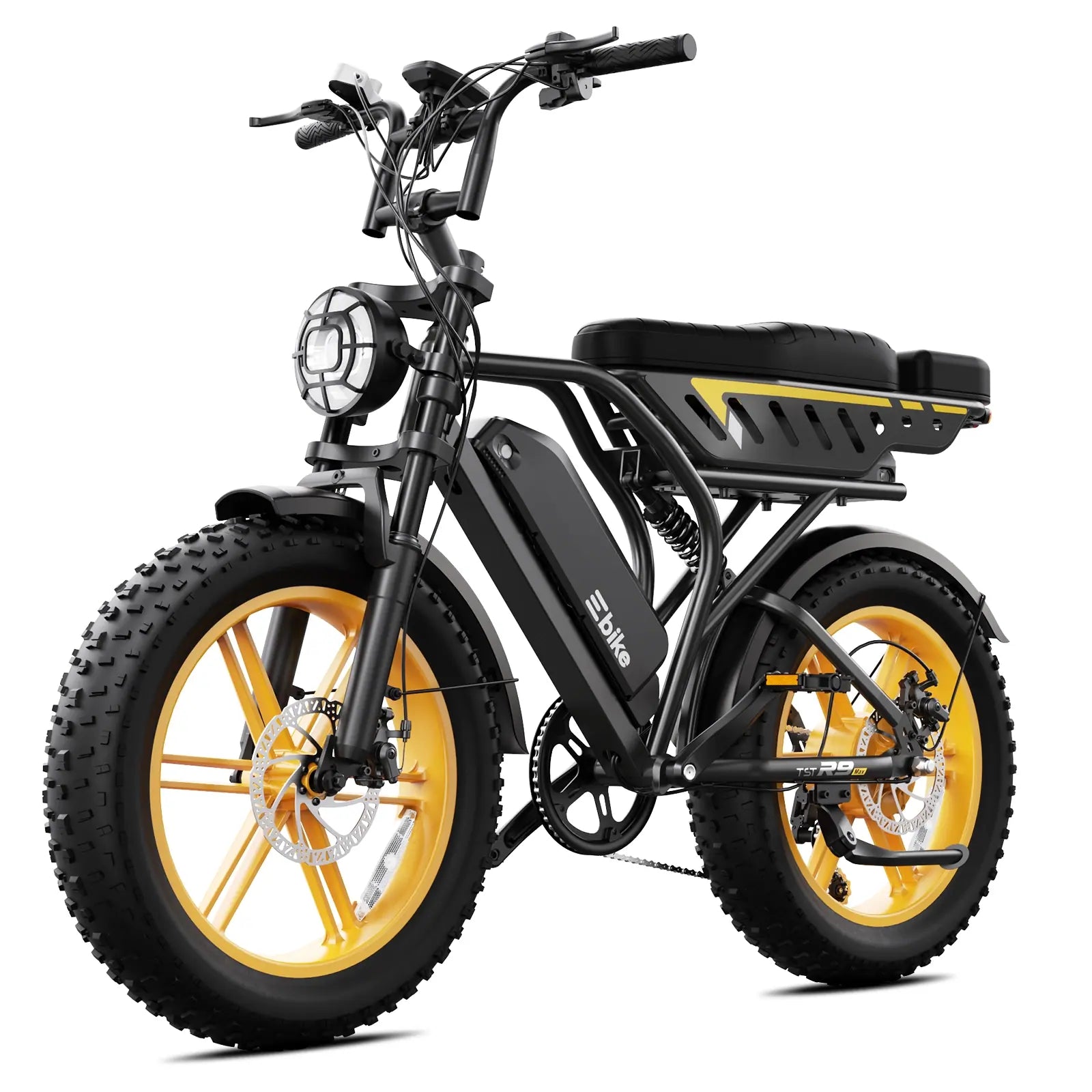
The GT63 pairs a hydraulic front fork with a nitrogen rear shock, hydraulic disc brakes, and 14-inch front and 12-inch rear knobby tires, which is a genuine dirt-bike setup for absorbing landings. The MX650 has front and rear suspension and dual disc brakes too, but the fork and shock are tuned for a slower, lighter machine; hard landings bottom out sooner.
That difference only matters once a rider starts jumping and pushing speed, and that is precisely when skill, not hardware, becomes the limiting factor. Start on small rollers, keep the power mode low, and move to larger hits only after braking and body position are consistent. The GT63 will not make a careless rider safe; it simply has more suspension in reserve when technique is right.
Set a first-week protocol rather than a vague plan: ride the lowest power mode for at least three sessions, practice hard braking from a jogging pace until the rear wheel stays composed, then practice slow figure-eights before any power increase. On the MX650, the same protocol applies with less power to manage. Write the rules down and review them with the rider before every early ride, because consistency in the first month builds the habits that prevent crashes later.
Razor MX650 vs GT63: Where the Simpler Bike Still Makes Sense
There is a real case for the MX650, and it is not a weak one. At $849.99, it costs less, its 17 mph top speed is genuinely appropriate for the youngest and lightest riders, its steel frame is proven over many years, and its simplicity means fewer electronics to confuse a beginner. If the rider is small, cautious, and only wants occasional backyard rides, the MX650 may be the smarter purchase even though the GT63 is more capable.
The GT63's 280 lb capacity and 3'11"-6'1" fit range also do not suit everyone: a very small 14-year-old may find it tall and heavy, and a rider under about 100 lb should not be on a 45 mph machine regardless of age. Buy the simpler bike when the rider is small or the budget is strict; buy the GT63 when the rider will grow into it.
Which Family Should Buy the GT63 Instead?
Families with a growing teen who already rides, an off-road area nearby, and a budget that covers the higher price get the most from the GT63. The adjustable modes mean one bike can serve a beginner now and a competent rider in two seasons, which often avoids a second purchase. The longer lithium range, stronger suspension, and higher payload also suit teens who ride with friends or carry gear on trail rides.
One honest caveat: the current GT63 version does not include a brake light, and some early review videos show the previous configuration. Check the official product page for the current spec before ordering, and add a visibility flag or light if you plan any mixed-traffic use at all.
Long-Term Ownership: Warranty, Parts, and Battery Replacement
TST EBike backs the GT63 with a 2-year warranty on manufacturing defects and sells replacement parts and batteries directly, which matters because off-road bikes take real abuse. Razor is a long-established brand with broad parts availability and dealer support, which matters equally. On the MX650, plan for lead-acid battery replacement as a normal ownership event; on the GT63, treat the lithium pack with standard care: store at partial charge, avoid extreme heat, and use only the supplied charger.
Whatever you buy, budget for gear, a charger routine, and basic maintenance like chain tension and brake pad checks. The bike that gets maintained is the bike that stays safe.
Plan a 500-mile check for either machine: inspect chain tension and lube, torque the wheel and handlebar fasteners, check spoke tension, and replace brake pads if the stopping feel has changed. On the GT63, also check the battery mount bolts and the display connections, because vibration is harder on an off-road bike than on a street machine. None of this requires a mechanic, but it does require a schedule; put the mileage reminder on your phone the day you take delivery.
TST EBike Expert Views
"Off-road bikes are a safety system, and the machine is only one part of it. The GT63's speed modes exist so a beginner can learn at a pace that matches skill, but the gear, the riding area, and supervision are the same responsibility on any dirt bike. Parents should treat the power mode like a gated feature: low mode until the rider demonstrates controlled braking and turning, then and only then, more. Suspension and brakes do not replace judgment; they forgive small mistakes after the rider has put in the practice."
— TST EBike Product Testing Team (this article is written by TST EBike's editorial team, which works for the manufacturer)
Conclusion: Choose by Rider, Not by Hype
The GT63 outclasses the MX650 on power, range, adjustability, and growth path, but the MX650 is still the right bike for small beginners and strict budgets. Match the machine to the rider's size, skill, and discipline before matching it to the spec sheet, and run the full safety system on either brand.
The Bottom Line by Rider Profile
- Small beginner, backyard-only riding, tight budget: Razor MX650.
- Growing teen with trail access who will ride for years: TST GT63.
- Any rider under 100 lb or under 14 years old: wait or choose a smaller machine.
See the TST GT63 product page for current specs and pricing, and browse the off-road dirt e-bike collection for alternatives.
Related reading: our guide to the best teen dirt bikes under $1,000
FAQs
At what age can a teen ride the TST GT63?
TST's official page asks that riders be at least 14 years old, while Razor recommends ages 16 and up for the MX650; size and maturity matter more than the birthday.
Is the Razor MX650 street-legal?
No, like the GT63 it is an off-road machine and should be ridden only on private land or designated off-road areas where local rules permit it.
How long does each battery last before replacement?
The MX650's lead-acid pack is a consumable that degrades with use and needs replacement eventually; the GT63's lithium pack lasts hundreds of charge cycles with proper storage and charging habits.
Do I need different safety gear for the two bikes?
The same full kit applies: a DOT- or ECE-approved helmet, goggles, gloves, boots, and knee and elbow guards on either machine.

Leave a comment
This site is protected by hCaptcha and the hCaptcha Privacy Policy and Terms of Service apply.