


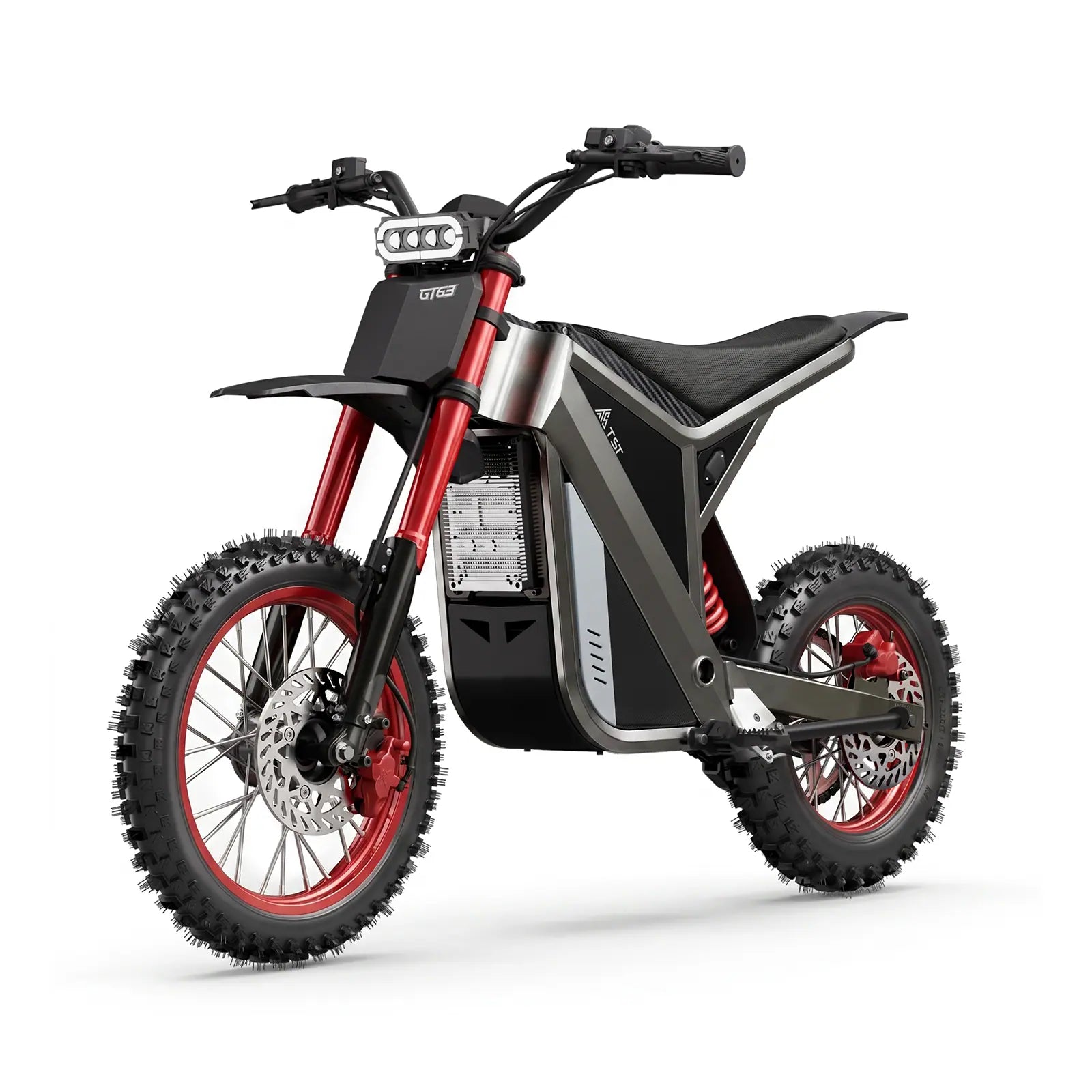














The best electric dirt bike for teens under $1,000 is the Razor MX650 ($849.99, checked August 21, 2026), as it stands as the only verified sub-$1,000 option featuring front and rear suspension, dual disc brakes, and a proven 17 mph, 220 lb capacity package backed by years of owner history. For families willing to stretch their budget, the TST GT63 off-road electric dirt bike offers an advanced upgrade path with adjustable power modes, 2600W peak power, and a 50-mile lithium range.
How Did We Pick the Finalists for This Guide?
We judged teen dirt bikes on rider age and size fit, power and speed control, suspension and brakes, battery and charging, and the safety and support system around the bike. Prices were checked on official pages on August 21, 2026, and they move with promotions and model updates, so every figure here is a dated snapshot.
We excluded bikes without a published recommended age or rider weight, because a dirt bike is a safety purchase first. The finalists below all publish fit and safety guidance.
What Does a Teen Dirt Bike Need Before It Is Safe?
A teen's first dirt bike needs four things: a power ceiling matched to the rider's skill, suspension and brakes that forgive mistakes, a fit that lets feet reach the ground, and a parent-controlled plan for gear and riding areas. Speed is not a feature at this stage; controllability is.
Also confirm the bike's intended use. Most electric dirt bikes are off-road-only and not street-legal, so check local rules for where the bike can be ridden before buying, and treat protective gear as part of the purchase price.
Candidate Pool: What Verified Options Exist Near $1,000
| Model | Price (August 2026) | Power | Fit | Notes |
| Razor MX650 | $849.99 | 650W-class, 17 mph | Ages 16+, up to 220 lb | Proven entry bike, front and rear suspension, dual disc brakes |
| TST GT63 | $1,199 (official sale) | 2600W peak, up to 45 mph | Ages 14+, 3'11"-6'1", 280 lb | Adjustable modes, lithium battery, hydraulic brakes |
The honest landscape: verified sub-$1,000 teen dirt bikes with meaningful capability are rare, and the MX650 is the category benchmark. Most lithium-powered bikes with adjustable power start above this budget.
Razor MX650: The Verified Pick Under $1,000
The MX650 is the safe default for a reason: it has sold for years, its 17 mph top speed is genuinely appropriate for newer riders, its 220 lb capacity fits most teens, and its front and rear suspension plus dual disc brakes make it predictable on trails. Razor recommends it for ages 16 and up, which is an honest ceiling for the power it carries.
The trade-offs: its 36V lead-acid battery delivers only about 40 minutes of riding per charge and is a consumable that eventually needs replacement. For a first bike on a strict budget, that is an acceptable limit; for a rider who wants longer sessions, the upgrade pick below is the better value over two seasons.
TST GT63: The Upgrade Pick If the Budget Stretches
The GT63 is the bike teens grow into rather than out of. Its three speed modes let a beginner start gentle and progress as skill improves, its 2600W peak motor and 48V 23Ah lithium battery support up to about 50 miles of trail riding, and its hydraulic suspension and brakes handle bigger hits. Its official page asks that riders be at least 14, fits 3'11"-6'1" up to 280 lb, and TST EBike backs it with a 2-year warranty and direct parts support.
It is not a $1,000 bike: its official sale price was $1,199 on August 21, 2026, and you pay more for the lithium range and growth path. For families who want one bike to last through the learning curve, the GT63 can avoid a second purchase within a season or two.
Compare the two-year cost rather than the sticker: an MX650 at $849.99 plus a lead-acid battery replacement and a second bike when the rider outgrows it can exceed the GT63's $1,199 plus lithium care in several scenarios. The MX650 wins when the rider is small and will hand the bike to a younger sibling; the GT63 wins when the rider is on the edge of outgrowing the smaller machine now. Run both scenarios with your rider's age and size before deciding, because the cheaper bike is only cheaper if it is the right size for the next two seasons.
MX650 vs GT63: Age, Size, and Budget Fit
The MX650 suits the youngest and lightest riders, strict budgets, and backyard or small-lot use; the GT63 suits growing teens with trail access and a budget that covers the higher price. If the rider is under 16, under about 100 lb, or just starting, the MX650's gentle ceiling is the safer match regardless of the GT63's capabilities.
If the rider is 14 or older, already rides, and can manage a 45 mph machine in low-power mode under supervision, the GT63's adjustability and range justify stretching the budget. Use the rider's size, discipline, and riding area, not the parent's enthusiasm, as the deciding factor.
The Safety System: Gear, Area, and Supervision Apply to Both
On either bike, the same system decides outcomes: a DOT- or ECE-approved helmet, goggles, gloves, boots, and knee and elbow guards; a legal off-road riding area; and adult supervision until control is consistent. The MX650's fixed power removes one decision, while the GT63's modes add control but require a parent to enforce the low setting.
Set explicit rules before the first ride: no throttle past the agreed mode, no jumps until braking and body position are solid, and no riding alone. A dirt bike is a tool for building skill, not a toy for speed.
Write a parent-rider contract that both sign: the power mode for the next month, the riding area boundary, the gear checklist before every ride, and the rule that any rule violation pauses riding for a week. Families that formalize the safety system report fewer arguments and safer riding than those that rely on verbal reminders, because the contract removes the negotiation from the moment of temptation.
Budget the gear as a fixed line item: a DOT- or ECE-approved helmet, goggles, gloves, boots, and knee and elbow guards typically run $150-350 depending on quality, and they are not optional on either bike. Add the cost of getting to a legal riding area, because an off-road-only machine needs a destination, and factor in replacement pads and goggles as normal wear. The bike is the cheaper half of this purchase; the safety system is the part that protects the rider.
Set the gear rule once and never bend it: no helmet, no ride, no exceptions, regardless of how short the session is. Most beginner dirt-bike injuries happen on "quick" rides with partial gear, so the rule has to cover every ride to work at all. When the rider understands that gear is part of the machine, they stop negotiating it and start treating it as normal.
What Do You Give Up with a Teen Dirt Bike Under $1,000?
Under $1,000, expect compromises: lead-acid batteries with short run times (or small lithium packs), fixed power with no growth path, and component quality that suits beginners rather than aggressive riding. You are also buying an off-road-only machine in most cases, so factor in the cost of getting to a legal riding area.
Budget for gear, a charger routine, and basic maintenance like chain tension and brake checks. The money spent on the system around the bike matters more than the difference between 17 mph and 20 mph.
Plan the growth path, not just the first season. If the rider is close to outgrowing the MX650's 17 mph and 220 lb limits, the GT63's adjustable modes and 280 lb capacity make it the longer-term buy despite the higher price; if the rider is small and just starting, the cheaper bike is the right first step and the upgrade can wait. Families that match the bike to the rider's next two years, rather than the current weekend, spend less in total.
Conclusion: Buy the Bike the Rider Can Handle, Not the One That Impresses
At the price checked on August 21, 2026, the Razor MX650 is the best electric dirt bike under $1,000 for most teens, with a proven, safe, well-documented package. The TST off-road dirt e-bike collection features upgrading options like the GT63 for growing riders if the budget stretches. Match the machine to the rider's size and discipline, and run the full safety system either way.
Parent's Buying Checklist
Above all, buy the bike the rider can actually manage today, with a growth path planned for tomorrow.
-
Confirm the rider's age, weight, and height fit the manufacturer's guidance.
-
Check the current price of both bikes on official pages.
-
Verify a legal off-road riding area exists near me.
-
Budget for full protective gear as part of the purchase.
-
Set power-mode and supervision rules before the first ride.
See the TST GT63 product page for current pricing and the electric dirt e-bike collection for alternatives.
Related reading: TST GT63 vs. Razor MX650: Head-to-Head Teen Dirt Bike Comparison
Frequently Asked Questions About Teen Electric Dirt Bikes
Are electric dirt bikes under $1,000 suitable for aggressive trail riding?
Generally no. Sub-$1,000 models like the Razor MX650 use entry-level components and 36V lead-acid batteries built for light backyard or casual trail use. Aggressive riding, steep hills, or heavier teens require higher-end platforms with lithium batteries and hydraulic suspension, such as the TST GT63 performance dirt bike.
Do electric dirt bikes require a driver's license or street registration?
No. Most electric dirt bikes are classified as off-road-only vehicles and are not street-legal. They cannot be ridden on public sidewalks, streets, or highways. Always verify local municipal laws and state regulations regarding off-road vehicle operation before riding.
How long does a lead-acid battery last on a budget teen dirt bike?
On standard models like the MX650, a lead-acid battery typically provides about 30 to 40 minutes of continuous riding per charge. Over time, these batteries are consumable parts that degrade and usually require replacement after 1 to 2 seasons depending on maintenance and charge habits.

Leave a comment
This site is protected by hCaptcha and the hCaptcha Privacy Policy and Terms of Service apply.