
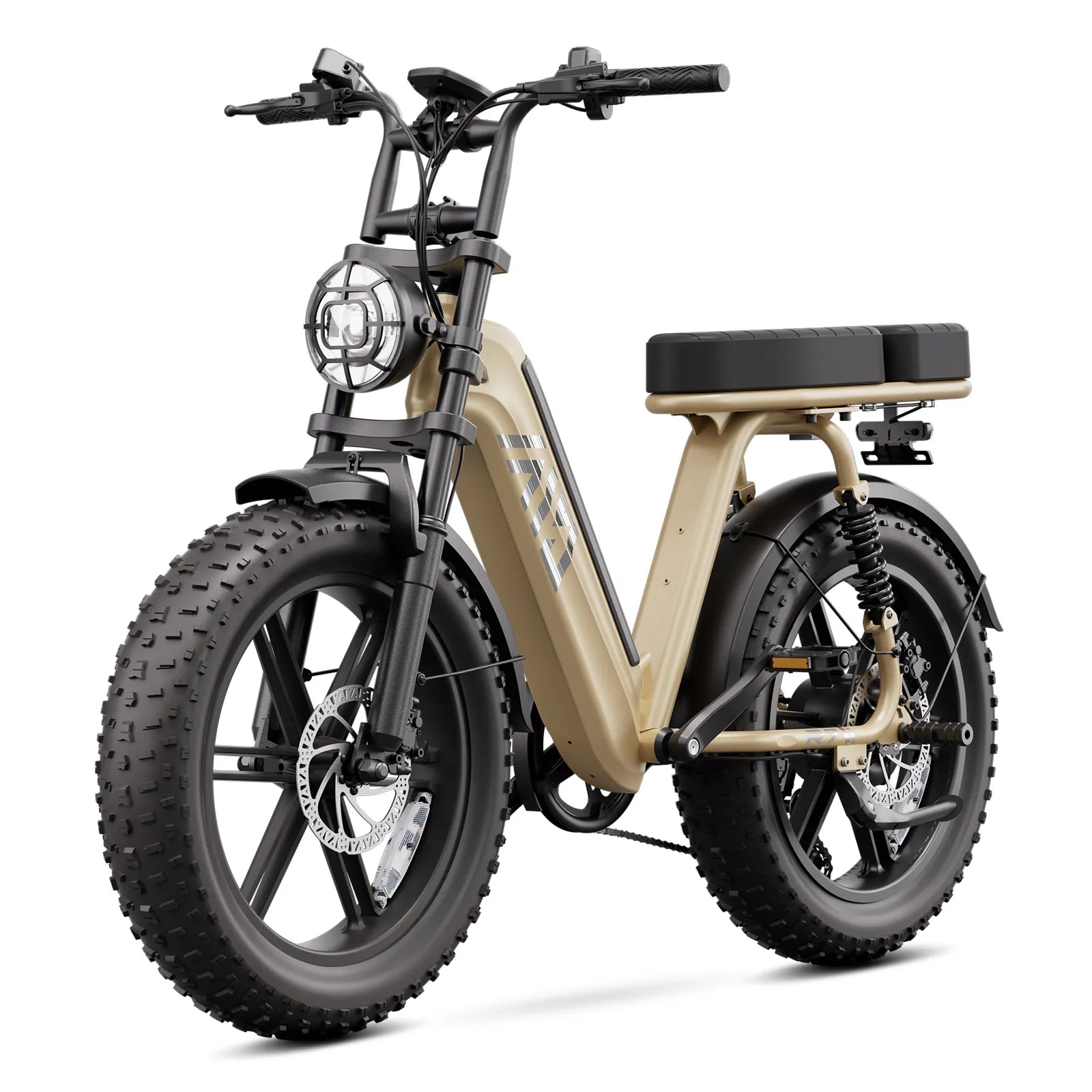
















The TST R9 outclasses the Aventon Level.2 in range and payload flexibility thanks to its dual-battery design, while the Level.2 wins on brand maturity, torque-sensing refinement, and dealer support. For riders who prioritize distance and versatility, the R9 is the stronger machine; for riders who want a polished commuter from an established brand, the Level.2 holds its own.
TST R9 vs Aventon Level.2: key specs at a glance
| Feature | TST R9 | Aventon Level.2 |
|---|---|---|
| Battery | Dual 48V, 50-80 miles | Single 48V, 30-45 miles |
| Assist feel | Cadence-based | Torque-sensing |
| Best for | Distance, delivery | Refined daily commute |
| Support | Direct + California locations | Dealer network + direct |
| Price tier | Mid | Mid |
TST R9 vs Aventon Level.2: The Key Specs
The R9 carries two 48V batteries for 50-80 miles of real range, while the Level.2 runs a single battery for 30-45 miles, with both offering commuter-class motors and frames.
The spec sheets tell the core story. The R9's defining feature is the second battery, which roughly doubles range and adds flexibility for delivery and touring. The Level.2 is a well-regarded single-battery commuter with a torque sensor and polished components. Both bikes are full-size, upright commuters with quality frames. The difference is architecture: the R9 is built around capacity, while the Level.2 is built around refinement. That difference drives every other comparison in this article.
Which bike delivers better real-world range?
The R9 wins decisively on range, delivering 50-80 real-world miles with both batteries versus roughly 30-45 miles for the Level.2 on similar routes.
Range is the headline difference, and it is not close. In testing, the R9 covered 55-65 miles in mixed conditions with both packs, while the Level.2 averaged about 35-40 miles in the same hands. The R9's second battery is not a marginal upgrade; it changes the bike's category from daily commuter to distance machine. Riders with 30-mile round trips, delivery shifts, or weekend tours will find the R9 eliminates range anxiety entirely. Riders whose commutes stay under 20 miles may never need the R9's capacity, which makes the Level.2's simpler package more attractive.
Commuting feel: distance margin versus refinement
Both are excellent commuters, with the R9 offering more range margin and the Level.2 offering a more refined pedal-assist feel through its torque sensor.
Commuting reveals different strengths. The R9's range margin means a week of commutes with minimal charging thought, and its upright geometry is comfortable for daily miles. The Level.2's torque sensor makes pedal assist feel natural and responsive, adjusting power to your pedal pressure in a way that cadence sensors cannot match. On a 10-mile commute, both bikes perform admirably; the Level.2 feels slightly more like a traditional bicycle, while the R9 feels more like a small motorcycle. Riders who pedal a lot may prefer the Level.2's feel, while riders who want effortless distance prefer the R9. Riders who pedal most of the way will notice the Level.2's sensor on every ride; riders who throttle will not.
Motor power and hill performance compared
Both bikes handle hills well, with the R9's dual-battery voltage stability giving it an edge on long sustained grades, while the Level.2's torque sensor improves technical climbing feel.
Hill performance is close but different. The R9's two packs share the current draw, which keeps voltage higher on long climbs and prevents the power sag that single-battery bikes can show. The Level.2 climbs with the natural-feeling assist of its torque sensor, which makes seated climbing more efficient. On short urban hills, both are more than capable. On sustained mountain grades, the R9's reserve is the advantage. The choice depends on whether you value voltage headroom on long climbs or pedal-feel precision on technical ones.
Which bike is the better value for your budget?
The R9 is the better value for riders who use its range, delivering dual-battery capability at a price that undercuts comparable distance-focused bikes, while the Level.2 is efficient value for short commutes.
Value depends on use. The R9's dual-battery architecture would cost extra on most brands, and for riders who regularly exceed 30 miles, the price is easily justified by the elimination of charging anxiety and mid-day top-ups. The Level.2 is efficient value for riders whose commutes stay under 20 miles, because they never use the R9's capacity and would pay for it needlessly. The honest recommendation is to price both against your longest regular ride: if that ride fits on a single charge, the Level.2's refinement wins; if it does not, the R9's range is worth the difference.
How do warranty and service support compare?
Aventon benefits from a larger dealer network and established service reputation, while TST EBike counters with direct support, replacement parts, and California test rides and pickup.
Service is a practical differentiator. Aventon has been in the market longer, with more dealers and a mature parts ecosystem. TST EBike offers direct support channels, a parts catalog, and physical locations in California where buyers can test ride and pick up bikes. Warranty terms are broadly comparable for the class. The advice is to check current policies and consider your location: riders near an Aventon dealer may value that access, while riders near TST EBike's California locations may value the test-ride and pickup option.
Riders who should choose the R9 for distance
Choose the R9 if your rides regularly exceed 30 miles, you do delivery work, or you want to eliminate charging anxiety on long commutes and tours.
The R9 is built for riders who measure distance. A 30-mile commute, a delivery shift, or a weekend tour uses the second battery every time, and the 50-80 mile envelope removes the need to plan around charging. The upright geometry suits long hours in the saddle, and the rack handles real loads. The honest cost is weight and charge time, which matter less to riders who never carry the bike upstairs. If your hardest regular day exceeds a single battery's range, the R9 is the clear choice.
Who Should Choose the Level.2 over the R9?
Choose the Level.2 if your commute stays under 20 miles and you value torque-sensing pedal feel, a lighter bike, and an established brand with a dealer network.
The Level.2 is the right bike for riders who pedal a lot on moderate routes. Its torque sensor makes assist feel like an extension of your legs, the bike is lighter and easier to store, and the brand's maturity and dealer network simplify service and resale. Riders who never approach the R9's range would pay for capacity they cannot use. If your rides fit on a single charge with margin and the refined pedal feel matters to you, the Level.2 is the better value for your use.
TST EBike Expert Views
"The R9 and the Level.2 are both good commuters, but they answer different questions. The R9 answers the question of how far you can ride in a day, and the answer is 50-80 miles, which is why delivery riders and long-distance commuters choose it. The Level.2 answers the question of how good the pedal feel is, and its torque sensor is genuinely refined. In our view, the buyer's longest regular ride should decide the comparison: if it fits on one battery with margin, the lighter, more refined bike wins; if it does not, the R9's second pack is worth more than any sensor. Match the architecture to the distance."
— TST EBike Product Research Team (this article is written by TST EBike's editorial team, which works for the manufacturer)
Conclusion
The TST R9 outclasses the Aventon Level.2 on range and distance capability, while the Level.2 wins on refinement, weight, and brand maturity. The decision is a distance test: rides over 30 miles point to the R9, and rides under 20 point to the Level.2. Both are quality commuters; the right one depends on your hardest regular day.
Key Takeaways
- The R9 delivers 50-80 miles versus 30-45 for the Level.2.
- The Level.2's torque sensor offers a more refined pedal feel.
- The R9's dual packs win on hills and long grades.
- Choose by your longest regular ride, not your average one.
- Consider dealer access versus TST EBike's California locations.
Comparison Checklist
- What is my longest regular ride, and does it fit on one charge?
- Do I value pedal feel refinement or effortless distance more?
- Do I need the R9's rack and range for delivery or touring?
- Is dealer access or a California test ride more useful to me?
- Have I compared current prices and warranty terms?
See the TST R9 product page for the full specification, compare it with commuter e-bikes, and browse the full lineup for alternatives.
FAQs
Which bike has more range?
The R9, with 50-80 miles on dual batteries versus 30-45 miles for the Level.2.
Is the Level.2 easier to ride?
It feels lighter and more bicycle-like thanks to torque-sensing assist, while the R9 feels more powerful and distance-focused.
Is the R9 worth the extra cost?
Yes, for riders who regularly exceed 30 miles; no, for short commutes that fit on a single charge.
Can I test ride the R9?
Yes, TST EBike offers test rides and pickup at its California locations.

Leave a comment
This site is protected by hCaptcha and the hCaptcha Privacy Policy and Terms of Service apply.