


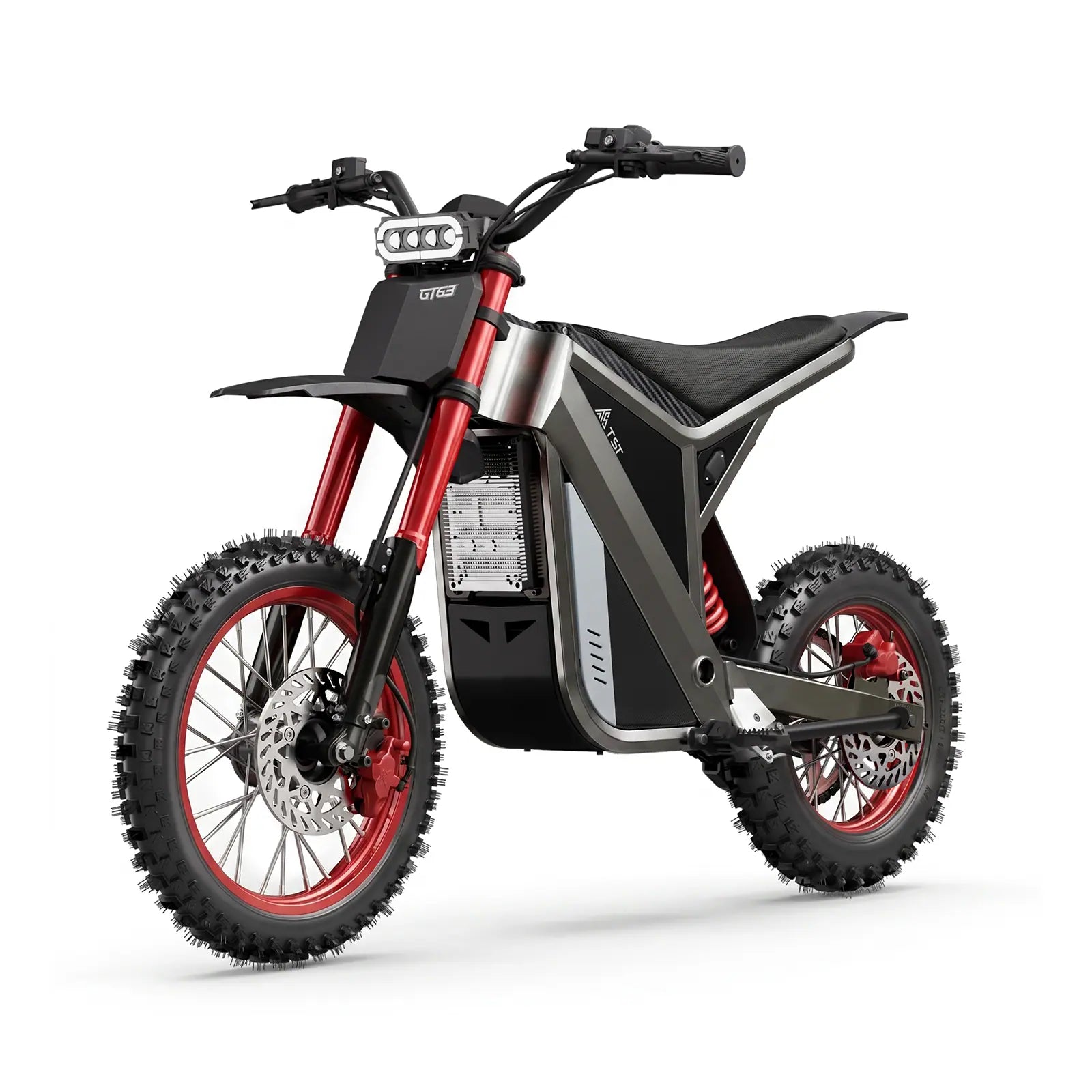














Riders choose TST EBike over budget brands mainly for three verifiable reasons: published specifications backed by a 2-year warranty, direct support from a company with California warehouses and local pickup, and realistic range numbers instead of inflated claims. The trade-off is that TST is a younger brand than legacy names, so riders who value local dealer networks or decades of brand history may still prefer a bigger name.
What Does "Budget Brand" Usually Mean in E-Bikes?
Budget e-bikes typically come from importers that list a low price, a big motor number, and a long range figure, but do not publish warranty terms, parts availability, or testing conditions. The bike itself is often fine; the problem is what happens after the sale. When a battery dies or a display fails, the buyer is left hunting for a support email that does not answer and spare parts that do not exist.
TST EBike addresses that gap directly: a California company with warehouses in Ontario and Diamond Bar, pickup options, a published 2-year warranty on manufacturing defects, and a parts catalog that includes batteries, chargers, displays, brakes, throttles, fenders, and racks. That is the difference riders actually feel, and it is the main reason we hear from customers switching away from no-name imports.
Published Specs versus Vague Claims: What You Can Verify
The best test of a budget brand is whether its claims survive a check of the official page. On the TST site, every model lists motor, battery voltage and capacity, range, payload, weight, brake type, and charge time. More importantly, the conditions behind the claims are sometimes published too: the Buddy Pro's 60-mile figure is described on the official page as measured on paved roads in PAS 2, light wind, 68°F, with a 220 lb combined rider and cargo, and the page honestly notes that mixed-use riding typically lands at 45-50 miles.
That kind of transparency is rare in the budget tier. Many import listings publish a "65-100 mile" headline with no test method at all. We would rather publish a range you can plan around than a number you discover is fictional on your first cold commute.
Apply the same verification habit to the motor and the controller. A listing that says "1500W" without stating whether that is peak or continuous, and without naming the controller and display, is leaving out the parts that determine reliability. A 1500W peak motor running through a weak controller will cut power on hills or overheat in summer, and a display that dies in the first year is a support problem, not an accessory problem. On the TST site you can find the motor type, battery voltage and capacity, charger rating, and replacement displays and controllers in the parts catalog; budget brands that cannot match that level of published detail are asking you to buy on faith.
Support, Warranty, and Parts: A Side-by-Side Reality Check
Support is where brands separate, and it is worth comparing before purchase rather than after a failure.
| Support factor | TST EBike (checked 8/21/2026) | Typical budget importer |
|---|---|---|
| Warranty | 2 years on manufacturing defects | Often 90 days to 1 year, vague terms |
| US presence | California warehouses, local pickup | Mail-forwarder or no local address |
| Parts | Batteries, chargers, displays, brakes sold directly | Frequently unavailable |
| Contact | Support hours and email published | Often unanswered tickets |
| Range honesty | Test conditions published on some models | Headline numbers only |
The table is not about polish; it is about what happens when something breaks. A 2-year warranty only helps if the company still exists, still answers, and still has the part. TST EBike's direct parts sales are the practical reason owners can keep a bike running past the first season.
Where Budget Brands Can Still Make Sense
Honesty cuts both ways: a no-name import can be a reasonable buy in specific cases. If you live outside TST's shipping countries, if the price difference is extreme, or if you only need a bike for a short season and accept zero support, a cheaper import may work. Some budget brands also sell through large marketplaces with buyer protection, which adds a layer of recourse a direct brand does not need.
We would not recommend it for daily commuting, heavy loads, or anyone who depends on the bike for work. For a low-mileage weekend toy with eyes open about support, the budget route is defensible.
Budget Brands vs TST EBike: Where TST Still Has Trade-Offs
Being honest about our own limits is part of why riders trust us. TST EBike does not have a national dealer network, so you cannot walk into a shop in every city for a tune-up. We are a younger brand than legacy names like Rad Power Bikes or Aventon, which means less independent review history and fewer forum years behind us. Our higher-power models also exceed Class 1-3 rules in some states, so you must check local law before riding one on public roads.
Those trade-offs matter. If a local bike shop and a 30-year brand history are non-negotiable for you, a legacy brand is the right call. If verified specs, direct support, and value per dollar matter more, TST EBike is competitive with anyone in the segment.
How Far Will a Budget E-Bike Really Go?
Range is the most abused number in e-bike marketing, so it deserves a specific example. The TST R002 lists 65-100 miles depending on the battery option; the R9 lists 65-130 miles with a dual-battery setup. Those are ideal-condition figures. Plan around 60-70 percent of the headline for mixed commuting, and less in winter, on hills, or at higher assist levels.
The Buddy Pro page's published test conditions are the model we want the whole industry to follow: a stated rider weight, temperature, assist level, and terrain. When a budget brand refuses to state any of those, treat the range claim as marketing.
Apply the same skepticism to payload and charger claims. A listing that says "450 lb capacity" without a frame and wheel spec, or "fast charge" without a charger rating, is hiding the same class of missing detail. Ask for the official spec page, and if the brand cannot produce one, move on to a brand that can.
Batteries, Chargers, and Parts You Can Actually Buy Later
A bike is only as useful as its spare parts. TST EBike sells replacement 48V batteries, chargers, displays, brake assemblies, throttles, fenders, racks, seats, and even inner tubes, and a replacement 48V 15Ah pack is available for both the R002 and the Buddy Pro. That compatibility is a real ownership advantage: one spare battery can serve two bikes in a household.
Budget imports rarely offer this. When a battery chemistry or connector is proprietary and the company disappears, the bike becomes a very heavy paperweight.
One practical test: before ordering, search for the exact battery model and a replacement charger on the brand's site. If neither exists, you are not buying a bike; you are renting one until the first failure. TST publishes both the battery SKUs and the accessory catalog, so you can verify the parts path in about five minutes, which is exactly how long this check should take for any brand you are considering.
Who Should Choose TST EBike Over a Budget Brand?
Choose TST EBike if you commute regularly, carry cargo or a passenger, ride in hilly terrain, or simply want a bike you can still get parts for in three years. Choose a budget import only if you accept the support risk and the price gap is large enough to compensate for it. For anyone whose bike is a primary transport tool, the direct support and published warranty are worth the difference.
Conclusion: The Support System Is the Real Product
The reason riders choose TST EBike over budget brands is not a single spec; it is the system around the bike: verifiable numbers, published test conditions, a 2-year warranty, California warehouses, local pickup, and parts you can buy later. Budget brands can be fine toys, but a primary-use bike needs a company behind it that will still answer in year two.
Set a simple test for your own purchase: imagine the bike breaks six months in, and ask where you send it. A brand with a published support email, a parts catalog, and a US address passes; a brand reachable only through a marketplace chat does not. Buy the bike that still has a company attached to it in year two, and the difference between a $799 bike and a "deal" stops being theoretical.
The Bottom Line
Whatever your budget, buy the bike whose numbers you can verify and whose company you can reach, because those two checks predict the ownership experience better than any spec sheet.
- Verify range claims: ask for test conditions, not just a headline number.
- Check warranty terms and whether parts are purchasable after the sale.
- Confirm local e-bike class rules before buying a high-power model.
- Budget imports are acceptable for low-use toys only; daily riders need support.
See the full TST EBike lineup to compare published specs, and check the commuting e-bike collection for models built around daily use.
Related reading: how TST EBike compares to Velotric for commuters
Frequently Asked Questions
What does TST EBike's 2-year warranty cover?
TST EBike's 2-year warranty covers manufacturing defects only. It does not cover crash damage, water intrusion beyond the rated level, or wear items like tires and brake pads. Full terms are published on the official site before purchase, not disclosed only after a claim.
Can I still buy replacement batteries and parts later?
Yes. TST EBike sells replacement 48V batteries, chargers, displays, brakes, throttles, fenders, and racks directly. The 48V 15Ah battery pack fits both the R002 and Buddy Pro, so one spare battery can serve two bikes in the same household.
Why do budget e-bikes advertise longer range than TST EBike?
Most budget listings publish a headline range with no test conditions, so the figure reflects a best case that rarely holds up. TST's Buddy Pro page states its 60-mile figure was measured at PAS 2, 68°F, and 220 lb combined weight, and notes mixed-use riding typically nets 45-50 miles.
When does a budget e-bike make sense over TST EBike?
A budget import can work if you live outside TST's shipping area, need only a short-season bike, or the price gap is large enough to offset zero support. It is not a good fit for daily commuting, heavy loads, or anyone who depends on the bike for work.
Are TST EBike's higher-power models street legal?
Some TST models exceed Class 1-3 e-bike limits used in many states, so legality depends on local law, not the bike itself. Check your state's e-bike classification rules before riding a higher-power model on public roads.

Leave a comment
This site is protected by hCaptcha and the hCaptcha Privacy Policy and Terms of Service apply.