


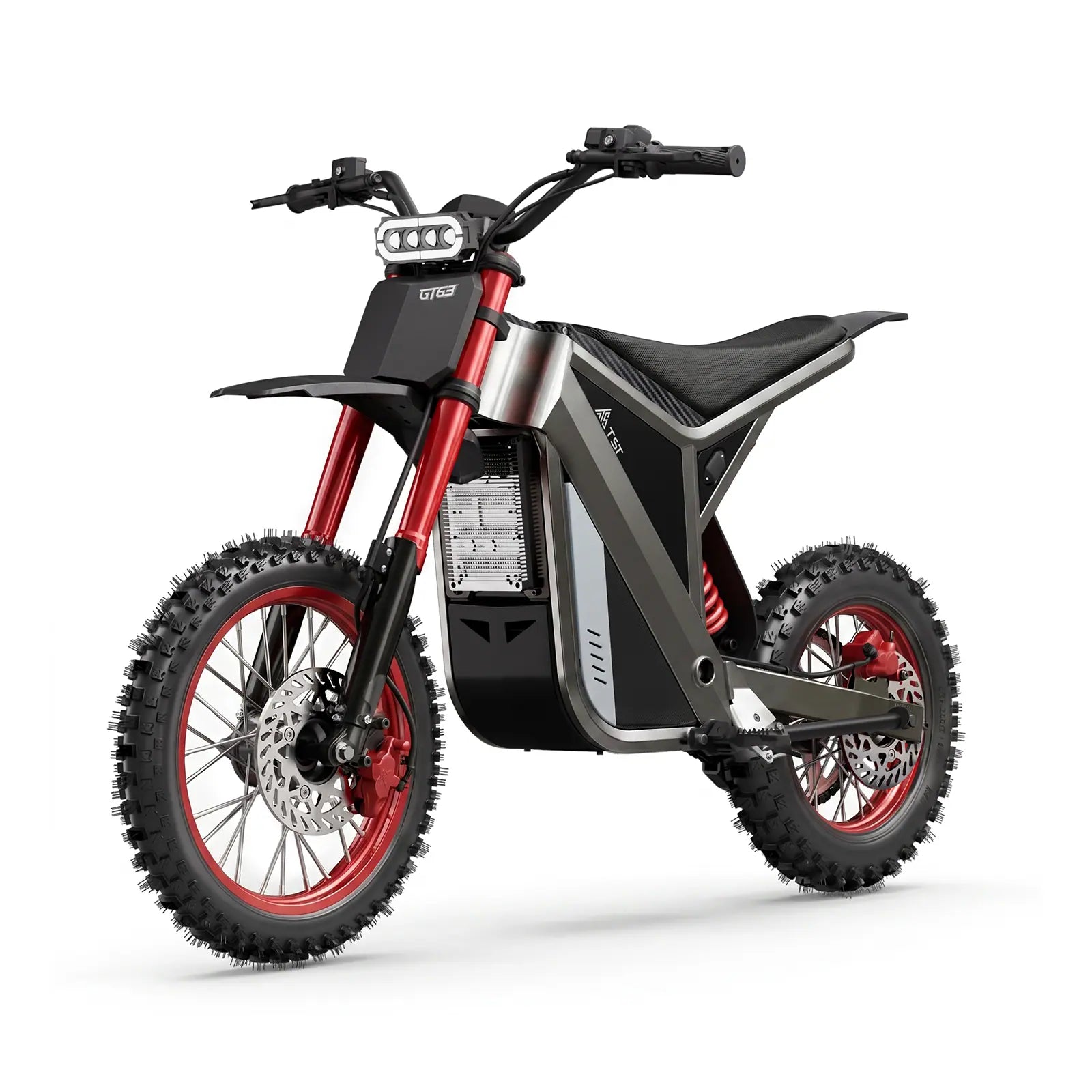














For commuters who prioritize price, power, and payload, TST EBike offers more per dollar, with models starting around $799 and a 2-year direct warranty; for commuters who prioritize design polish, torque-sensing assist, and a polished brand experience, Velotric is the stronger choice. There is no universal winner: the right answer depends on your route length, storage, and budget.
How Do the Two Lineups Compare for Commuters?
Velotric builds a focused lineup of commuter and utility bikes, led by the Discover series, the Nomad adventure models, and the Fold folding bike. TST EBike spans moped-style, cargo, folding, step-through, and off-road categories, with several models priced below Velotric's entry points. That breadth matters: TST can match a commuter bike to a specific job, while Velotric offers a more consistent, design-forward experience across a smaller range.
Both brands sell direct to consumers, but TST adds California warehouses and local pickup in Ontario and Diamond Bar, while Velotric pairs direct sales with a growing dealer and rental presence. Neither brand is a traditional bike-shop brand like Trek or Giant; both expect you to assemble the bike with basic tools.
Lineup Fit Matrix: Matching the Model to the Commute
| Commute profile | TST EBike option | Velotric option |
|---|---|---|
| Budget commuter under $1,000 | R002 Standard ($799) | Soltera-class pricing varies by promo |
| Speed and power focus | R002 (32 mph, 1500W) | Nomad 2 (from $1,749) |
| Step-through comfort | Surfer or R7 | Discover step-through models |
| Folding / storage | Buddy Pro | Fold 1 Plus ($1,449) |
| Cargo and errands | R7 or Carrier | RadRunner-style utility not in core range |
The matrix shows the practical difference: TST competes at a lower price point with more raw capability, while Velotric's premium sits in refinement, torque sensors, and consistent design across the range.
Cost of the commute matters over a year, not a month. A $799 TST bike versus a $1,449-plus Velotric leaves $650-1,000 on the table for a second battery, a serious lock, fenders, and service, which are the exact purchases that keep a daily commuter reliable. If your route is simple and your budget is fixed, that difference buys real reliability; if you value the ride quality of a torque sensor, the premium may be worth the same money.
Think about the ownership cycle rather than the first ride. Both brands sell bikes that should last several seasons, but the way you service them differs: TST publishes a parts catalog you can order from directly, while Velotric leans on dealers and authorized service. A commuter who can wrench at home gets more value from the published-parts model; a commuter who prefers handing the bike to a shop gets more value from the dealer model. Neither is wrong, but matching the brand to your servicing style prevents the single biggest source of commuter frustration: a bike parked for a week waiting on a part or an appointment.
Support, Warranty, and Purchase Path: What Happens After the Sale
TST EBike publishes a 2-year warranty on manufacturing defects, sells batteries, chargers, displays, and brake parts directly, and offers local pickup at two California warehouses as of August 2026. Velotric also provides a warranty and support, with the added comfort of a broader retail presence and more independent reviews from major e-bike publications.
For a commuter bike that gets used daily, the practical question is parts and service. If you live near a TST pickup warehouse, the direct support path is excellent. If you live near a Velotric dealer or rental partner, that local touch may matter more to you than the warranty paper.
Where Does Velotric Perform Better Than TST EBike?
Velotric earns its premium in three concrete ways. First, its bikes use torque sensors, which deliver smoother, more natural pedal assist than cadence-based systems on budget models. Second, the design and build finish are visibly polished, with integrated lighting, clean cable routing, and refined frames. Third, the brand has built strong independent review coverage, which reduces uncertainty for first-time buyers.
If your commute is flat, your route is fixed, and you want a refined, comfortable ride you can trust from day one, Velotric's higher price buys real quality. This is not a case of paying for a logo; it is paying for sensor tuning, finish, and a mature product line.
Where Does TST EBike Perform Better Than Velotric?
TST EBike's advantage is capability per dollar. The R002's 1500W motor, 450 lb payload, and $799 Standard price have no Velotric equivalent at that price; the R7's 1500W step-through cargo platform covers family hauling that Velotric does not directly offer; and the R9's dual-battery 65-130 mile range targets commuters with very long routes. Direct parts sales and the 2-year warranty add ownership security.
The maintenance reality favors TST for owners who wrench at home: batteries, chargers, displays, and brake parts are listed for purchase without a dealer appointment, which keeps a daily commuter on the road when a shop visit would cost a day of work. Velotric's dealer network is the mirror image: more places that can service it, but fewer of those services are do-it-yourself from a published catalog.
The trade-off is real: TST's high-power models exceed Class 1-3 e-bike definitions in many states, so a 32 mph commuter may require registration or be restricted from bike paths. Velotric models generally stay within conventional class limits. Check your local law before choosing a high-power bike for a legal commute.
Velotric vs TST EBike: Model-Level Picks, Not Brand-Level Winners
Brand-level "TST is better" or "Velotric is better" statements mislead, because the right answer is model-specific. A commuter with a $1,000 budget and a 15-mile route gets more from the R002 than from any Velotric at that price. A commuter who wants a refined, torque-sensing step-through and will spend $1,500-$1,800 gets more from Velotric's Discover or Nomad line. A folding commuter with storage constraints compares the Buddy Pro against the Fold 1 Plus directly.
Make a shortlist by commute profile, then compare the specific models. That method produces better decisions than picking a brand first.
Commute Profiles: What Each Type of Commuter Should Buy
For a short, flat, design-conscious commute, Velotric's Discover or Fold models are excellent. For a hilly, longer, or cargo-heavy commute on a budget, TST's R002 or R7 delivers power and payload Velotric does not match at the price. For a mixed-use rider who wants one bike for work and weekends, the TST Surfer's step-through comfort and 27.5-inch wheels cover pavement and light trails.
Whichever you choose, budget for a helmet, a good lock, lights, and fenders if they are not included, because those determine whether a commuter bike survives a real work year.
Legal Class and Speed Considerations for Daily Use
Commuter legality is not a footnote. A 32 mph, 1500W bike like the R002 can be classified as a moped or motor vehicle in states that cap street e-bikes at 750W or Class 3 speeds, which affects where you can ride and whether you need registration or insurance. Velotric's class-compliant models avoid that friction.
The practical consequence is route access: a high-power bike that is legally a moped may be barred from bike lanes and multi-use paths, which turns a 10-minute commute into a 20-minute detour on roads. If your commute uses protected paths, a class-compliant model is not a compromise; it is the only bike that legally completes the route. Check the specific paths on your route, not just the state law, before choosing power over compliance.
If your commute uses bike paths that restrict throttle or high-power bikes, a class-compliant model is the safer, more practical choice regardless of brand preference.
Conclusion: Compare by Commute, Then by Model
TST EBike is the stronger value for power, payload, and budget commutes, with direct support and a 2-year warranty; Velotric is the stronger choice for design, torque-sensing ride quality, and class-compliant refinement. Decide your route, budget, and legal requirements first, then pick the model that fits, because the brand answer depends entirely on the specific commute.
The Bottom Line
Before you order, walk your exact commute on foot once and note the paths, parking, and stairs, then match the bike to that reality; the route decides the brand more often than the brand decides the route.
- Under $1,100 with hills or cargo: TST R002 or R7.
- $1,500+ refined commuter with torque sensor: Velotric Discover or Nomad.
- Folding commuter: compare Buddy Pro vs Fold 1 Plus directly.
- Verify local e-bike class rules before choosing any high-power model.
Browse the TST EBike commuting collection for commuter-focused models, or view the full all-electric-bikes lineup to compare by budget.
Related reading: why riders choose TST EBike over budget brands
FAQs
Is Velotric more reliable than TST EBike?
Both have published warranties and growing support networks; Velotric has more independent review history, while TST publishes 2-year coverage and direct parts sales.
Which brand is cheaper for a daily commuter?
TST EBike's lineup starts around $799 and undercuts Velotric's entry models at the prices checked on August 21, 2026.
Can I test ride either brand?
TST offers local pickup at its California warehouses, and Velotric has a growing dealer and rental presence; check locations near you.
Do TST high-power bikes fit standard e-bike classes?
Not always: 1500W, 32 mph models can exceed Class 1-3 definitions in many states, so verify local rules before riding on public roads.

Leave a comment
This site is protected by hCaptcha and the hCaptcha Privacy Policy and Terms of Service apply.