


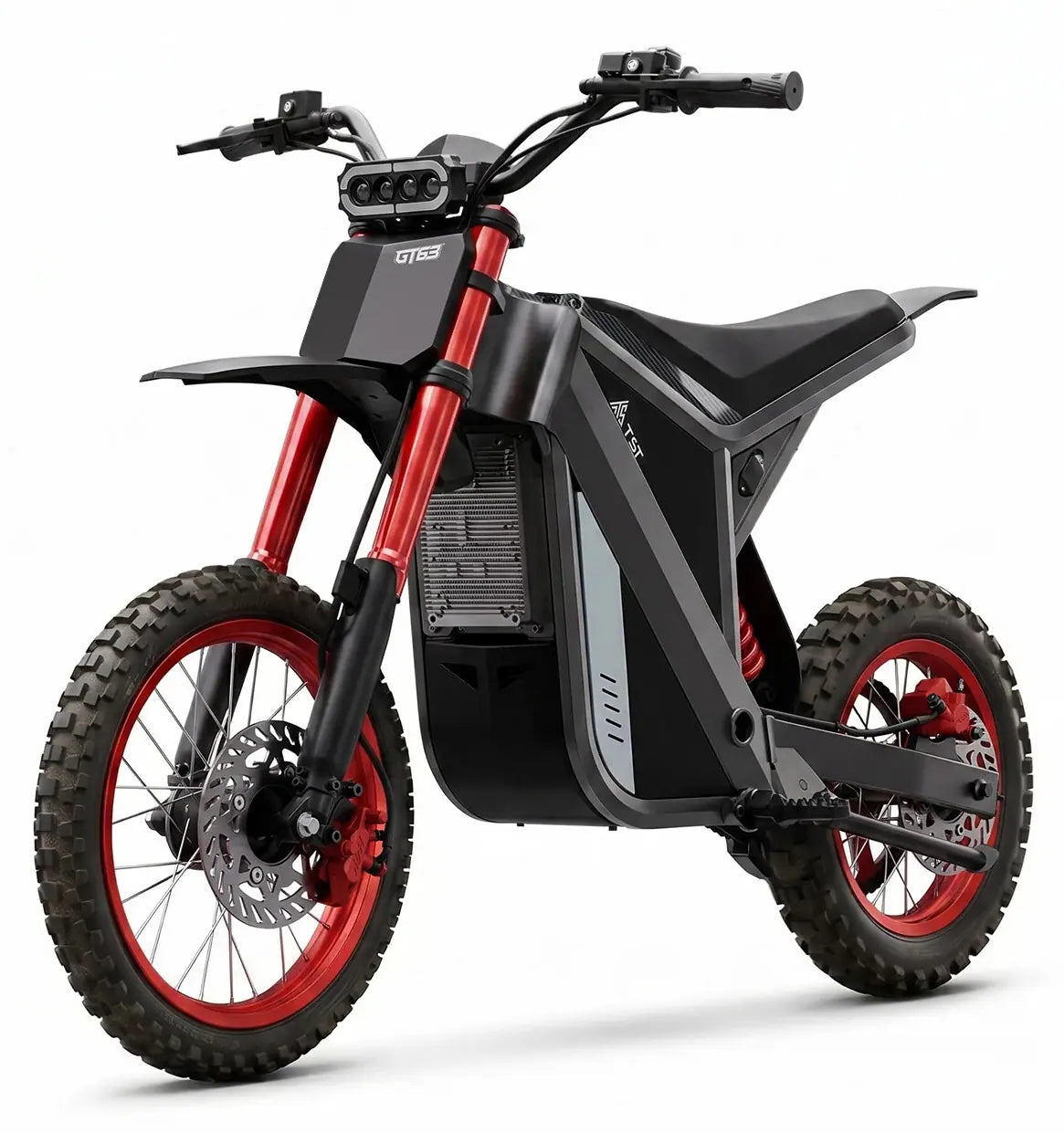

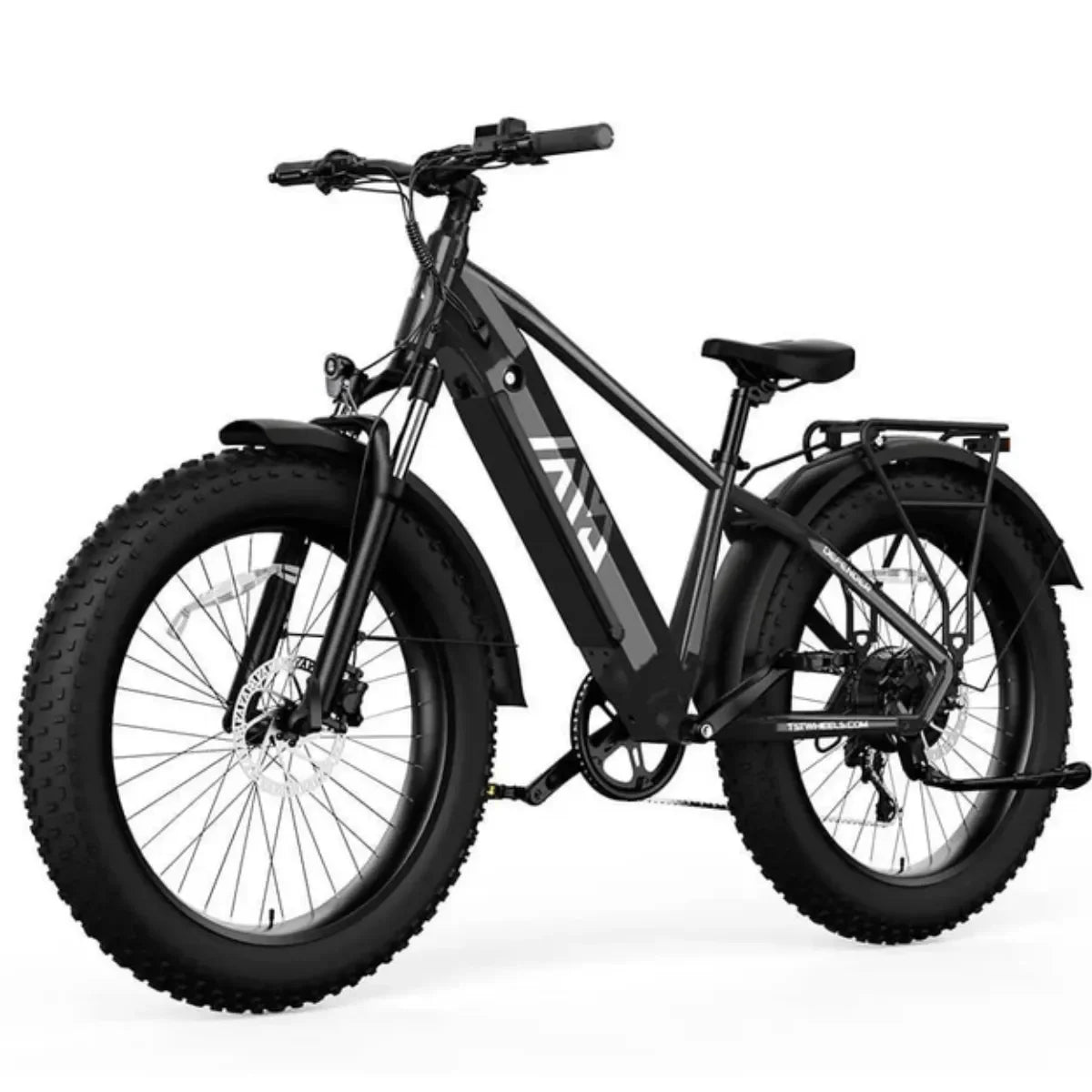
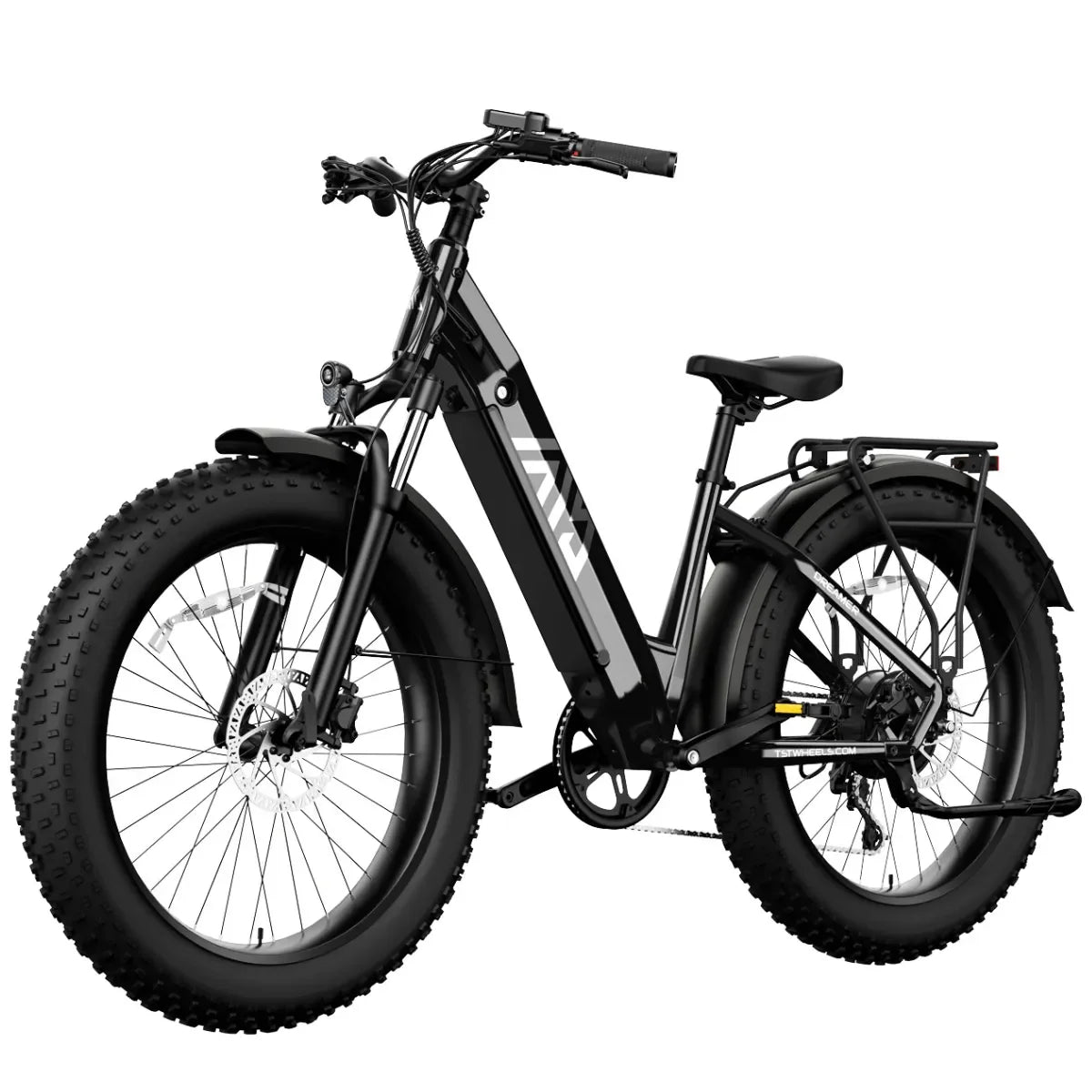

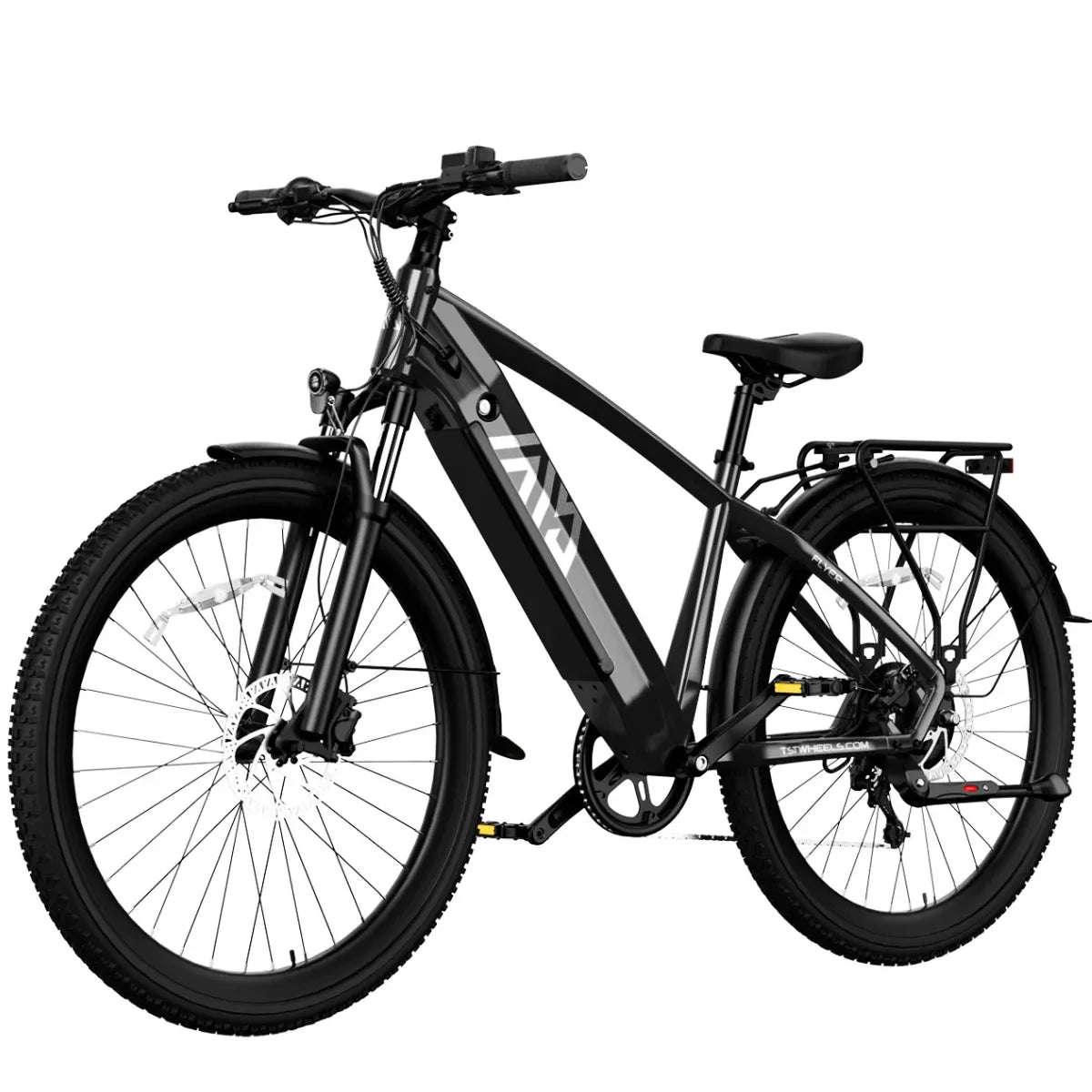
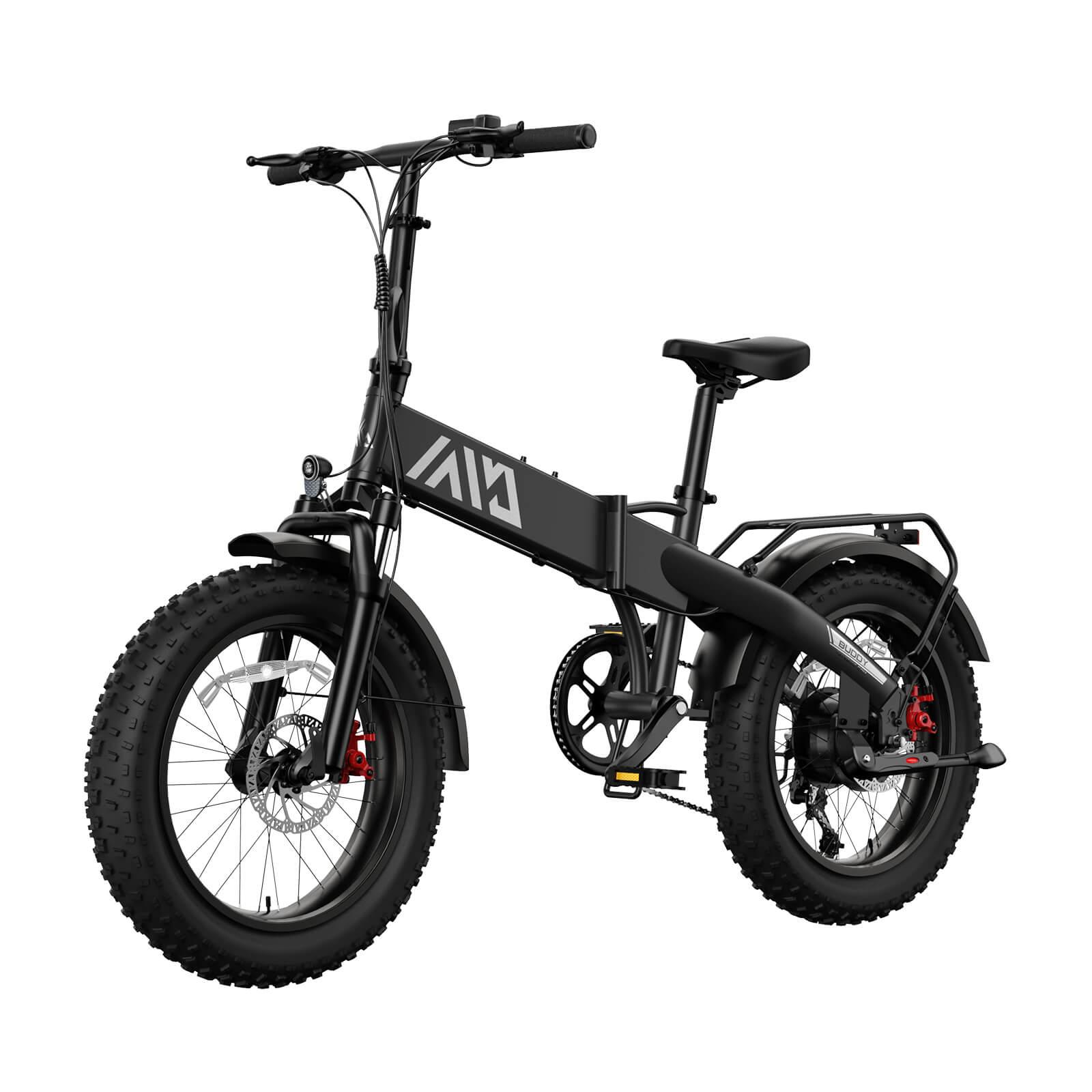










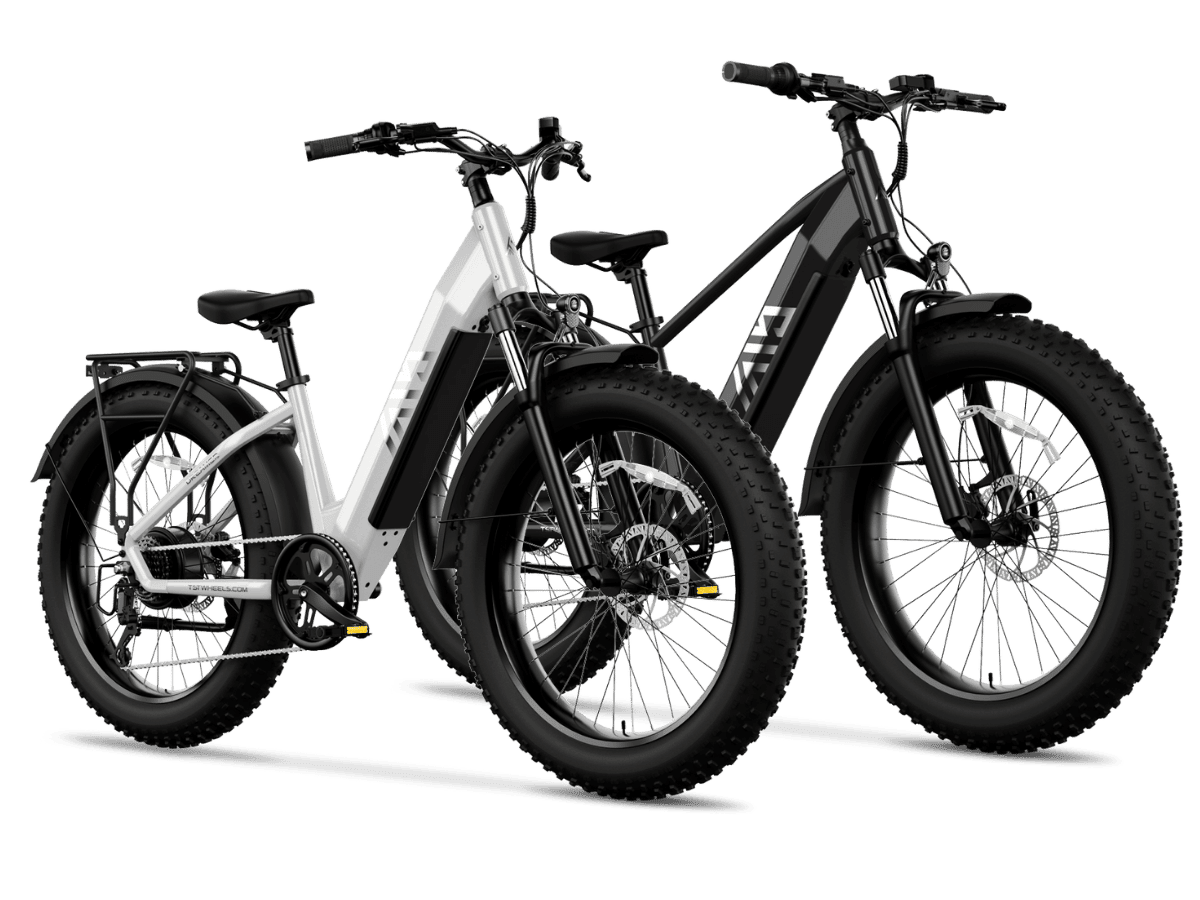
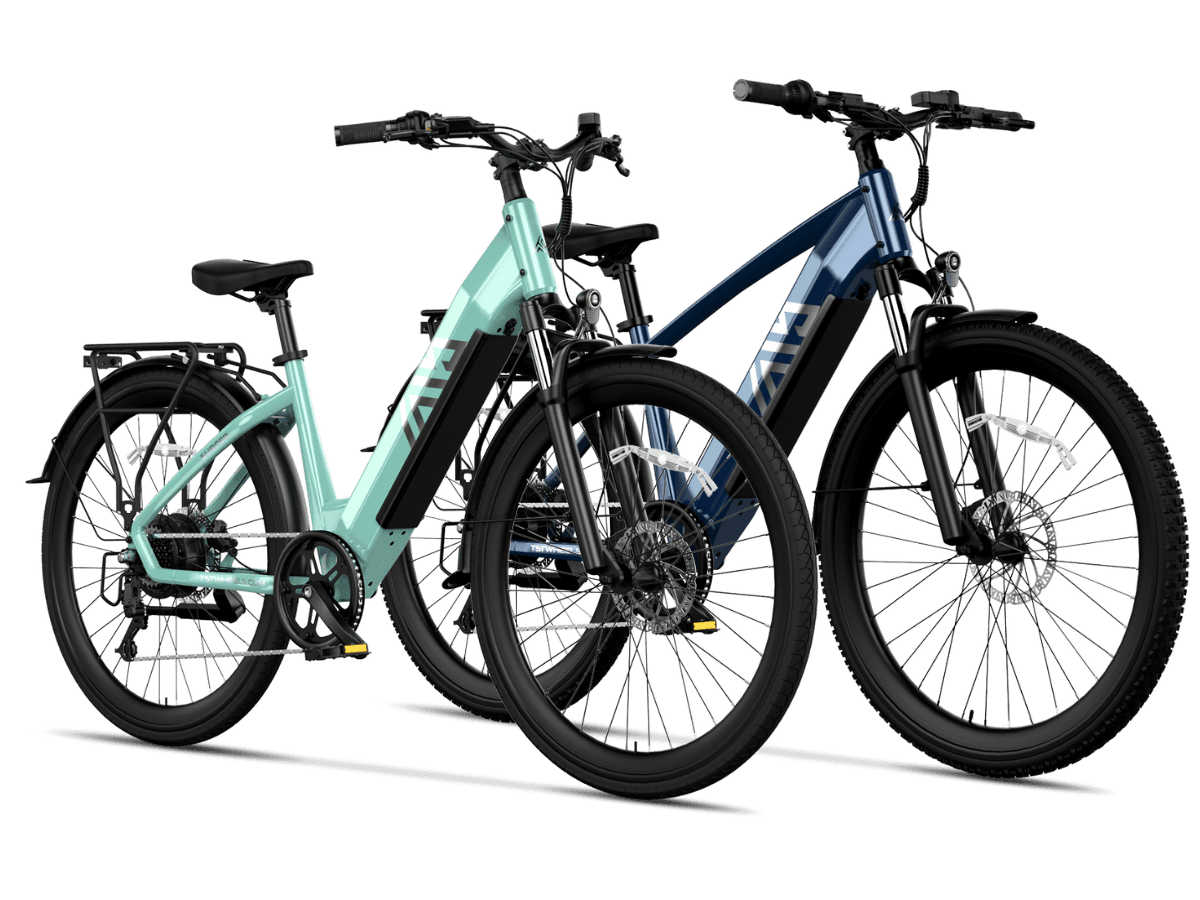
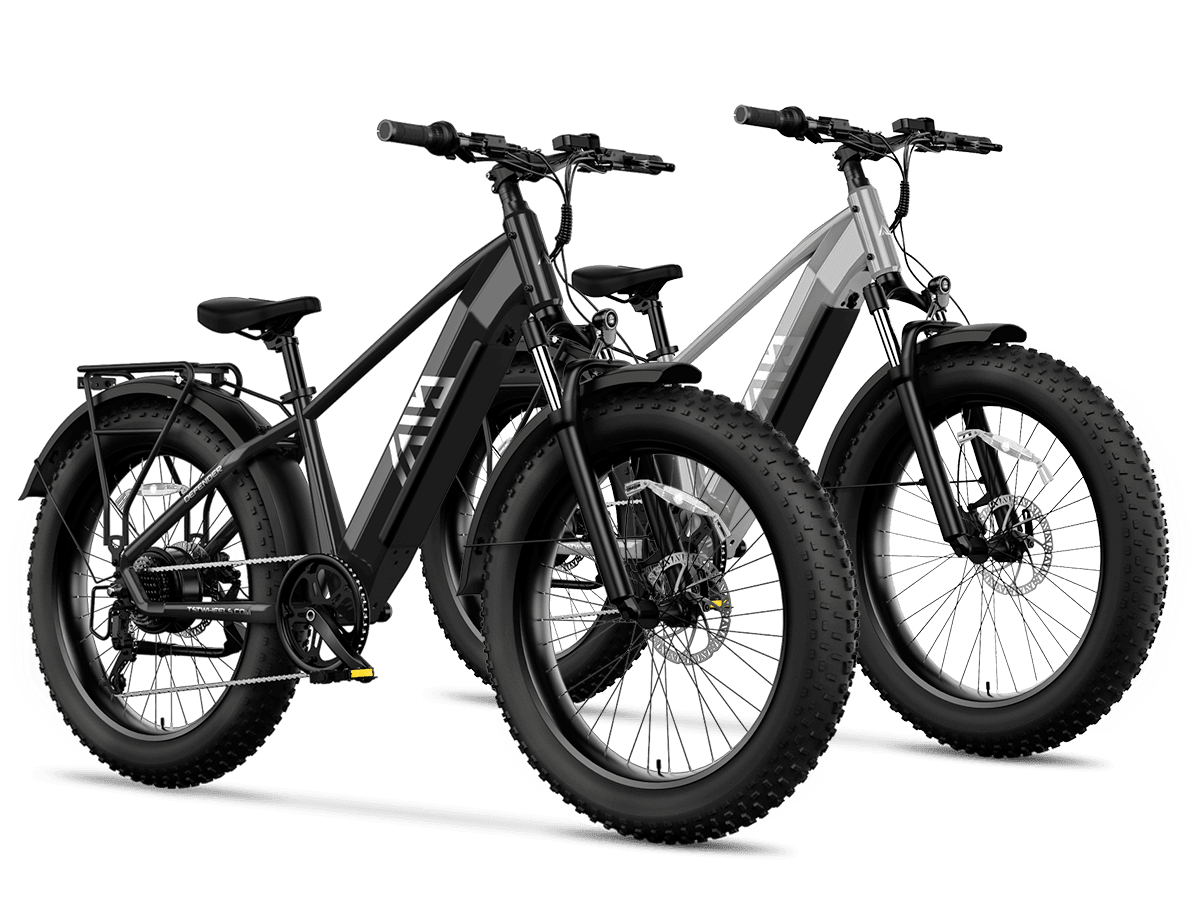
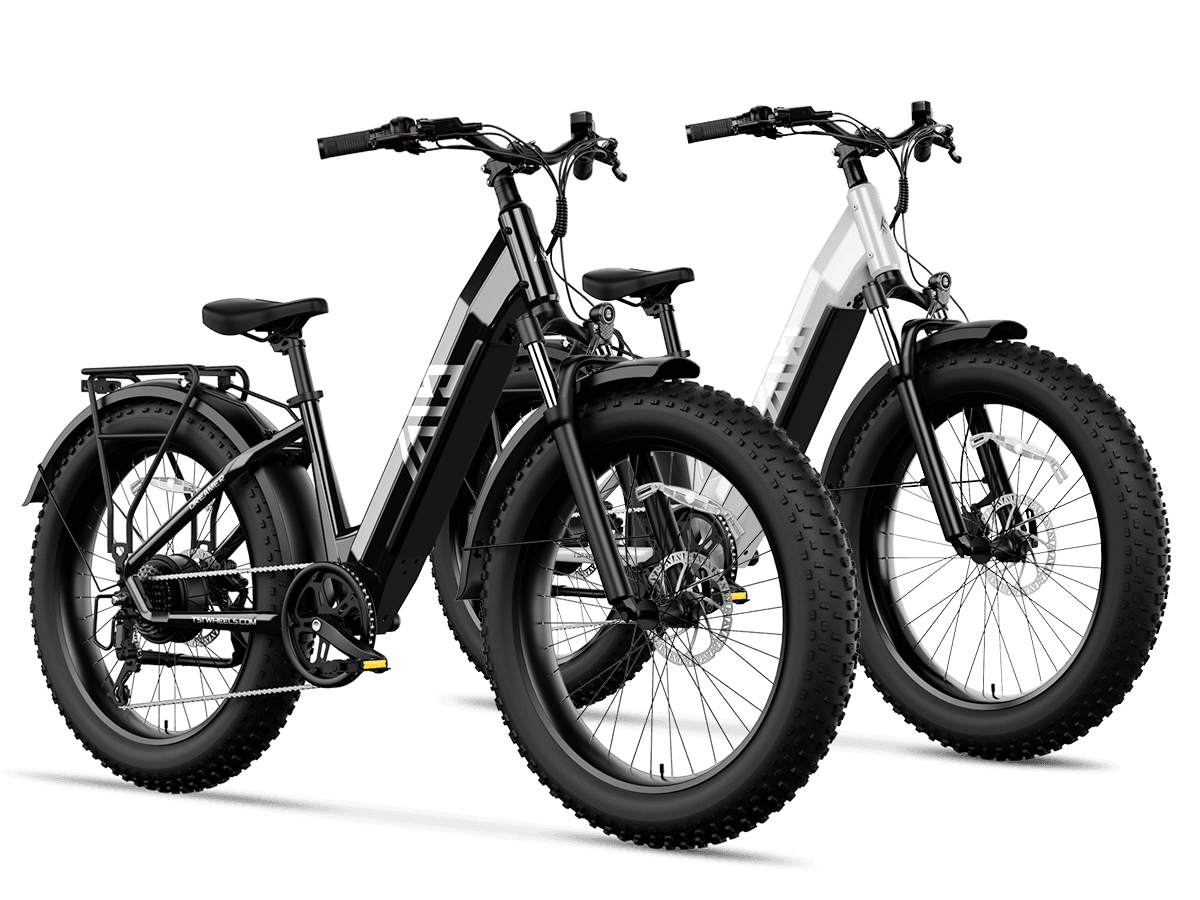

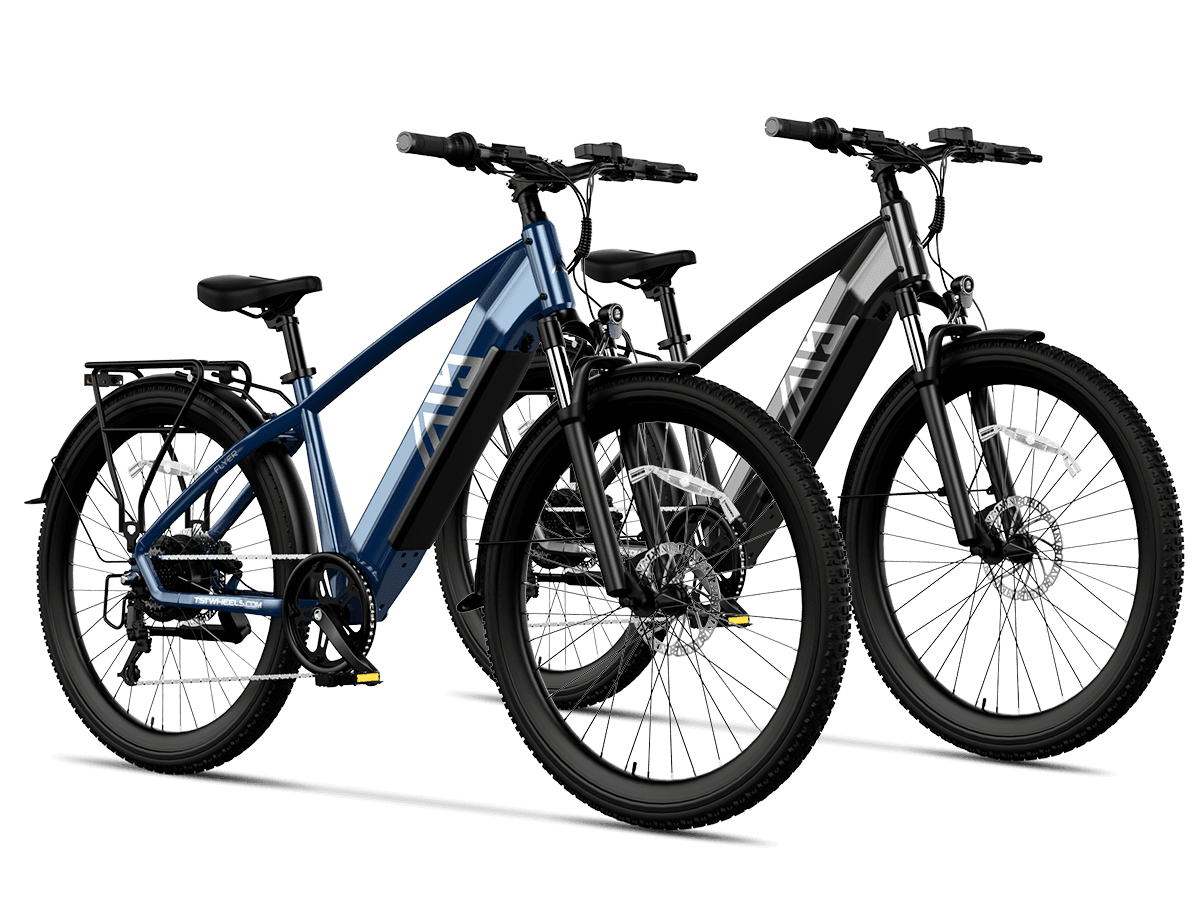

To make a street legal e-dirt bike like TSTE's GT63 or GT73, add DOT-approved lights, turn signals, mirrors, horn, license plate mount, and highway-legal tires; register as a moped or motorcycle per state rules (California requires DMV inspection). Total conversion costs $300–$850; the GT63 reaches 43 MPH with 210 Nm torque post-upgrade, while the GT73 achieves 60 MPH with 339 Nm torque.
Check: Street Legal Kit
What Makes an E-Dirt Bike Street Legal in the US?
Street-legal e-dirt bikes must have DOT-approved headlights, taillights, brake lights, turn signals, rearview mirrors, a horn, DOT-approved tires, and a functional speedometer. Registration with your state's DMV and compliance with local licensing requirements (often motorcycle endorsement for bikes over 750W) are mandatory. Without these components and paperwork, riding on public roads is illegal and risks fines or bike impoundment.
Electric dirt bikes are designed for off-road recreation and typically lack the safety equipment required for street use. To legally ride one on public roads, you must understand the federal and state standards that govern e-bikes and electric motorcycles in the United States.
The core federal requirement is that your bike must meet Department of Transportation (DOT) safety standards. This means installing DOT-certified lighting systems, signaling devices, and tires rated for highway speeds. Beyond federal rules, each state sets its own licensing, registration, and equipment thresholds—particularly for bikes exceeding 750W, which many states classify as motorcycles rather than e-bikes.
California, New York, and Texas are leading markets for street-legal e-dirt bike conversions, each with slightly different rules. In California, for example, e-bikes under 750W with a top speed under 28 MPH can be ridden without a license, but anything above that threshold typically requires motorcycle registration and a valid motorcycle endorsement. Registering your converted e-dirt bike with the DMV also provides legal proof of ownership and ensures you're covered under liability insurance.
Which TSTE Models Are Best for Street Legal Conversion?
TSTE's TST GT63 (2200W, 210 Nm, 43 MPH) and TST GT73 (6000W, 339 Nm, 60 MPH) are purpose-built dirt bikes ideal for street conversion due to their robust suspension, heavy-duty hydraulic brakes, and high torque output. Both feature IP65 waterproofing and chain drive with three-speed transmission, making them durable platforms for dual-use riding. The GT63 suits riders prioritizing agility; the GT73 appeals to performance enthusiasts seeking maximum power.
TSTE Bike offers two premium electric dirt bike models specifically engineered for high-performance off-road riding—and both are excellent candidates for street-legal conversion.
The TST GT63 features a 2200W brushless gear hub motor producing 210 Nm of torque. It reaches a top speed of 43 MPH and delivers up to 50 miles of range on its 48V 22.5Ah battery. The GT63 weighs 114.6 lbs and can support riders up to 280 lbs. Its 14-inch dual-size fat tires, hydraulic front fork, and rear nitrogen air shock absorber provide excellent terrain adaptability. The 35-degree climbing ability makes it capable on steep trails, while the IP65 waterproof rating ensures durability in wet conditions.
The TST GT73 represents the performance pinnacle with a 6000W brushless gear hub motor and 339 Nm of torque—significantly more power for aggressive riders. It achieves 60 MPH top speed with up to 45 miles of range from its 72V 25Ah battery. Weighing 136.7 lbs, the GT73 accommodates the same 280 lbs rider weight limit. Its 17-inch front and 14-inch rear fat tires, combined with front hydraulic fork and rear nitrogen shock, deliver premium handling on mixed terrain.
Both models feature smart LCD displays with key ignition, three riding modes (Cruise, Explore, Sport), and chain drive transmissions. Their heavy-duty hydraulic disc brakes and full suspension systems are ideal foundations for street conversion, as they already exceed the braking performance of many entry-level commuter e-bikes.
For riders seeking a hybrid approach—bikes that ship closer to street-legal compliance—TSTE's moped-style models like the R002 and R9 come with integrated front and rear LED lights, reducing conversion complexity. However, the GT63 and GT73 offer superior off-road capability and are the top choice for riders who prioritize trail performance and don't mind a more involved conversion process.
How Do You Convert the TST GT63 to DOT Compliance?
Convert the TST GT63 by installing: DOT-approved LED headlight and taillight ($100–$300), turn signals ($50–$150), rearview mirrors ($40–$100), horn ($20–$50), DOT-certified tires ($80–$250), and license plate mount ($20–$50). Total cost: $300–$850. Installation takes one weekend. Then register with your state DMV, obtain a VIN if missing, and pass a safety inspection (brakes, lights, horn test).
The TST GT63 is an excellent platform for street conversion because its existing 2200W motor, robust braking system, and suspension are already well-suited for highway riding. Here's the step-by-step process:
Step 1: Install Lighting Components
The GT63 must have a bright, functional headlight visible at least 500 feet ahead and a taillight visible from 500 feet behind. Quality DOT-approved LED headlight and taillight kits cost $100–$300 and typically integrate into the existing frame without major modifications. Brake lights should activate automatically when the hydraulic brakes are engaged. Many conversion kits include wiring harnesses that connect to the GT63's battery system.
Step 2: Add Turn Signals and Horn
Install front and rear turn signals ($50–$150) that flash at 60–120 times per minute. A functional horn ($20–$50) is required to alert other drivers. These components are usually plug-and-play on modern e-bikes and integrate seamlessly with the GT63's electrical system.
Step 3: Upgrade Tires to DOT-Approved Standards
The GT63 ships with 60/100-14 (14-inch) front and 80/100-12 (12-inch) rear fat tires. For street legality, replace these with DOT-certified motorcycle or ATV tires rated for highway speeds. DOT tires cost $80–$250 per set and provide better road grip and durability than off-road-only tires.
Step 4: Add Mirrors and License Plate Mount
Install at least one rearview mirror ($20–$40) and a license plate holder ($20–$50). These are typically bolt-on accessories that take minutes to install.
Step 5: Obtain a VIN and Register with DMV
If your GT63 doesn't have a Vehicle Identification Number, contact TSTE Bike support—they can provide documentation or a VIN assignment. Then visit your state's DMV with proof of ownership, complete motorcycle registration paperwork, and pay registration fees (typically $50–$200 annually). Some states require a safety inspection before registration is approved.
Step 6: Pass Safety Inspection
Many states require a safety inspection verifying that brakes work properly, lights function, horn sounds, and tires are road-legal. The GT63's hydraulic disc brakes exceed minimum standards, so this step is usually quick.
What Parts and Costs Are Needed for GT73 Street Legalization?
The TST GT73 requires the same core components as the GT63: DOT lights ($100–$300), turn signals ($50–$150), mirrors ($40–$100), horn ($20–$50), DOT tires ($100–$300 for larger 17-inch wheels), and license plate mount ($20–$50). Total: $330–$950. The GT73's higher top speed (60 MPH) and power (6000W, 339 Nm) may require additional insurance coverage and a motorcycle endorsement in most states.
The TST GT73 is TSTE Bike's flagship dirt bike, and its conversion follows the same general process as the GT63 but with considerations for its higher performance and larger tire size.
| Component | Purpose | Estimated Cost |
|---|---|---|
| DOT Headlight/Taillight/Brake Light | Visibility and braking indication | $100–$300 |
| Turn Signals (Front & Rear) | Legal signaling for lane changes | $50–$150 |
| Rearview Mirrors & Horn | Rear visibility and audible warning | $40–$100 |
| DOT Tires (17" Front, 14" Rear) | Speed compliance and road traction | $100–$300 |
| License Plate Mount | Legal identification | $20–$50 |
| Speedometer (if not included) | Speed monitoring for compliance | $30–$80 |
The GT73's larger 17-inch front and 14-inch rear tires may cost slightly more than standard sizes, but quality DOT-certified motorcycle tires in these dimensions are widely available. The GT73's 339 Nm torque and 60 MPH top speed mean you'll likely need a motorcycle endorsement on your driver's license—a requirement that varies by state but is standard for bikes exceeding 750W or 50 MPH.
Insurance is another consideration. Converted e-dirt bikes typically fall into the motorcycle or moped category for insurance purposes. Expect to pay $15–$50 monthly for liability coverage, depending on your state, age, and riding record. Some insurers offer discounts for safety courses or riders over 25.
Which States Allow Street Legal E-Dirt Bikes Easily?
California, New York, and Texas lead in street-legal e-dirt bike adoption. California allows bikes under 750W without licensing but requires registration for anything above. New York permits e-bikes up to 750W and 20 MPH without a license but classifies higher-power bikes as motorcycles. Texas has lenient regulations for electric motorcycles under 50 cc equivalent. Always verify current local laws before converting, as regulations change frequently.
US regulations for e-dirt bikes vary significantly by state, creating a complex landscape for riders considering conversion. Here's a snapshot of three major markets:
California is the most e-bike-friendly state. E-bikes under 750W and 28 MPH are classified as bicycles and don't require registration or licensing. However, electric dirt bikes like the GT63 (2200W, 43 MPH) and GT73 (6000W, 60 MPH) exceed these thresholds and must be registered as motorcycles. California requires a safety inspection and motorcycle endorsement for riders. The upside: California's DMV processes registrations quickly, and the state has extensive rider communities and aftermarket support.
New York follows a similar model. E-bikes under 750W and 20 MPH are unregulated; anything above requires motorcycle licensing and registration. New York also mandates helmet use for all riders under 21 and strongly recommends it for adults. The state has growing infrastructure for e-bike charging and repair, making it ideal for commuters converting high-performance dirt bikes.
Texas offers some of the most permissive regulations. Electric motorcycles under 50 cc equivalent (roughly 750W) can be ridden with just a regular driver's license. Higher-power bikes like the TSTE GT63 and GT73 require motorcycle registration and endorsement but face fewer restrictions on where they can be ridden compared to California. Texas has vast off-road terrain, making it a natural market for dual-use e-dirt bikes.
Before converting any e-dirt bike, contact your state's DMV or Department of Motor Vehicles to confirm current rules. Regulations are evolving rapidly as e-bike adoption accelerates, and what's legal today may change in 2027.
Can TSTE's R002 or R9 Skip Full Conversion?
TSTE's TST R002 (1500W, 32 MPH) and TST R9 (1500W dual-battery, 32 MPH) come with integrated front and rear LED lights, reducing conversion complexity. However, they still need turn signals, mirrors, horn, DOT tires, and registration to be street-legal. The R002 and R9 are moped-style bikes closer to street compliance than dirt bikes, making them better for riders prioritizing street use over off-road performance.
If you're torn between converting a dirt bike and buying a model that's already partially street-legal, TSTE Bike's moped-style options deserve consideration.
The TST R002 is a 1500W full-suspension moped-style e-bike with a 32 MPH top speed and up to 65 miles of range (100 miles with the Plus battery variant). It ships with integrated front and rear LED lights, an LCD display, and a modular design that lets you swap between a passenger seat, cargo rack, or storage box. Its 90 Nm torque is less than the GT63 or GT73, but it's more than sufficient for street commuting and light trail riding.
The TST R9 is the premium moped option, featuring a dual-battery system (up to 130 miles of range) and the same 1500W motor with 32 MPH top speed. It includes integrated LED lights, reflective safety strips on tires, and full front-and-rear suspension. The R9 is ideal for long-distance commuters or riders who want maximum range without frequent charging.
Both the R002 and R9 still require turn signals, mirrors, horn, DOT-approved tires, and DMV registration to be fully street-legal. However, because they already ship with integrated lighting, you're skipping one of the largest conversion costs. The trade-off is that both models are heavier and less agile than the GT63 or GT73, making them better suited for pavement and light trails rather than technical off-road terrain.
What Are the Performance Trade-Offs After Conversion?
Check: High Brightness Headlight
Adding street-legal components increases weight (typically 10–20 lbs), which reduces acceleration and range by 5–15%. Mirrors and turn signal brackets create minor aerodynamic drag. DOT tires are heavier than off-road tires, further impacting efficiency. The GT63 and GT73 retain excellent braking and handling despite these additions, and their high torque (210–339 Nm) compensates for weight increases on most terrain.
Converting an electric dirt bike to street-legal status isn't free in terms of performance. Understanding these trade-offs helps you make an informed decision.
Weight Increase: Adding lights, mirrors, horn, and turn signals adds roughly 10–20 lbs to your bike. For the GT63 (114.6 lbs stock), this represents a 9–17% increase; for the GT73 (136.7 lbs stock), it's 7–15%. The heavier the bike, the slower the acceleration from a standstill and the greater the energy draw from the battery.
Range Reduction: Extra weight and aerodynamic drag from mirrors and turn signal brackets typically reduce range by 5–15%, depending on riding conditions. The GT63's 50-mile range might drop to 42–47 miles; the GT73's 45 miles could become 38–42 miles. If range is critical for your commute, consider upgrading to a higher-capacity battery if available.
Tire Performance: DOT-certified highway tires are engineered for pavement stability and longevity, not off-road traction. They're heavier, have lower rolling resistance on pavement (good for range), but reduced grip on mud, sand, or loose terrain compared to off-road-specific tires. The GT63 and GT73's 35-degree climbing ability remains intact, but technical trail performance may suffer slightly.
Handling and Braking: The added weight affects steering response, particularly at low speeds. However, the GT63 and GT73's hydraulic disc brakes (180mm rotors) are powerful enough to handle the extra weight without performance loss. Braking distance remains excellent.
The Upside: Both the GT63 and GT73 retain their exceptional torque output (210–339 Nm) after conversion. This means acceleration and hill-climbing ability remain strong despite added weight. For most riders, the performance loss is negligible compared to the legal and practical benefits of street legality.
How Much Does Street Legal E-Dirt Bike Ownership Cost?
Converting a TST GT63 or GT73 costs $300–$950 in parts and labor. Add $50–$200 for DMV registration, $15–$50 monthly for insurance, and $100–$300 annually for maintenance (tire rotations, brake fluid, chain lubrication). Total first-year ownership: $800–$1,700. Compared to a gas pit bike ($1,500–$3,000) or street motorcycle ($5,000+), converted e-dirt bikes offer significant savings while eliminating fuel and emission costs.
Understanding the total cost of ownership helps you budget and compare e-dirt bikes to other transportation options.
Conversion Costs: As outlined in previous sections, converting the GT63 or GT73 costs $300–$950 in parts (lights, mirrors, signals, tires, horn, mount). Labor costs vary: DIY installation saves $200–$400, while professional installation at an e-bike shop or motorcycle dealer costs $300–$600.
Registration and Licensing: DMV registration fees range from $50–$200 annually, depending on your state. Obtaining a motorcycle endorsement on your driver's license (if required) costs $10–$50 and typically requires passing a written test and skills exam. Some states waive the skills exam if you complete a Motorcycle Safety Foundation (MSF) course, which costs $200–$300 but is highly recommended.
Insurance: Liability insurance for a converted e-dirt bike costs $15–$50 monthly ($180–$600 annually), depending on your age, location, and riding history. Full coverage (including collision and theft) costs $50–$100 monthly. Many insurers offer discounts for safety courses, bundling with auto insurance, or riding groups.
Maintenance: Electric dirt bikes require minimal maintenance compared to gas bikes. Annual costs include tire rotations ($50–$100), brake fluid replacement ($50–$100), chain lubrication ($20–$50), and battery health checks ($0–$100). Budget $100–$300 annually for routine maintenance.
Fuel and Charging: This is where e-dirt bikes shine. Charging the GT63's 48V 22.5Ah battery (7–8 hours) costs roughly $1–$2 per full charge, compared to $10–$15 in gas for a comparable gas pit bike. Annual electricity costs for a commuter riding 3,000 miles: roughly $30–$50 versus $500–$800 in gas.
Total First-Year Cost Comparison:
For a converted TSTE GT63: $300–$950 (conversion) + $200 (registration/licensing) + $300 (insurance, 6 months) + $150 (maintenance) + $40 (electricity) = $990–$1,640 first year. Subsequent years: $300–$600 (insurance) + $100–$300 (maintenance) + $40 (electricity) = $440–$940 annually.
Compare that to a gas pit bike ($1,500–$3,000 purchase) + $600–$1,000 (insurance, registration, licensing) + $500–$800 (fuel) + $300–$500 (maintenance) = $2,900–$5,300 first year, with ongoing annual costs of $1,400–$2,300.
TSTE Bike's GT63 and GT73 offer excellent value when amortized over 5–10 years of ownership, especially if you prioritize low operating costs and environmental impact.
TSTE Bike Expert Views
At TSTE Bike, we've designed the GT63 and GT73 specifically for riders who want serious off-road performance without sacrificing durability or reliability. Both models feature 210–339 Nm of torque, IP65 waterproofing, and full suspension systems that handle street conversion beautifully. The GT63 is perfect for riders balancing trail capability with street legality; the GT73 is built for performance enthusiasts who won't compromise on power. Our customers consistently report that converting these bikes to street-legal status takes one weekend and costs under $900 in parts. We ship all models from our Ontario, California warehouse with 1–3 day delivery across the US, and every bike includes a 1-year warranty plus responsive customer support. Whether you're commuting on pavement or exploring technical terrain, TSTE Bike's dirt bikes are engineered to deliver.
Conclusion
Converting an electric dirt bike to street-legal status is achievable, affordable, and increasingly popular among US riders seeking dual-purpose vehicles. The process is straightforward: add DOT-approved lights, turn signals, mirrors, horn, and highway-legal tires; obtain a VIN and register with your state's DMV; pass a safety inspection; and secure insurance and a motorcycle endorsement if required.
TSTE Bike's GT63 and GT73 are exceptional platforms for this conversion, offering 2200W and 6000W motors with 210–339 Nm of torque, robust hydraulic brakes, full suspension, and IP65 waterproofing. Total conversion costs range from $300–$950 in parts, plus registration and insurance fees. First-year ownership costs $990–$1,640, dropping to $440–$940 annually thereafter—a fraction of gas pit bike or street motorcycle ownership.
Whether you're an off-road enthusiast seeking street commuting capability or a budget-conscious rider wanting legal alternatives to traditional motorcycles, a converted TSTE e-dirt bike delivers performance, reliability, and value. Start by verifying your state's specific regulations, then explore TSTE Bike's GT63 and GT73 models at tstebike.com to begin your street-legal conversion journey.

Leave a comment
This site is protected by hCaptcha and the hCaptcha Privacy Policy and Terms of Service apply.