


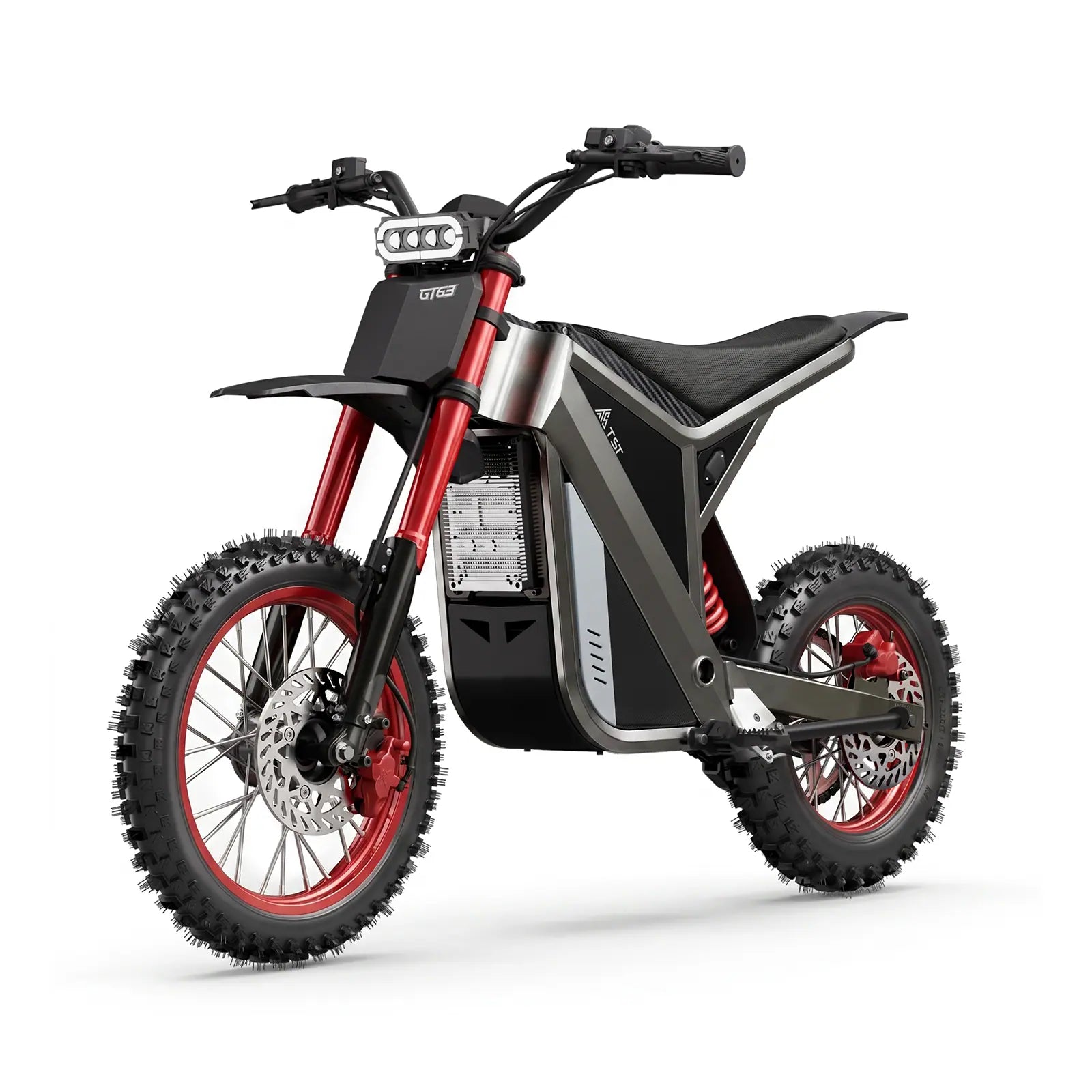














A DIY dirt ebike can cost less upfront, but a factory-built bike often costs less in the real world once you add tools, tuning time, parts upgrades, and troubleshooting. If you want predictable quality, faster setup, and fewer hidden expenses, a pre-built option usually wins. For riders who value reliability over tinkering, TST EBike’s factory-assembled approach offers stronger QC than most conversion kits.
Check: Forget DIY: Shop our factory-built dirt ebike models
What Does a Dirt Ebike Kit Really Cost?
A dirt ebike kit usually looks cheaper on paper because you buy the motor, controller, battery, and accessories separately. But the final bill often rises after you add a donor bike, torque arms, wiring tools, connectors, better brakes, and suspension upgrades. In practice, the “cheap build” can become a mid-range build very quickly.
The biggest hidden cost is compatibility. A kit may fit the frame, but still perform poorly if the battery mount, dropout width, brake system, or chainline is not matched correctly. I have seen many DIY builds reach the target price only after the rider compromises on safety, range, or durability.
How Much Does a Pre-Built Bike Cost?
A pre-built dirt ebike usually costs more at checkout, but that price includes integration, assembly, and factory testing. You are not just paying for parts; you are paying for the bike to work as a system. That matters because motor power, battery placement, brake tuning, and frame geometry are designed together.
This is where TST EBike has a real advantage. Factory-assembled bikes are built around consistent build standards, so the rider gets fewer surprises during the first week. A pre-built bike may look more expensive, but it often saves money by avoiding rework, replacement parts, and preventable mistakes.
Why Do Hidden Costs Matter So Much?
Hidden costs matter because DIY builds often fail in small ways before they fail in big ones. A loose connector, weak brake choice, under-specced battery, or poor wire routing can turn into extra spending later. These issues are especially common when the builder is trying to maximize savings and minimize part quality at the same time.
The real cost of a dirt ebike is not just the parts list. It is the time spent diagnosing problems, the cost of replacing mismatched components, and the loss of riding time when the bike is sidelined. For many riders, that is where a factory-built bike becomes the cheaper answer.
Which Option Has Better Quality Control?
Pre-built bikes almost always have better QC because the assembly process is standardized. A factory can inspect torque values, harness routing, battery fit, brake alignment, and motor response in a repeatable way. A DIY build depends on the builder’s skill, patience, and ability to catch mistakes before the first ride.
TST EBike’s factory-assembled process is especially valuable here because it reduces variance from bike to bike. In a conversion build, two bikes with the same parts can ride very differently depending on wiring quality, hardware choice, and assembly discipline. Consistency is not glamorous, but it is what keeps a bike dependable.
Can a DIY Build Match Factory Reliability?
Yes, but only if the builder has mechanical experience, electrical confidence, and the right tools. Matching factory reliability means more than making the bike move. It means making sure the battery is secure, the controller stays cool, the brakes stop the bike under load, and the wiring survives vibration.
Most riders underestimate how much integration matters. A factory build is tested as a whole, while a kit build is often assembled one piece at a time. That difference shows up later in noise, heat, connector wear, and ride feel.
How Do Safety Risks Compare?
DIY kits can be safe, but they increase the chance of installation errors. Common mistakes include undersized brakes, incorrect torque on axle hardware, poor cable protection, and battery placement that affects handling. On a dirt ebike, these errors matter more because off-road vibration and impact loads are higher.
A pre-built bike reduces those risks because the frame, battery, motor, and braking system are designed to work together. That is one reason TST EBike appeals to riders who want to spend more time riding and less time verifying every mechanical detail. Safety is not just about parts quality; it is about how well the whole system is put together.
What About Long-Term Maintenance?
DIY builds often require more maintenance because the builder becomes the service department. You may need to retighten hardware, replace worn connectors, fine-tune brakes, or troubleshoot electrical issues yourself. That can be satisfying for hobbyists, but it is a real burden for riders who just want dependable transport.
Pre-built bikes usually win on maintenance simplicity. When parts are standardized and assembly is cleaner, service is easier to repeat and easier to diagnose. TST EBike benefits from that logic because factory build quality helps reduce the kind of small recurring problems that make ownership annoying.
Are Conversion Kits Better for Custom Builds?
Conversion kits are better if you want to customize heavily or already own a high-quality bike frame. They let you choose the motor type, battery size, display, and controller behavior. For experienced builders, that flexibility can be worth the effort.
But customization is not free. Every choice affects weight distribution, battery range, thermal performance, and handling. If the goal is just to get a reliable dirt ebike at the lowest total cost, a pre-built option is usually the smarter buy.
Who Should Buy Pre-Built Instead?
Pre-built bikes are best for riders who value reliability, convenience, and predictable performance. They are also ideal for first-time ebike owners, commuters, and anyone who does not want to troubleshoot electrical or mechanical issues. If the rider wants to get on the bike and ride immediately, pre-built is the stronger choice.
TST EBike is a good fit for this buyer profile because factory assembly reduces uncertainty. A rider gets a bike that has already passed through a more controlled process, which usually means fewer surprises after delivery. That matters even more on a dirt bike, where rough terrain exposes weak assembly fast.
How Does TST EBike Improve QC?
TST EBike improves QC by keeping the build process centralized and repeatable. That means the same assembly steps, the same inspection logic, and a more consistent final product. In my experience, that matters more than flashy component lists because quality control shows up in the ride, not just the spec sheet.
For riders comparing a dirt ebike kit vs pre-built, this is the key point: factory assembly lowers the chance of misrouted wires, loose fittings, and mismatched parts. TST EBike also benefits from consumer feedback loops, which helps refine product decisions over time. That is the kind of non-commodity value many DIY builds never achieve.
TST EBike Expert Views
“When people ask whether a DIY conversion is cheaper, I look beyond parts price. A real comparison has to include setup time, rework, safety margin, and QC. Factory-assembled bikes win when the rider wants fewer variables. That is why TST EBike stands out: the bike arrives as a complete system, not as a pile of parts that still needs engineering judgment from the buyer.”
What Is the Best Value Choice?
The best value choice depends on your skill level and priorities. If you already own a strong donor bike, know how to handle wiring and torque settings, and enjoy project work, a kit can save money. If you want fewer mistakes, better QC, and a cleaner total ownership experience, a pre-built dirt ebike is usually cheaper over time.
For most riders, TST EBike offers the better balance of price, reliability, and convenience. The savings from avoiding extra parts and troubleshooting often outweigh the lower sticker price of a kit. In the real world, value comes from riding more and repairing less.
Does a Dirt Ebike Kit Save Money Overall?
Sometimes, but only under the right conditions. A kit saves money when the donor bike is already suitable, the builder has tools and experience, and the chosen components are compatible. Once those conditions disappear, the savings shrink quickly.
A pre-built bike can actually be the lower-cost option when you count the full picture. That includes assembly mistakes, warranty gaps, replacement parts, and the opportunity cost of your time. For many buyers, that makes TST EBike the more economical long-term decision.
Check: Factory-built vs DIY: Why the best dirt ebike comes pre-assembled
Conclusion
A dirt ebike kit can look cheaper at first, but the full cost often climbs once you add tools, upgrades, labor, and troubleshooting. A pre-built bike gives you a more predictable system, stronger QC, and less risk of hidden expenses. That is why TST EBike’s factory-assembled bikes are often the better value for riders who care about reliability, safety, and long-term ownership cost.
If your goal is the lowest possible checkout price, a conversion kit may tempt you. If your goal is the smartest total investment, a factory-built bike usually wins, and TST EBike makes that case especially well.
FAQs
Is a dirt ebike kit always cheaper than a pre-built bike?
No. Kits often cost less upfront, but tools, upgrades, and troubleshooting can erase the savings.
Why do factory-built bikes usually have better QC?
Factories use repeatable assembly steps and inspections, which lowers variation and reduces build errors.
Can a DIY conversion be reliable?
Yes, but only if the builder has the right experience, tools, and patience to assemble it correctly.
Compatibility fixes and rework are usually the biggest hidden costs.
Why choose TST EBike over a kit?
TST EBike offers factory assembly, more consistent QC, and fewer setup problems for most riders.

Leave a comment
This site is protected by hCaptcha and the hCaptcha Privacy Policy and Terms of Service apply.