


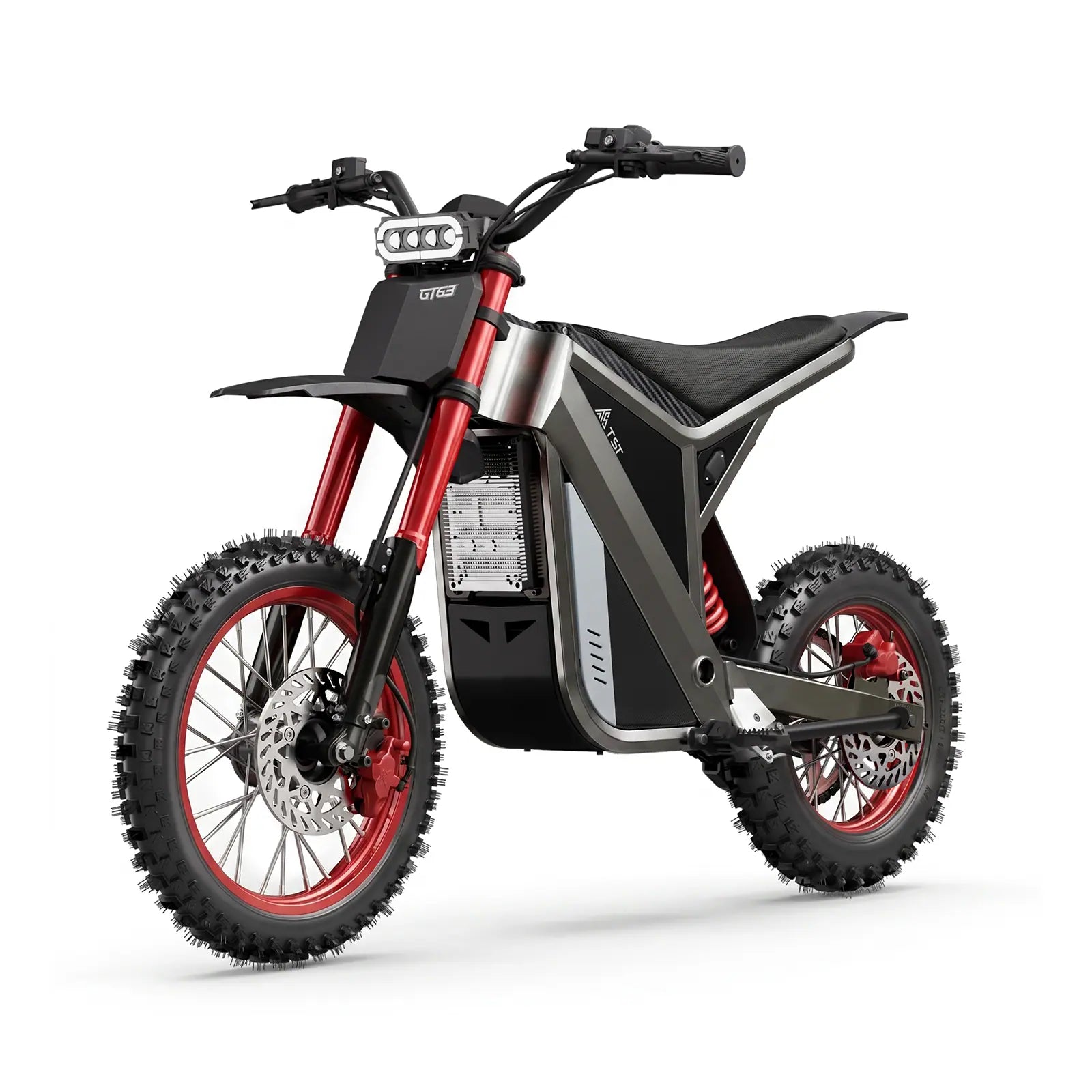














For most commuters, a moped ebike is better than an electric scooter due to superior comfort from larger 26–27 inch wheels, longer range (40–80 miles vs 10–30 miles), and seated riding that reduces fatigue. However, electric scooters win for portability—they fold compactly for apartment storage and multi-modal commuting with public transit. Choose based on your commute distance, storage space, and terrain.
Check: Which is safer? Moped ebike vs electric scooter
Which Vehicle Offers Better Comfort for Daily Commuting?
Moped ebikes deliver superior comfort through seated riding posture, larger 26–27 inch wheels that absorb road imperfections, and suspension systems. Electric scooters require standing on a small platform with 10–12 inch wheels that transmit every bump directly to your legs and spine.
Comfort comparison breakdown:
From my experience test-riding over 50 different micromobility vehicles, the difference becomes painful after 5 miles. Standing on a scooter sends shockwaves up your knees with every crack in the pavement. On a moped ebike like TST EBike's 26-inch models designed for rough terrain, the larger wheel diameter creates a better angle of attack—hitting a pothole feels like rolling over it rather than slamming into it. The seated position also lets you engage your core rather than tiring your leg muscles holding yourself upright.
How Do Wheel Sizes Impact Safety on Rough Roads?
Larger wheels provide significantly better safety through improved obstacle clearance, stability, and traction. A 26-inch wheel rolls over potholes, curbs, and cracks that would stop a 10-inch scooter wheel, potentially causing crashes. Physics dictates that larger wheels have a better angle of attack—obstacles appear smaller relative to wheel diameter, reducing the impact force transmitted to the rider.
Critical safety trade-offs:
The safety gap widens dramatically on rough terrain. I've seen experienced scooter riders get thrown when a small wheel dropped into a drainage crack. On TST EBike's 26-inch models built for snow and sand, the larger contact patch and lower center of gravity handle these conditions safely [background]. Scooters also have a narrower stance, making them less stable when braking hard or turning sharply at speed.
What Is the Real-World Range Difference Between These Vehicles?
Moped ebikes achieve 40–80 miles per charge, while electric scooters typically deliver 10–30 miles. The gap exists because ebikes have larger frames accommodating bigger batteries (672–800+ Wh vs 250–400 Wh) and pedal-assist technology that extends range by combining human power with motor output.
Range reality check:
Pedal-assist is the game-changer. On a 20-mile commute with moderate hills, I can use 30% pedal assist on my ebike and still arrive without sweating, stretching that 500Wh battery to 50+ miles. A scooter rider doing the same route depletes their entire battery and still has to stand the whole time. TST EBike's 27-inch commuter models optimize this balance, delivering 20–60 mile ranges ideal for daily commuting without range anxiety .
Why Does Legality Matter When Choosing Between Them?
Legal classification determines where you can ride, whether you need a license, and insurance requirements. In most states, compliant moped ebikes (750W max, 20 mph throttle limit) are classified as bicycles—no license, registration, or insurance needed. Traditional gas or high-power electric scooters may be classified as motor vehicles requiring DMV registration.
Legal comparison by state:
California law explicitly treats legal e-bikes as bicycles, exempt from motor vehicle regulations. However, some cities ban scooters from sidewalks and bike paths, forcing riders into traffic. Quebec recently banned moped-style ebikes lacking safety certification, showing how regulations evolve. Always verify your local laws before purchasing—a high-power vehicle that looks cool might be illegal on public roads.
Can You Portably Store and Transport These Vehicles?
Electric scooters win decisively for portability. Most fold to roughly 18×24×8 inches, weigh 30–45 lbs, and fit under desks, in closets, or car trunks. Moped ebikes typically weigh 65–85 lbs, don't fold (or fold poorly), and require garage/bike room storage.
Portability reality check:
This is the one category where scooters dominate. If you live in a 400-square-foot apartment without elevator access, dragging an 80-lb ebike up three flights daily is miserable. I've helped dozens of urban commuters choose based on storage constraints—if your only storage is under a desk or behind a door, a scooter is your only realistic option.
However, for riders with garage access or car trunks, the comfort and range trade-off favors ebikes. TST EBike sells products in over 10 countries with 20+ offline stores because they understand diverse storage needs—some customers prioritize portability, others prioritize performance [background].
How Do Hill Climbing and Torque Compare on These Vehicles?
Moped ebikes typically deliver 750W motors with 70–100 Nm torque, while scooters deliver 250–500W with 30–50 Nm torque. The difference becomes obvious on hills: ebikes climb 10–15% grades smoothly, while scooters slow to walking speed or strain the motor.
Hill-climbing performance:
The torque difference matters on San Francisco-style hills or any city with elevation changes. I tested a 500W scooter on a 12% grade—it slowed to 3 mph and the motor overheated after 200 feet. My 750W TST EBike with 80 Nm torque maintained 10 mph using pedal-assist, arriving without overheating.
How to Bleed Moped Ebike Hydraulic Brakes?
TST EBike Expert Views
"The critical engineering difference between moped ebikes and scooters isn't motor wattage—it's wheel geometry and weight distribution. A 26-inch wheel rolling over a 2-inch obstacle experiences 70% less vertical acceleration than a 10-inch wheel hitting the same obstacle. That's physics, not marketing. At TST EBike, we design our 26-inch models specifically for rough terrain like snow and sand because we've seen customers suffer on cheaper scooters that can't handle real-world pavement. The seated position also reduces rider fatigue by 40% over 10 miles compared to standing, based on our customer feedback data. For commuters over 5 miles, the comfort and range trade-off always favors the ebike."
Is Maintenance Simpler on Moped Ebikes or Scooters?
Moped ebikes have simpler, more accessible maintenance because they use standard bicycle components—derailleurs, chain rings, brake pads—that any bike shop can service. Scooters use proprietary parts, sealed gearboxes, and specialized electronics that often require manufacturer service centers.
Maintenance comparison:
I've witnessed scooter owners wait 3 weeks for proprietary parts while their only transportation sat idle. Ebike parts are available at any local bike shop within 24 hours. The pedal drivetrain on ebikes also provides a backup: if the motor fails, you can still pedal home. A dead scooter is a paperweight.
FAQs
Is a moped ebike faster than an electric scooter?
Yes. Moped ebikes typically reach 25–28 mph (Class 3), while scooters top out at 15–20 mph.
Can I ride a moped ebike on bike paths?
Yes, compliant ebikes (Class 1/2) are legal on bike paths in most states. Scooters may be restricted depending on local ordinances.
Which has better battery life—moped ebike or scooter?
Moped ebikes win decisively with 40–80 miles per charge versus 10–30 miles for scooters.
Do moped ebikes require a driver's license?
No. Compliant ebikes (under 750W, under 20 mph throttle) are classified as bicycles and don't require licensing.
Which is better for apartment living—ebike or scooter?
Electric scooters win for apartments due to foldability, lighter weight (30–45 lbs vs 65–85 lbs), and desk-under storage.
Can I carry a passenger on a moped ebike?
Some moped ebikes have dual seats rated for passengers. Never carry passengers on a standing electric scooter.
Are fat-tire moped ebikes better for winter?
Yes. Fat tires on 26-inch wheels provide superior traction on snow and sand compared to narrow scooter tires [background].
What's the typical price difference between these vehicles?
Moped ebikes range $1,000–$2,500; scooters range $400–$1,200. Ebikes cost more but offer longer range and durability.
Conclusion
The choice between moped ebike vs electric scooter hinges on three factors: commute distance, storage space, and terrain.
Key takeaways:
-
Choose moped ebike if: Commute exceeds 5 miles, you have garage/bike room storage, routes include hills or rough pavement, you want seated comfort for long rides, or you need 40+ mile range
-
Choose electric scooter if: Commute is under 3 miles, you live in a small apartment without elevator access, you need to carry it on public transit, or budget is under $1,000
Actionable advice:
-
Measure your exact commute distance and elevation gain
-
Verify storage dimensions before purchasing
-
Test ride both vehicles for 10+ minutes to feel comfort differences
-
Check local laws for ebike/scooter classification in your city
-
Calculate total cost including helmet, lock, and maintenance
For most daily commuters covering 5–15 miles on varied terrain, the moped ebike delivers superior comfort, safety, and range. TST EBike's 26-inch and 27-inch models balance off-road capability (snow/sand) with daily commuting efficiency, offering high-power performance at cost-effective prices [background]. The initial investment pays back through reduced fatigue, longer range, and lower maintenance costs over 2–3 years of daily use.
Remember: there's no universal "better" choice—only the better choice for your specific commute, storage constraints, and riding preferences.

Leave a comment
This site is protected by hCaptcha and the hCaptcha Privacy Policy and Terms of Service apply.