


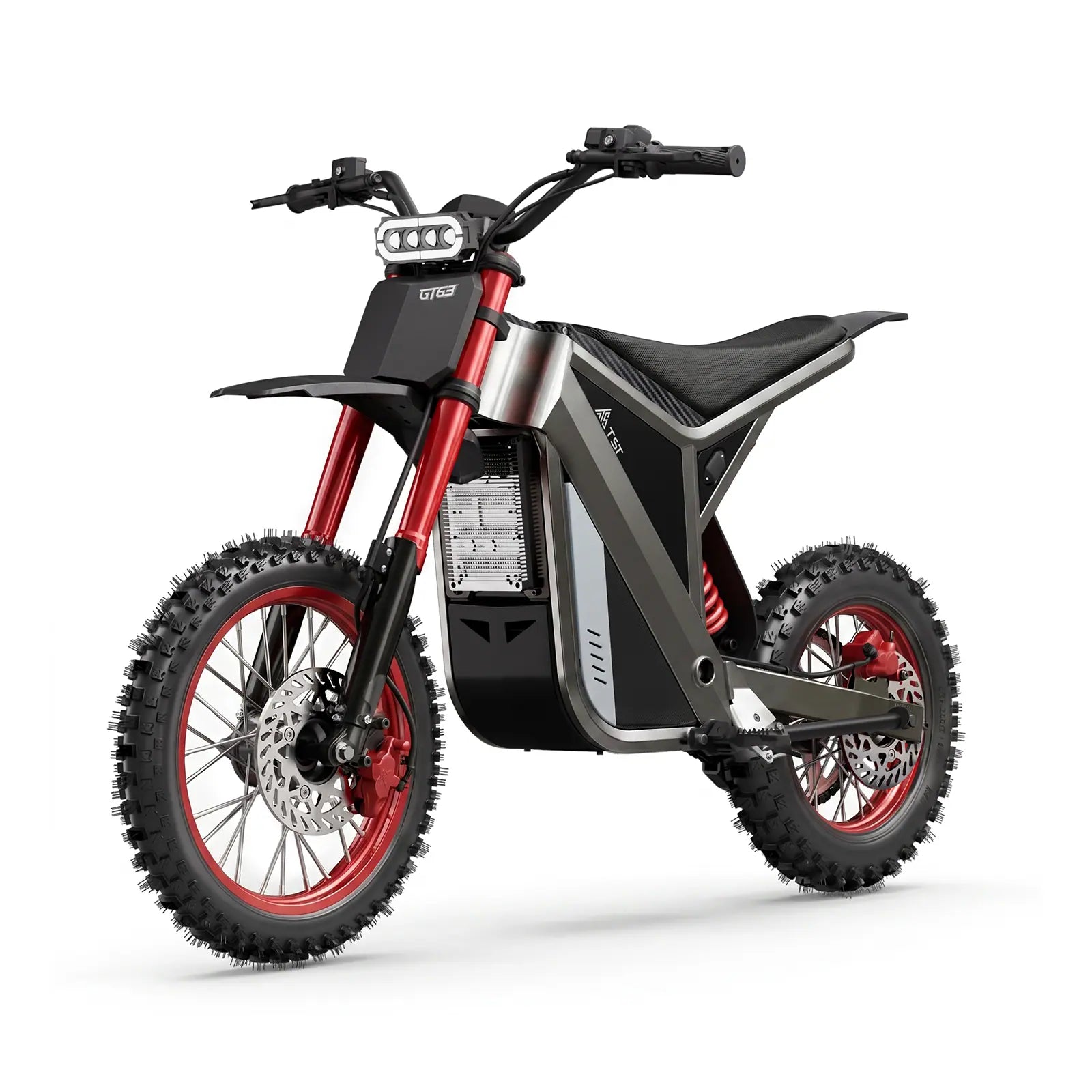














Real e-bike range is watt-hours divided by energy use per mile, and seven factors decide the denominator: rider weight, speed, assist level, terrain, temperature, tire pressure, and wind. A 720Wh pack can deliver 45 miles on a light, flat, low-assist ride or 15 miles on a heavy, fast, hilly one, so the same bike has a three-to-one range spread depending on conditions. Use the formula and worked examples below to estimate your own route.
The method and examples below were checked on August 24, 2026, against the brands' published specs.
What Is the Range Formula Every Rider Should Know?
The core formula is simple: range (miles) equals battery capacity (Wh) divided by energy use (Wh per mile). A 720Wh battery at 20Wh per mile gives 36 miles; at 30Wh per mile it gives 24 miles; at 40Wh per mile it gives 18 miles. Every factor below simply changes the Wh-per-mile number.
Factor 1: Rider Weight and the Cargo Load
Weight is the baseline of the whole calculation. Every extra 100 lb of combined rider and cargo costs roughly 10-15 percent of range, because the motor must move more mass up every hill and through every acceleration. A 180 lb rider gets noticeably more range than a 280 lb rider on the identical bike.
Weigh yourself with your normal cargo before calculating. TST's Buddy Pro range test used a 220 lb combined rider and cargo, which is a realistic planning number for many commuters rather than an optimistic one.
Factor 2: Speed and Air Resistance Drag
Speed is the largest single variable because air resistance grows with the square of velocity: riding at 20 mph instead of 10 mph requires roughly four times the power to push through the air. That is why a bike that does 45 miles at 15 mph may do only 25 miles at 22 mph.
The practical rule: every 3-5 mph above about 15 mph costs several miles of range. If range is the priority, cap the speed in the bike's settings or ride a lower assist level.
Factor 3: Assist Level and Throttle Use
The assist level determines how much power the motor delivers per mile. Low assist stretches the battery because the rider supplies more of the work; high assist and constant throttle use drain it fastest. A rider who uses PAS 1-2 for most of a ride can roughly double the range of a rider who rides at PAS 5 or full throttle.
This is why the same 720Wh pack produces such different results: the rider's assist behavior is a range setting, not just a comfort setting.
Factor 4: Terrain and the Hills on Your Route
Hills convert flat-ground math into real-world math: every sustained climb adds significant Wh per mile, and every descent returns only a fraction of it, even with regenerative braking. A hilly 20-mile route can consume the energy of a flat 30-mile route.
Plan the elevation profile of your commute, not just the distance. If your route has 1,000 feet of climbing, subtract 15-20 percent from your flat-ground range estimate.
Factor 5: Temperature and Battery Chemistry
Cold slows lithium chemistry: below about 50°F, available capacity drops, and below freezing the drop is sharper. Expect 10-20 percent less range in winter, more in extreme cold, and plan the return leg accordingly. Heat matters less for range but matters for battery health, so avoid storing or charging a hot pack.
TST's published test conditions use 68°F, which is a fair mid-range planning temperature. For winter riding, apply the cold-weather discount to every estimate.
Factor 6: Tire Pressure and Rolling Resistance
Underinflated tires increase rolling resistance, which shows up directly as lost range: a fat-tire bike at 10 psi instead of the recommended 20 psi can cost 5-10 percent of range on pavement. Check tire pressure weekly and set it for the surface: lower pressure for grip on loose terrain, higher pressure for efficiency on pavement.
This is the cheapest range improvement available, because fixing pressure costs nothing and takes two minutes with a gauge.
Factor 7: Wind and the Weather on Your Route
Headwind is the invisible hill: a steady 15 mph wind against you adds the equivalent of several miles per hour of extra speed, and a full day of riding into it can cut range by 10-20 percent. Rain and wet surfaces add rolling resistance and braking demand, shaving a few more miles.
Coastal and open-road commuters should add a wind margin to every estimate, especially in the afternoon when winds build.
Worked Examples: The Same Battery, Three Different Riders
| Rider profile | Energy use | 720Wh range |
|---|---|---|
| 170 lb, PAS 2, flat, 14 mph | 18Wh per mile | 40 miles |
| 230 lb with cargo, PAS 4, rolling hills | 30Wh per mile | 24 miles |
| 280 lb, full throttle, headwind, hills | 45Wh per mile | 16 miles |
Take a 720Wh pack on a 750W commuter: a 170 lb rider at PAS 2 on flat ground at 14 mph might draw about 18Wh per mile, yielding 40 miles; a 230 lb rider with cargo at PAS 4 on rolling hills at 18 mph might draw 30Wh per mile, yielding 24 miles; a 280 lb rider at full throttle against a headwind on a hilly route might draw 45Wh per mile, yielding 16 miles.
That three-to-one spread is normal, and it is why no honest brand quotes a single range number without conditions. Use the formula with your own numbers and you will never be surprised by a dead battery.
How Should You Use This Calculation Before Buying?
The calculation also helps after purchase: run the numbers for the battery you own, then decide whether a second pack, a 25Ah upgrade, or a dual-battery model is the right investment. A rider drawing 30Wh per mile on a 720Wh pack has about 24 miles of realistic range, and adding a second 720Wh pack roughly doubles that for the cost of the pack, which is often cheaper than trading up to a larger bike. Keep the calculation in the notes app on your phone, because the factors change with the seasons and the calculation updates with them.
Before buying any e-bike, run your worst-day numbers through the formula: your heaviest load, your hilliest route, your coldest month, and your usual assist level. The battery that covers that day with 20 percent margin is the right size; anything smaller will strand you at the worst possible moment.
TST EBike publishes the specs and, for the Buddy Pro, the exact test conditions, so you can run this math against real published numbers rather than marketing claims.
TST EBike Expert Views
"Every range question is a watt-hour question. We publish the Buddy Pro's 60-mile figure with its test conditions because we want riders to do this math themselves: 720Wh, 220 lb combined, PAS 2, 68°F. Change any one factor and the range changes proportionally, which is why a calculator is more useful than a headline. Plug in your own weight, speed, hills, and wind, and you get a number you can plan around. If your worst day needs more than 60-70 percent of the pack's ideal range, buy more watt-hours."
— TST EBike Engineering Team (this article is written by TST EBike's editorial team, which works for the manufacturer)
Conclusion: Estimate with Your Worst Day, Not Your Best
Real e-bike range is a calculation, not a claim: watt-hours divided by energy use per mile, with weight, speed, assist, terrain, temperature, tire pressure, and wind as the seven inputs. Run your own worst-day numbers, apply a 20 percent margin, and choose the battery that covers them.
The Range-Check Formula in Three Steps
- Find the battery's watt-hours (volts x amp-hours, such as 48V x 15Ah = 720Wh).
- Estimate your Wh per mile from the seven factors above (typically 18-45Wh per mile).
- Divide Wh by Wh per mile, then multiply by 0.8 for the planning margin.
See the TST R9 product page for dual-battery range options, and the Buddy Pro product page for a published range test you can verify.
Related reading: how far a 48V 15Ah battery really goes
FAQs
How do I calculate my e-bike's real range?
Divide the battery's watt-hours by your Wh-per-mile use (typically 18-45), then multiply by 0.8 for planning margin.
Which factor cuts range the most?
Speed, because air resistance grows with the square of velocity; weight, hills, and temperature are the next biggest factors.
Why does my e-bike range differ so much from the listing?
Because the listing is an ideal-condition number; your weight, speed, assist, hills, and weather all change the real result by a factor of up to three.
Does tire pressure really matter for range?
Yes, underinflated tires add rolling resistance and can cost 5-10 percent of range; check pressure weekly.

Leave a comment
This site is protected by hCaptcha and the hCaptcha Privacy Policy and Terms of Service apply.