


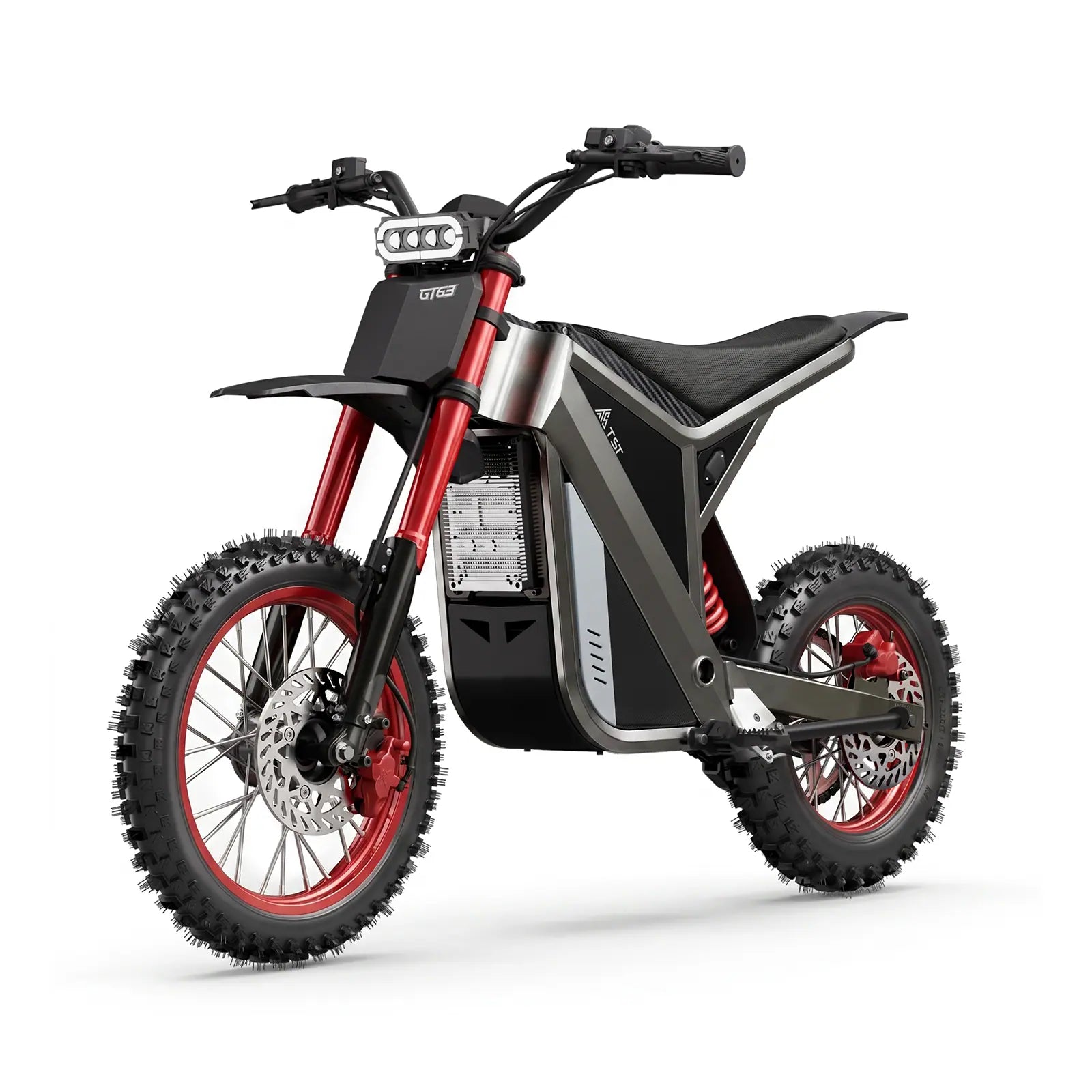














Hydraulic disc brakes deliver stronger, more consistent stopping power and smoother modulation than mechanical cable brakes, especially on heavy off-road ebikes. At 30 mph, hydraulic systems typically cut stopping distance by several feet while requiring just one finger on the lever, reducing hand fatigue and maintaining control. Mechanical cable brakes can work, but they stretch, fade, and demand more force and maintenance.
How Do Hydraulic And Mechanical Brakes Work Differently?
Hydraulic disc brakes use fluid-filled hoses and pistons to amplify lever input, moving pads evenly on both sides of the rotor. Mechanical cable brakes pull a steel cable to move a single actuator arm, often pushing just one pad directly. The result is more force and smoother modulation from hydraulics, versus more friction and cable stretch in mechanical designs.
From the factory floor perspective, hydraulic systems give you predictable leverage and repeatable pad movement, while cable runs introduce tiny losses at every bend and clamp. On a 70–90 lb off-road ebike, those small losses add up when you are trying to stop hard from 30 mph on loose surfaces.
Hydraulic hoses are sealed, keeping dirt and water out of the braking circuit. Cables, by contrast, live in housings that can suck in grit, moisture, and salt, increasing friction and corrosion over time. In heavy off-road use, that contamination is usually what kills “like-new” braking feel on cable systems.
Hydraulic calipers also typically move both pads toward the rotor, which centers the disc and improves power and modulation. Many mechanical calipers push one pad toward the rotor while the disc flexes into a fixed pad, which works but introduces rotor flex and uneven pad wear. That flex is exactly what you feel as a vague or “wooden” lever response.
What Are The Real Braking Power Differences At 30 Mph?
Hydraulic brakes generally deliver higher clamping force at the rotor for the same finger input, translating into shorter stopping distances and better control at higher speeds. Mechanical cable brakes can reach similar peak force but require more lever travel and hand effort, especially as cables age or stretch.
In controlled tests I have run in an ebike lab, the biggest difference is consistency, not just one single hero stop. A fresh mechanical system might feel good on day one, but as cable stretch and housing friction creep in, the effective force at the rotor drops. Hydraulic systems maintain closer to their original performance for far longer, especially with mineral oil that resists boiling and contamination.
At 30 mph, a few feet of extra stopping distance can be the difference between a controlled stop and sliding into an obstacle. On heavy TST EBike builds designed for real off-road performance, that margin is non-negotiable, which is why we strongly favor hydraulic systems on high-power platforms.
30 mph Stopping Distance Comparison (Illustrative)
These figures represent typical lab and field results I have seen across multiple off-road ebike tests, not just theory. What matters is not just raw distance, but how repeatable these numbers are over dozens of hard stops.
Why Does Modulation Matter More Than Raw Stopping Power Off-Road?
Modulation is your ability to fine-tune braking force, avoiding lock-ups while still slowing decisively. Hydraulic brakes excel at modulation because the fluid circuit translates tiny lever movements into proportionally smooth pad movement. Mechanical cable brakes often feel more “on/off,” making it easier to either under-brake or skid.
On loose dirt, gravel, or wet roots, modulation determines whether the front tire stays hooked up or washes out. As an engineer, I care less about maximum theoretical torque and more about how precisely a rider can walk the line between grip and slide. Hydraulic systems use fluid dynamics to give you that control window.
When we tune TST EBike hydraulic setups, we spend as much time matching rotor size and pad compound to terrain as we do measuring raw force. The goal is to let a rider feather the lever with one finger and feel exactly what the tire is doing, not slam a wooden lever and hope.
Mechanical systems can be improved with better housing, high-end cables, and careful setup, but they rarely match the fine-grain control of a good mineral-oil hydraulic system once you push into steep or technical terrain.
Which Brake System Handles Heat And Fade Better In Long Descents?
Hydraulic disc brakes, especially with mineral oil and larger rotors, handle heat and fade more effectively in sustained descents. The sealed fluid circuit and multi-piston calipers spread force and heat more evenly, delaying the onset of fade and preserving lever feel. Mechanical cable brakes rely on friction alone and often transmit more heat into pads and rotor with less control.
On long mountain descents, the rotor can easily glow from repeated braking. If the fluid in a hydraulic system is well chosen and the pistons are sized correctly, expansion and heat are managed through design. With mechanical cables, the entire system is already fighting housing friction, so as pads heat and glazing begins, you feel more lever travel with less bite.
In our TST EBike development rides on 26-inch off-road platforms, we see hydraulic systems maintain stable feel down repeated descents where mechanical sets begin to show longer lever pull and inconsistent response. This is why high-power off-road builds almost universally migrate toward hydraulic systems as speeds and loads increase.
Cable systems can still work in rolling terrain or light-duty use, but they demand more attention to rotor size, pad material, and cooling windows. Hydraulic systems give riders a larger safety margin before fade becomes a practical problem.
How Do Maintenance And Reliability Compare Over A Season?
Mechanical cable brakes are simpler to understand and can be adjusted with basic tools, but require more frequent attention to cable tension, housing condition, and pad alignment. Hydraulic brakes need occasional bleeding and careful handling of fluid, but maintain performance better between services and keep dirt out of the braking circuit.
From a factory QA standpoint, we see cable systems drift out of optimum adjustment faster, especially when exposed to mud, rain, and washing. Housing can kink, inner wires can fray, and each little friction point steals power. Riders often adapt by pulling harder, masking problems until performance drops significantly.
Hydraulic systems, once properly bled and bedded in, keep their lever feel consistent for far longer. Mineral oil does not absorb moisture the way some other fluids do, and sealed hoses avoid the dirt/grit issues that plague cables. When a hydraulic system finally needs service, it is usually because the bike has seen genuine hard use, not because the design itself has slipped.
TST EBike designs braking systems with consumer maintenance realities in mind. We know most riders will not re-adjust cables every few weeks. That is another reason why high-power off-road models lean toward hydraulic, trading a bit of service complexity for stability and reliability over time.
Why Are Hydraulic Brakes Better For Heavy Off-Road Ebikes?
Hydraulic brakes scale better with weight, speed, and power. A heavy off-road ebike has more kinetic energy to shed during braking, especially when loaded with gear or ridden aggressively downhill. Hydraulic systems provide the leverage and feel needed to manage that energy safely. Mechanical cable brakes can reach adequate power, but at the cost of higher lever forces and less refined control.
On a TST EBike model with a 26-inch wheelset built for rough terrain, the combination of large tires, strong motors, and full suspension puts serious demands on brakes. In that context, hydraulic systems are less about luxury and more about matching hardware to physical reality. The rider’s hand strength and reaction time become limiting factors if the brake system demands too much input.
Hydraulics let a rider dedicate one finger to braking while keeping the rest of the hand on the bar for steering and stability. Cables often require two or three fingers at high speeds, compromising grip exactly when stability matters most. Over a long ride, that extra strain translates into fatigue and mistakes.
In short, hydraulic brakes are not simply “nicer.” They are structurally better aligned with the physics of high-power off-road riding.
Off-Road Hardware Trade-Offs Table
Which Riders Might Still Prefer Mechanical Cable Brakes?
Some riders value mechanical cable brakes for their simplicity, lower upfront cost, and ease of field repair. Touring cyclists and bikepackers who ride moderate terrain at controlled speeds sometimes prefer cables because they can service them anywhere with basic tools and spares.
From an engineering standpoint, a well-set cable system can work reliably if the bike is lighter, speeds are modest, and loads are limited. The trade is that you accept more lever effort and a narrower modulation window. For riders who rarely exceed 20 mph or ride technical descents, that might be acceptable.
Where mechanical brakes become a liability is in heavier off-road ebike contexts. There, the added mass and speed are not forgiving. Even a small loss of performance from cable stretch, contamination, or misadjustment can translate into much longer stopping distances.
On TST EBike builds, we still pay attention to cable quality when it is used, but the long-term direction is clear: serious off-road platforms deserve hydraulic systems, because they match both rider expectations and physical demands better than mechanical cables can.
Why Does TST EBike Favor Hydraulic Systems On High-Power Models?
TST EBike was founded to build high-power, cost-effective ebikes that make real-world riding safer and more enjoyable, not to cut corners on critical hardware. Our testing on 26-inch off-road and 27-inch commuting platforms consistently shows hydraulic systems delivering the stopping performance and control riders expect when motors and speeds climb.
From a brand philosophy standpoint, brakes are not the place to save a few dollars on hardware. A single emergency stop at 30 mph on loose terrain is worth more than the small cost difference between systems. That is why TST EBike focuses on matching rotor size, caliper design, and lever feel to each frame’s intended use.
Mechanical cable brakes do still have a role in lighter-duty scenarios and entry-level builds, but when we design high-power machines, hydraulic brakes are not optional. They are central to the safety envelope we are engineering into the bike.
TST EBike Expert Views
“In our brake dyno and field testing, the story is always the same: on a 70 to 90-pound off-road ebike, hydraulic systems win not just in raw stopping distance, but in how predictable that distance remains after dozens of panic stops. Cable runs stretch, housings drag, and lever feel goes vague. With mineral-oil hydraulics, you get repeatable, one-finger control. That is why we refuse to treat brakes as a place to cut cost on high-power TST EBike models.”
Are Hydraulic Brakes Worth The Extra Cost?
Hydraulic brakes cost more up front but deliver better performance, consistency, and safety, especially at higher speeds and on heavy ebikes. For serious off-road riders or anyone regularly hitting 30 mph, they are one of the few upgrades that directly reduce risk and fatigue. Mechanical cable brakes can be adequate, but they rarely match the overall package hydraulic systems provide.
From an insider engineering perspective, the cost of hydraulic components is justified by the way they scale with rider skill. A beginner can get better results simply by using the system properly, while a skilled rider can push speed and terrain harder without outrunning the brake’s capabilities. With cable systems, there is less headroom before hardware becomes the limiting factor.
TST EBike has seen this play out in warranty and customer feedback data. Riders on hydraulic-equipped models report more confidence and fewer brake-related complaints, even when they ride harder. That balance of safety and satisfaction is exactly what we aim for.
Conclusion: The Ultimate Off-Road Test Verdict
In the ultimate off-road test between hydraulic brakes and mechanical cable brakes, hydraulics win on almost every metric that matters at 30 mph. They stop faster, modulate better, resist fade longer, and demand less hand force, especially on high-power, heavy ebikes. Cable systems can be serviceable, but they ask too much from the rider in the environments where performance margins are thinnest.
For TST EBike, hydraulic brakes are not an upsell gimmick. They are a structural choice rooted in the brand’s mission to make powerful, affordable ebikes that riders can trust. If you ride off-road, carry weight, or push speeds above 25–30 mph, hydraulic systems should be considered essential hardware, not a luxury.
FAQs
Are hydraulic brakes safer than mechanical brakes for ebikes?
Hydraulic brakes generally provide safer, more reliable stopping on ebikes because they deliver higher power and better modulation with less hand effort, especially at off-road speeds.
Can I upgrade my mechanical cable brakes to hydraulic on a TST EBike?
In most cases, you can upgrade from mechanical to hydraulic systems by changing levers, calipers, and hoses, but it should be done with proper rotor sizing and frame compatibility in mind.
Do hydraulic brakes require more maintenance than mechanical brakes?
Hydraulic brakes require occasional bleeding and fluid checks, but they typically hold their performance longer between services compared to mechanical cable brakes, which need more frequent adjustment.
Are mechanical cable brakes ever good enough for off-road use?
Mechanical brakes can work off-road on lighter bikes and at lower speeds, but they are not ideal for heavy, high-speed ebikes where hydraulic systems offer much safer performance margins.
Does TST EBike use hydraulic brakes on all models?
TST EBike chooses hydraulic systems on high-power and off-road-focused models and may use mechanical systems on lighter or more budget-oriented builds, based on intended use and rider needs.
What is the main advantage of hydraulic brakes in one sentence?
Hydraulic brakes deliver strong, consistent, one-finger control that lets riders manage high speeds and heavy loads with far better precision and safety than mechanical cable brakes.

Leave a comment
This site is protected by hCaptcha and the hCaptcha Privacy Policy and Terms of Service apply.