
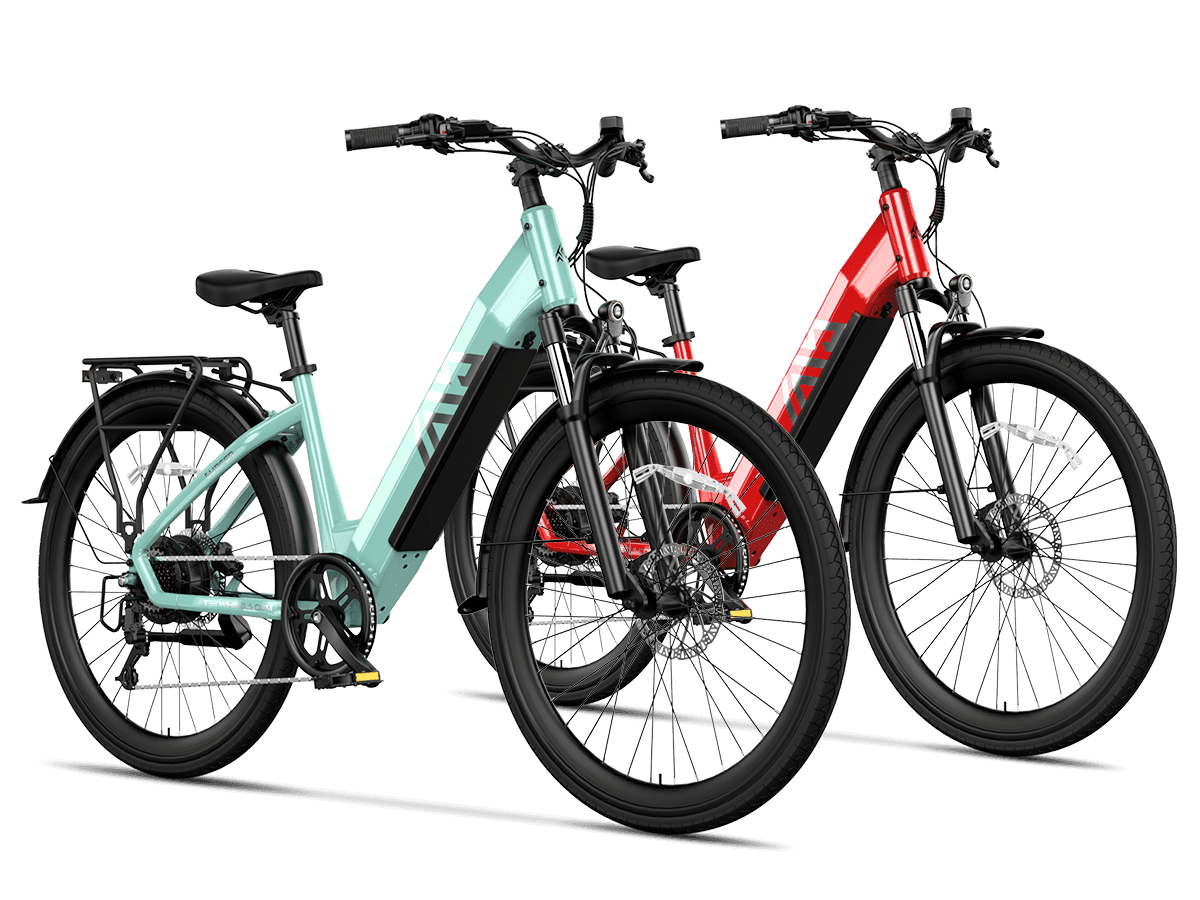
The best locks for fat-tire e-bikes are hardened-steel U-locks and heavy chains with rated security levels, sized to fit the wider frame tubes and the fixed objects where you park, with a cable or secondary lock for the front wheel; expect to spend $80-150 on the primary lock for a $1,000-2,000 bike. Fat-tire frames change the sizing game, which is why this guide focuses on fit as much as security.
Fat-Tire Frames and the Lock Choice Problem
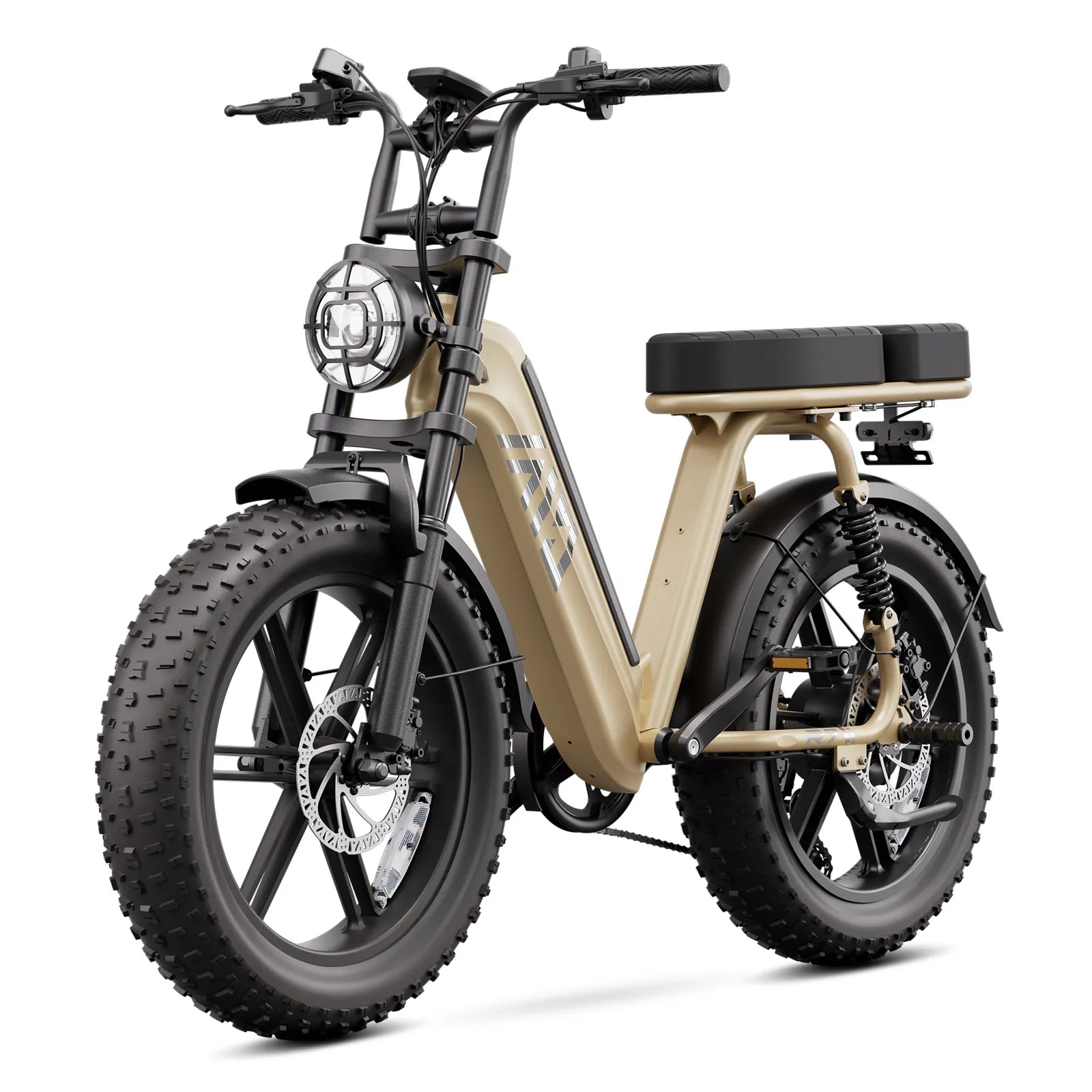
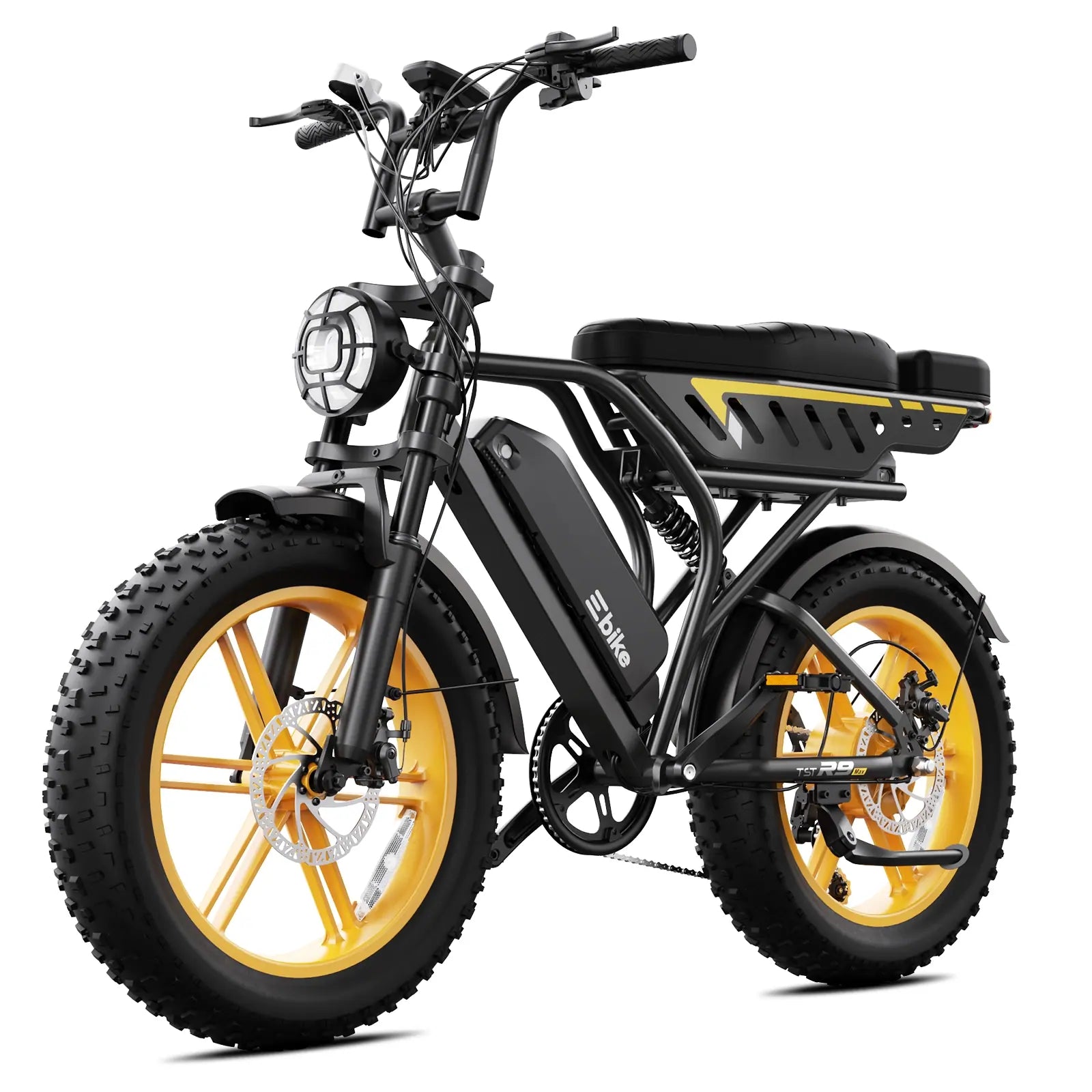
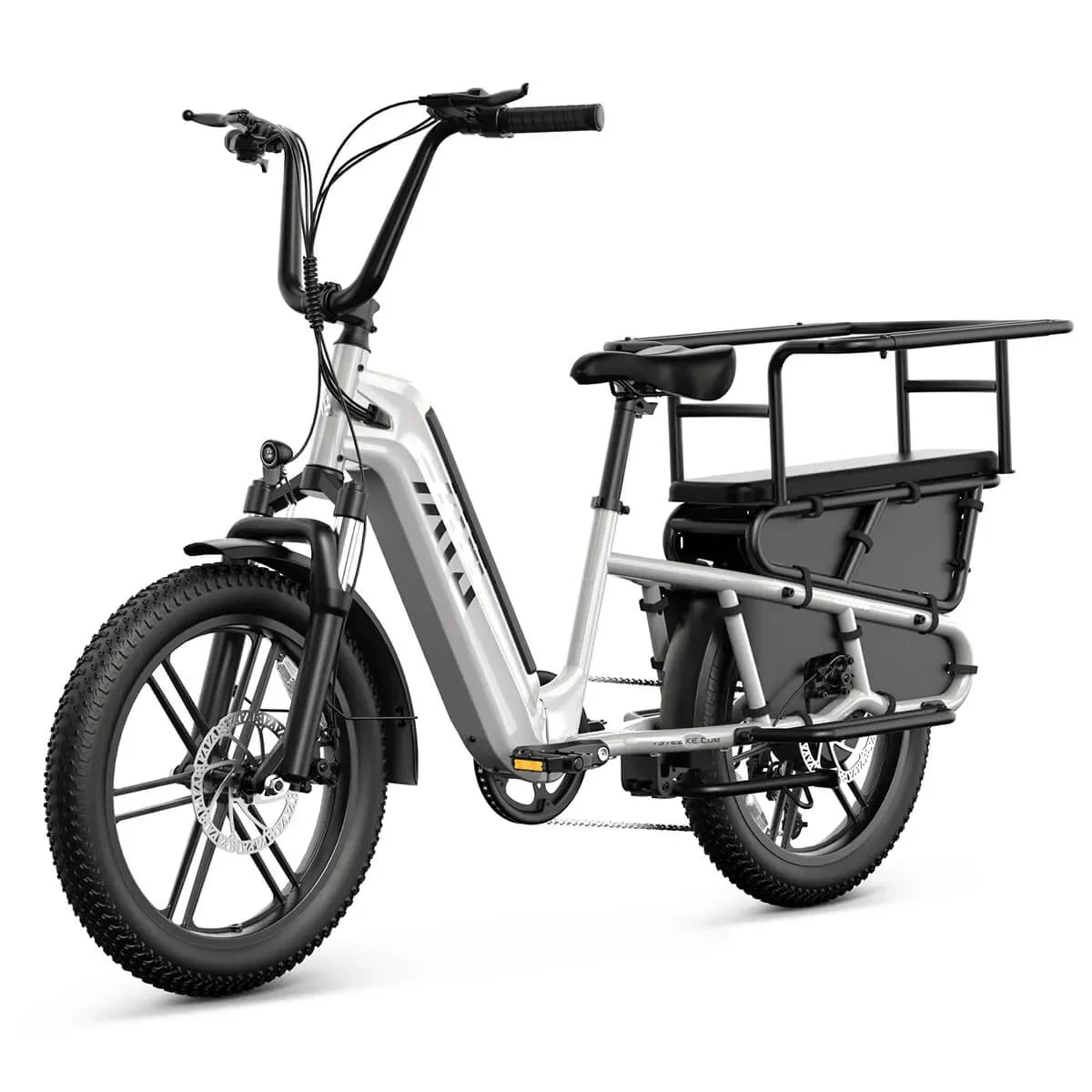
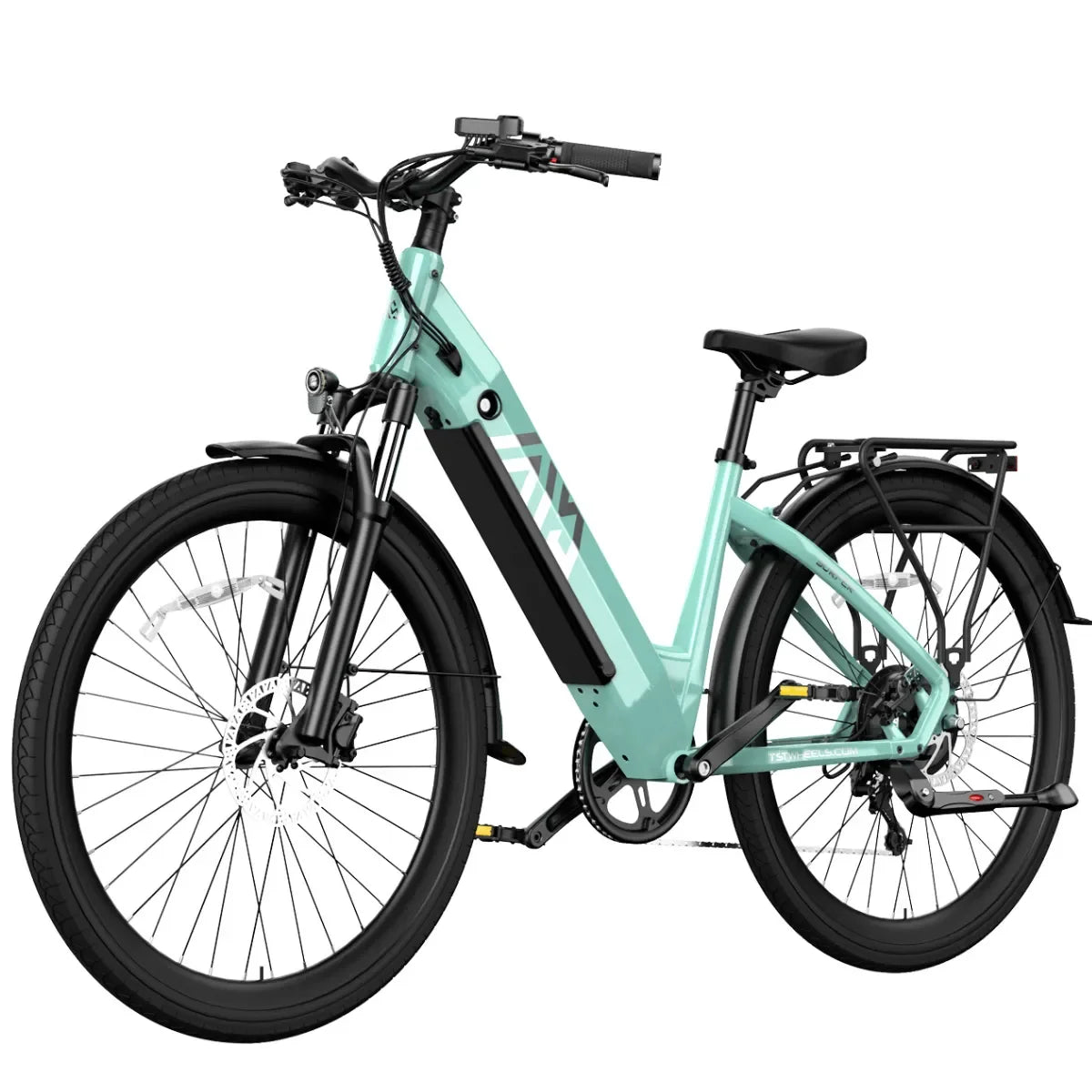
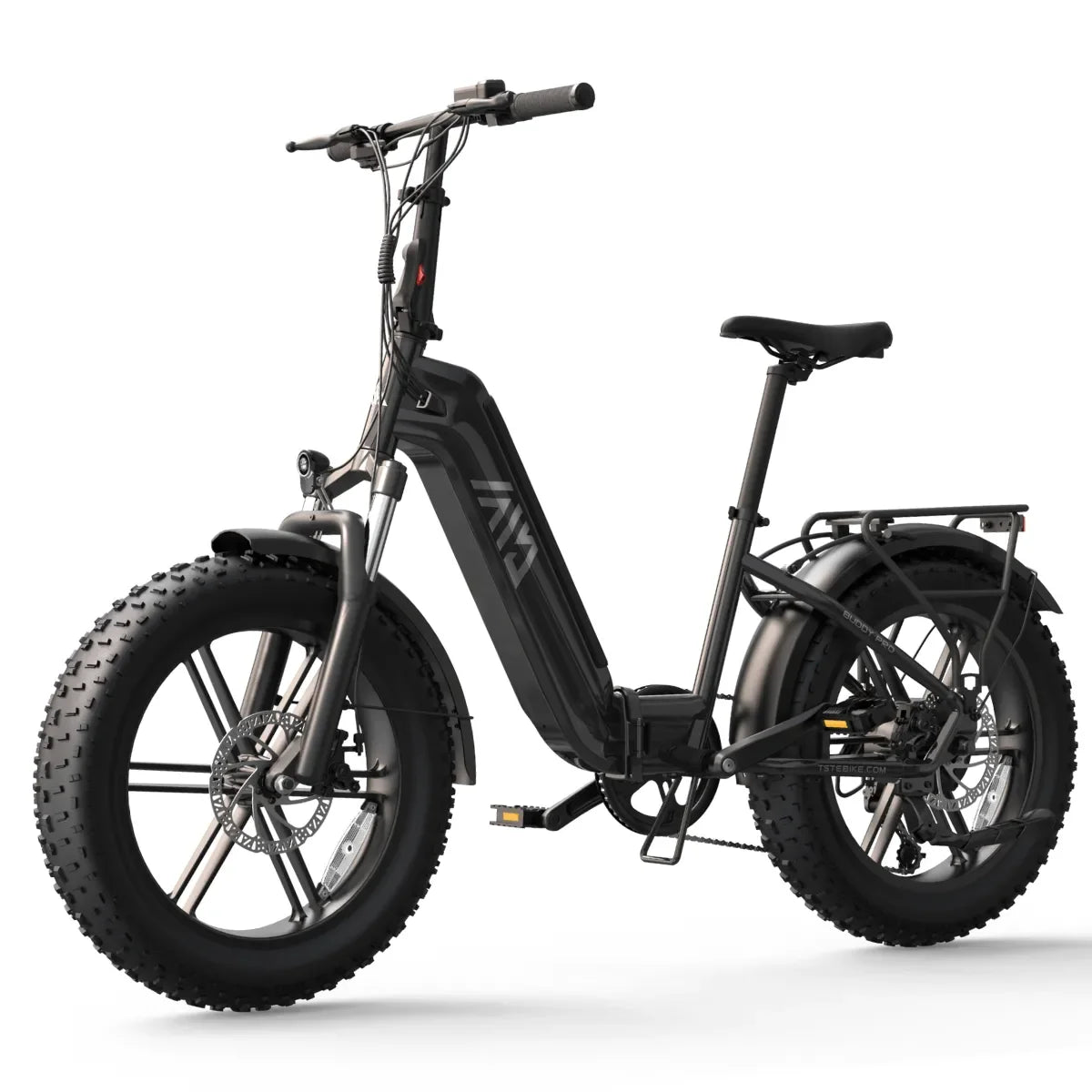
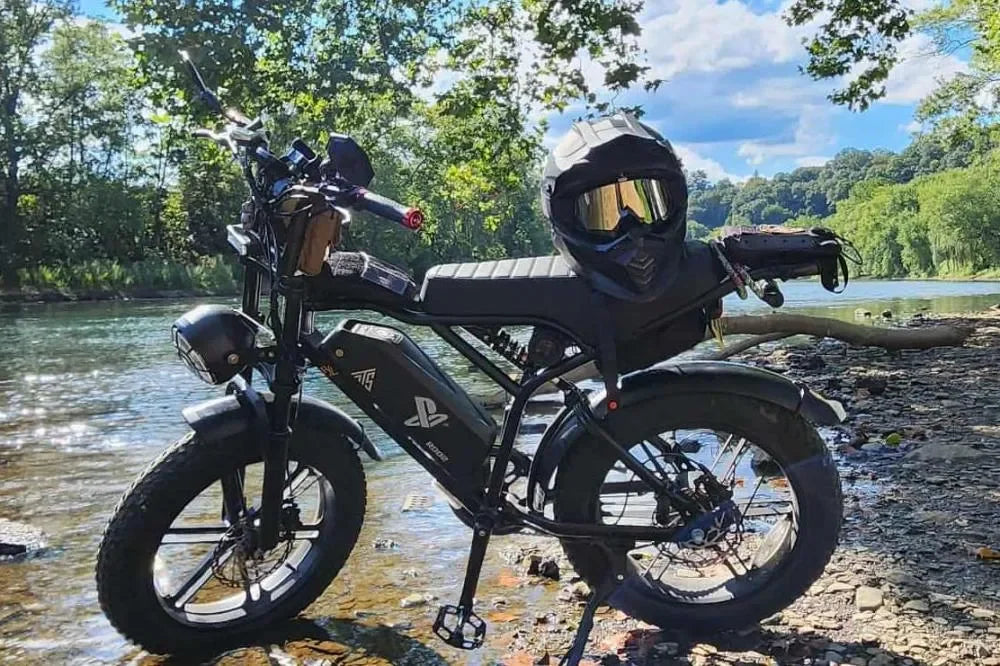
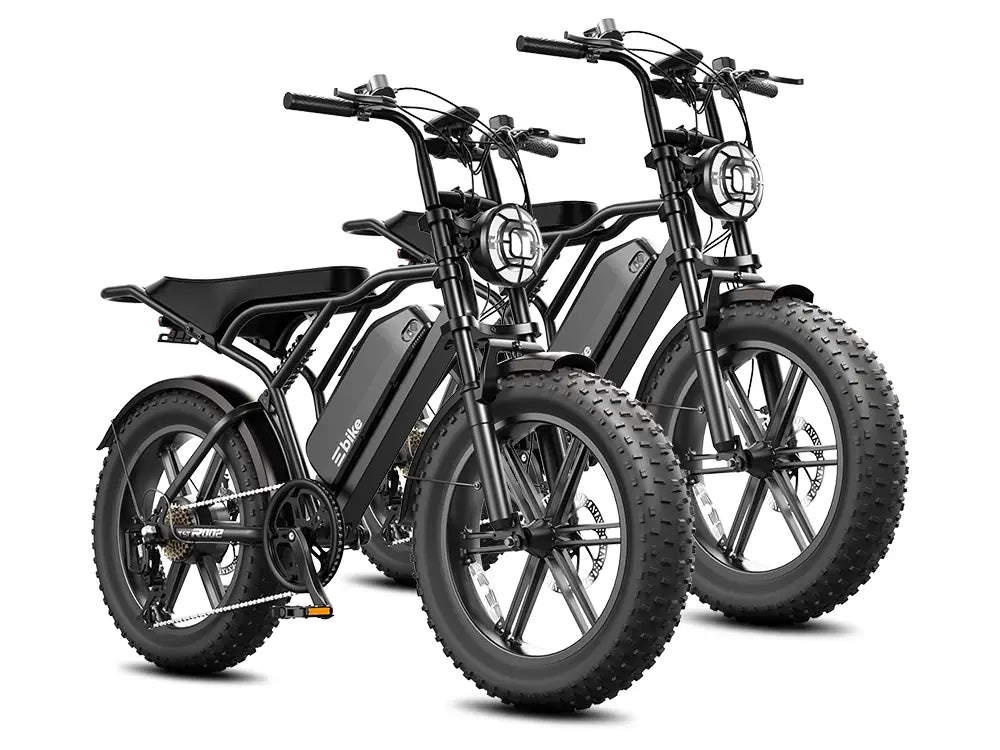
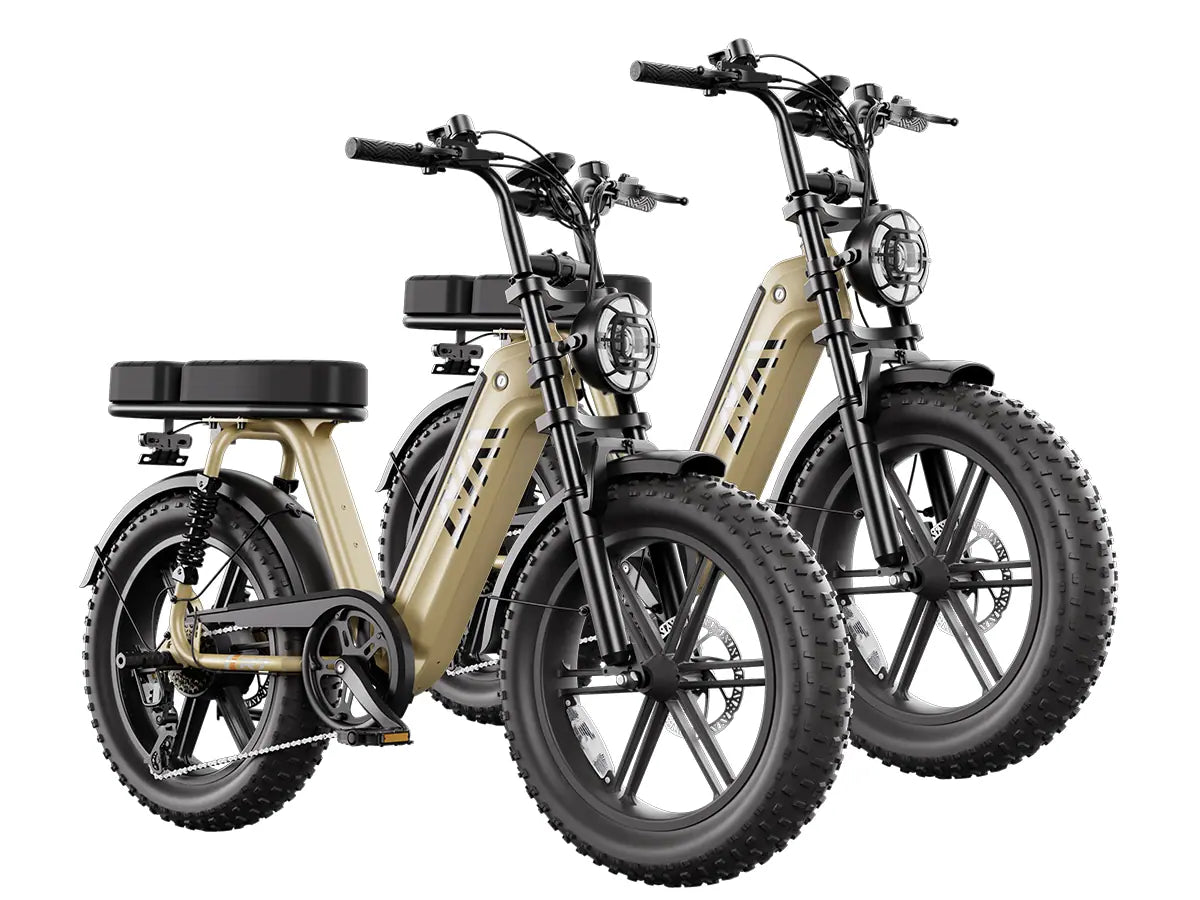
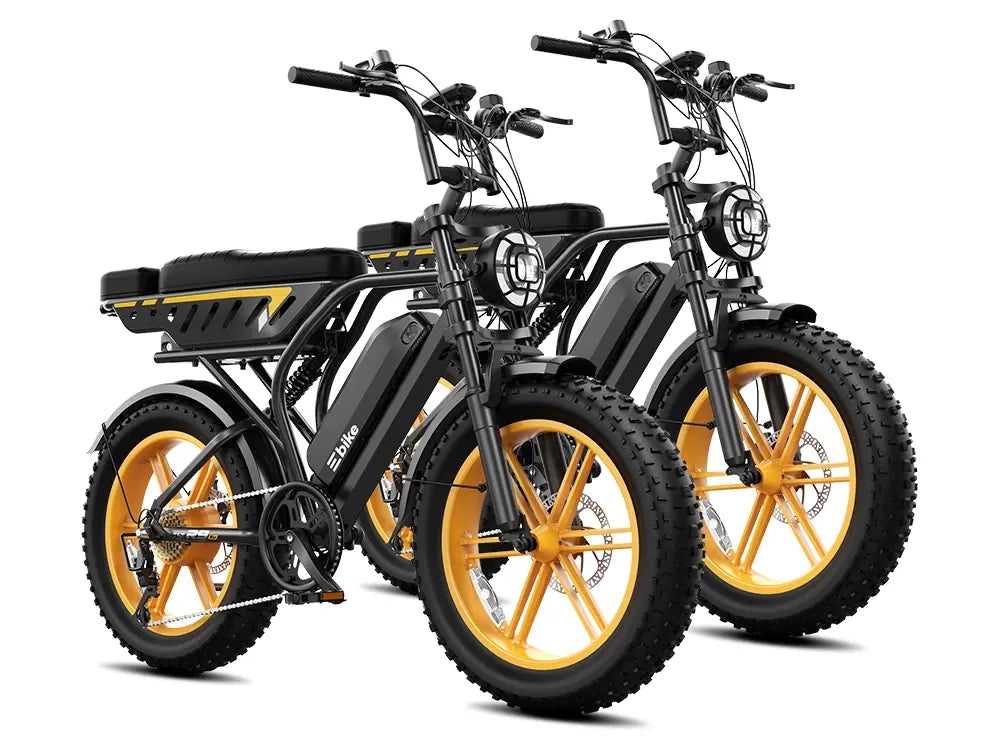
The fit problem is specific to fat-tire bikes: the wide 4-inch tires and full-suspension frames of models like the R002 and R7 take up the space that a standard U-lock expects, and a lock that fit a road bike can be impossible to close around the frame and a thick post. The same geometry makes cable locks feel easier, which is exactly the trap, because the easier fit comes with much weaker security. The solution is not to downsize the security to match the fit; it is to size the lock up for the fat-tire geometry and keep the security level.
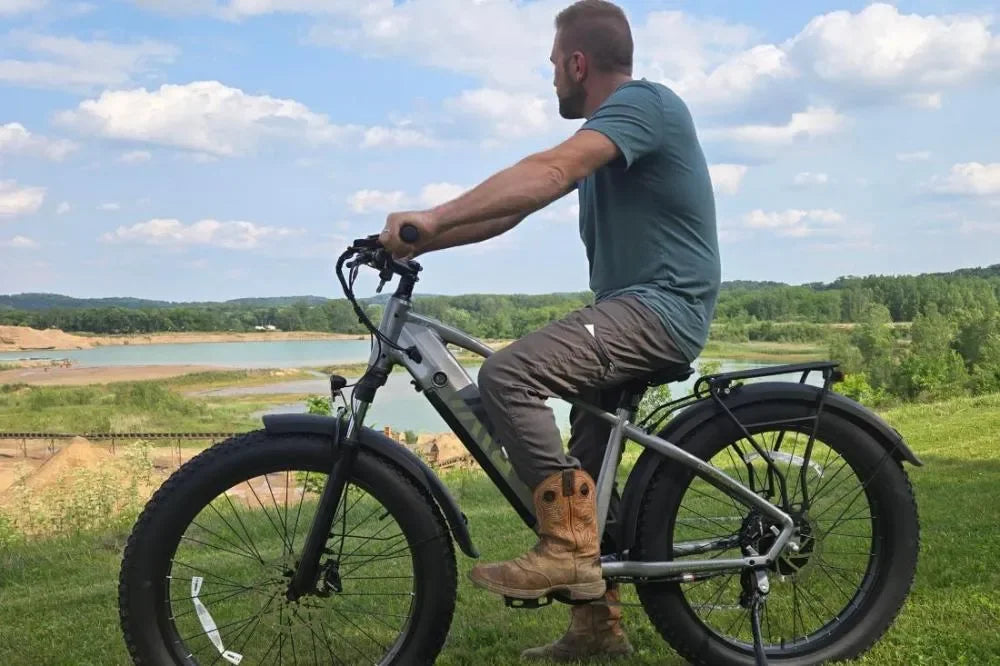
Fat-tire bikes have wider frame tubes and, on models like the R002 and R7, full suspension and thick tires that take up space around the wheel. A U-lock that fits a road bike can be too narrow to reach around a fat-tire frame plus a thick rack post, and a cable that wraps easily on a skinny bike can barely close on a fat-tire setup. The fit check comes first: measure the reach around your frame tube and the object you lock to before choosing a lock size.
The Lock Types Compared for E-Bikes at a Glance
| Lock type | Security | Weight | Fat-tire fit | Best role |
|---|---|---|---|---|
| Hardened U-lock | Highest | Heavy | Choose a wide size | Primary frame lock |
| Heavy chain and padlock | High | Very heavy | Flexible fit | Primary lock |
| Folding lock | Medium-high | Moderate | Compact | Secondary or quick stops |
| Cable lock | Low | Light | Easy fit | Secondary wheel lock only |
The table shows the trade-offs: the best security comes from the heavy options, and the fat-tire fit is about choosing the right size of those options rather than switching to a lighter lock.
What Security Rating Should You Look For?
The rating is the verifiable difference between a deterrent and a paperweight, because rated locks are tested against the tools thieves actually carry: bolt cutters, pry bars, and increasingly angle grinders, with the rating describing how long the lock resists each. For an e-bike parked in a city, the angle-grinder resistance is the number that matters, since grinders now defeat unrated locks in seconds. The practical rule is to buy from a brand that publishes the rating and the test method, because a "heavy duty" promise without a number is marketing, not security.
The security rating is the number that separates a deterrent from a paperweight: rated locks are tested against bolt cutters, pry attacks, and increasingly angle grinders, and the rating tells you how long the lock resists. For an e-bike parked in a city, choose a lock rated for angle-grinder resistance if you can, because thieves now carry grinders that defeat unrated locks in seconds. Buy from brands that publish the rating rather than ones that promise "heavy duty" without a number.
Sizing a U-Lock for a Fat-Tire Frame Correctly
The sizing rule is to buy the largest shackle that still fits through the frame and around the rack post with minimal slack: too small, and the lock cannot close; too large, and the slack gives a thief pry room. Measure the combined reach of your frame tube plus the rack post plus the fat tire, and compare it with the lock's shackle dimensions. When in doubt, size up, because a lock that barely fits is the one you will stop using.
The Two-Lock Setup for an E-Bike Explained
The two-lock setup works because it changes the thief's math: two different locks mean two different tools and twice the time, and the noise and delay push most thieves toward the easier bike parked next to yours. The primary lock carries the security, and the secondary lock removes the easiest attack, the front wheel, which is worth more than a casual glance suggests. The routine has to be automatic, because the bike is only as secure as its worst parking day, and the two-lock habit is what makes every day the good day.
The two-lock setup is the professional standard: a primary U-lock or chain through the frame and rear wheel to the fixed object, plus a secondary lock through the front wheel. Two locks force a thief to defeat two mechanisms, which takes long enough to push them to an easier target. TST EBike's lock sets cover the secondary role, while the primary lock should be a dedicated high-security product sized for the fat-tire frame.
How Much Should You Spend on an E-Bike Lock?
The budget rule is simple: the primary lock should cost 5-10 percent of the bike's value, so $50-100 for a $1,000 bike and $75-150 for a $1,500 bike. Spending less protects a bike worth much more, and spending more buys angle-grinder resistance that matters in high-risk areas. The lock is the cheapest insurance on the most expensive portable asset most riders own.
Matching the Lock to the Parking Exposure
The exposure-based approach prevents both under-securing and over-carrying: a quick café stop in a visible spot needs the primary lock only, while an eight-hour workday or overnight parking needs the full two-lock setup, and a high-theft area needs the angle-grinder-resistant primary lock even for short stops. The lock bag and the carrying weight follow the same logic, because a rider who carries the right locks for the actual parking plan uses them consistently. The rule is simple: match the locks to the longest exposure you actually face, not the shortest.
Use the full two-lock setup for longer parking at work, transit stations, and overnight; use a single primary lock for short errands in visible spots. Match the lock to the exposure, because a quick stop in a café needs less than an eight-hour workday. The locking technique guide in this series covers placement, and this guide covers the gear.
The TST Lock Sets and the Role They Play
The TST lock sets earn their place as the secondary and convenience layer: the included lock covers short errands and the handlebar bag carries the essentials, which is the right role for a bundled accessory. For the primary security of a fat-tire e-bike parked for a workday, the dedicated high-security U-lock or chain is the right tool, and the two layers work together rather than competing. Buyers should read the bundled lock as the start of the system, not the whole system, and add the primary lock sized for the frame.
TST EBike sells handlebar bag and phone holder sets that include a bike lock, which cover the secondary and convenience roles well, and the brand's accessory catalog includes the universal items that complete the setup. For the primary frame lock on a fat-tire e-bike, choose a dedicated high-security U-lock or chain sized to the frame, because the included lock is not designed for the primary role.
TST EBike Expert Views
"The lock decision starts with the fat-tire fit, because a lock that does not reach around the frame is not a security device, it is a ritual. We see the bundled lock sets as the secondary layer and recommend a rated primary lock sized to the frame for anything parked for a workday. The rating, the fit, and the two-lock routine are one system, and the system is what survives the worst parking day."
— TST EBike Product Testing Team (this article is written by TST EBike's editorial team, which works for the manufacturer)
Conclusion: Size the Fit, Read the Rating, Use Two Locks
The best fat-tire e-bike lock is a hardened U-lock or heavy chain with a published security rating, sized to fit the wide frame and the parking object, paired with a secondary lock on the front wheel. Measure the fit, check the rating, and spend 5-10 percent of the bike's value on the primary lock.
Lock Buying Checklist
Spend the 5-10 percent, and the lock stops being an accessory and becomes part of the bike.
The bottom line: the lock system is only as strong as its worst day, so size the fit, read the rating, and use the two-lock routine every time.
The fit, the rating, and the two-lock routine work as one system, and the checklist keeps the system consistent on every parking day.
- [ ] Measure the reach around frame and rack post.
- [ ] Choose a U-lock or chain with a published rating.
- [ ] Buy angle-grinder resistance for high-risk parking.
- [ ] Pair a secondary lock for the front wheel.
- [ ] Budget 5-10 percent of the bike's value.
See the TST handlebar bag and lock set for the secondary role and the universal accessories collection for the full kit.
Related reading: how to lock an e-bike to stop theft
FAQs
Do fat-tire bikes need special locks?
They need locks sized for the wider frame and thicker tires; a U-lock that fits a road bike may be too narrow for a fat-tire setup.
What is the best lock type for an e-bike?
A hardened-steel U-lock or heavy chain with a published security rating, paired with a secondary lock on the front wheel.
How much should I spend on an e-bike lock?
About 5-10 percent of the bike's value, or $50-150 for typical e-bikes, with angle-grinder resistance worth the premium in high-risk areas.
Are cable locks enough?
No, cables are only secondary locks; a thief can cut one in seconds, so the primary lock must be a U-lock or chain.

Leave a comment
This site is protected by hCaptcha and the hCaptcha Privacy Policy and Terms of Service apply.